 © Ditch TownsendCC BY-SA 4.0 · iNaturalist
Blueside Wrasse (female)
Cirrhilabrus cyanopleura
Oxycheilinus orientalis
Oxycheilinus orientalis is a species of Maori wrasses
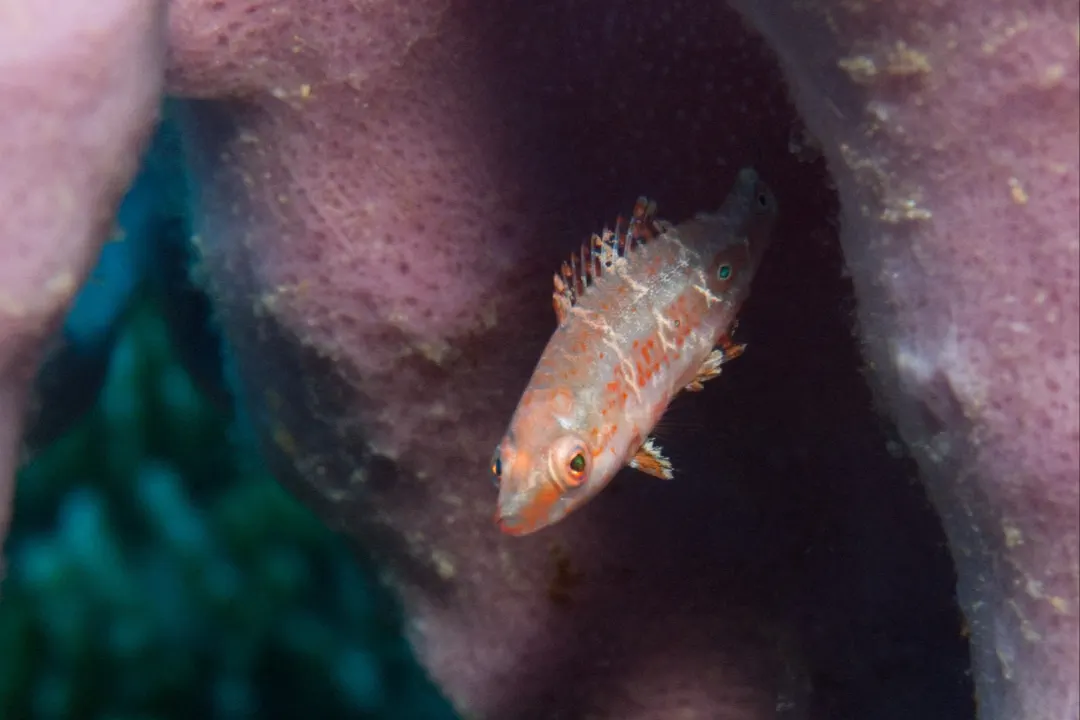
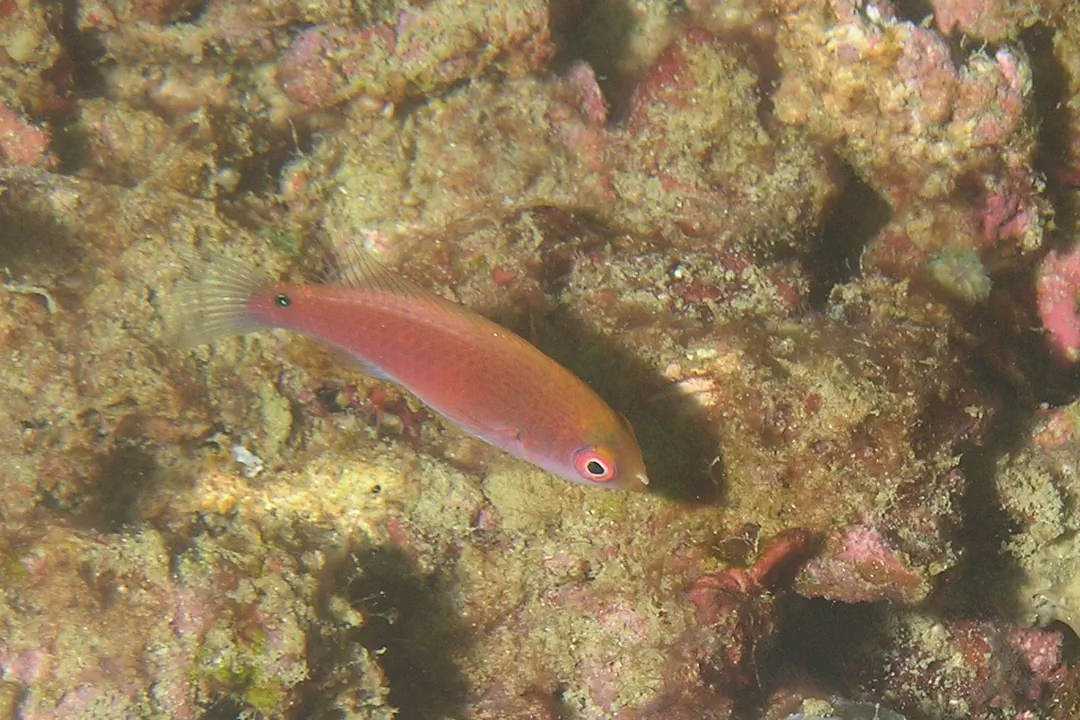
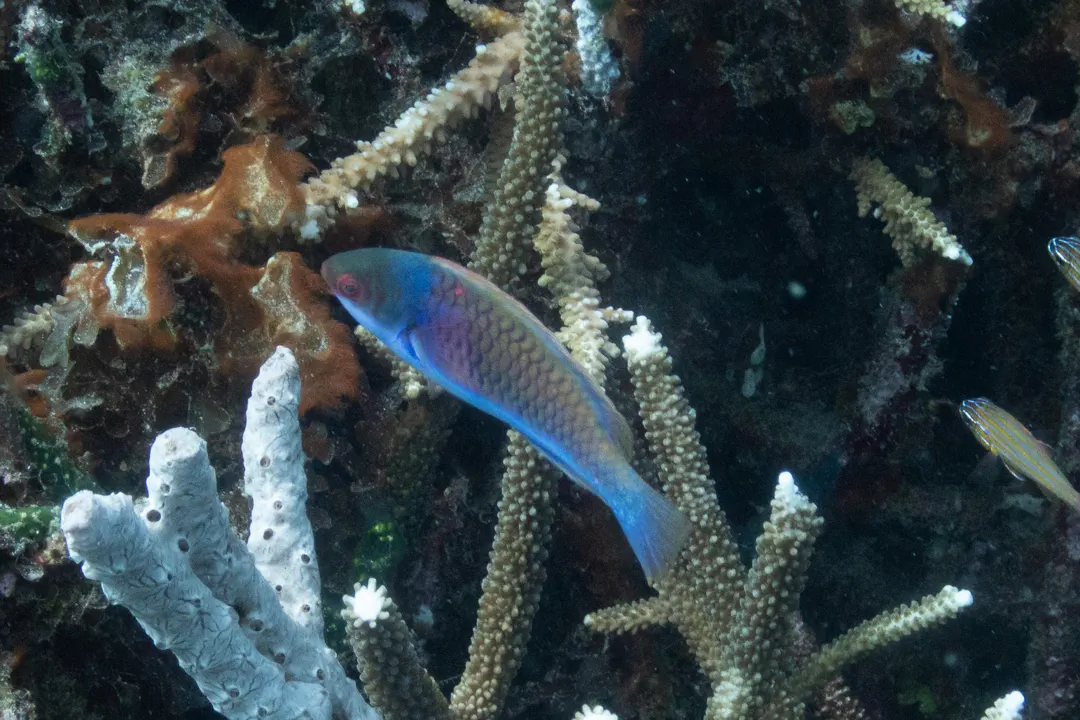
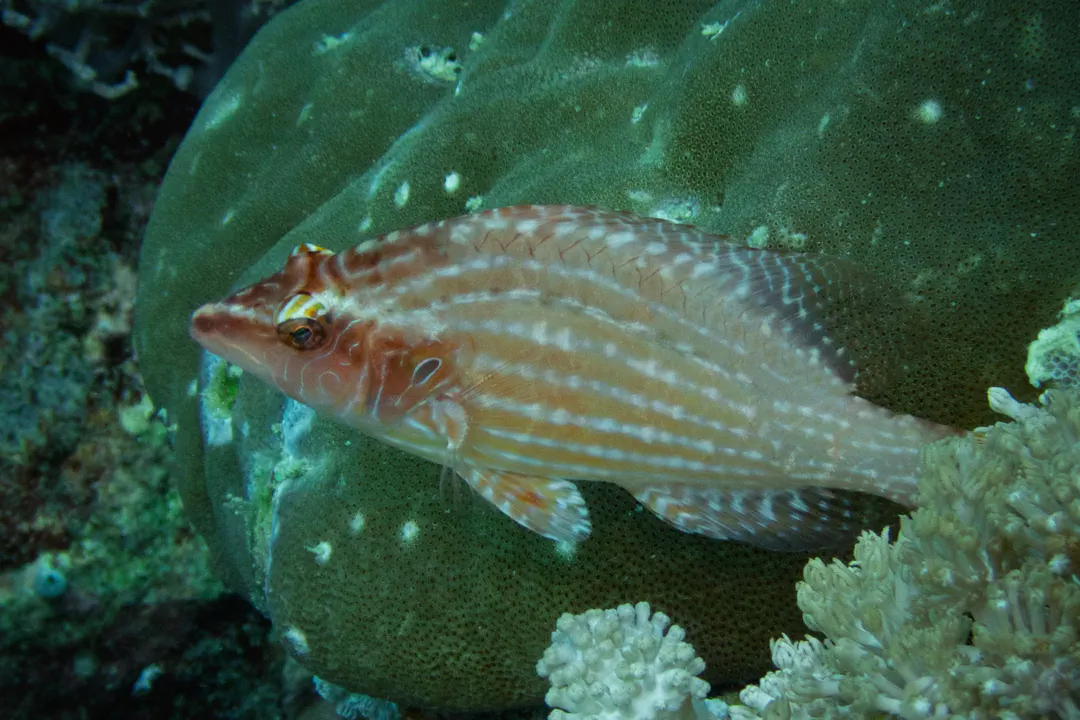
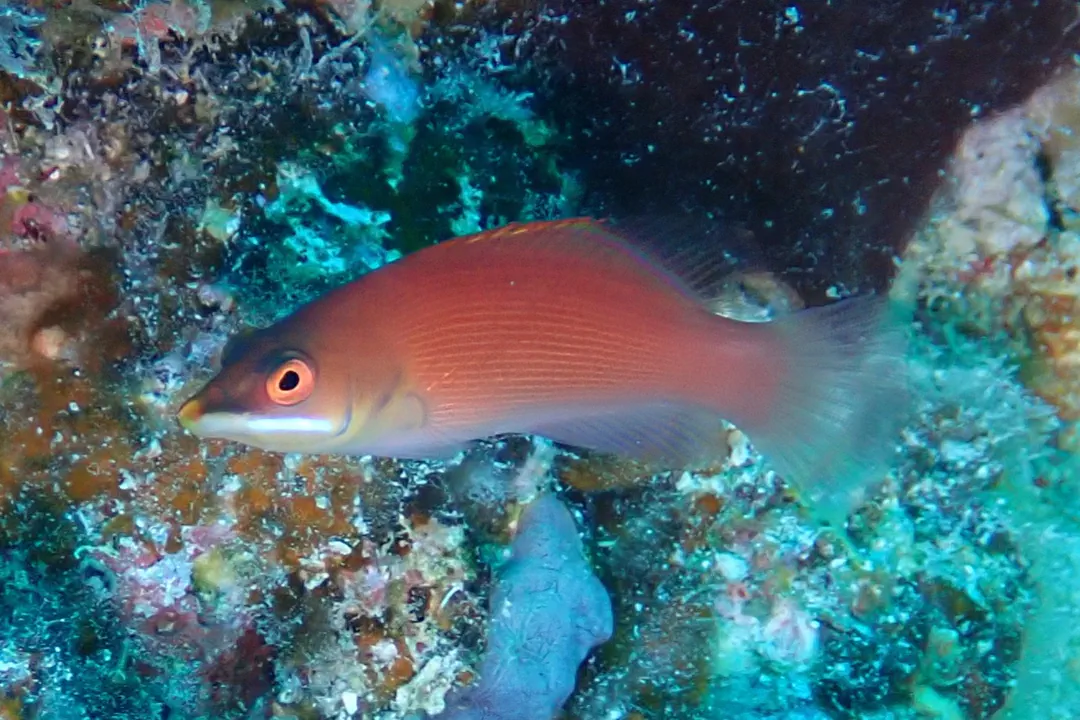
Large adults are reddish with a black blotch on the basal half of the dorsal-fin membrane between the first and second spines, and a black blotch around the anterior portion of the lateral-line anterior series in adults, 5 indistinct pale narrow white-flecked bars, 2 indistinct pale stripes along body, irregular bright red vertical lines on scale edges and red dots and anterior and lower part of body; whitish to pale blue-green lines on side of lower jaw, widest near front of chin; small dark-edged white to pale blue-green spots on side of snout and head below eye; iris yellowish-orange with a blue ring; anterior lateral line scales often with a blackish smudge; dorsal and anal fins pale reddish-orange with oblique red lines and dark-edged white to blue lines or rows of dashes or small spots, membrane of first dorsal fin sometimes blackish, rarely with a broad dusky border; caudal fin red with small white spots, often with an irregular blotchy white bar near base; pectoral fin-rays pale yellowish, fin membranes transparent; pelvic fins translucent whitish, with red blotches and white flecks.
Small adults pale reddish with pink flecks above, white flecks below, a yellowish-orange stripe from chin to eye and mid-side to base of caudal fin, with a broad whitish band above and below; scale edges along mid-side with vertical red lines; two small bright red mid-lateral spots, a small bright red spot below middle of soft portion of dorsal fin, and a second caudal-fin base.
North of Cartier Island, Timor Sea, depth 95 m. Elsewhere, the species is widespread in the tropical east-Indo-west Pacific.
Inhabits deeper sandy and rubble areas on coastal and outer reefs - also in seagrass and algal beds. Females swim in small groups, while juveniles often shelter in crinoids or among soft corals at moderate depths.
Feeds mostly on fishes, shrimps and other crustaceans.
Maori wrasses are protogynous hermaphrodites - changing sex from female to male during their life cycle.
© Ditch TownsendCC BY-SA 4.0 · iNaturalist 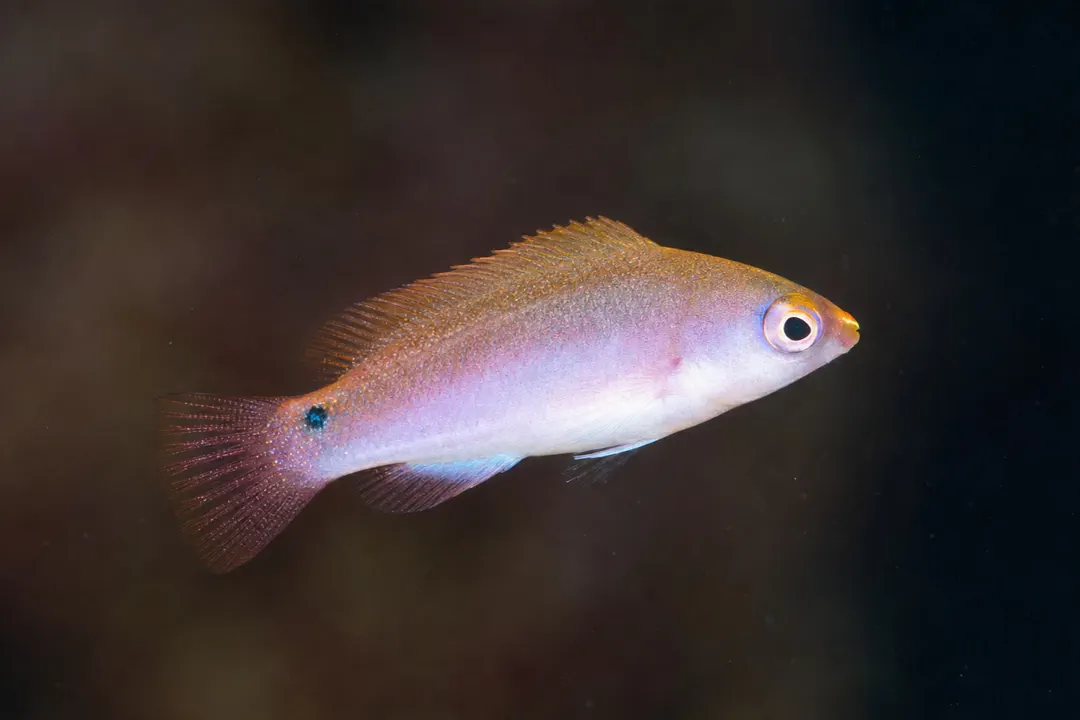
 Justin PhilboisCC0 · iNaturalist
  © Pierre PericardCC BY 4.0 · iNaturalist
  © Debra BakerCC BY 4.0 · iNaturalist
  © Debra BakerCC BY 4.0 · iNaturalist
 Oriental Wrasse has no known danger to humans. However, always observe marine life responsibly.
Oriental Wrasse can be found at depths of up to 80 meters.
Download Seabook free for iOS and Android.