 © Ditch TownsendCC BY-SA 4.0 · iNaturalist
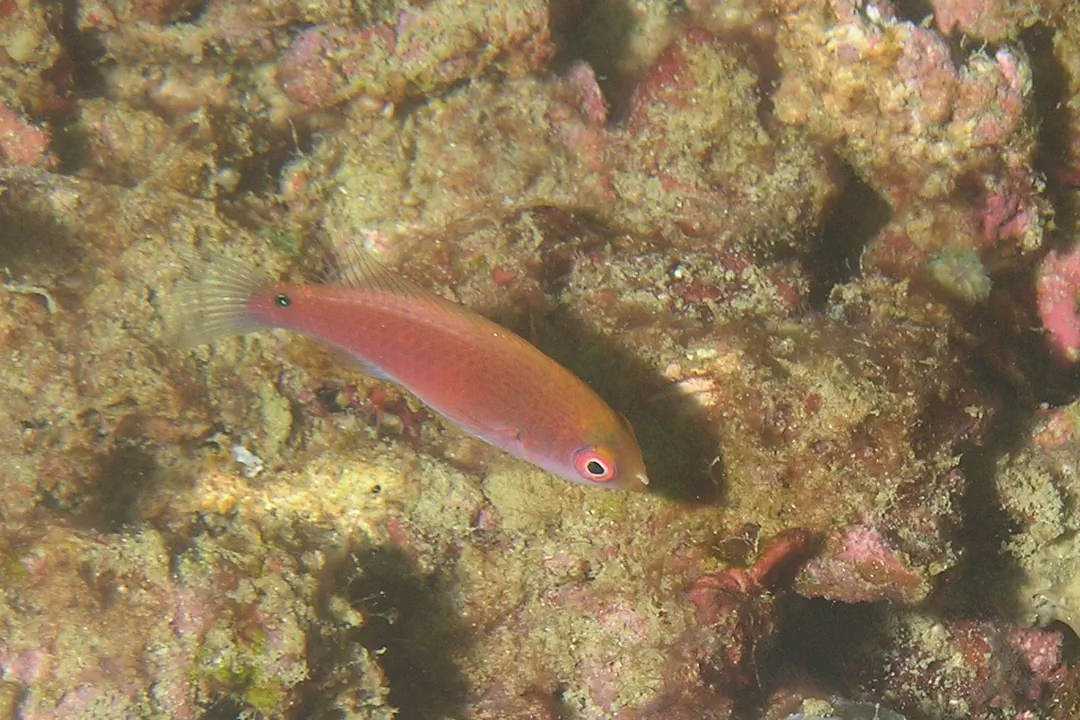
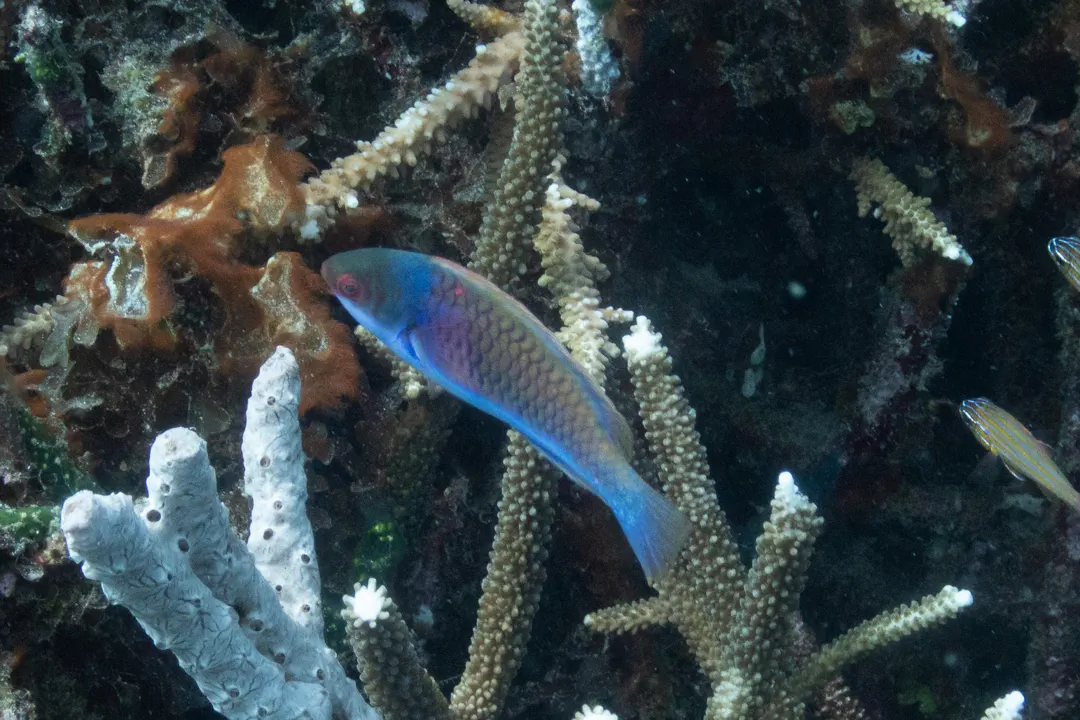
Blueside Wrasse (female)
Cirrhilabrus cyanopleura
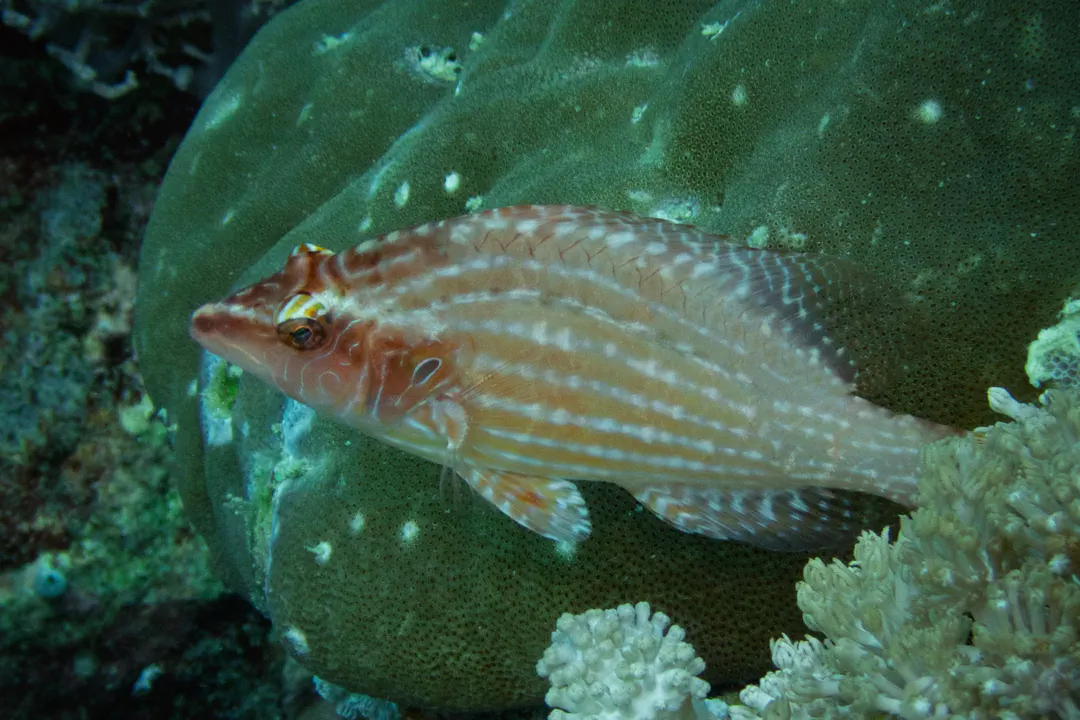
Pteragogus enneacanthus
Pteragogus enneacanthus is a species of wrasses native to the Indian Ocean and the western Pacific Ocean.
A mottled reddish-brown wrasse with fine white stripes along the sides, dark spots or blotches along the lateral line that may form a narrow dark stripe, and an eye-sized ocellus in a reddish patch on the gill cover that is present in juveniles, but may be indistinct in adults. Males have filamentous tips on the first two dorsal-fin spines.
Houtman Abrolhos islands to the Dampier Archipelago, Western Australia, and from the northern Great Barrier Reef and reefs in the Coral Sea, Queensland, to Sydney, New South Wales. Elsewhere, the species is widespread in the Western Pacific, from Indonesia to Tonga, north to Kagoshima, Japan, and south to Australia.
Found in various habitats from shallow algae reefs to deep offshore on soft bottom with sponges and hydroid colonies. Mostly small, secretive species, usually hiding among dense weeds. It rarely leaves its cover except to move quickly between hydrozoan colonies, but not before having a good look around first to make sure its safe. Oviparous, distinct pairing during breeding.
© Ditch TownsendCC BY-SA 4.0 · iNaturalist 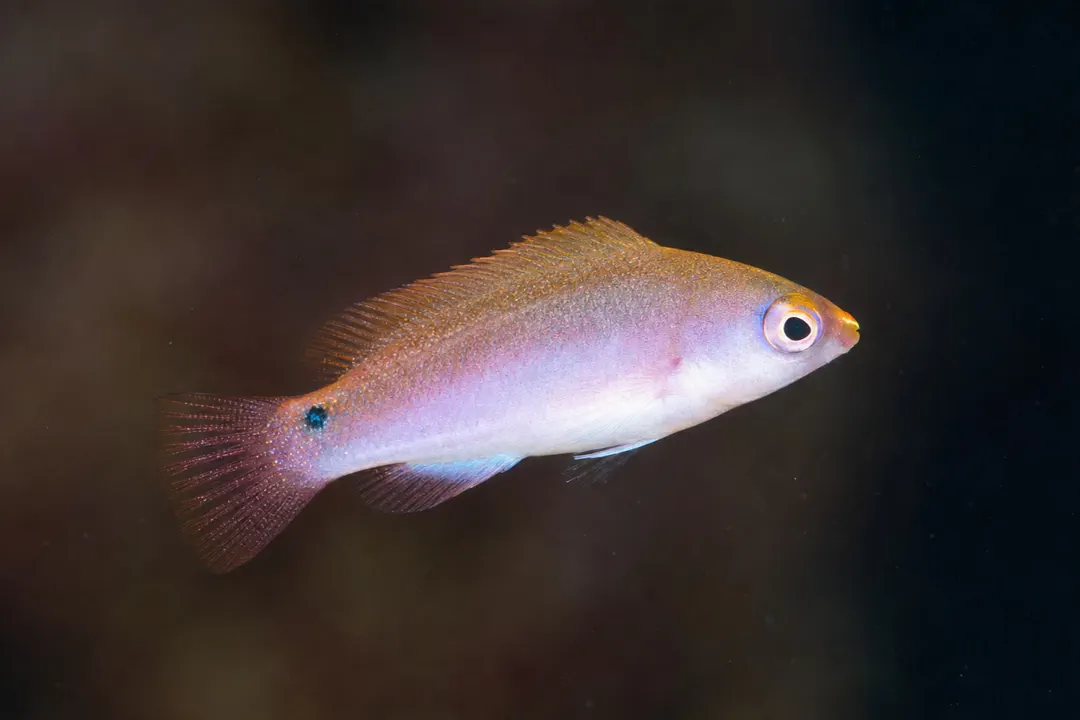
 Justin PhilboisCC0 · iNaturalist
 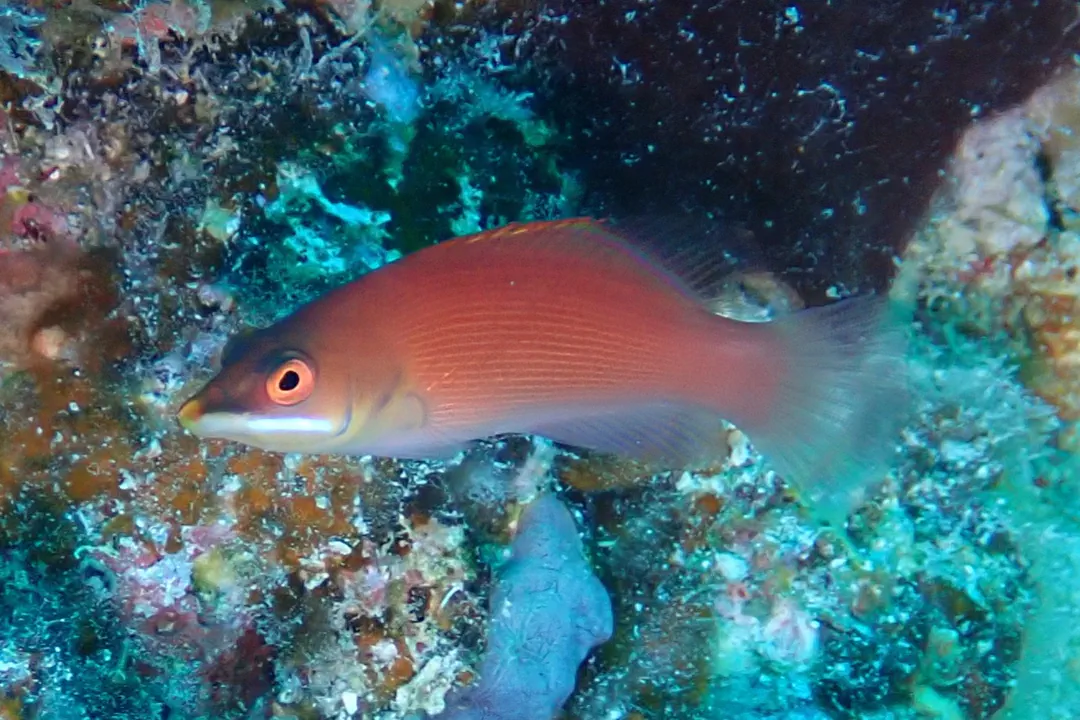 © Debra BakerCC BY 4.0 · iNaturalist
 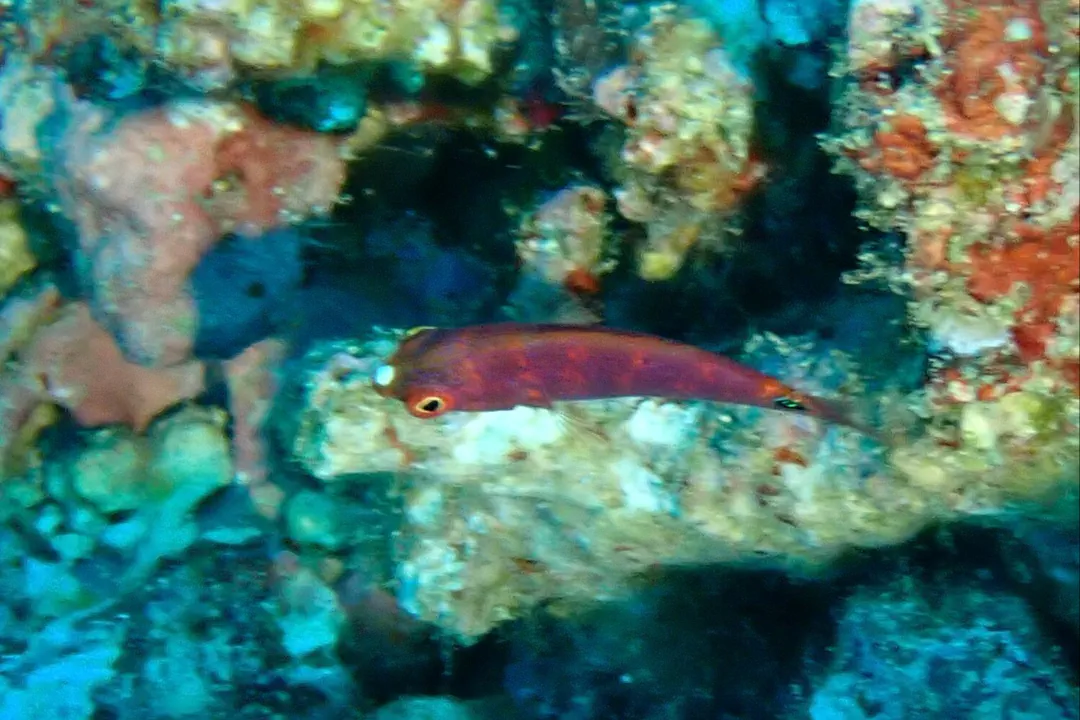 © Debra BakerCC BY 4.0 · iNaturalist
 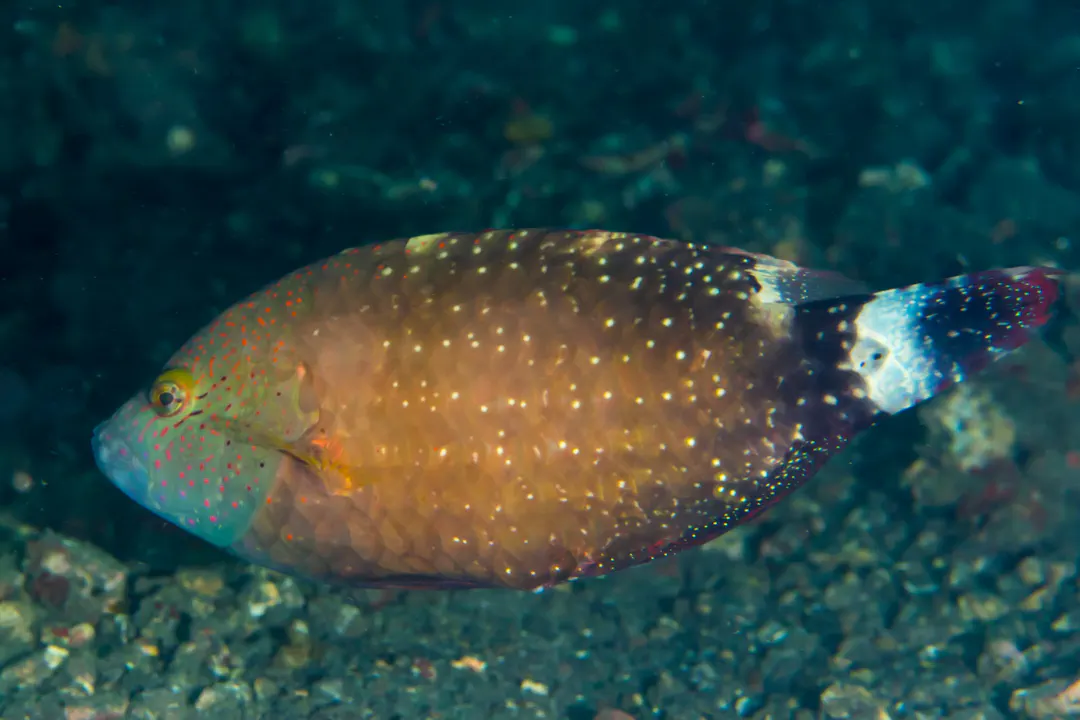 © Rickard ZerpeAll rights reserved
 Cockerel Wrasse has no known danger to humans. However, always observe marine life responsibly.
Cockerel Wrasse can be found at depths of up to 64 meters.
Download Seabook free for iOS and Android.