 © Roger RittmasterCC BY 4.0 · iNaturalist
Bluehead Tilefish
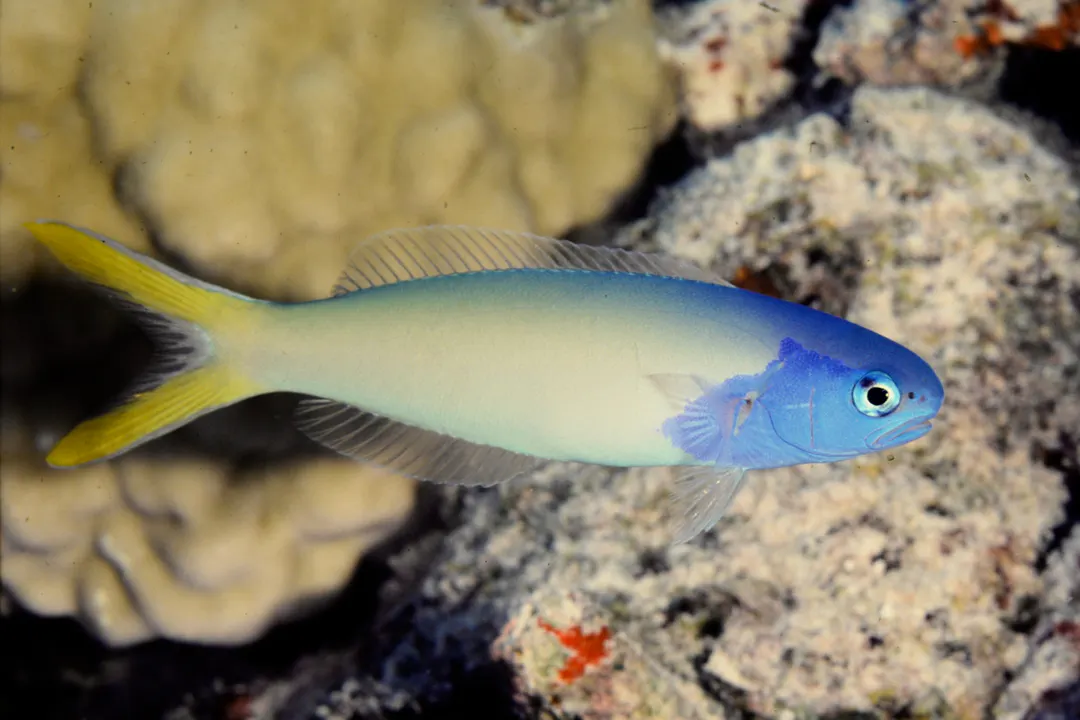
Hoplolatilus starcki
Malacanthus latovittatus
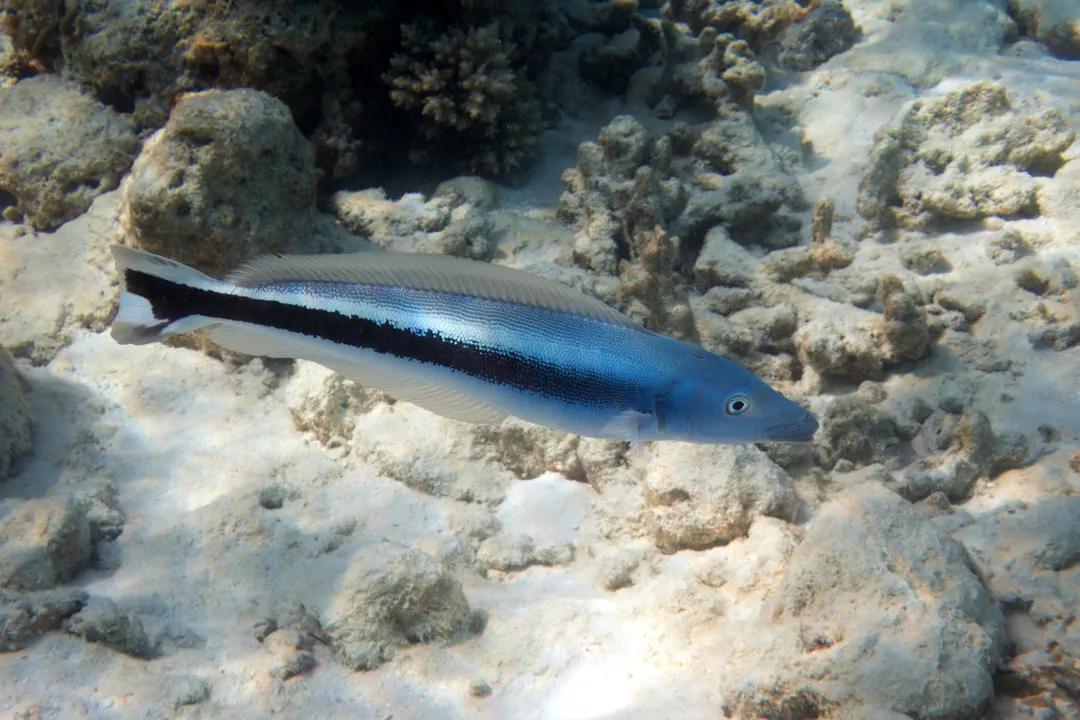
Malacanthus latovittatus is a species of tilefish from the family Malacanthidae. The fish is known to swim at depths of 20–22 metres (66–72 ft) with temperatures of 22–28 °C (72–82 °F).
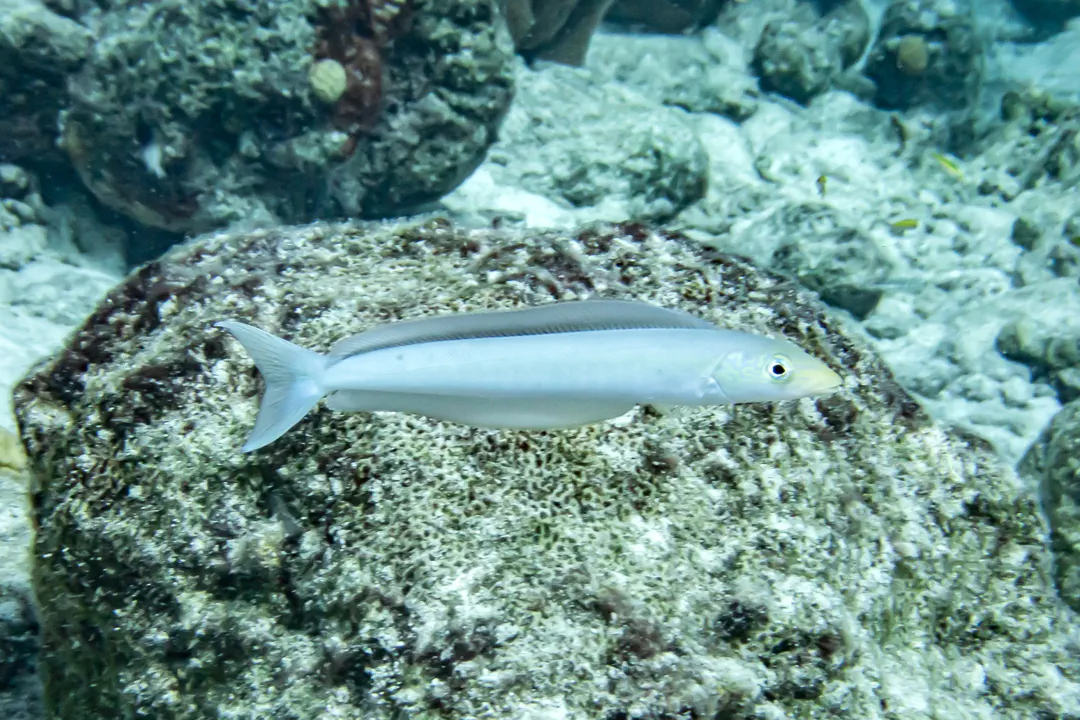
The blue blanquillo is one of the many members of the Malacanthidae family, which are distinguishable by their streamlined bodies and the large crest on their head. The fish is primarily blue, with some shades of yellow, and can change colour in different situations. On their backs, there is a series of stripes that run across its body. Their belly is white and the head colour changes from a light blue to a pinkish mix during spawning season. Max length is 45 cm, common length is 35 cm.
The Blue blanquillo is the only species within the genus Malacanthus, which itself is in the family Malacanthidae, commonly known as tilefish. The Malacanthidae are part of the Percoidea, a suborder of the order Perciformes. Both subfamilies have relatively long dorsal fins and anal fins.
Blue blanquillo fish are commonly found in the Indo-Pacific area, ranging from the Red Sea to the Line Islands, north to southern Japan and south to New Caledonia and the Cook Islands. They are often seen in areas around coral reefs near the sea floor. This particular species gets its name from its bluish coloration.
Malacanthus latovittatus does not swim in schools, they are often found swimming alone or in pairs. They are known to clean other fish, but may mimic the wrasse to inhibit predators from eating it. They tend to swim high above the substrate to pick prey from the substrate with their excellent eyesight.
The blue blanquillo's primary staple is benthic invertebrates or zooplankton, but they also feed on crustaceans such as crabs and shrimp, molluscs, worms, sea urchins and small fish. Their common predators are reef sharks, and other larger fish; they are also eaten by humans.
© Roger RittmasterCC BY 4.0 · iNaturalist 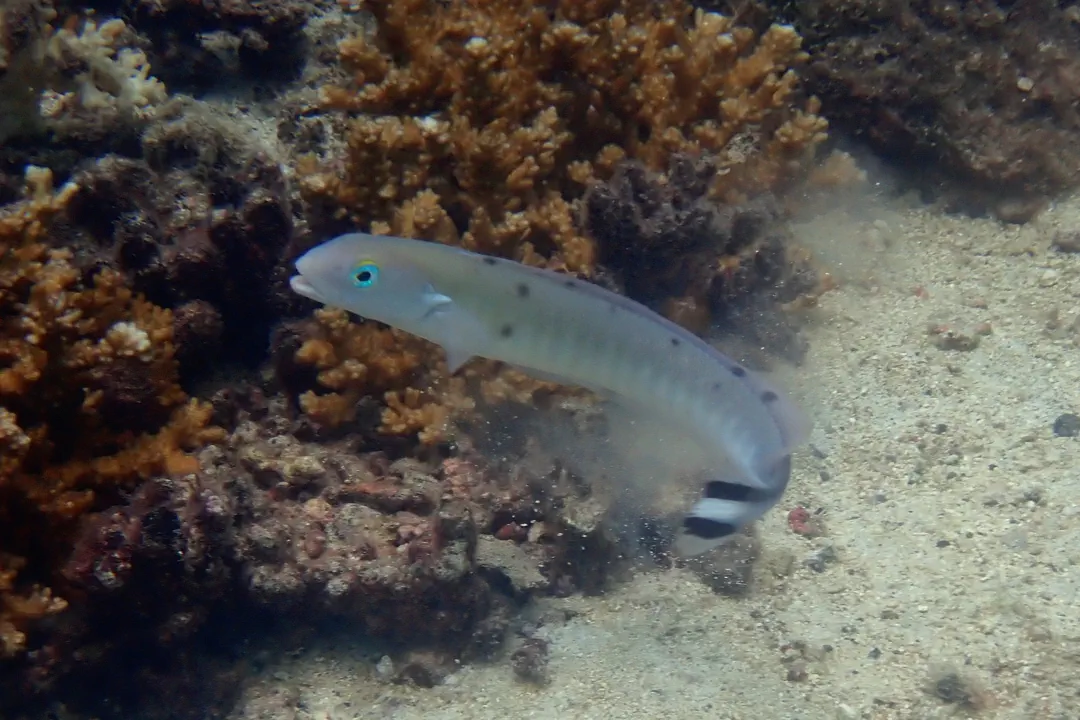 © keesgroenendijkCC BY 4.0 · iNaturalist
  © Jay BrasherCC BY 4.0 · iNaturalist
 Blue Blanquillo has no known danger to humans. However, always observe marine life responsibly.
Blue Blanquillo can be found at depths of up to 65 meters.
Download Seabook free for iOS and Android.