 © Lesley ClementsAll rights reserved
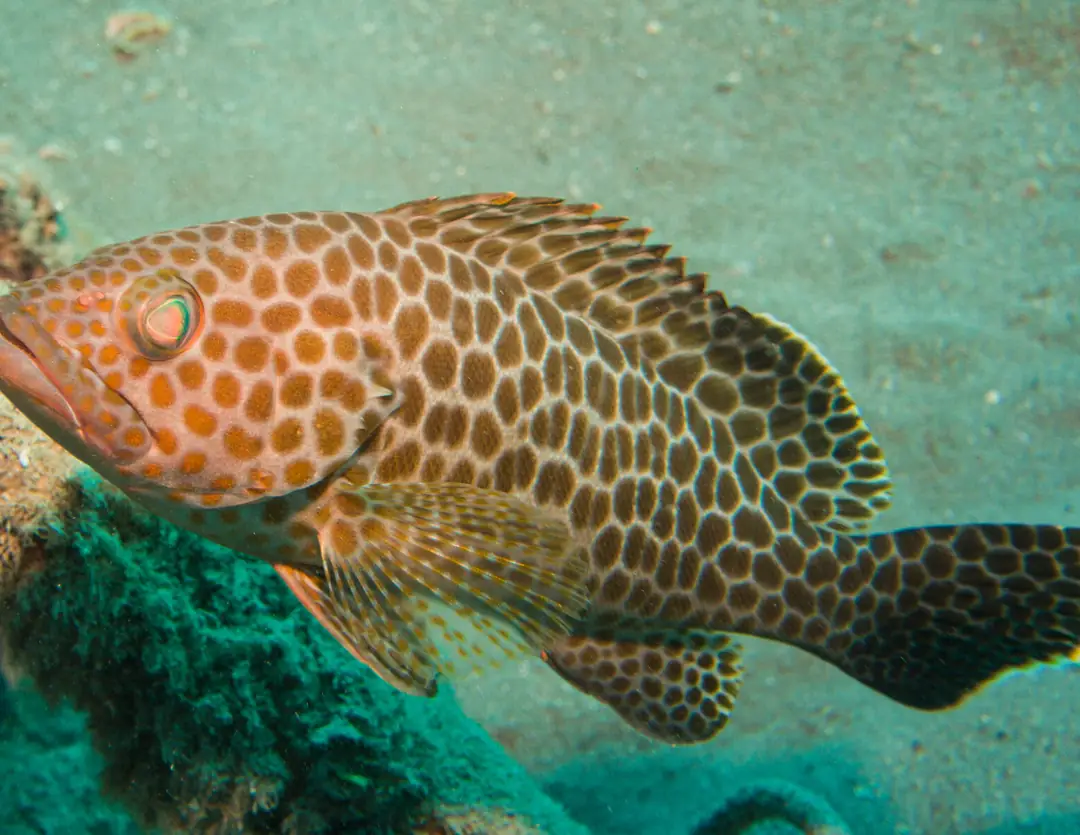
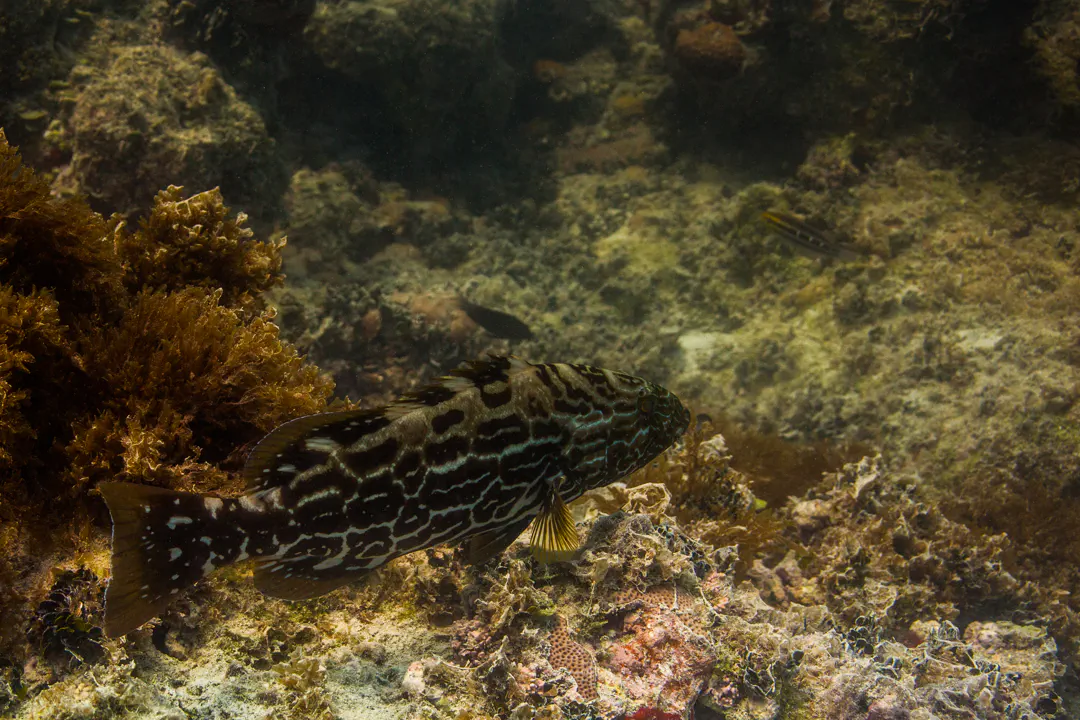
Areolate Rock Cod
Epinephelus areolatus
Cephalopholis cyanostigma
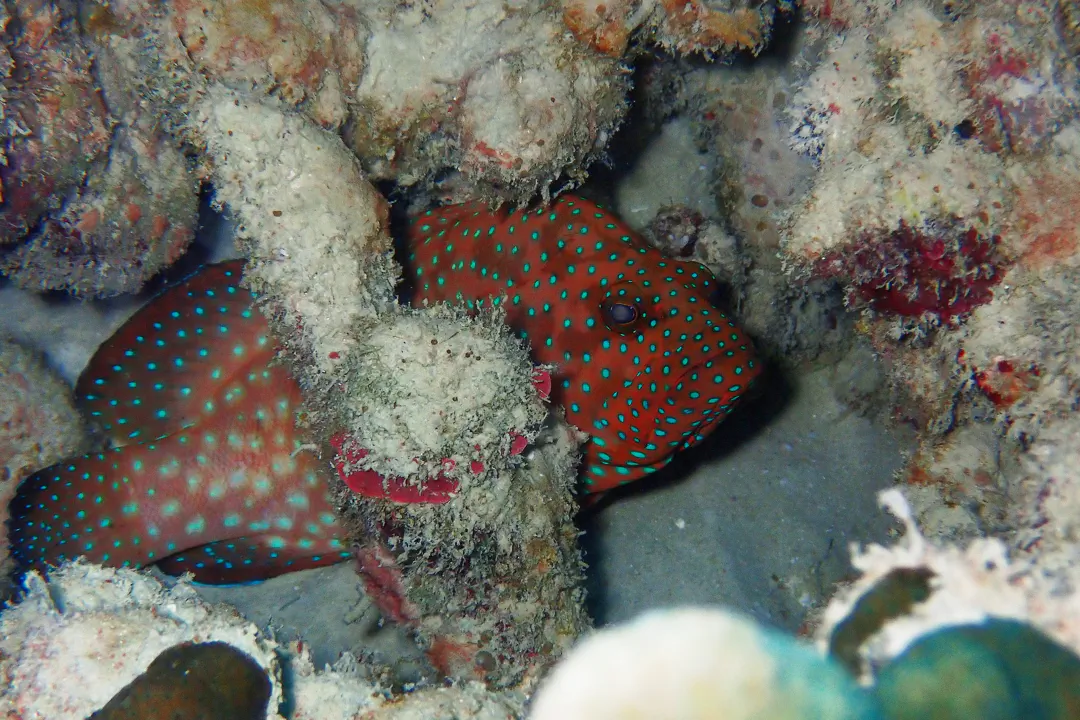
Cephalopholis cyanostigma, known commonly as the bluespotted hind, is a marine grouper belonging to the family Serranidae, found in the tropical western Pacific and Indo-Pacific regions.
Cephalopholis cyanostigma was first described by Valenciennes in 1828, under the original name Serranus cyanostigma, with the type locality being Java. The species name cyanostigma comes from Greek, with cyano- meaning blue and stigma meaning mark or spot, referring to the fish’s many small blue spots. The genus name Cephalopholis is derived from Greek, with kephalē meaning head and pholis meaning scale. Known synonyms and reclassifications include Cephalopholis kendalli Evermann & Seale, 1907, Cephalopholis xanthopterus Allen & Starck, 1975, and a misspelling Epinephelus cyanostigrna, along with the original combination Serranus cyanostigma. WoRMS lists Cephalopholis cyanostigma as the accepted name and treats related historical names as synonyms or prior combinations.
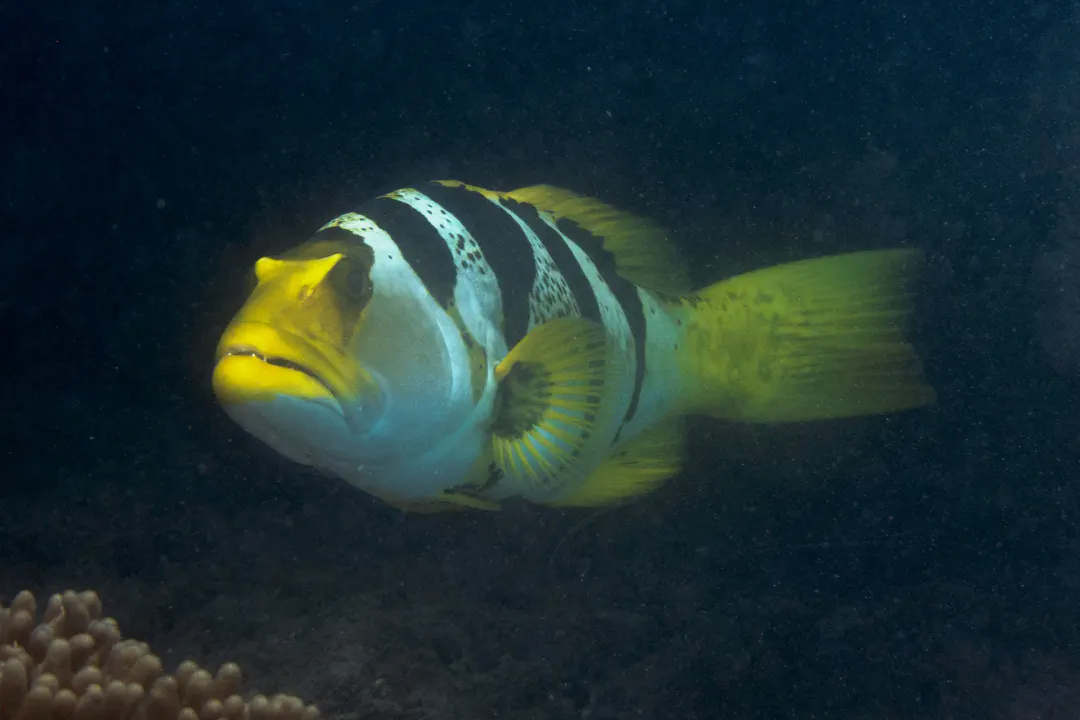
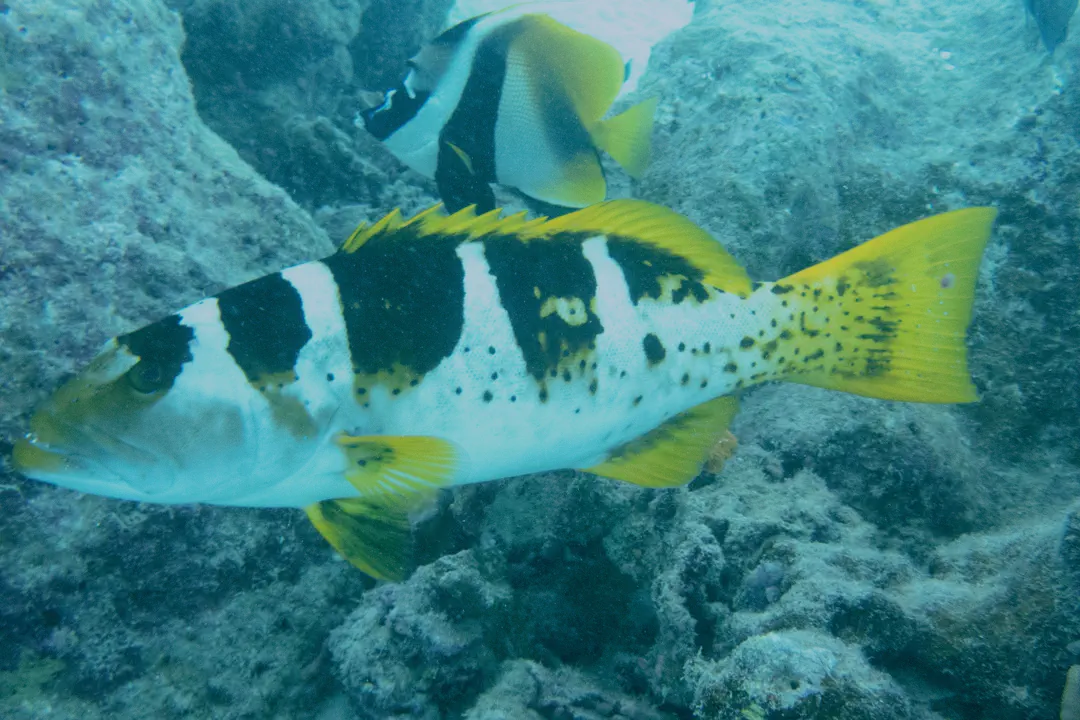
The bluespotted hind has a brown to reddish-brown body with many small blue spots or ocelli, and a rounded tail fin. Adults exhibit a body that is moderately compressed and fairly deep, with a depth about 2.6–3.0 times in standard length. The body, head, and fins of the species carry numerous blue spots that are often dark- or black-edged and may appear with a pale or white halo. Faint or pale bars are present on the sides, sometimes described as chain-like or broken, with larger and more strongly edged spots on the head and chest compared to the body. The caudal fin is rounded, while the pectoral fins can appear orange-yellow distally in adults, and the rear fins may show a blue margin. Juvenile bluespotted hinds are darker brown or bluish-grey to brown, featuring bright yellow dorsal, anal, pelvic, and tail fins that fade as they grow, with blue spots becoming more prominent around 9 cm in length. The bluespotted hind can be distinguished from Cephalopholis argus by having 8 anal-fin rays instead of 9, and by the presence of faint pale bars along the whole body rather than the more obvious 5–6 pale bars concentrated on the rear body. Unlike Cephalopholis miniata, the bluespotted hind has blue spots with greyish margins rather than the cleaner red/orange appearance associated with that species. The combination of a brownish-red base colour, numerous blue ocelli with pale margins, some pale bars, and a rounded caudal fin is key to identifying the bluespotted hind among other spotted groupers.
The bluespotted hind is a reef-associated marine fish that primarily inhabits shallow protected coastal reefs, seagrass beds, and coral-rich areas. Its reported depth range is 1–50 m. The geographic distribution of the species extends across the western Pacific, from the Philippines to Australia, including Palau, New Britain, and the Solomon Islands. In Australia, the bluespotted hind is recorded from north-western Western Australia to the southern Great Barrier Reef and Queensland region.
The bluespotted hind is best described as a crepuscular, mostly solitary reef predator, showing activity across the full 24-hour cycle with peaks around dusk and increased movement at dawn and dusk, while being more subdued at midday. In field and aquarium studies, the species was active over 24 hours, but feeding strikes peaked at dusk and swimming activity increased at dawn and dusk relative to midday. The bluespotted hind is identified as a protogynous hermaphrodite, meaning individuals change sex from female to male at some point in life. Available source summaries describe the species as solitary and highly site-attached or sedentary rather than schooling or strongly social. The provided sources do not give species-specific details on spawning timing, courtship, or pair/harem structure for the bluespotted hind. The search results do not include a direct field study on how the bluespotted hind reacts to divers, but it can be inferred that it may be shy or secretive based on general grouper and soapfish aquarium guidance.
The bluespotted hind is a carnivorous grouper that primarily eats fish, especially small reef and schooling fishes, as well as crustaceans. Its diet is dominated by fish such as cardinalfishes, damselfishes, herrings, and sometimes fusiliers. Invertebrate prey are less important but include caridean shrimps, stomatopods, galatheid crabs, and occasionally a polychaete worm. The species feeds by ambush predation, using a rapid engulfing strike that combines ram and suction feeding. Feeding behavior varies with prey availability and habitat, with a tendency to take more mid-water schooling fish when available. Feeding rates of the bluespotted hind are higher in summer than in winter.
The bluespotted hind is considered a minor-to-local fisheries species and is occasionally sold for food. It is caught using methods such as hook-and-line, spear, and traps, and is probably of importance to artisanal fisheries. The species is not a major aquarium species and is treated as suitable with care rather than being a typical aquarium-trade fish. The bluespotted hind is rated as harmless to humans. The species is currently assessed as Least Concern by the IUCN.
© Lesley ClementsAll rights reserved 
 © Lesley ClementsAll rights reserved
  © João D'AndrettaCC BY 4.0 · iNaturalist
  © Ewout KnoesterCC BY-SA 4.0 · iNaturalist
  © Logan JonesCC BY 4.0 · iNaturalist
 Blue-spotted Rock Cod has no known danger to humans. However, always observe marine life responsibly.
Blue-spotted Rock Cod can be found at depths of up to 50 meters.
Download Seabook free for iOS and Android.