 © Robin WhiteCC BY 4.0 · iNaturalist
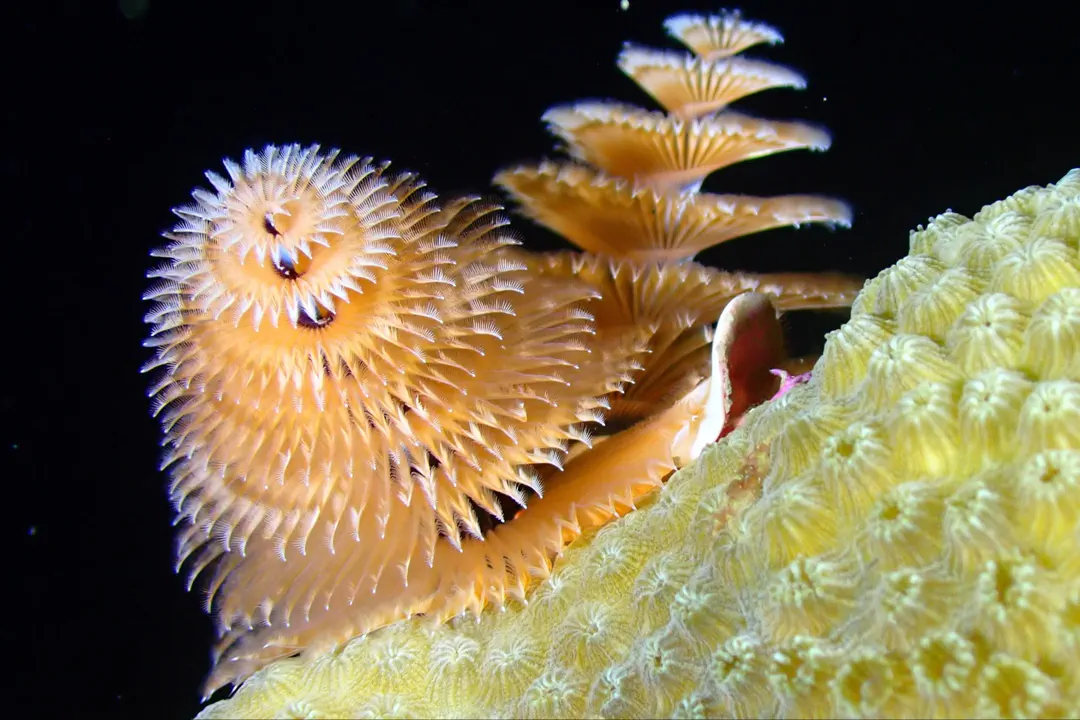
Caribbean Christmas Tree Worm
Spirobranchus giganteus
 © seabook.appAll rights reserved
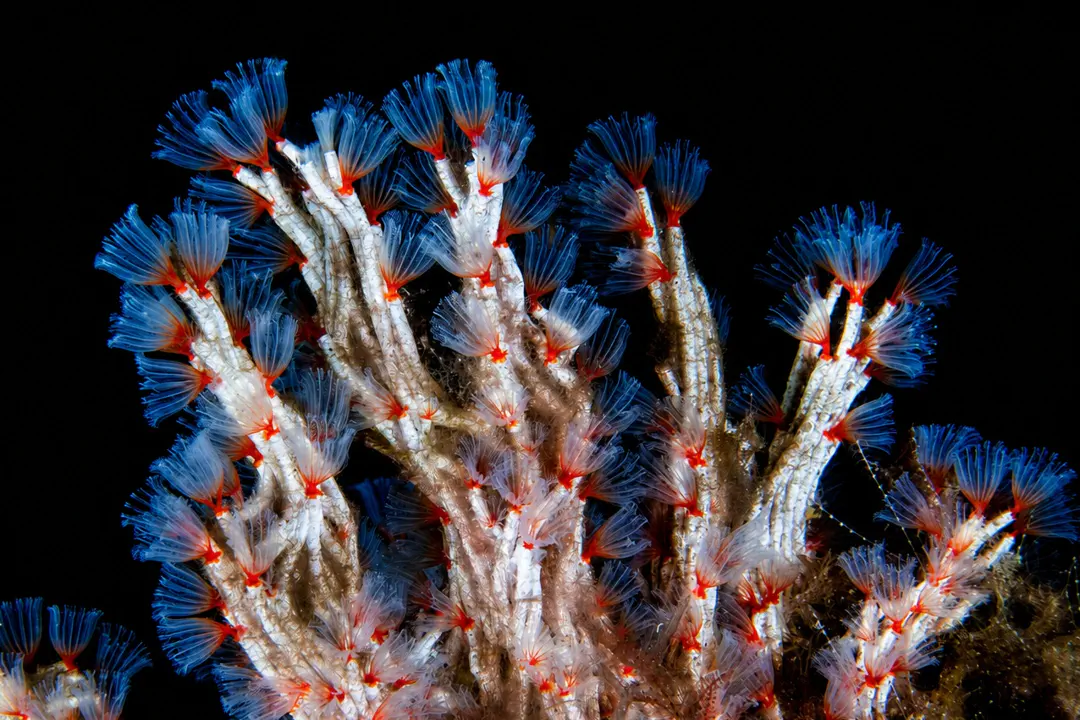
Filogranella elatensis
Filogranella elatensis is a brushworm from the Serpulidae family. The worm's body consists of a head, a cylindrical, segmented body and a tail piece. The head consists of a prostomium (part for the mouth opening) and a peristomium (part around the mouth) and carries paired appendages. Tube worms with bright red plumes, gradually turning pale towards the ends. The plumes extend from thin white and clustered calcareous tubes.
It consists of dozens of similar rigid tubes sheltering serpulid worms. The worms use their exposed tentacles to catch drifting bits of food. They are extremely sensitive to changes in light and will withdraw completely within a split second if disturbed. The tubes are small, with an inner diameter of a pencil lead, and are usually found in shaded areas underneath coral heads, out of direct sunlight.
Distribution: Western Indian Ocean: Red Sea, the Gulf of Aqaba
The plume are 2,5 cm. in diameter, the tubes can grow much longer.
They attach to hard substrates such as rocks and boulders, but are also seen in harbors and pier pilings, in overhangs and under coral heads, starting at 5 meters and down to considerable depths, well beyond the dive limit.
The Red colonial Tube Worm individual is rather small, but are found in large colonies. Found under rock edges in water deeper than about 5 feet. They have bright red radioles with a white tube. These are not to be confused with the Giant Red Tube Worms found at the deepest depths of the ocean living near hot springs.
Members of the class Polychaeta are mostly gonochoric (sexual). Mating: Females produce a pheromone attracting and signalling the males to shed sperm which in turn stimulates females to shed eggs, this behavior is known as swarming. Gametes are spawned through the metanephridia or body wall rupturing (termed as "epitoky", wherein a pelagic, reproductive individual, "epitoke", is formed from a benthic, nonreproductive individual, "atoke"). After fertilization, most eggs become planktonic; although some are retained in the worm tubes or burrowed in jelly masses attached to the tubes (egg brooders). Life Cycle: Eggs develop into trocophore larva, which later metamorph into juvenile stage (body lengthened), and later develop into adults.
© Robin WhiteCC BY 4.0 · iNaturalist 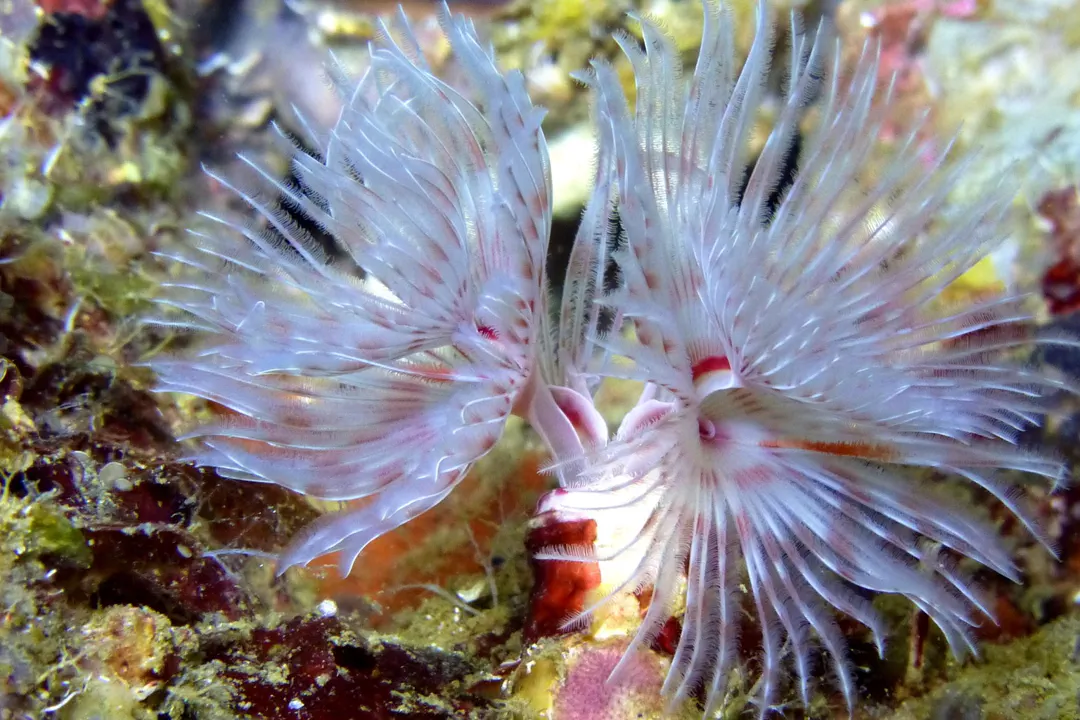 © Kai SquiresCC BY 4.0 · iNaturalist
 Delicate Tube Worm has no known danger to humans. However, always observe marine life responsibly.
Download Seabook free for iOS and Android.