 © Trevor Van LoonCC BY 4.0 · iNaturalist
Black Seahare
Aplysia vaccaria
Dolabella auricularia
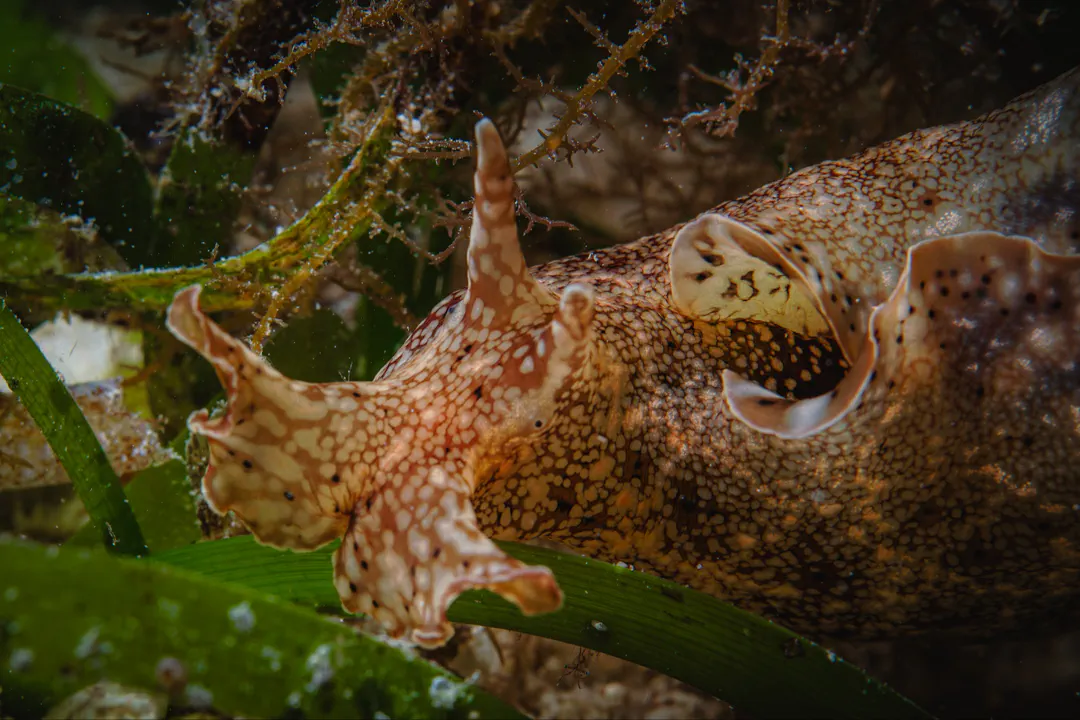
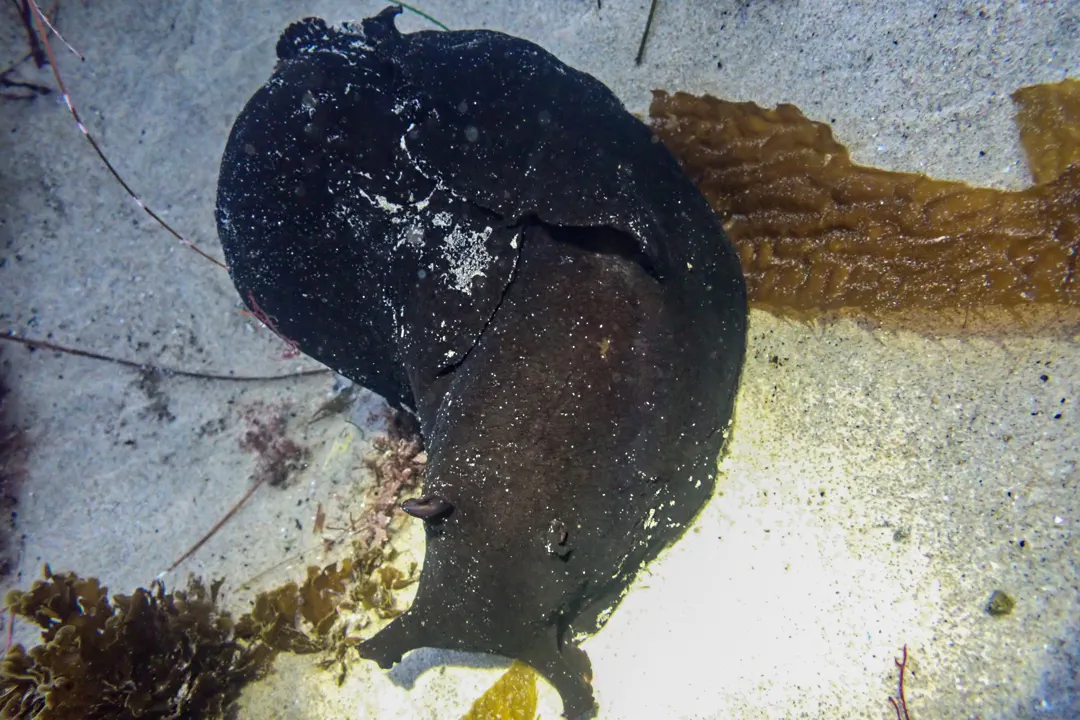
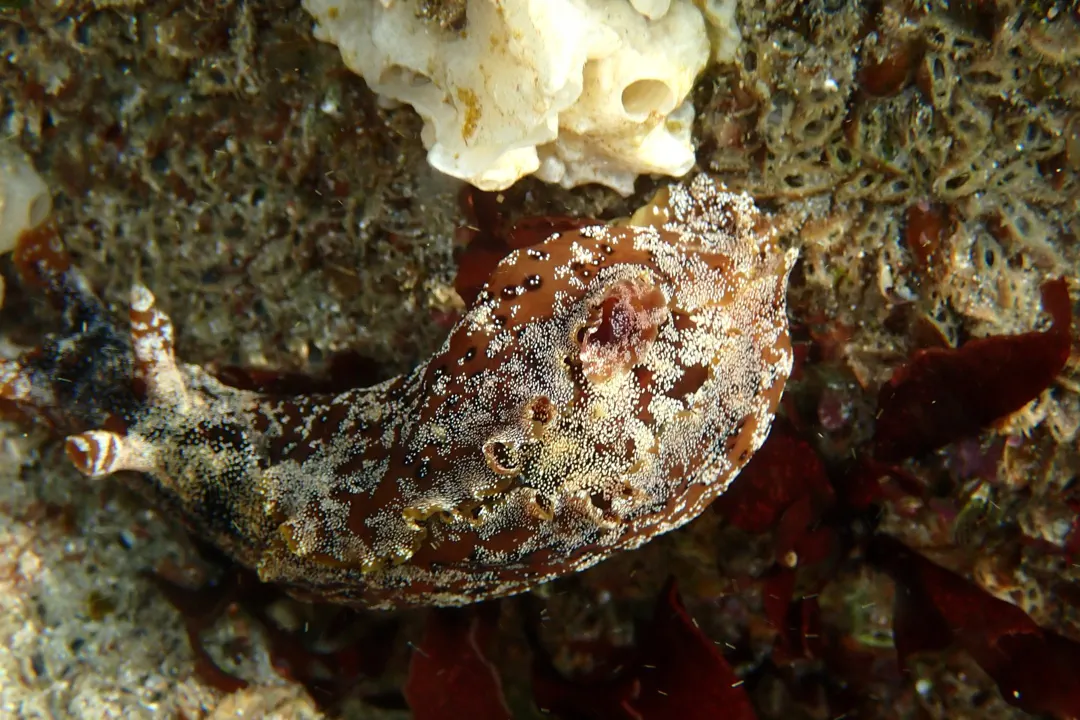
Dolabella auricularia is a species of large sea slug, a marine opisthobranch gastropod mollusk in the family Aplysiidae, the sea hares.
Dolabella auricularia is a rather large species. It can reach a length of 40 cm. It can be recognized by a flattened disk on the posterior surface of the animal. This species can be found with soft pustules, leading to a rather knob-like appearance. It has a short, blunt head. Its body is covered with tubercles and skin flaps. The inner shell has a typical earlike form. It gives off purple ink when disturbed.
Dolabella auricularia can be found in the Indian Ocean, Western and NW Pacific.
This sea hare lives in areas that are sheltered from rough currents. They will often hide in seagrass, sand and mud, feeding on algae. Intertidal rock pools are also a favoured place to live.
Dolabella auricularia is sometimes used by the keepers of large marine farms aquaria, to keep algal growths in the tank down, because the sea hare feeds on them. In the Philippines the eggs of the Sea Hare which they call a Donsol are eaten as a delicacy. This delicacy is called in the Philippines Lukot or Lokot.
The anti-cancer agent monomethyl auristatin E is derived from peptides found in D. auricularia.
© Trevor Van LoonCC BY 4.0 · iNaturalist 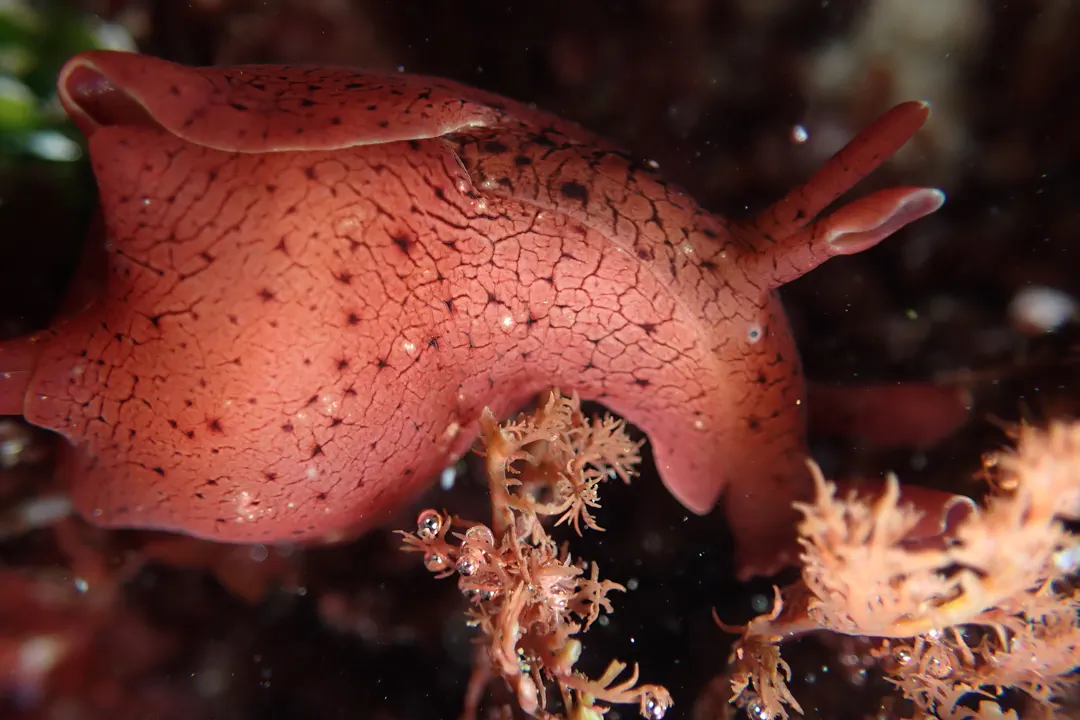 © Lisa BiasilloCC BY 4.0 · iNaturalist
  © Ben JobsonCC BY 4.0 · iNaturalist
 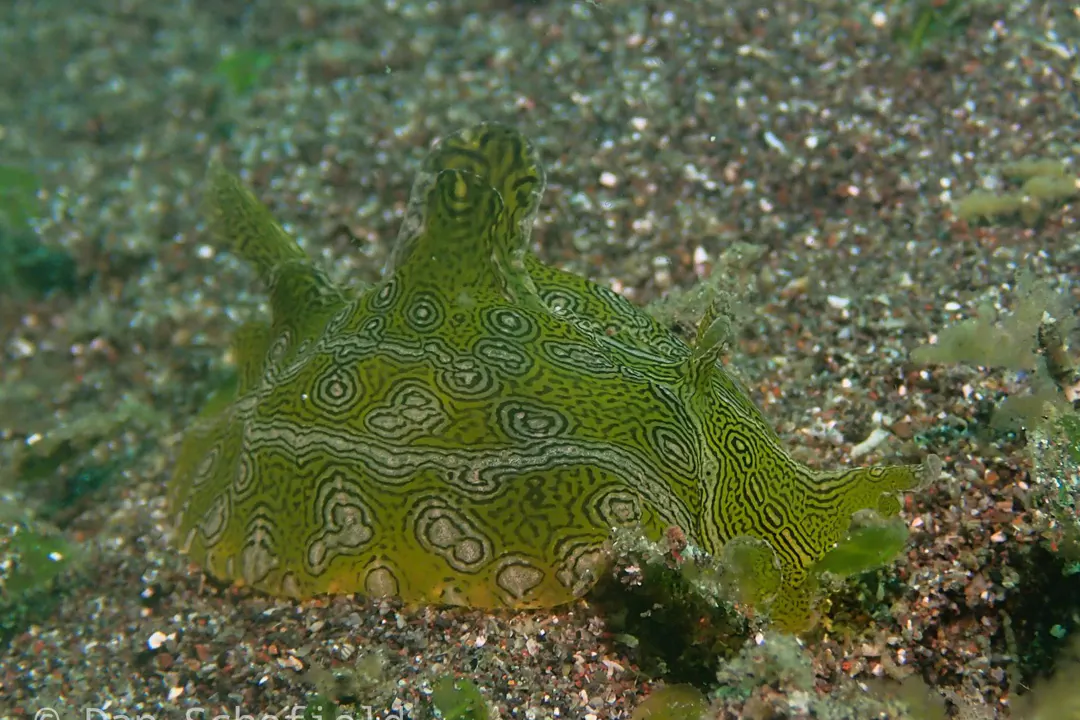 © coenobitaCC BY 4.0 · iNaturalist
 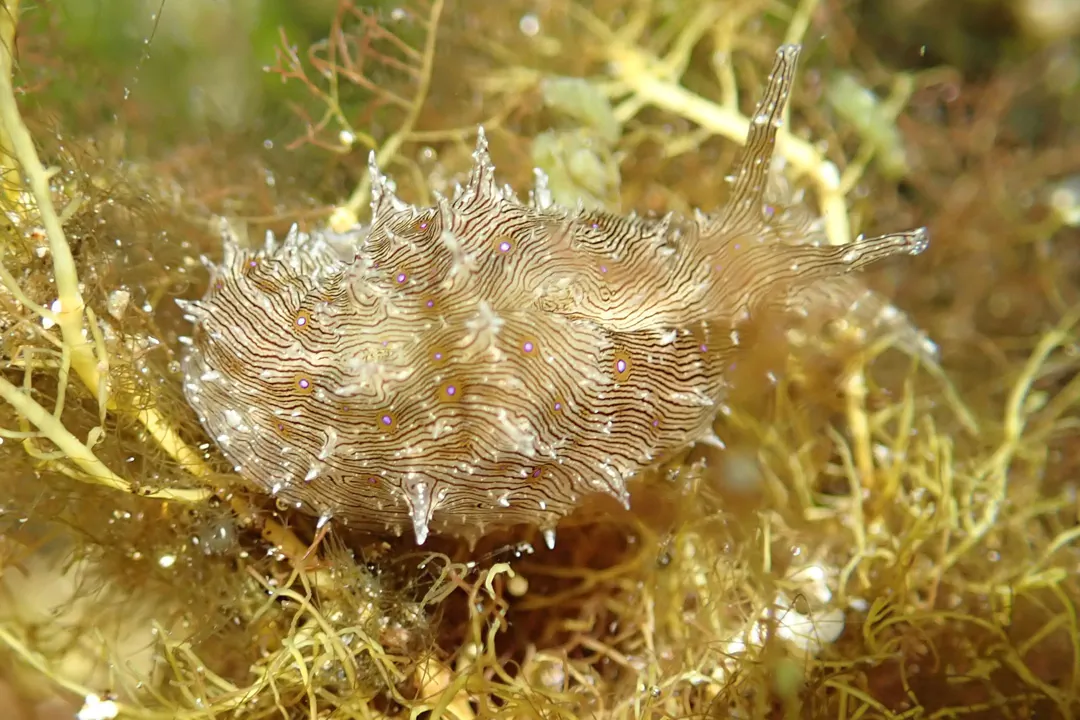 © libby hepburnCC BY 4.0 · iNaturalist
 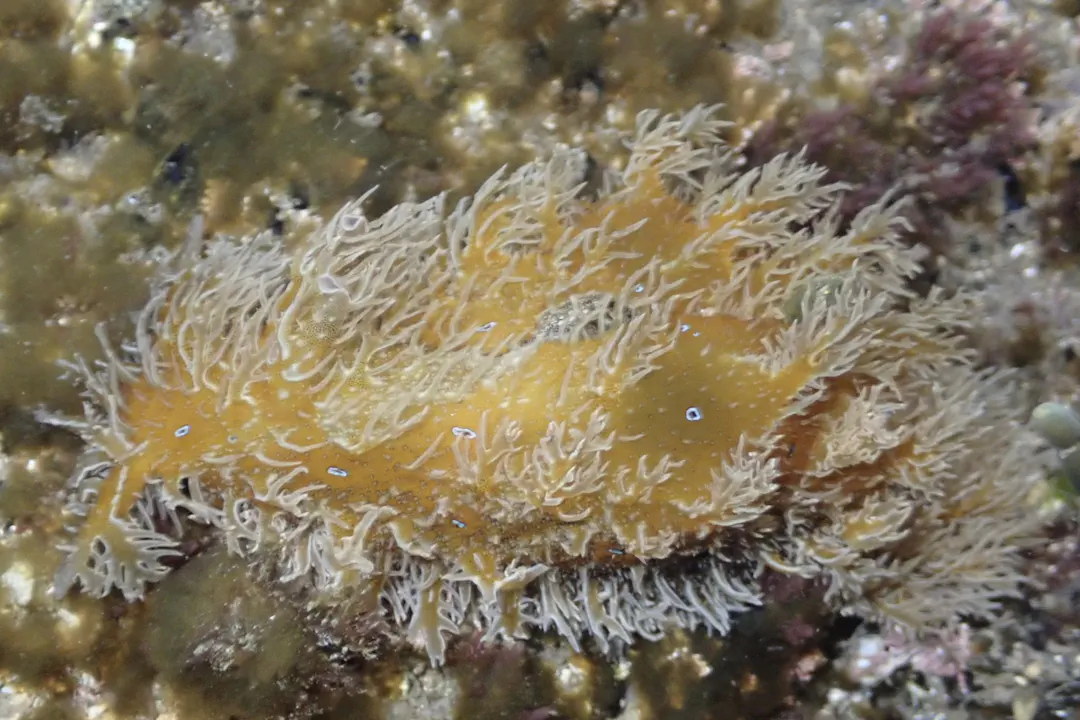 © libby hepburnCC BY 4.0 · iNaturalist
 Blunt-end Sea Hare has no known danger to humans. However, always observe marine life responsibly.
Download Seabook free for iOS and Android.