 © Ian ShawAll rights reserved
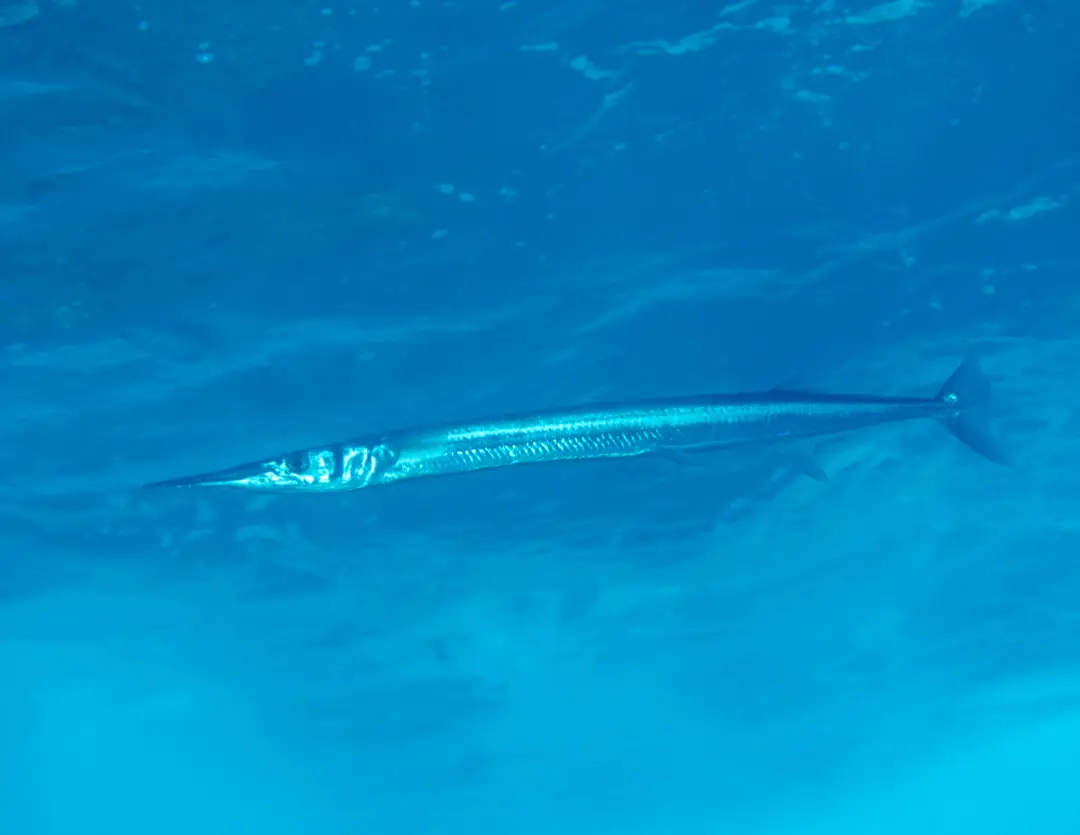
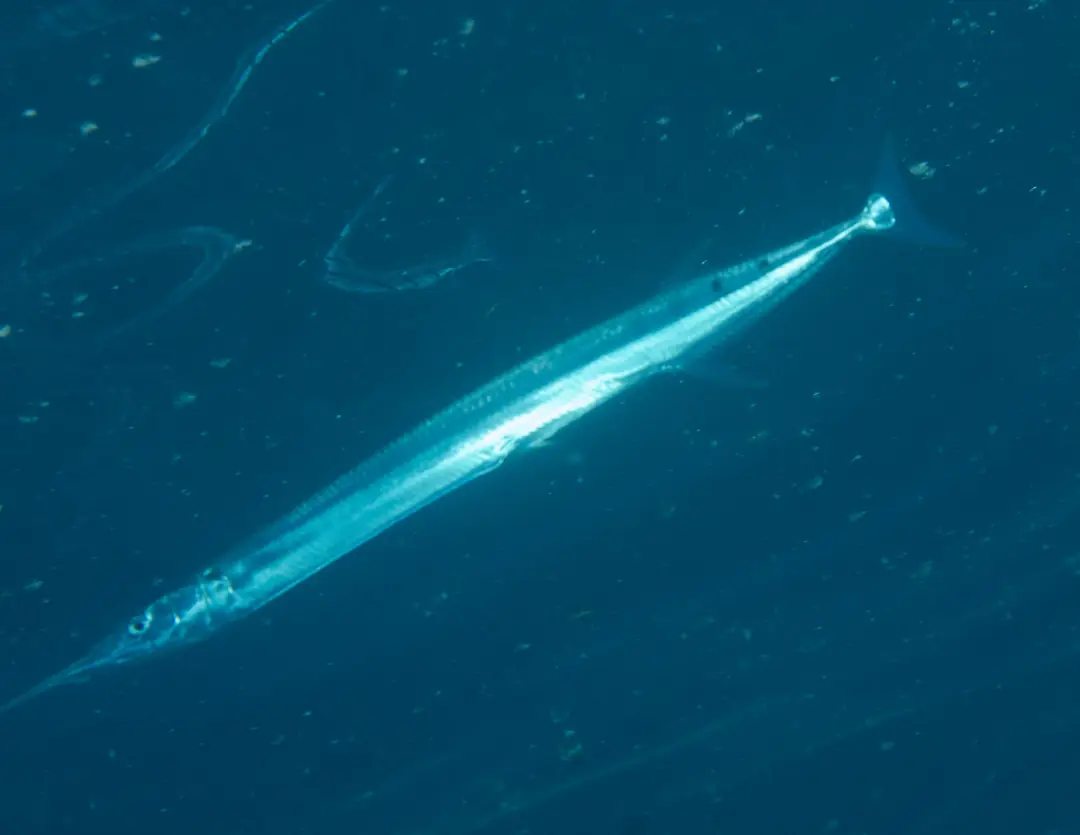
Barred Long-tom
Ablennes hians
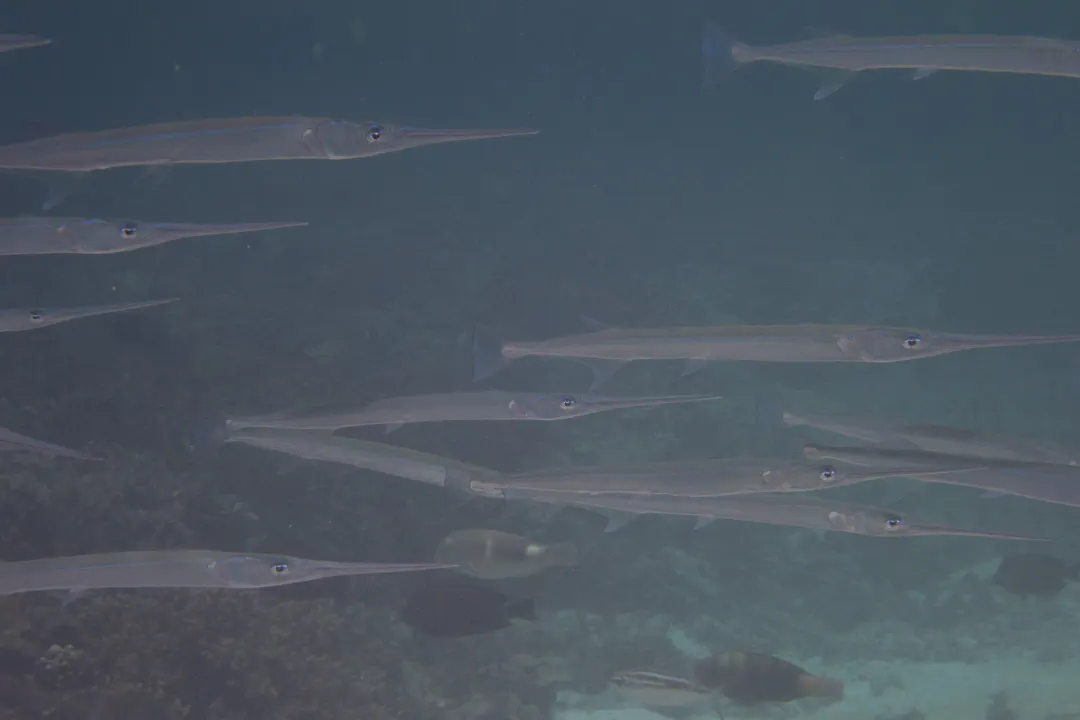
Tylosurus gavialoides
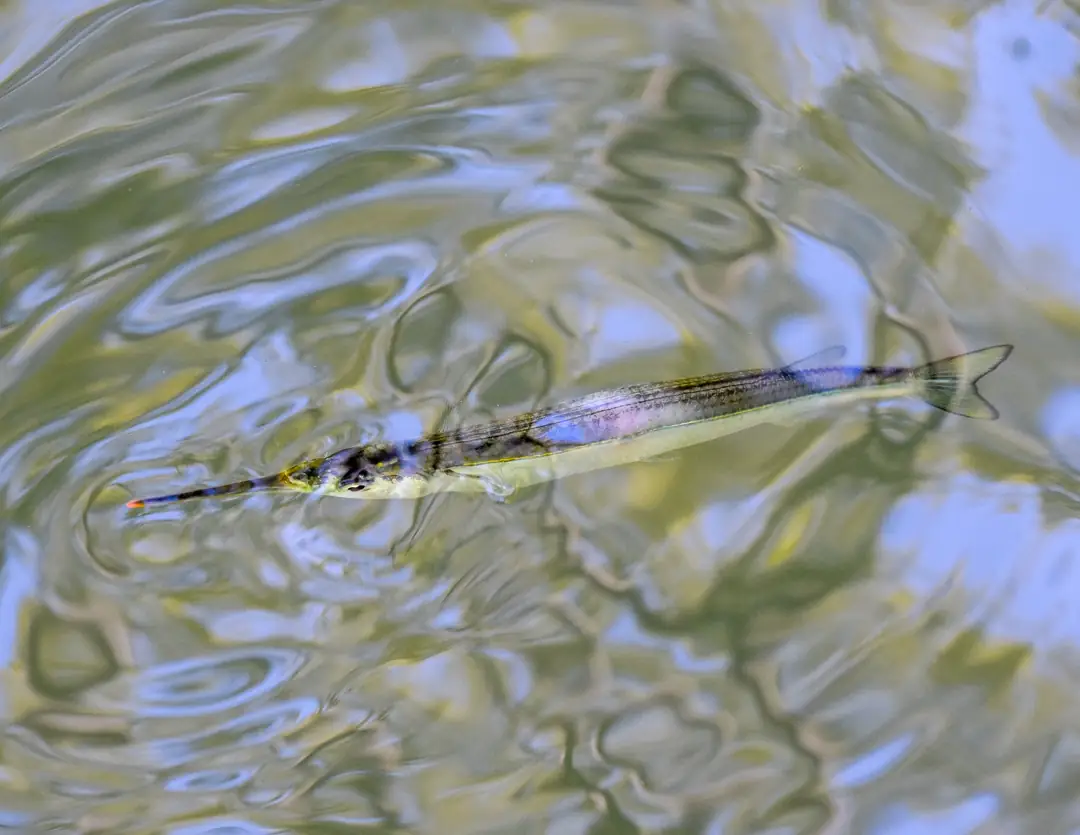
Dorsal fin 20-22; Anal fin 18-23. Body and caudal peduncle sub-cylindrical; jaws greatly produced, teeth on inner row, short and strong,teeth reduced on the outer row. Body covered in minute, somewhat deciduous scales; lateral-line positioned low on body. Dorsal and anal fins elevated anteriorly, positioned on rear of body with dorsal-fin origin slightly anterior to anal-fin origin, and both fins are elevated anteriorly; pelvic fins abdominal, placed posteriorly, distance from anal fin less than the length of fin base; caudal fin truncate, with centre slightly emarginated in adult.
The Stout Longtom is large, robust blue, green to gray longtom becoming silvery below, with dusky fins and snout, and a truncate to slightly emarginate caudal fin with the lower lobe noticeably longer than the upper lobe.
Endemic to tropical and subtropical waters of Australia, from Perth, Western Australia, around the tropical north to Mallacoota, Victoria. This pelagic species occurs around coral and rocky reefs, and also enters estuaries.
© Ian ShawAll rights reserved 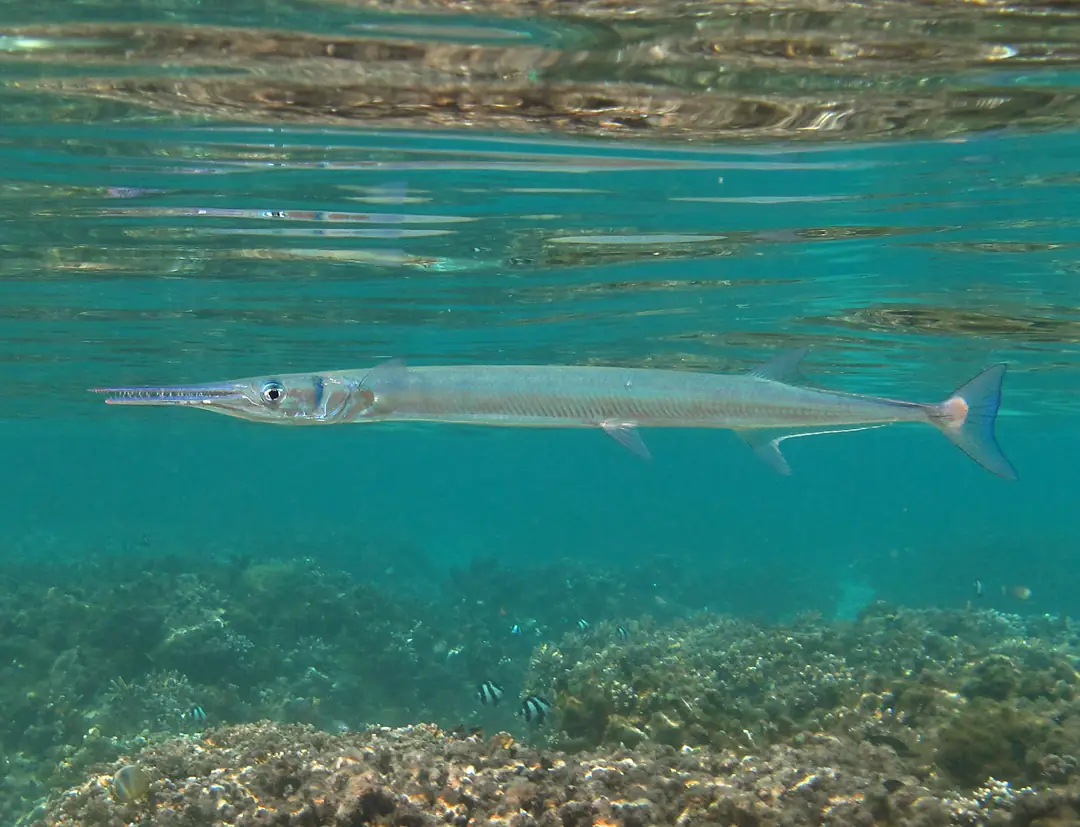 © Philippe BourjonCC BY-SA 4.0
  Justin PhilboisCC0 · iNaturalist
  © nick_rogersAll rights reserved
 Stout Long-tom has no known danger to humans. However, always observe marine life responsibly.
Download Seabook free for iOS and Android.