 © Ditch TownsendCC BY-SA 4.0 · iNaturalist
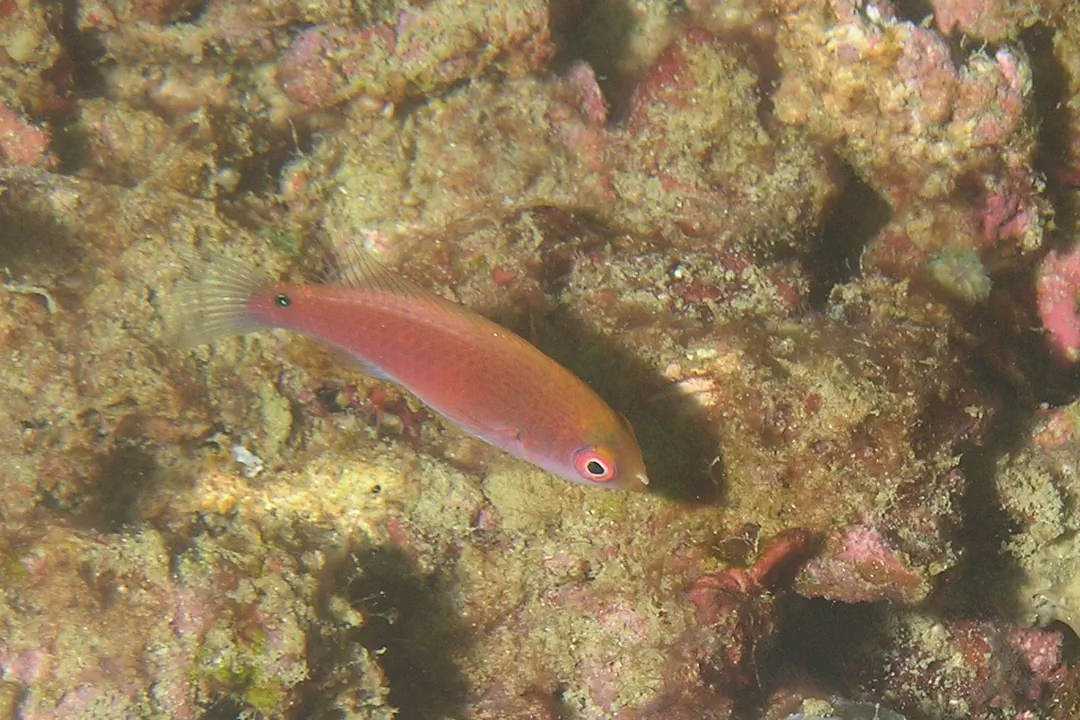
Blueside Wrasse (female)
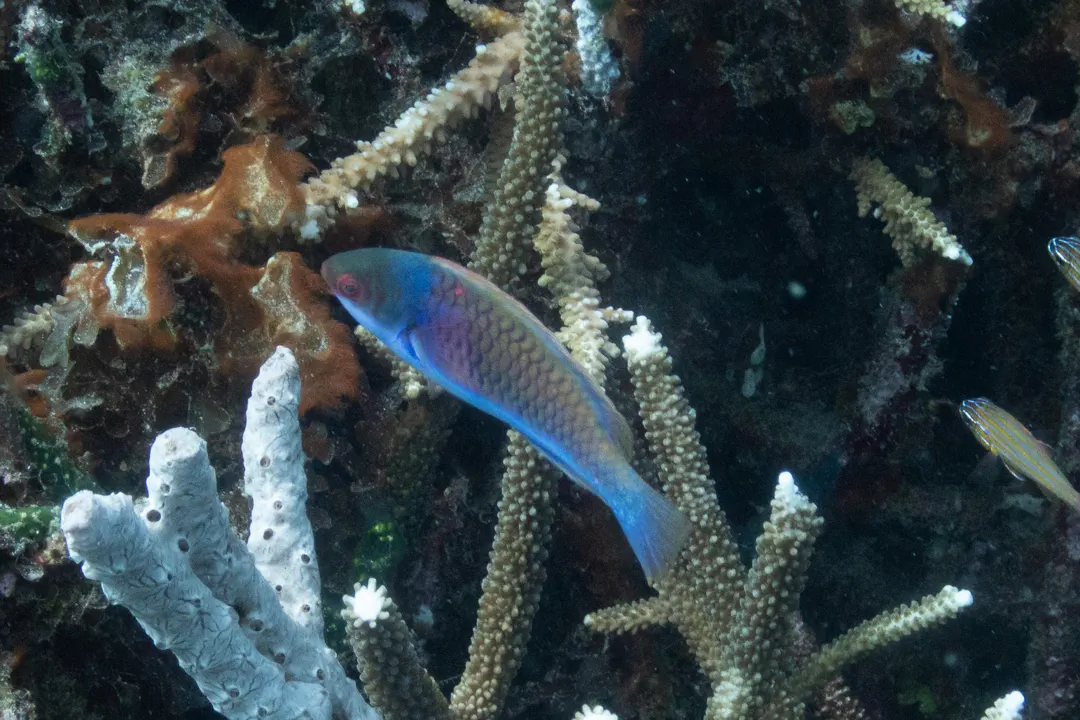
Cirrhilabrus cyanopleura
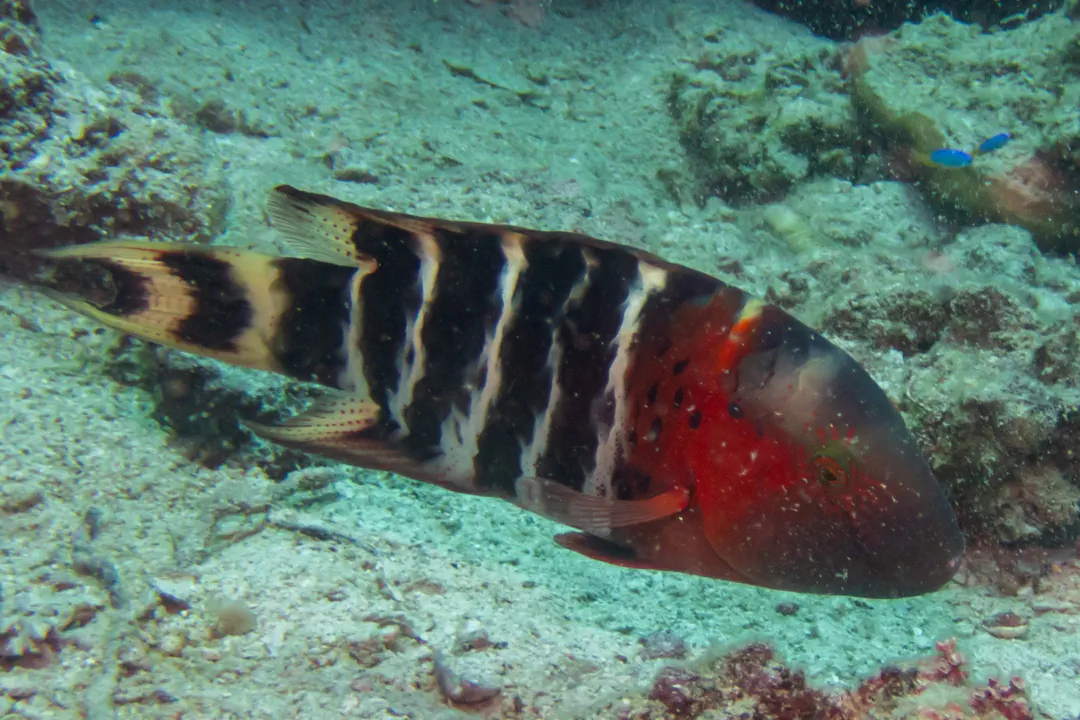
Cheilinus fasciatus
The Red-Breasted Wrasse (Cheilinus fasciatus) is a species of wrasse native to the Indian Ocean and the western Pacific Ocean.
This species can reach a maximum of 40 cm (16 in) in standard length. Terminal phase fishes generally have a more pronounced red band and convex forehead than initial phase and juvenile fish.
Dorsal spines (total): 9; Dorsal soft rays (total): 10; Anal spines: 3; Anal soft rays: 8. This species is distinguished by the following characters: body moderately deep, its depth 2.35 to 2.6 times in standard length; dorsal profile of head convex; anterior tip of snout forming an acute angle; jaws prominent, especially lower jaw in large individuals; strong canines 2, situated anteriorly in each jaw; no enlarged tooth present on rear of upper jaw; D IX,10, continuous with spines and anterior soft rays of similar length; A III, 8; pectoral fins with ii unbranched and 10 branched rays; pelvic fins short, not reaching anus; caudal fin rounded in juveniles, the upper and lower rays forming elongate lobes in large individuals, giving the fin a trilobed appearance. Lateral line interrupted below posterior portion of dorsal-fin base, with a total of 22-23 pored scales; scales reaching well onto bases of dorsal and anal fins; scales in front of dorsal fin extending forward to above anterior portion of eye; cheek and opercle scaly; lower jaw without scales. Colour of fish with alternating dark (brown to black) and light (yellow to white) vertical bars on body from opercle to caudal fin, 6 dark bars usually broader than 6 light ones, particularly in large individuals; scales with a vertical black streak; breast, pectoral-fin bases, and often anterior sides red; a light yellow-orange area in pectoral region; the small individuals are similarly marked, but often with less red colour and wider pale bars. Its head is greenish-blue, followed by a distinctive red-orange band followed by black and white stripes.
The red-breasted wrasse is native to the tropical waters of the Indo-Pacific region from the Red Sea and the African coast to the islands of the western Pacific.
The red-breasted wrasse lives in lagoons and seaward reefs in areas mixing rubble, coral, and sand at depths of from 4 to 60 m (13 to 197 ft) though rarer below 40 m (130 ft).
It feeds mainly on crustaceans, sea urchins, hard-shelled invertebrates, and mollusks.
© Ditch TownsendCC BY-SA 4.0 · iNaturalist 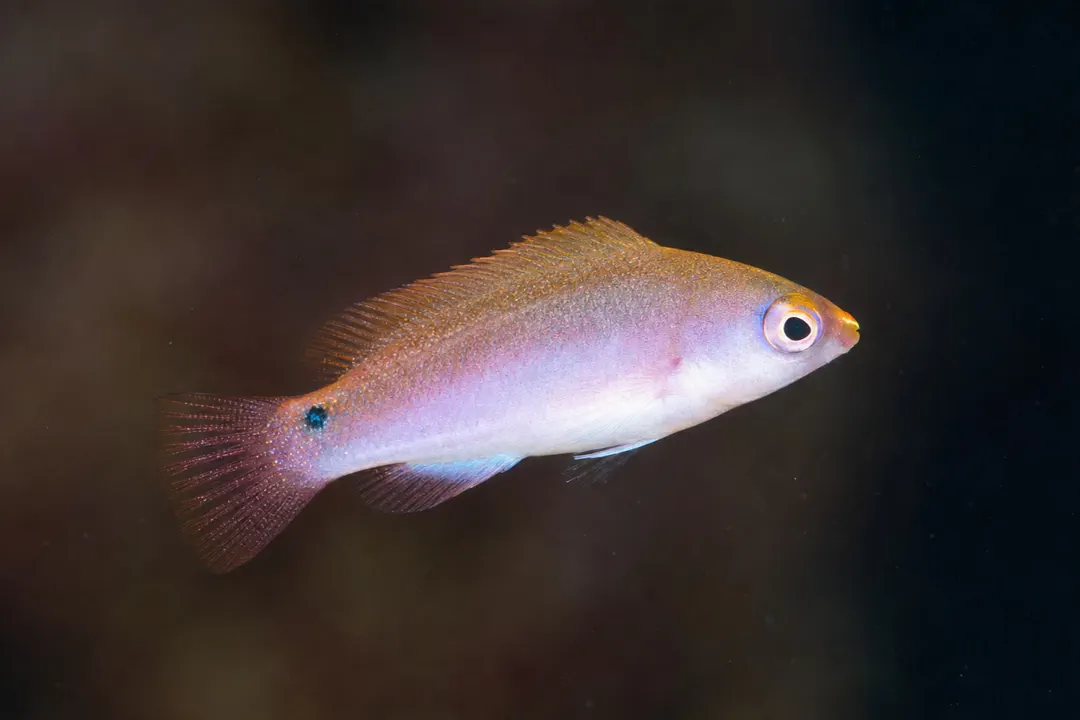 © seabook.appAll rights reserved
  Justin PhilboisCC0 · iNaturalist
 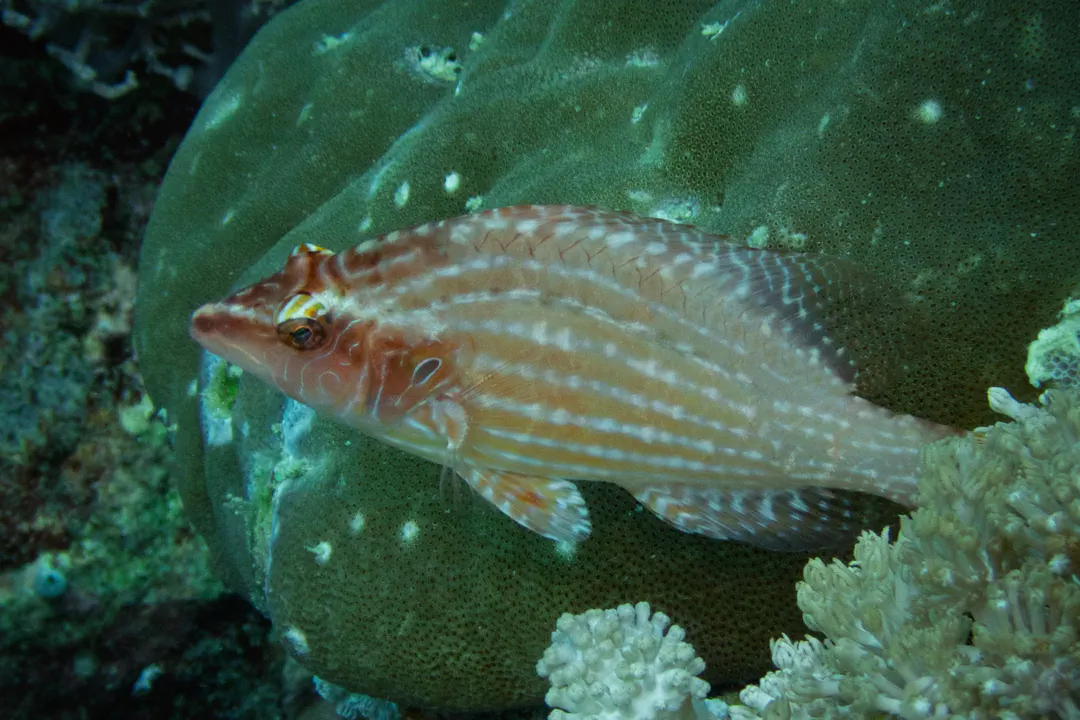 © Pierre PericardCC BY 4.0 · iNaturalist
 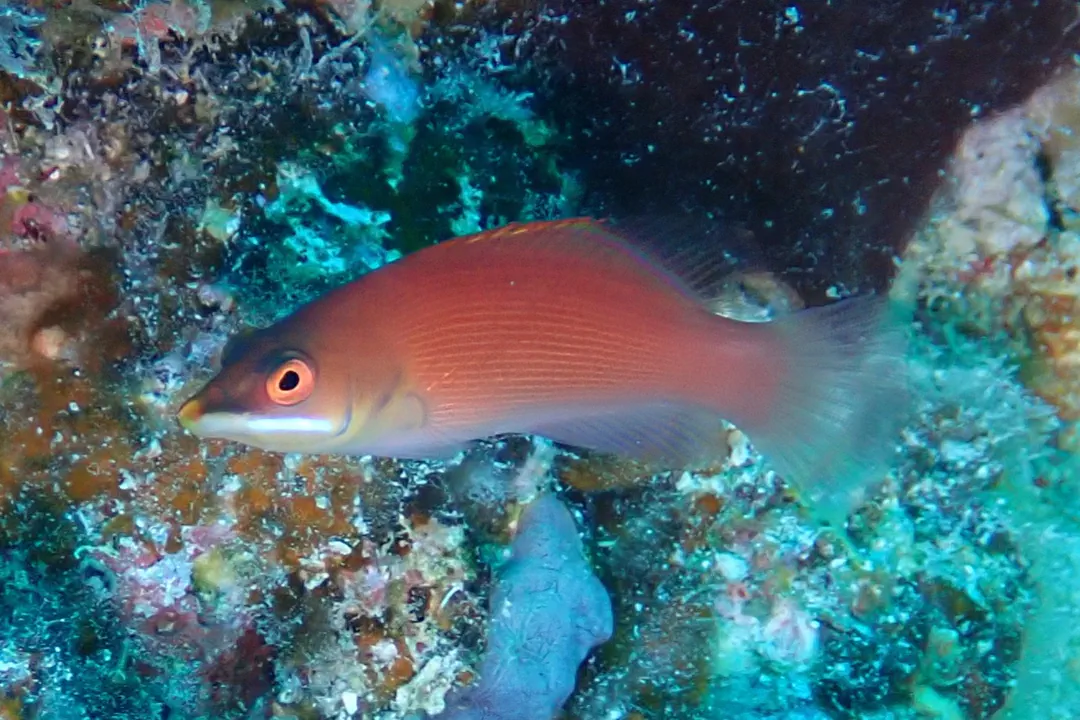 © Debra BakerCC BY 4.0 · iNaturalist
  © Debra BakerCC BY 4.0 · iNaturalist
 Redbreast Maori Wrasse has no known danger to humans. However, always observe marine life responsibly.
Redbreast Maori Wrasse can be found at depths of up to 80 meters.
Download Seabook free for iOS and Android.