 © Heather Dawnstar SabinCC BY 4.0 · iNaturalist
Barred Thicklip (female)
Hemigymnus fasciatus
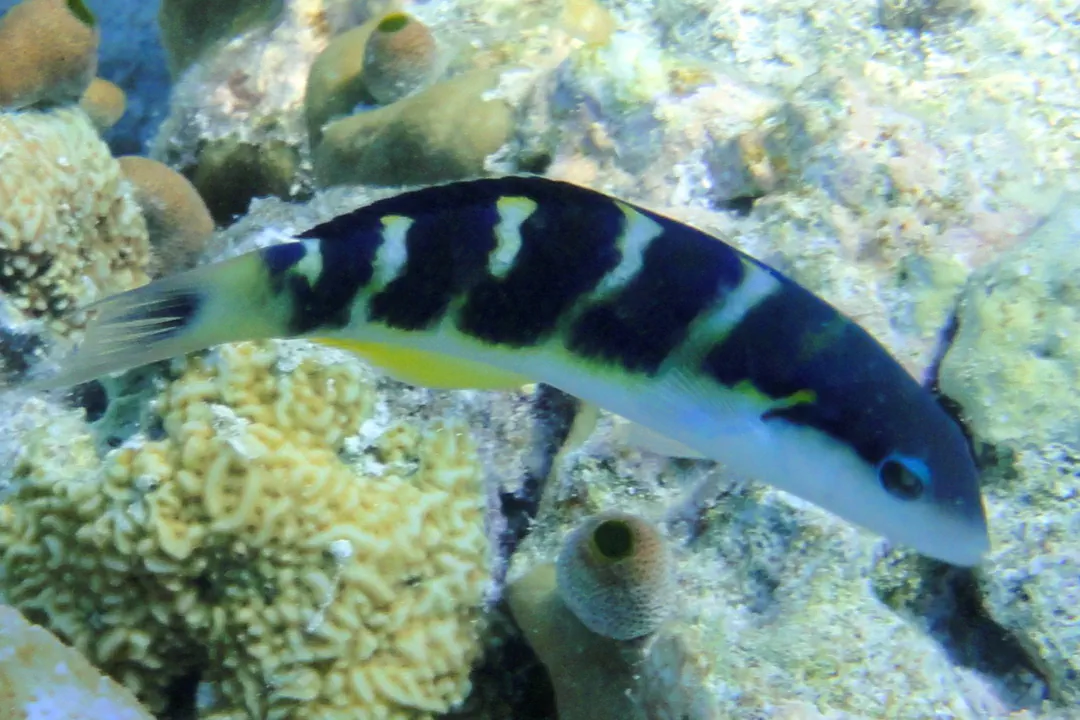
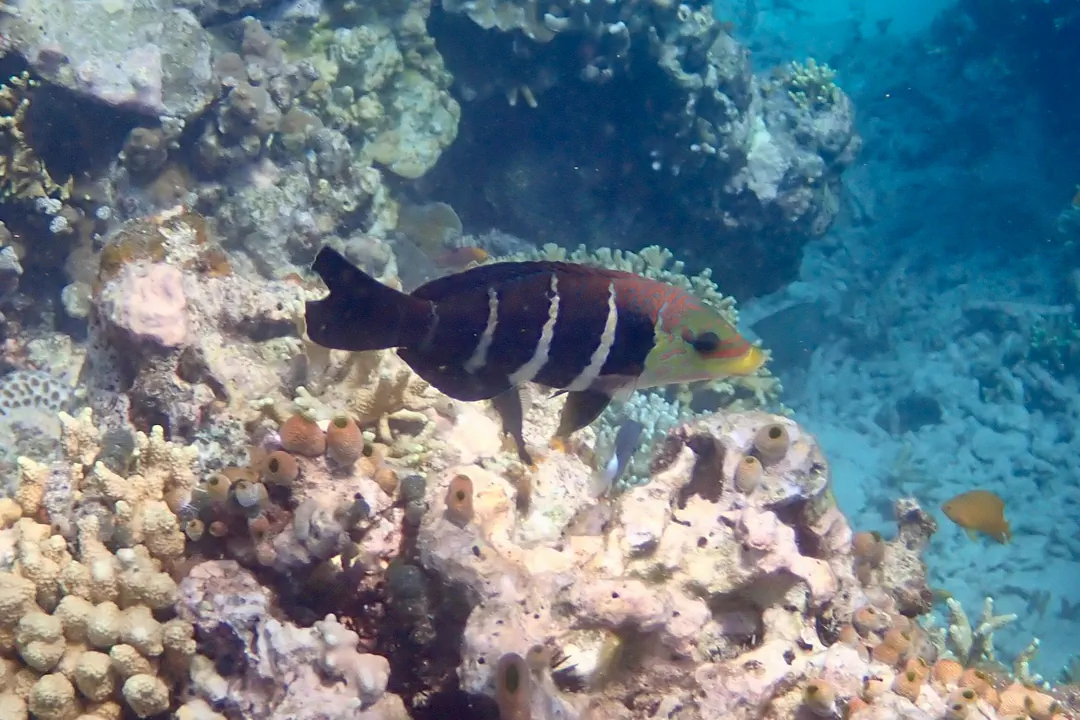
Thalassoma jansenii
Thalassoma jansenii is a species of wrasse native to the Indian Ocean and the western Pacific Ocean. It is a reef inhabitant, preferring rocky areas, and can be found at depths from 1 to 15 m (3.3 to 49.2 ft). This species can grow to 20 cm (7.9 in) in total length. Like many other coral reef wrasses, this species swims actively over the reef using solely their pectoral fins for thrust (known as labriform locomotion). It can also be found in the aquarium trade.
Often confused with the related Blackbarred Wrasse, Thalassoma nigrofasciatum, which occurs on the Great Barrier Reef and islands and reefs in the Coral and Tasman seas.
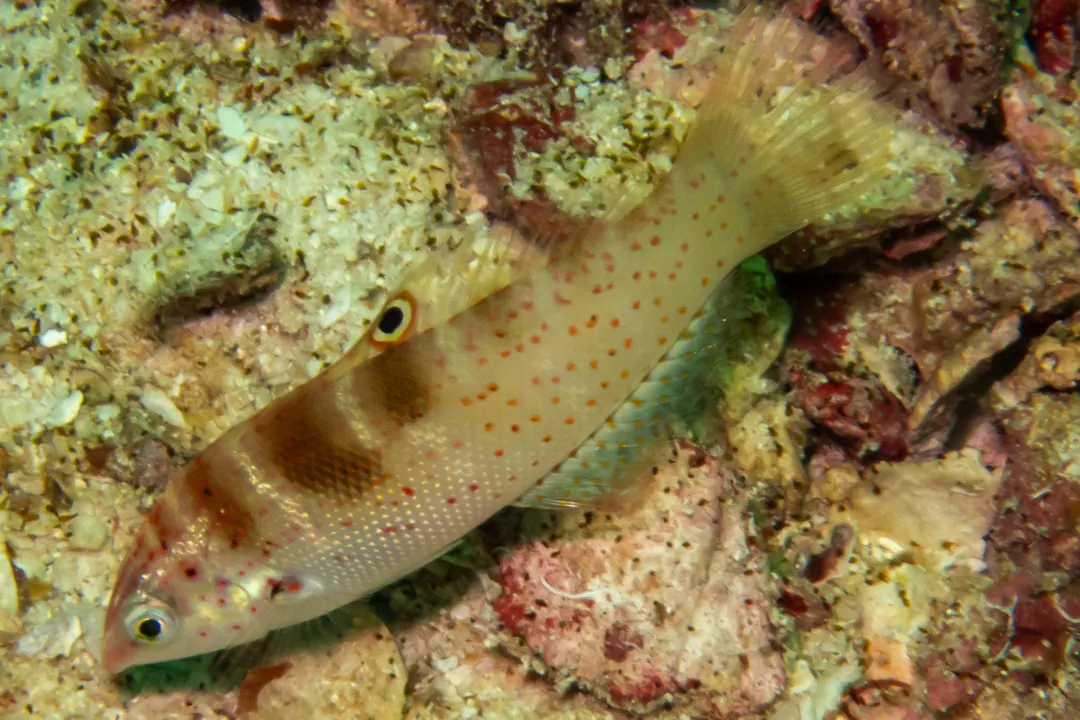
Color pattern remains similar throughout life. Large juveniles and females are mostly black with a single white band and white area below the head to the anus. Males retain the white central band but is more yellow, and develops a second narrow band halfway towards the head. Initial phase white with 3 black bars, the first on upper half of head and anterior body containing a yellow streak at edge of opercle, the second across dorsal fin and ventrally to anus, the third covering most of body and posterior portions of dorsal and anal fins. Terminal male with yellow between black bars. Pectoral fins bluish.
Indo-West Pacific: Maldives to Fiji, north to southern Japan, south to Lord Howe Island.
Inhabits coastal, lagoon and outer reefs, often in areas exposed to surge on seaward and lagoon reefs in depths to 15 m.
© Heather Dawnstar SabinCC BY 4.0 · iNaturalist 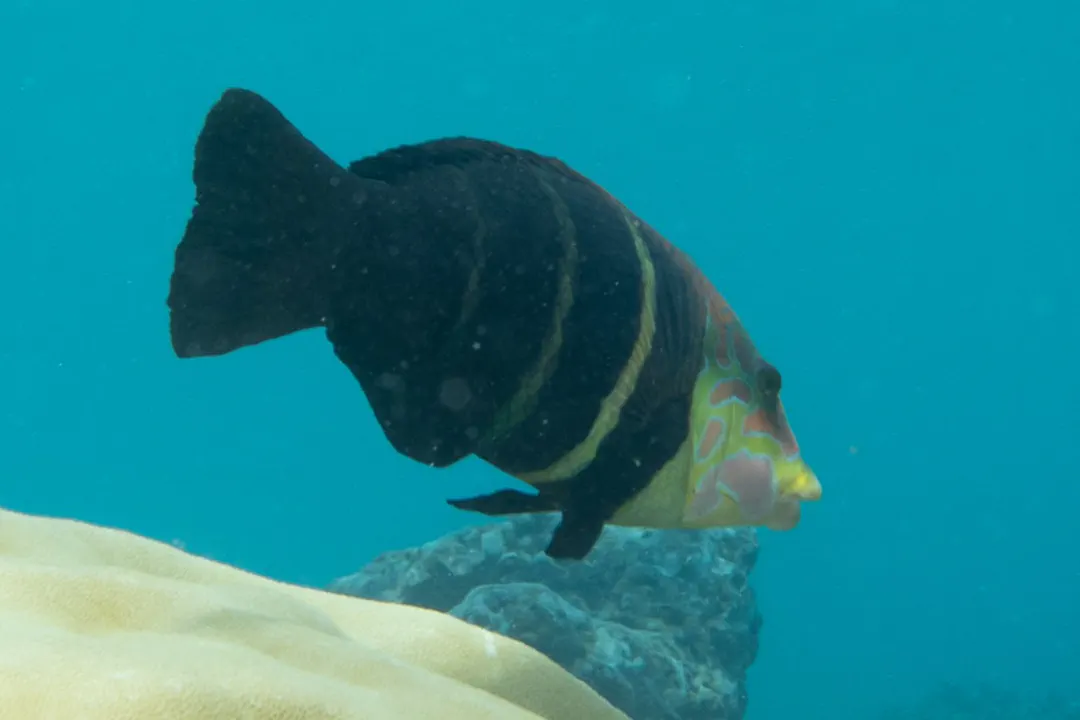 © Storm MartinCC BY 4.0 · iNaturalist
  © portioidCC BY 4.0 · iNaturalist
 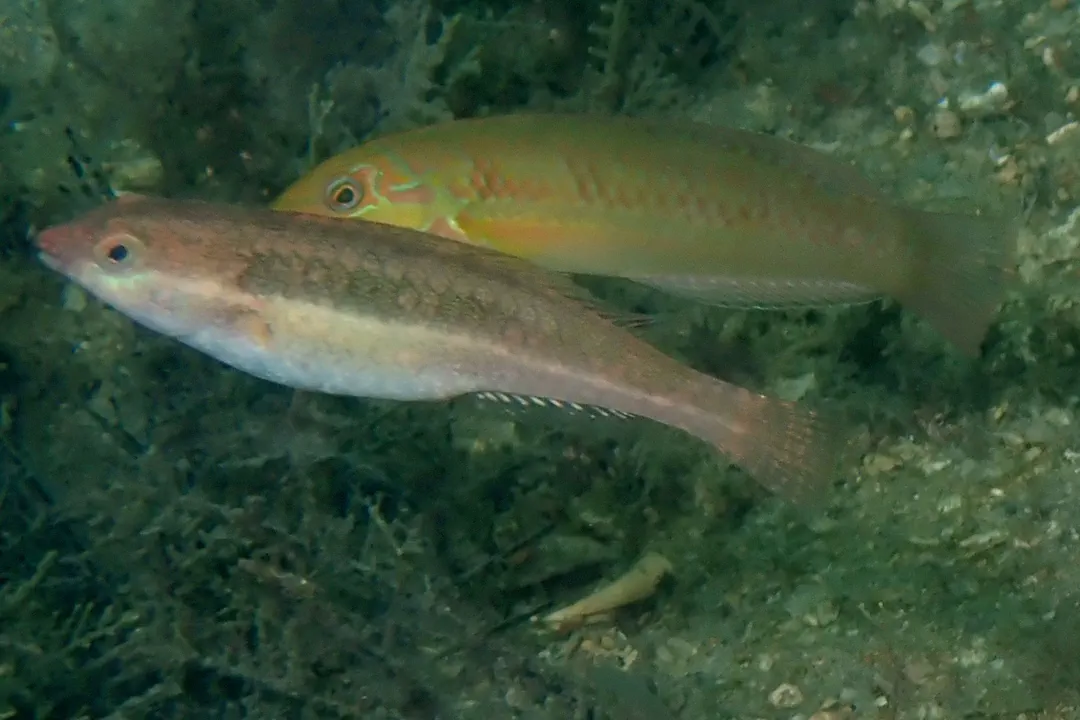 © jeyreCC BY 4.0 · iNaturalist
 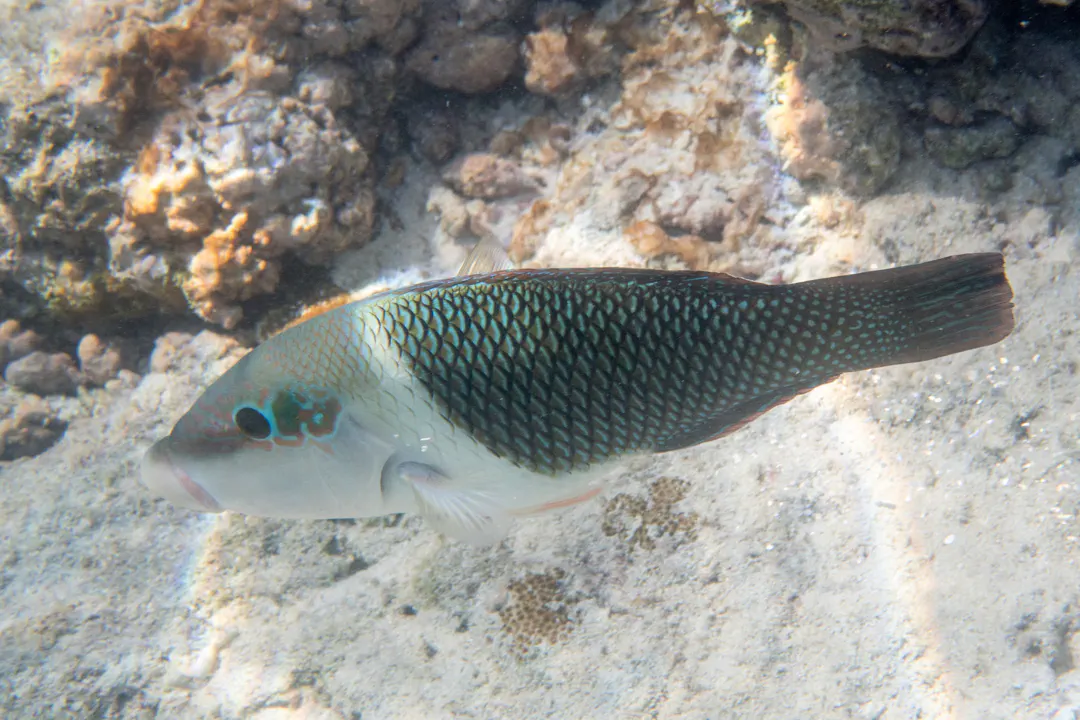 © Emanuele SantarelliCC BY-SA 4.0 · iNaturalist
 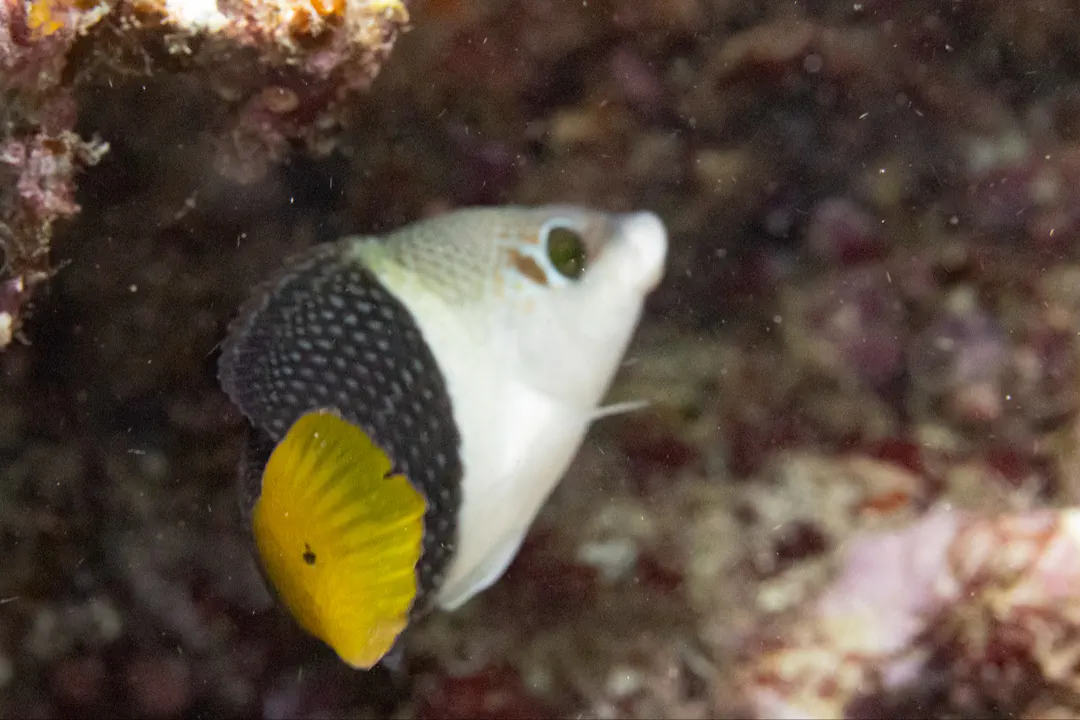 © cello caruso-turielloCC BY 4.0 · iNaturalist
 Jansen's Wrasse (male) has no known danger to humans. However, always observe marine life responsibly.
Jansen's Wrasse (male) can be found at depths of up to 15 meters.
Download Seabook free for iOS and Android.