 © Dan SchofieldCC BY 4.0 · iNaturalist
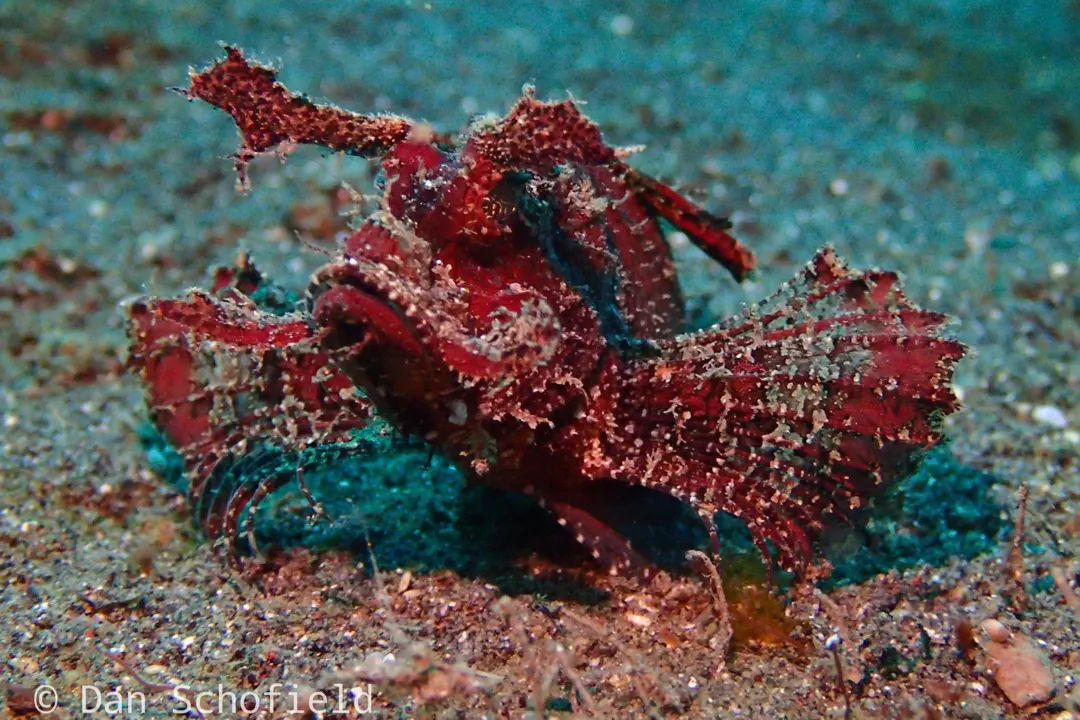
Ambon Scorpionfish
Pteroidichthys amboinensis
Scorpaena neglecta
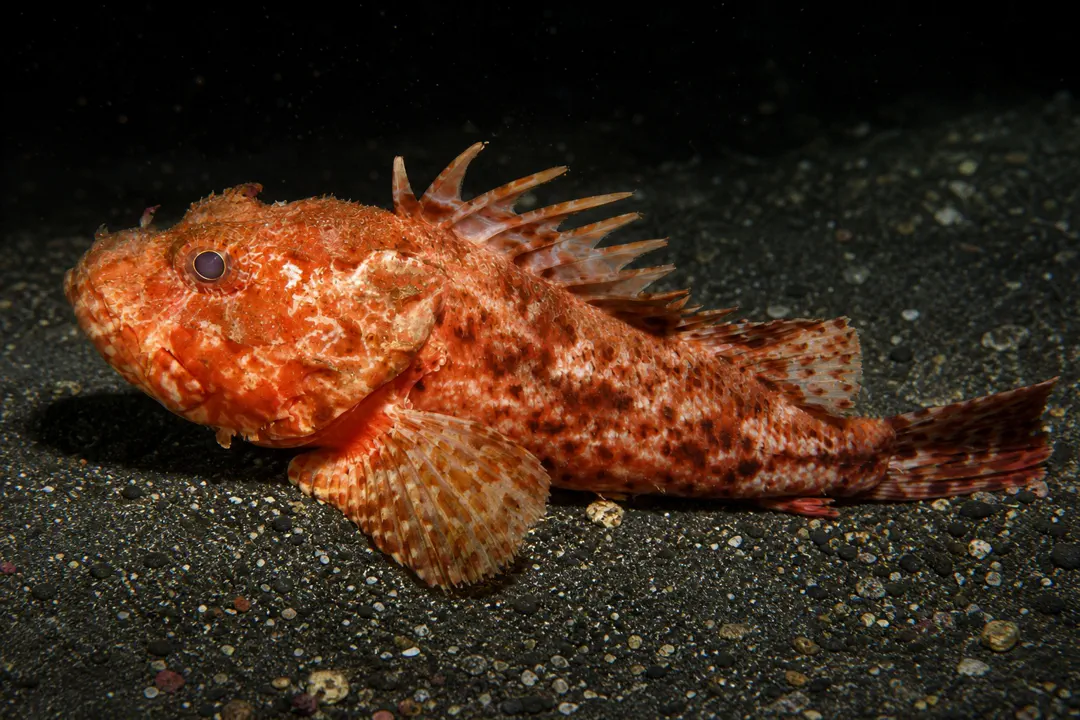
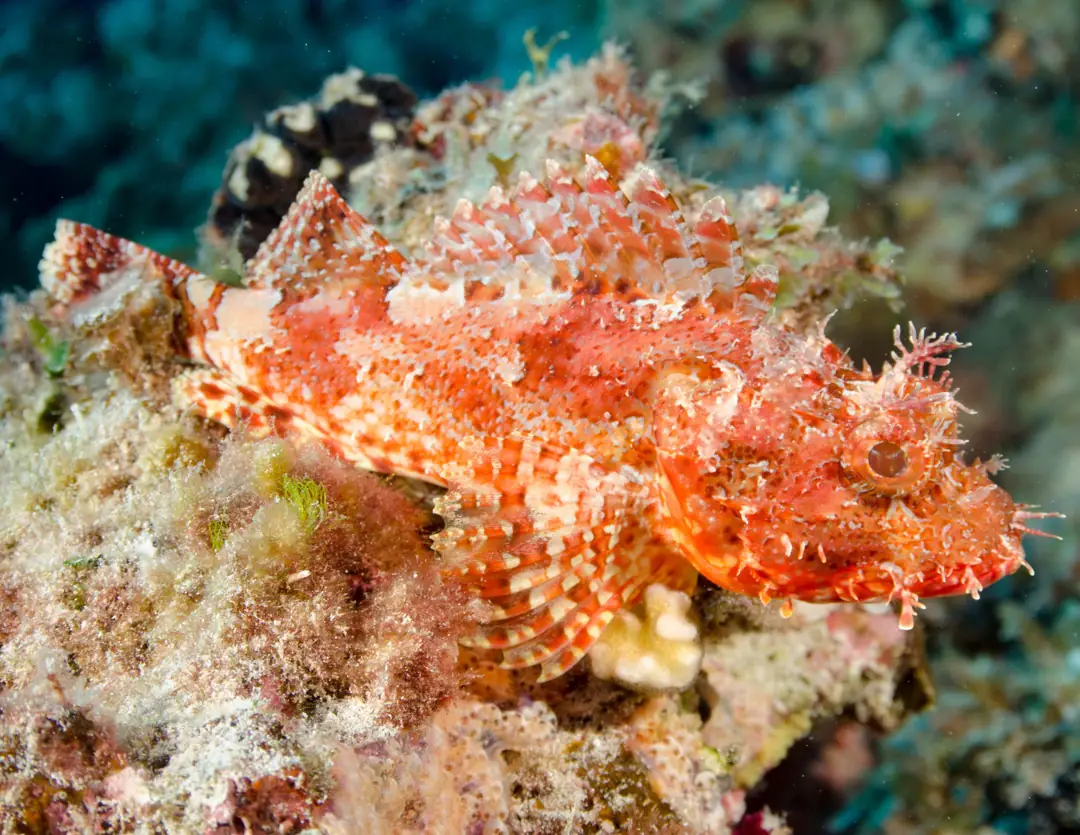
Scorpaena izensis is a Scorpionfish.
It's body color can vary from brown to red, depending on the water depth. The body is elongated and the sides are flat. The head is large and the spines are clearly jagged. The eyes are large in the upper lateral position; the eyeballs are as high as the dorsal edge of the head; the mouth is large, the end position, the oblique cleft, the upper and lower jaws are equal in length. 1 nasal spines, small and pointed, upwards backward, located on the inside of the front nostril. The lacrimal bone is large, with 1 edge on the outside and no spines; the upper edge has 1 obvious obtuse process; the lower edge of the anterior lobe has a pointed process, the middle lobe has 2 spines, and the posterior lobe has 1 spine. There are 1st, 2nd and 4th infraorbital bones under the orbit, and no 3rd and 5th infraorbital bones. There are 5 radial sensory holes in the middle of the lacrimal bone. The front operculum has 5 spines; the operculum has 2 bifurcated edges, and each rear end has 1 spines. There are no spines on the lower operculum and the interoperculum. The skull spines are small and sharp. The lateral ethmoid bone is smooth with 1 anterior spine; the frontal bone is smooth; the supraorbital ridge is high and convex, with 1 supraocular spine and 1 posterior spine; 1 small and pointed drum spine, located behind the posterior spine; between the eyes 1 pair of frontal ribs, the back end is connected with the spine, without frontal spine The parietal bones are smooth, with one roof spine and one neck spine each. There are 1 butterfly ear spine from the front of the eyes to the tip of the lateral line, small; 1 wing ear spine, long; 1 posterior temporal spine, 1 upper and lower spine, small upper spine and larger lower spine; 1 scapular spine, round and obtuse; base of pectoral fin With 1 spine above. The posterior part of the kiss is horizontally concave, the eye interval is horizontally concave, the groove between the frontal ribs is wide and concave, and there is a square parietal fossa behind the eye interval. The snout margin has 2 pairs of flaps; the posterior edge of the anterior nostril has a pointed feathery flap; the lower edge of the lacrimal bone has several flaps, the latter is wide; the anterior spine has a short flap, and the supra-ocular spine is 1m long and large Feather flaps; parietal spine with 1 small flap; suborbital ridge with 3 small flaps; a row of granular skin processes above the eyeball; 2 wide and short flaps on the edge of the operculum; 1 flap on the axillary. There are no obvious flaps on the apical spine, drum spine, neck spine, posterior eye spine, cheeks, side of the body and fins. The scales are large, and the comb scales. The abdomen has small round scales; the head, chest and base of pectoral fins have no scales. The lateral line is in the lateral position, the front end is oblique and straight, the rear end is straight, and the end extends to the base of the caudal fin. The dorsal fin is long and large, starting above the upper operculum spine. The hard spine and the fin rays are connected by a fin membrane. The hard spine fin membrane is recessed and close to the base. The base of the hard spine is longer than the base of the soft spine. The fifth hard spine is the longest, the first hard spine is the shortest, with hard spine.
Max length is 44,5 cm. Max published weight is 1,5 kg.
Indo-West Pacific: Japan, East China, Pihilippines, Indonesia, West-North Australia to Fiji
This species is common around coral and rocky areas to at least 200 m in depth.
© Dan SchofieldCC BY 4.0 · iNaturalist 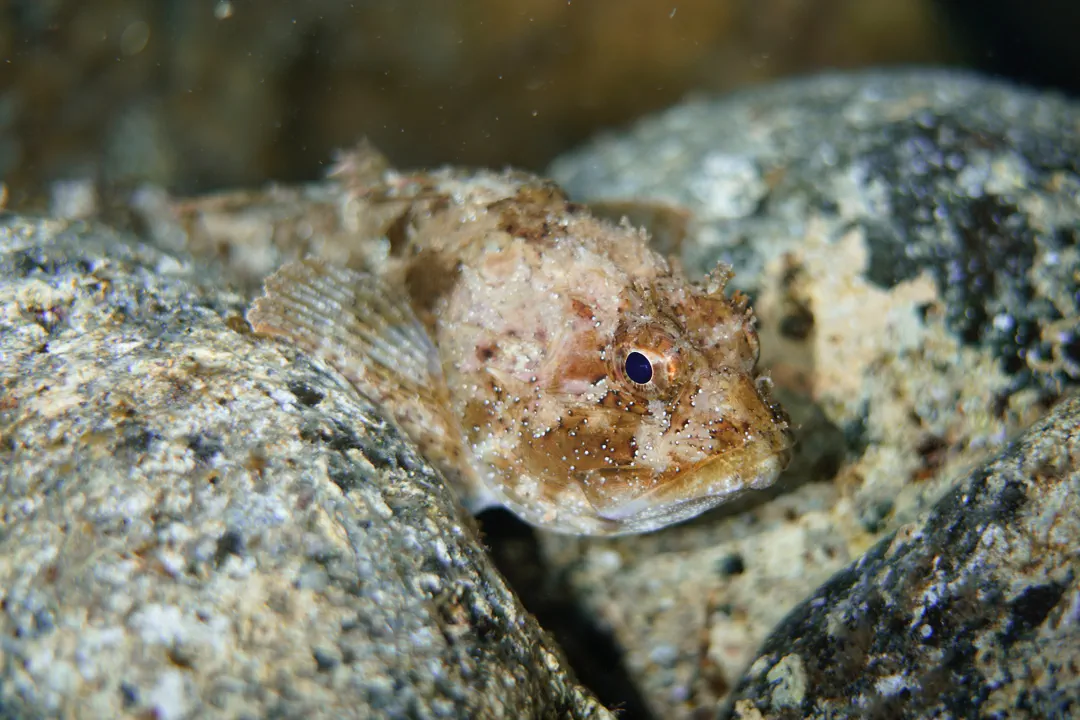 © Michael BommererCC BY 4.0 · iNaturalist
  © Ian ShawAll rights reserved
 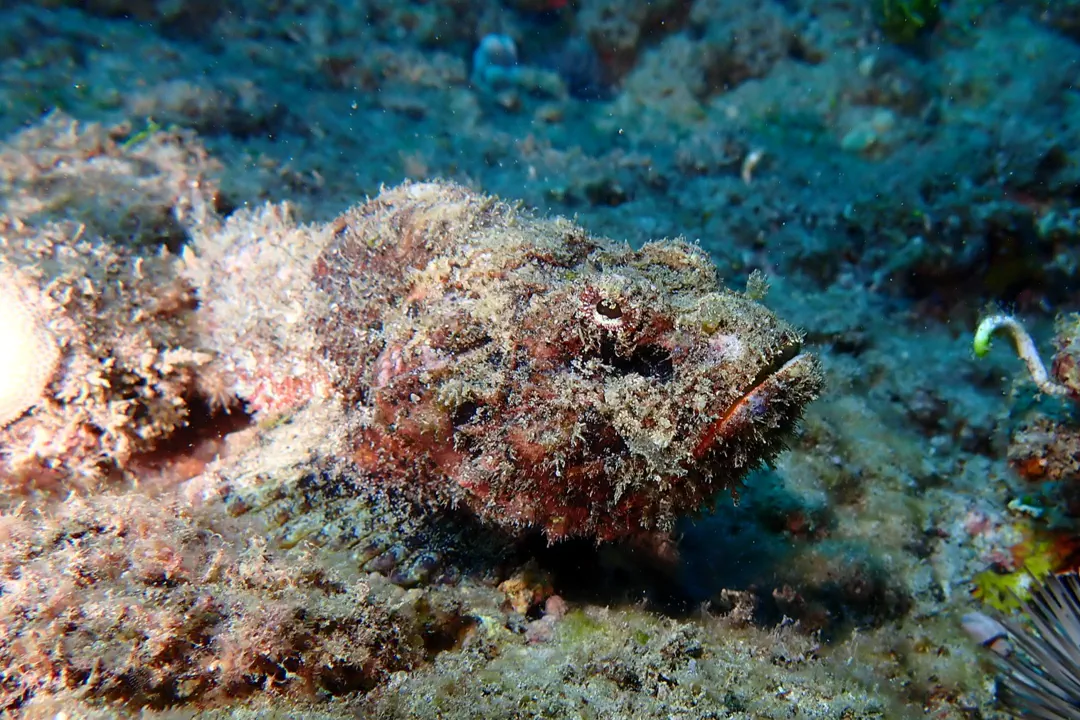 © Robin WhiteCC BY 4.0 · iNaturalist
 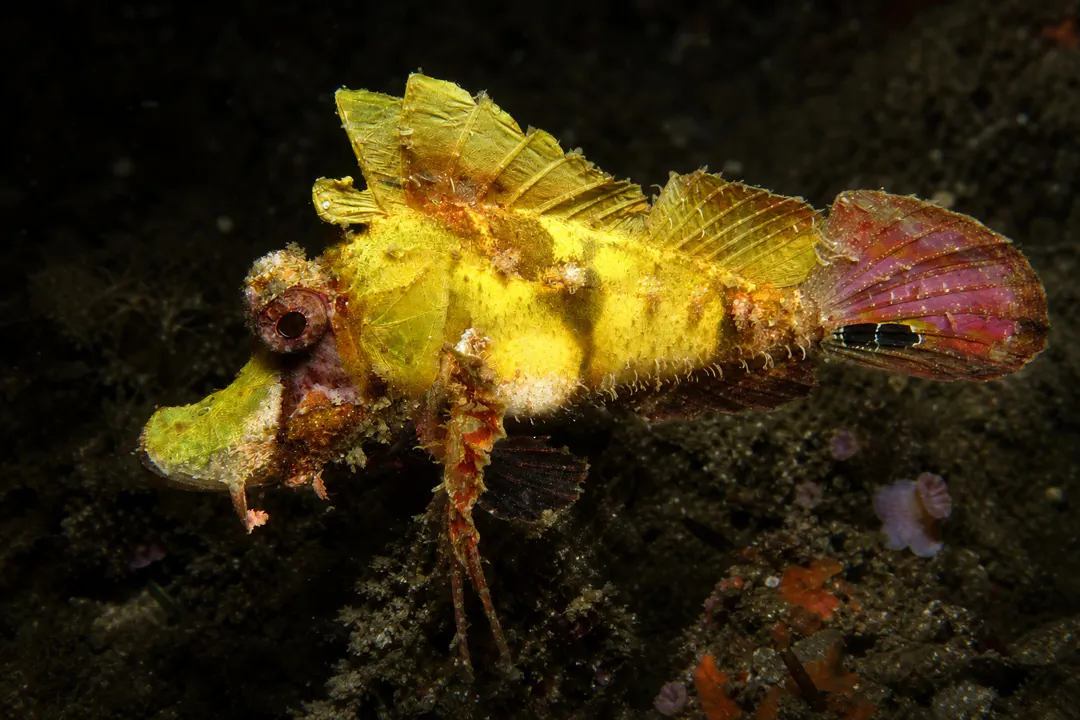 © seabook.appAll rights reserved
 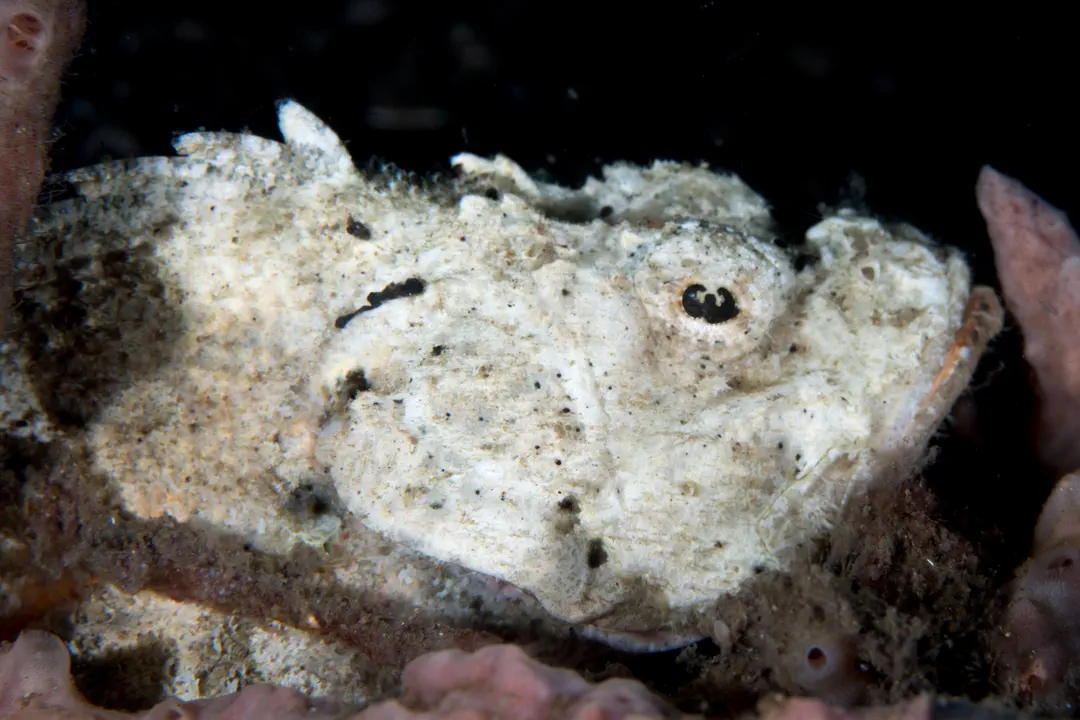 © Rickard ZerpeCC BY 4.0 · iNaturalist
 Izu Scorpionfish is classified as venomous, dangerous to humans. Always exercise caution and keep a safe distance.
Izu Scorpionfish can be found at depths of up to 200 meters.
Download Seabook free for iOS and Android.