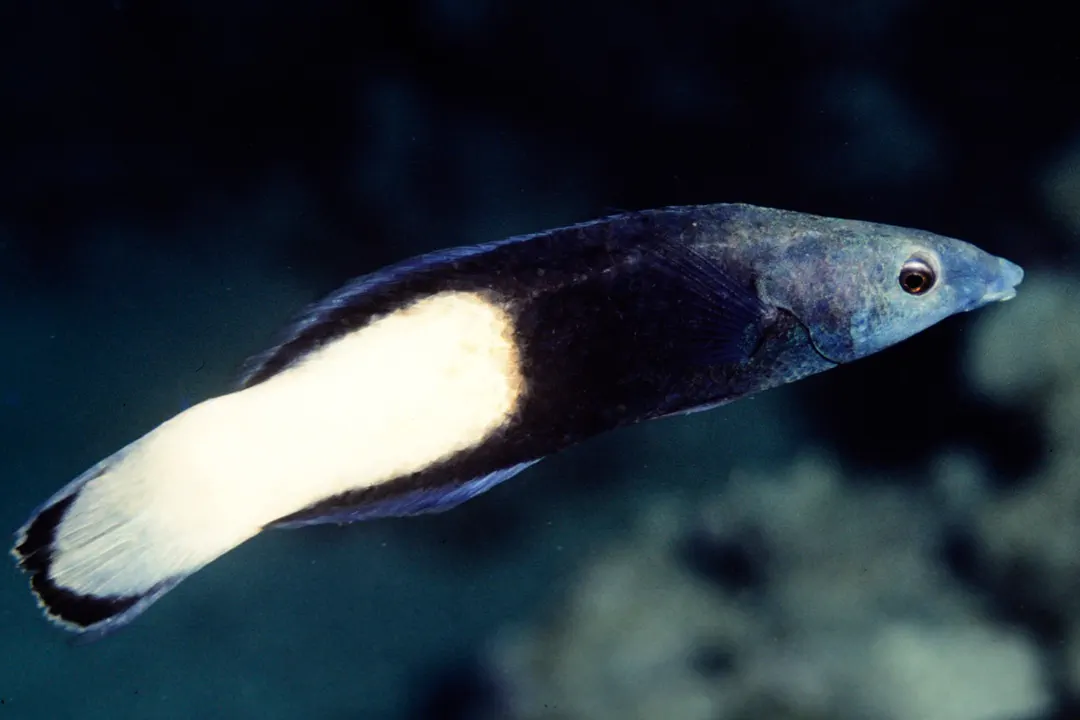
 © Roger RittmasterCC BY 4.0 · iNaturalist
Bicolor Cleaner Wrasse
Labroides bicolor
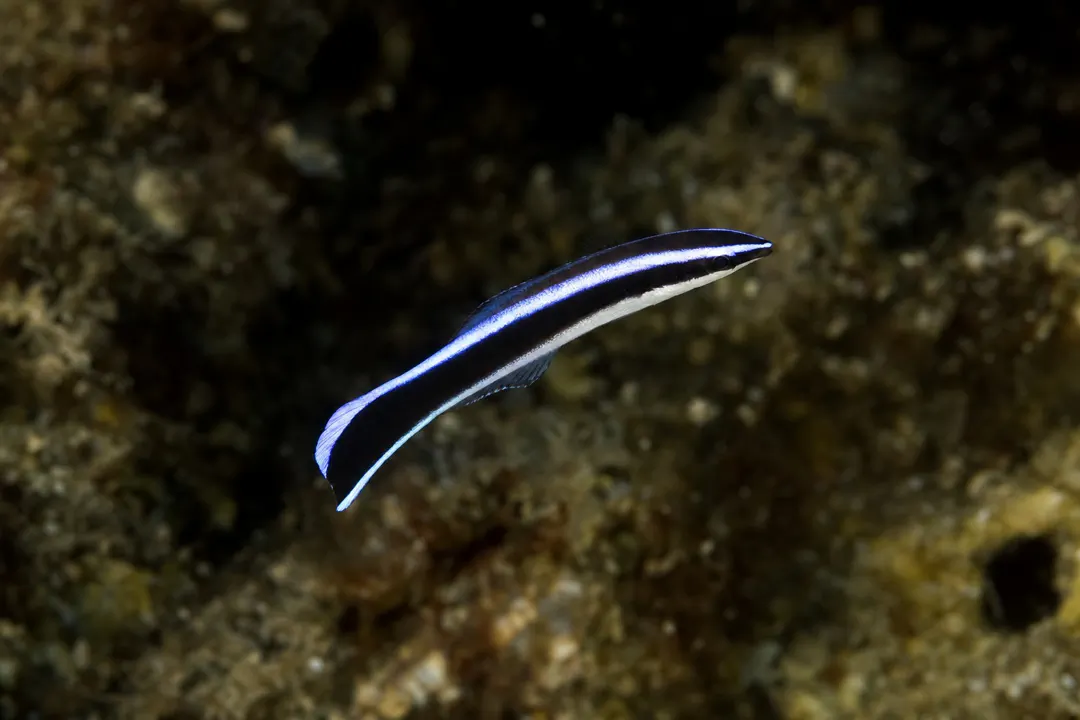 © seabook.appAll rights reserved
Labroides dimidiatus
Labroides dimidiatus is one of several species of cleaner wrasses found on coral reefs from Eastern Africa and the Red Sea to French Polynesia. Like other cleaner wrasses, it eats parasites and dead tissue off larger fishes' skin in a mutualistic relationship that provides food and protection for the wrasse, and considerable health benefits for the other fishes.
It is a small wrasse averaging 10 cm long (14 cm max). It can be recognized thanks to a wide longitudinal black stripe running along the side and eye; the back and the stomach are white (sometimes slightly yellowish). This white part evolves towards a bright blue on the front of the animal, while the black band widens at the tail. The young are black with an electric blue line.
The bluestreak cleaner wrasse is found on coral reefs in the tropics from the Red Sea and Indian Ocean to the western Pacific (including Papua New Guinea, Japan, Fiji, and French Polynesia).
Cleaner wrasses are usually found at cleaning stations. Cleaning stations are occupied by different units of cleaner wrasses, such as a group of youths, a pair of adults, or a group of females accompanied by a dominant male. When visitors come near the cleaning stations, the cleaner wrasses greet the visitors by performing a dance-like motion in which they move their rear up and down. The visitors are referred to as "clients". Bluestreak cleaner wrasses clean to consume ectoparasites on client fish for food. The bigger fish recognise them as cleaner fish because they have a lateral stripe along the length of their bodies, and by their movement patterns. Cleaner wrasses greet visitors in an effort to secure the food source and cleaning opportunity with the client. Upon recognising the cleaner and successfully soliciting its attention, the client fish adopts a species-specific pose to allow the cleaner access to its body surface, gills and sometimes mouth. Other fish that engage in such cleaning behavior include goby fish (Elacatinus spp.)
Some fish mimic cleaner wrasses. For example, a species of blenny called Aspidontus taeniatus has evolved the same behavior to tear small pieces of flesh from bigger fish. Another species, the bluestreak fangblenny, Plagiotremus rhinorhynchos, mimics juvenile cleaner wrasse so its presence is tolerated by the cleaners, which, it is assumed, enables it to take advantage of the concentration of potential victims.
© Roger RittmasterCC BY 4.0 · iNaturalist 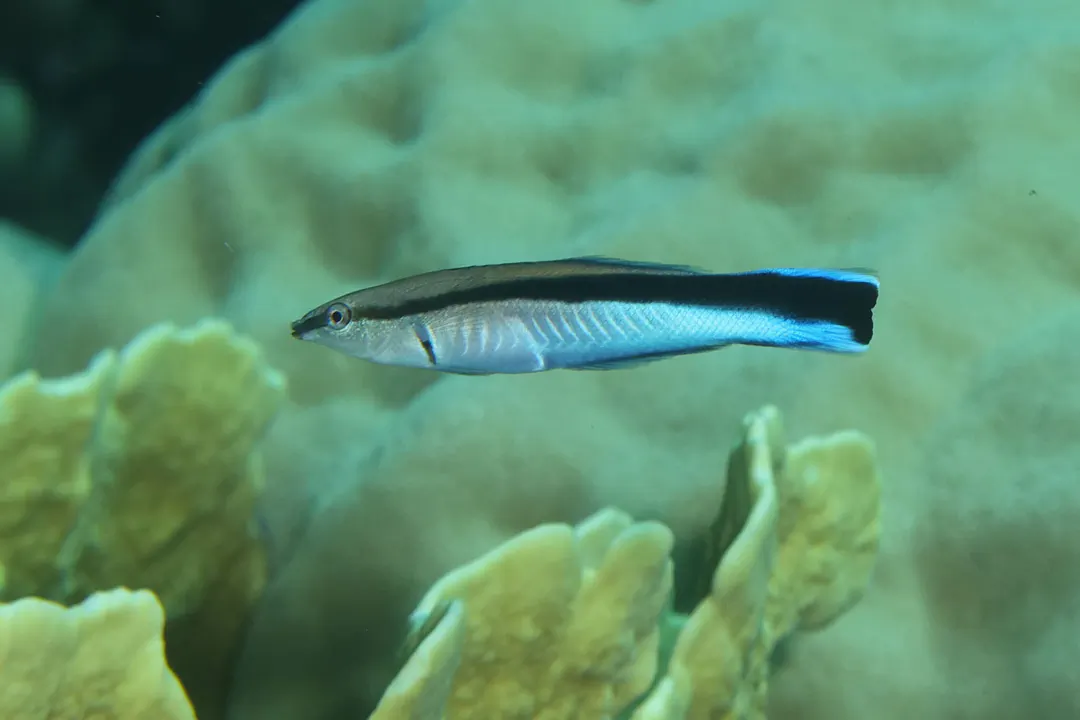 © Julien RenoultCC BY 4.0 · iNaturalist
 Bluestreak Cleaner Wrasse (juvenile) has no known danger to humans. However, always observe marine life responsibly.
Bluestreak Cleaner Wrasse (juvenile) can be found at depths of up to 100 meters.
Download Seabook free for iOS and Android.