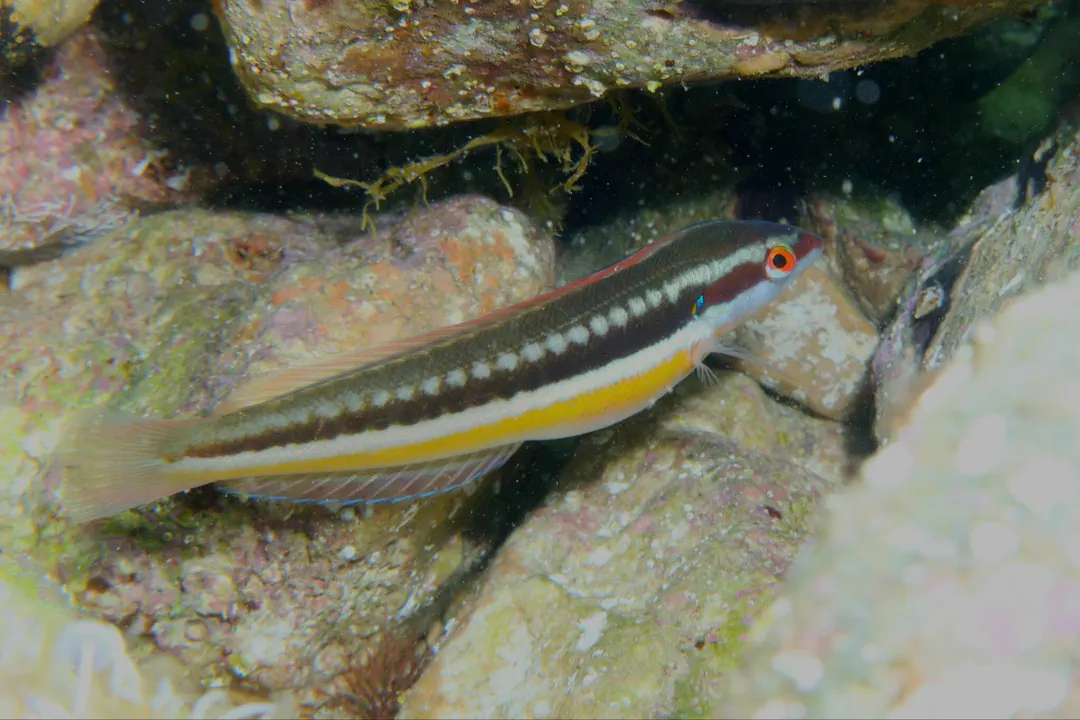
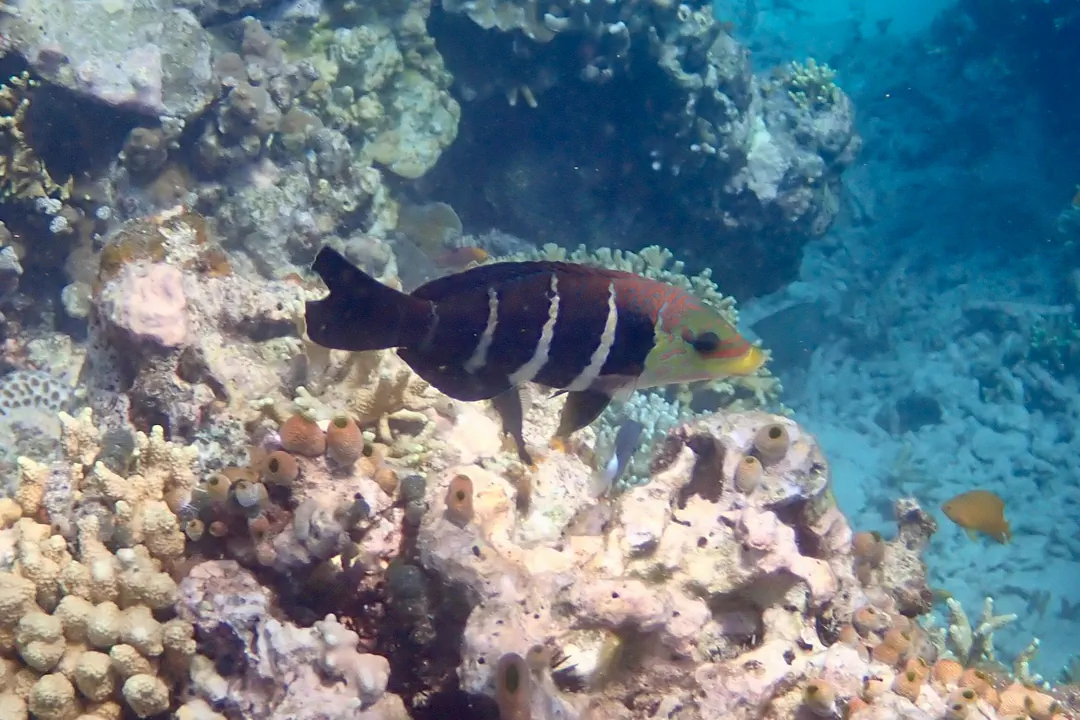
 © Heather Dawnstar SabinCC BY 4.0 · iNaturalist
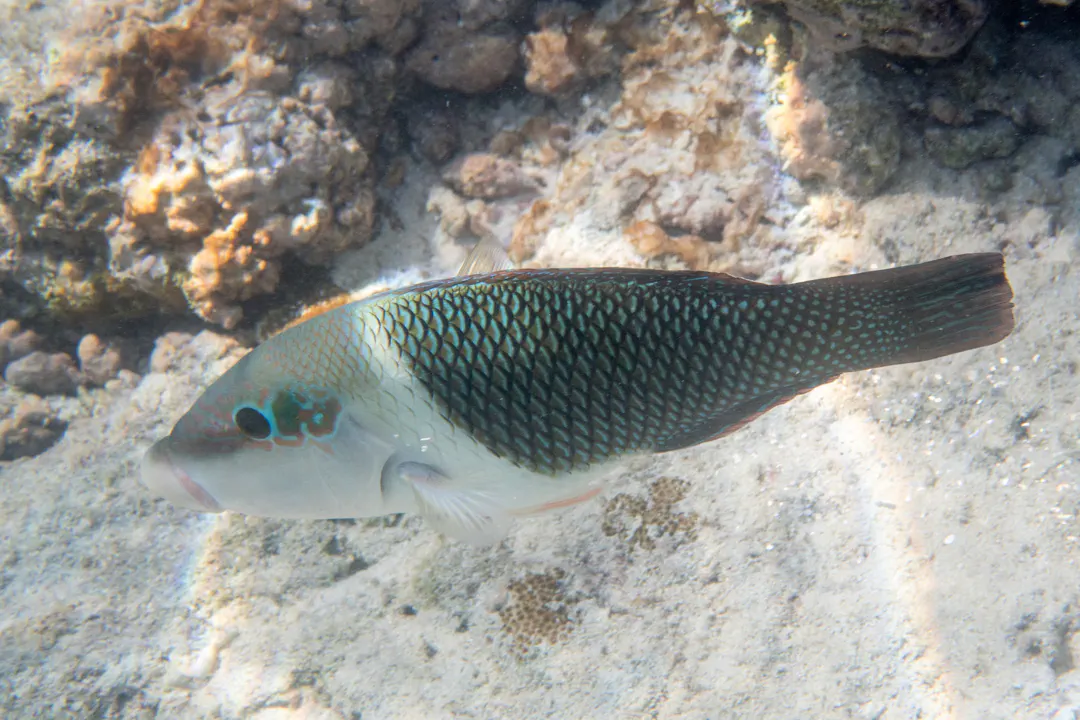
Barred Thicklip (female)
Hemigymnus fasciatus
Coris julis
The Mediterranean rainbow wrasse (Coris julis) is a small, colourful fish in the family Labridae. It can be found in the Mediterranean Sea and in the northeast Atlantic Ocean from Sweden to Senegal (though it is absent from the British Isles). Records of this species south from Senegal and the Cape Verde Islands are actually the closely related Coris atlantica.
It feeds on amphipods, isopods, sea urchins, polychaete, shrimps, and small gastropods.
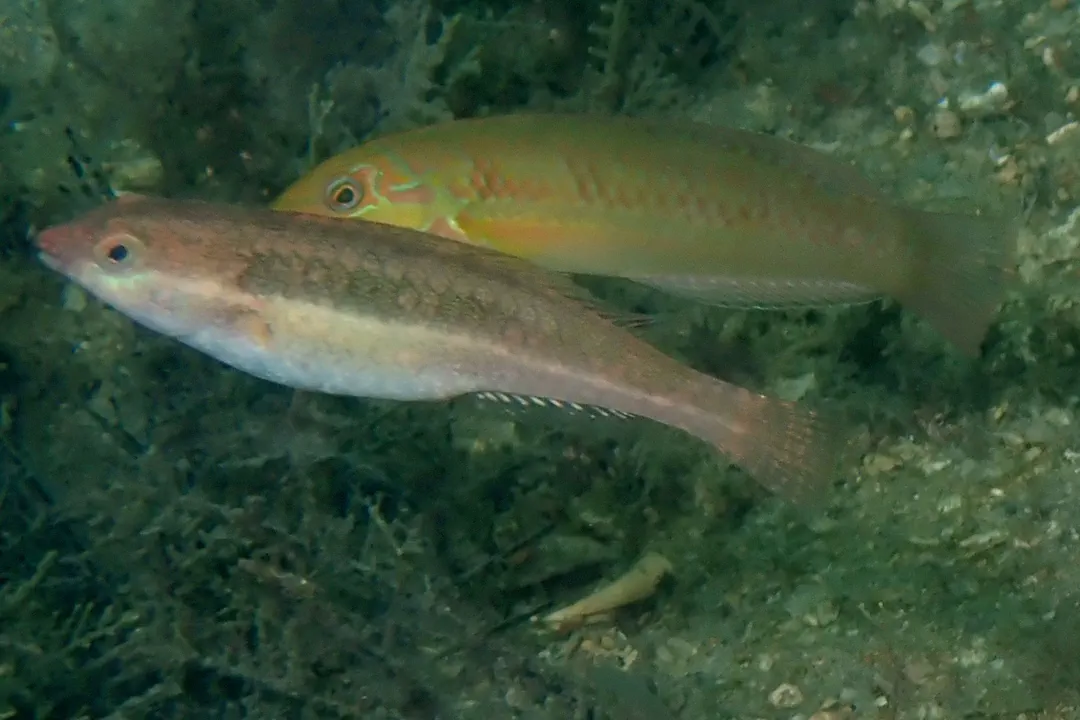
Like many wrasses, C. julis is a sequential hermaphrodite: All start in the smaller initial phase. These initial-phase individuals (both females and males) can turn into the larger secondary-phase males. At a length of about 18 cm (7.1 in), all individuals are secondary-phase males. The maximum length for the species is 25 cm (9.8 in). There is a marked difference in the appearance of the two phases. In the Mediterranean Sea, the secondary-phase male is green, blue, or brown, with white belly, a dark blue spot over the ventral fin, and a bright orange band on the side, while the smaller primary-phase females and males are brown with yellowish sides and white bellies. Populations in the Atlantic differ in colour and genetics from the Mediterranean population, but are maintained in a single species at present. If found to be separate, the scientific name Coris festiva (at present considered a synonym of C. julis) is available for the Atlantic population.
It is typically found near the shore in places with seagrass or rocks. It is usually found at depths of 0–60 m (0–197 ft), but occurs as deep as 120 m (390 ft).
The following specific names are considered junior synonyms of C. julis:
© Heather Dawnstar SabinCC BY 4.0 · iNaturalist 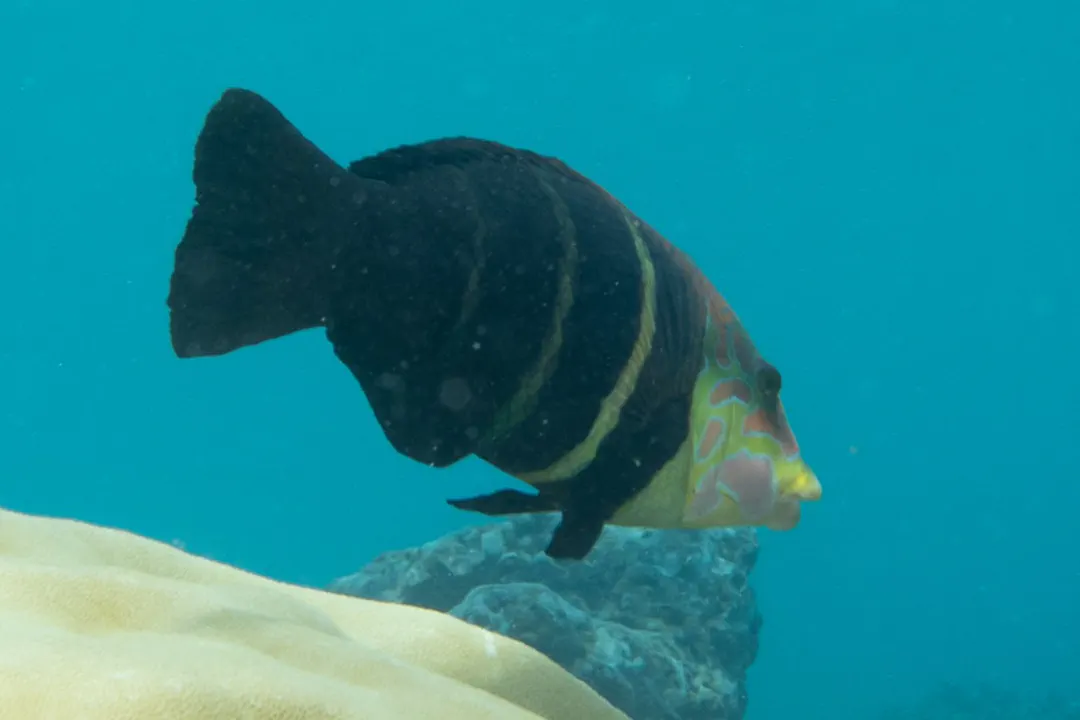 © Storm MartinCC BY 4.0 · iNaturalist
 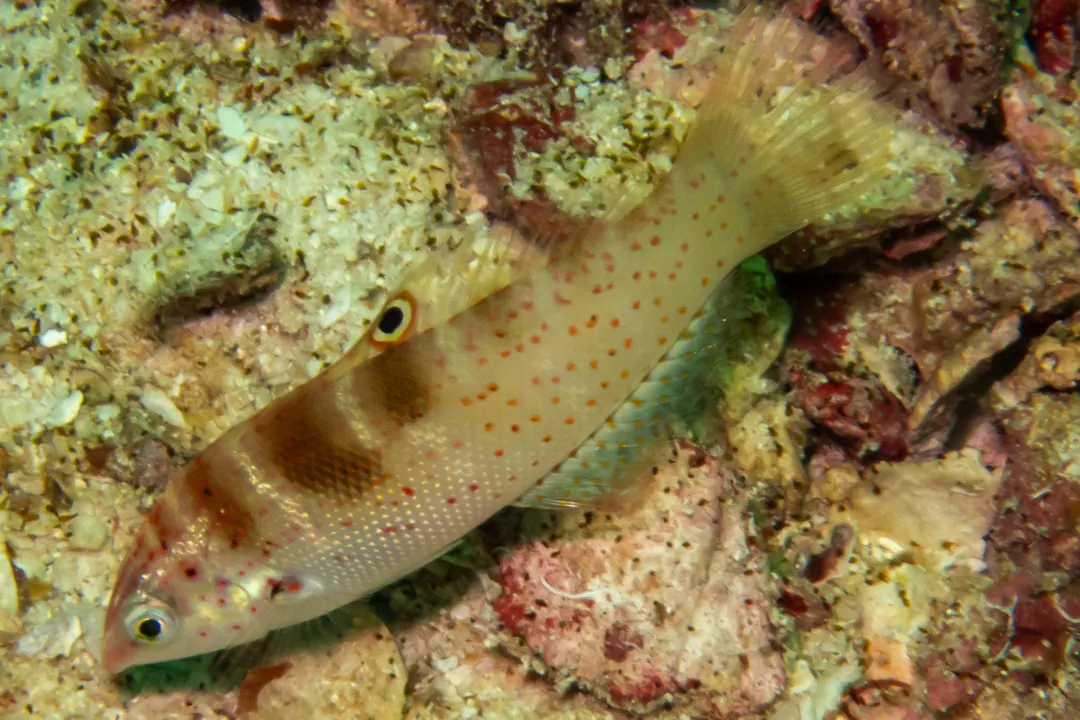 © portioidCC BY 4.0 · iNaturalist
  © jeyreCC BY 4.0 · iNaturalist
  © Emanuele SantarelliCC BY-SA 4.0 · iNaturalist
  © cello caruso-turielloCC BY 4.0 · iNaturalist
 Mediterranean Rainbow Wrasse has no known danger to humans. However, always observe marine life responsibly.
Mediterranean Rainbow Wrasse can be found at depths of up to 120 meters.
Download Seabook free for iOS and Android.