 © Lesley ClementsAll rights reserved
Areolate Rock Cod
Epinephelus areolatus
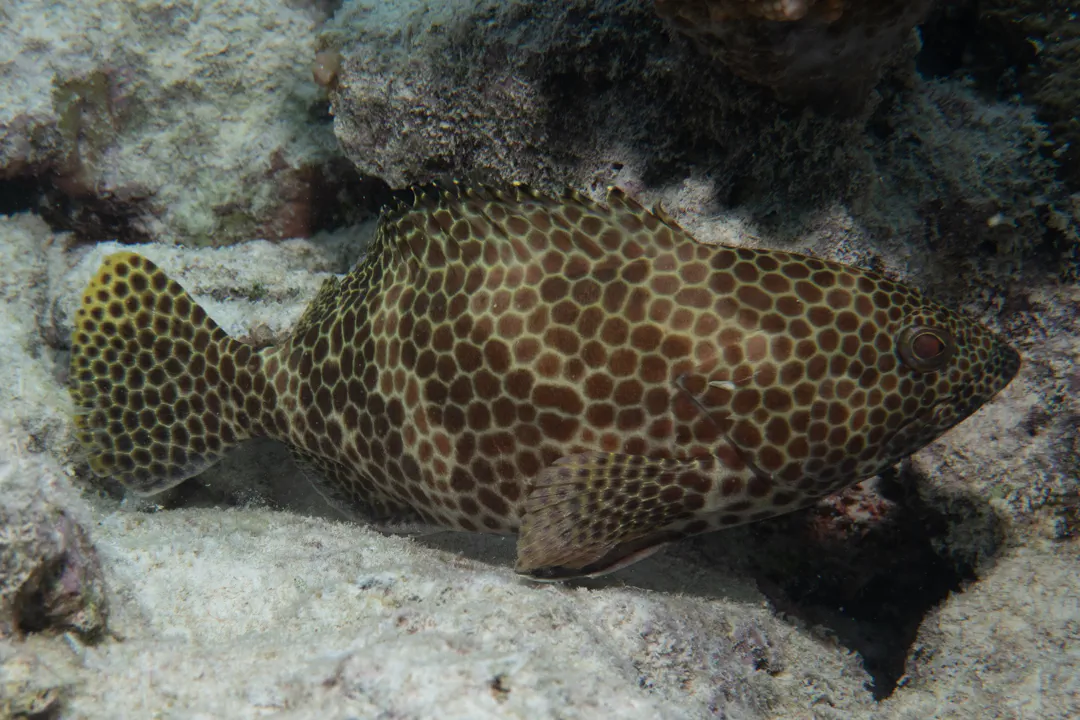
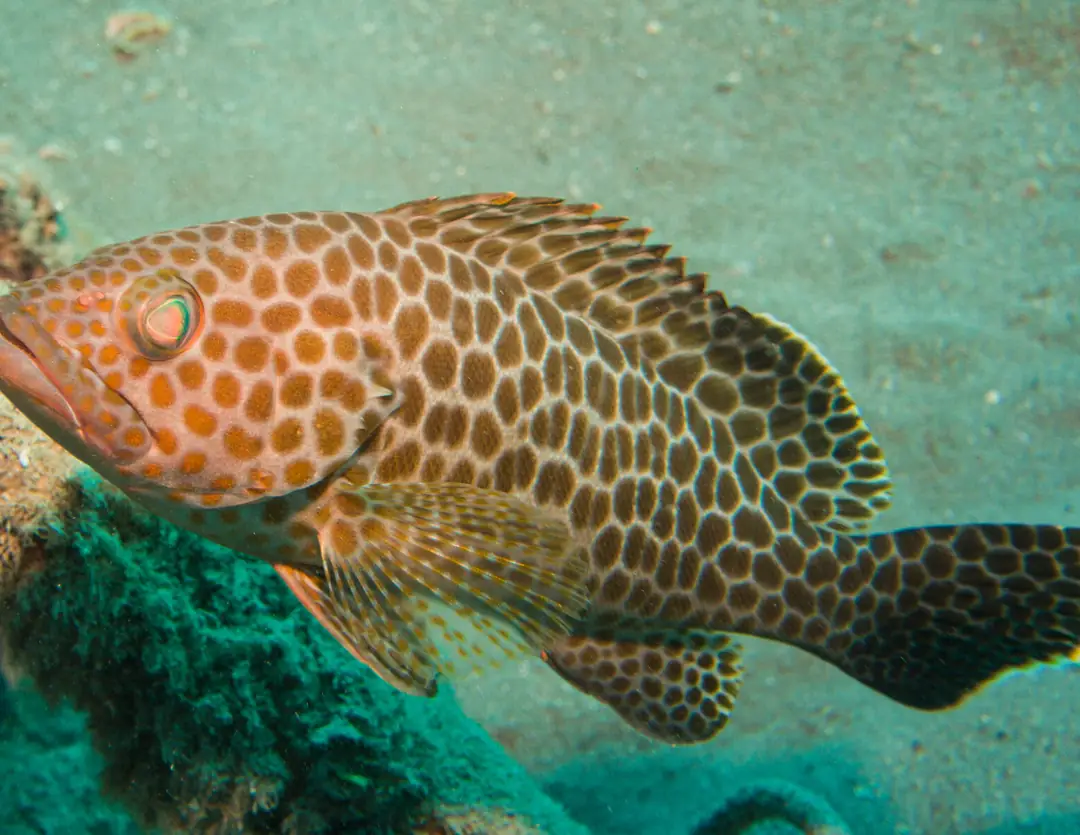
Epinephelus merra
Epinephelus merra also known by other vernacular names, is a species of marine fish in the family Serranidae.
Epinephelus merra reaches a maximum known length of 32 centimetres (13 in) and it is one of the smaller fish species in the genus Epinephelus. This species has a long dorsal fin with eleven spines, 15-17 dorsal soft rays and 8 anal soft rays. The body is ochre to light brown, stocky, with an oval profile. It is covered by small brown hexagons with pale interspaces disposed on irregular darker diagonal bands and forming a network (hence the common name of the species). These hexagonal spots are also present on all fins. The caudal fin is rounded and the interorbital area is flat, with a convex dorsal head profile. The eyes are globular, with red-brown to black pupils. The lower jaw is longer than the upper one and on the midlateral part of the lower jaw there are 2-4 rows of teeth.
The Honeycomb grouper is widespread throughout the tropical waters of the Indo-Pacific but is not present in the Red Sea and the Persian gulf.
These solitary groupers live in seaward reefs and in shallow lagoon, usually at depths less than 20 m, but they can reach about 50 m. Juveniles prefer reefs with staghorn corals (Acropora species). They mainly feed on fishes, crabs, shrimps and cephalopods, with and increase of piscivory with age. After the sexual maturity they are initially females and later they turn into males. Usually the groupers with a length of 16 cm are still females. These fishes usually spawn from January to April and the spawning begin 2 to 3 days before full moon and last about 3–4 days.
The genus Epinephelus has the ability to change sexes, more specifically they are protogynous hermaphrodites what means females can turn into males at one point in their life. This sex change usually happens in the non breeding season and can be caused by social stimuli, age, growth, and body size. Yet, the initial trigger for the sex change remains unknown. Females turn into males when they reach a length of approximately 20 cm, thus the size advantage model for sequential hermaphroditism applies in the case of the honeycomb grouper. The size advantage model states that if an individual can reproduce more effectively as one sex when small or young and as the other sex when larger or older, it should change sex at some point in its life history.
© Lesley ClementsAll rights reserved 
 © Lesley ClementsAll rights reserved
 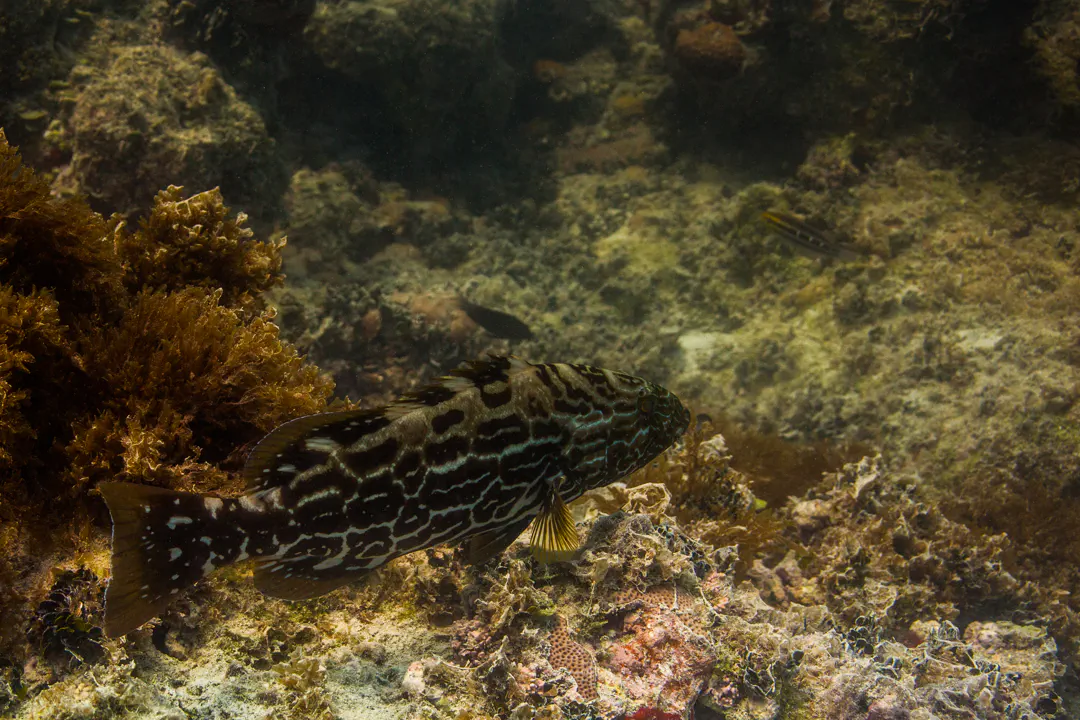 © João D'AndrettaCC BY 4.0 · iNaturalist
 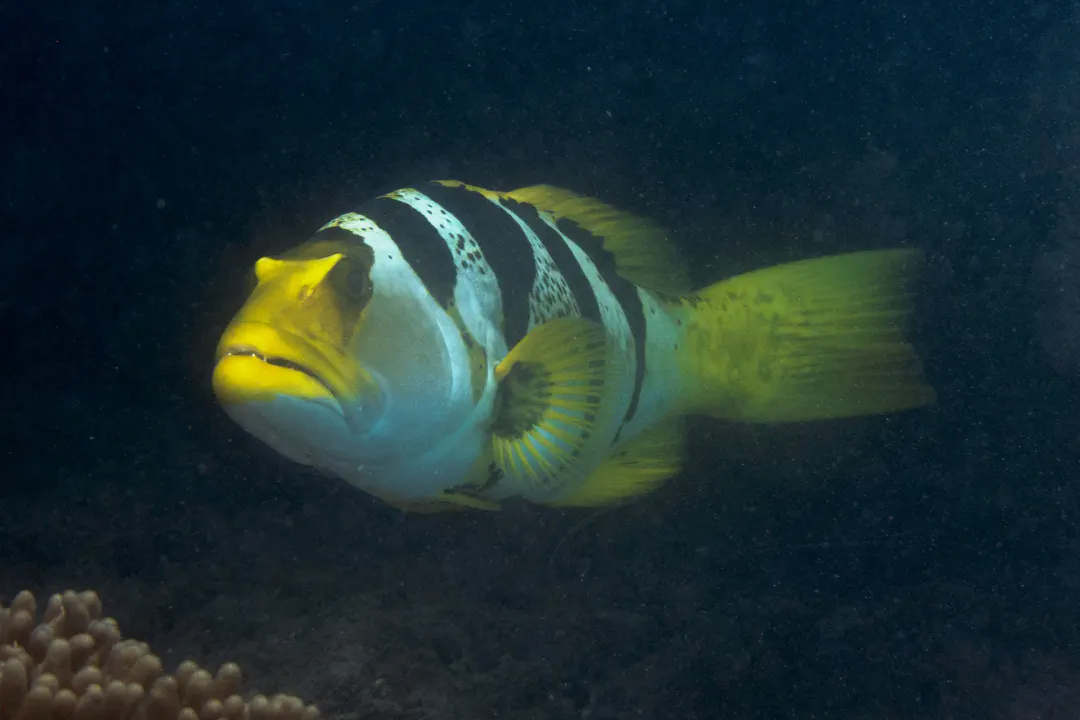 © Ewout KnoesterCC BY-SA 4.0 · iNaturalist
 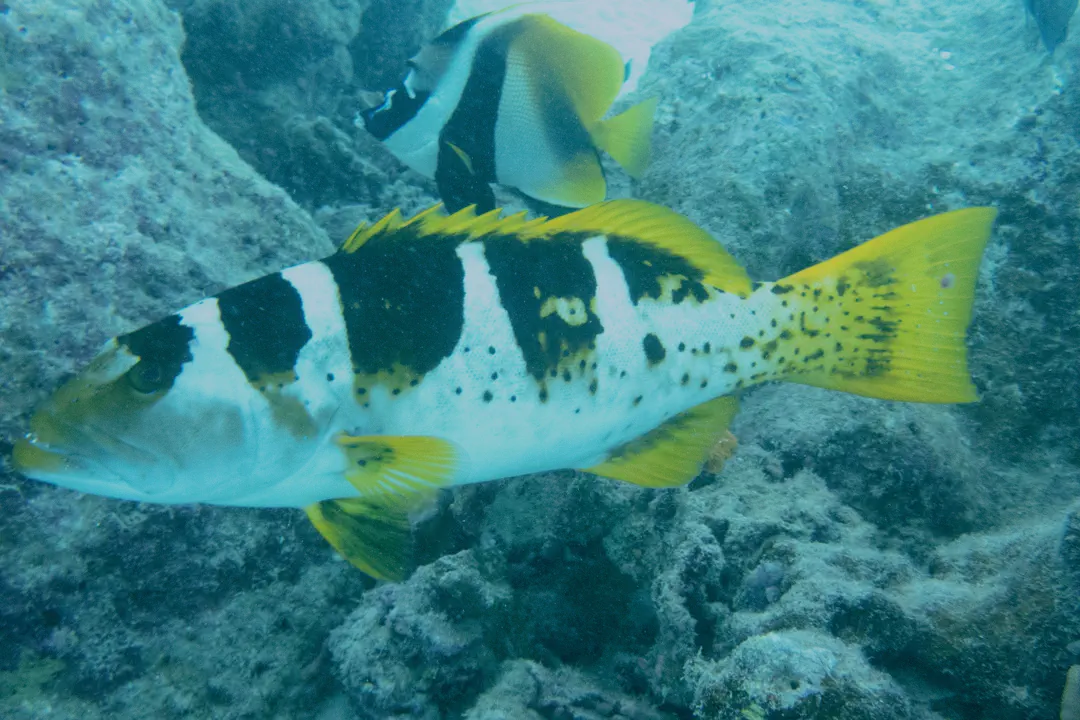 © Logan JonesCC BY 4.0 · iNaturalist
 Honeycomb Grouper is classified as poisonous. Always exercise caution and keep a safe distance.
Honeycomb Grouper can be found at depths of up to 50 meters.
Download Seabook free for iOS and Android.