 © Heather Dawnstar SabinCC BY 4.0 · iNaturalist
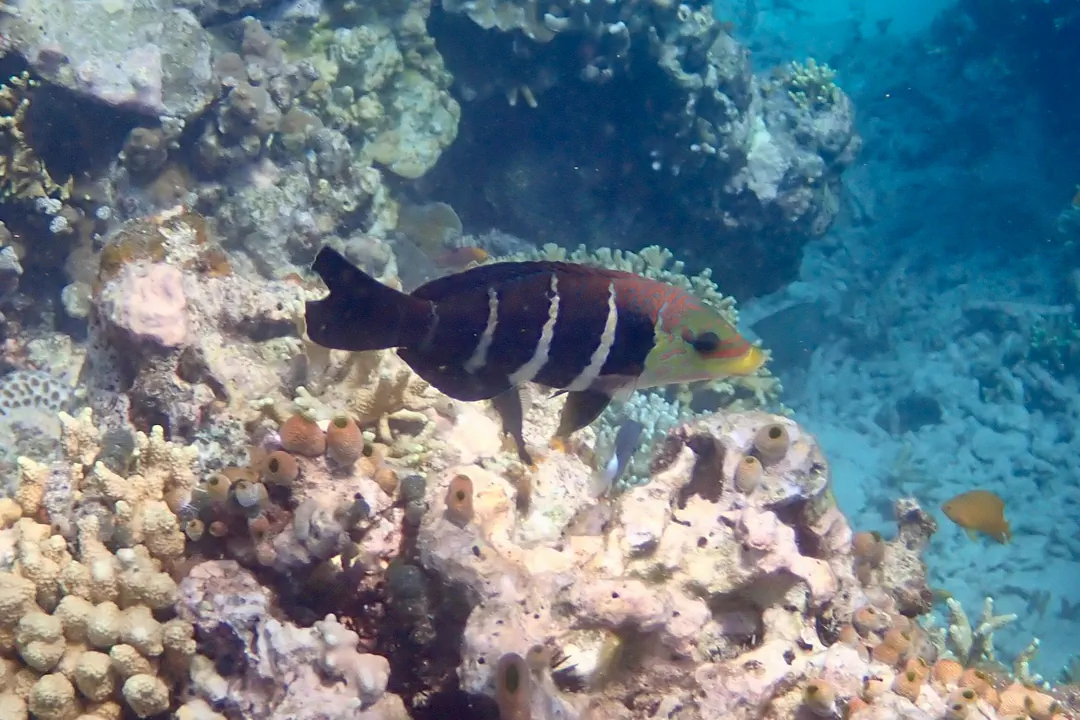
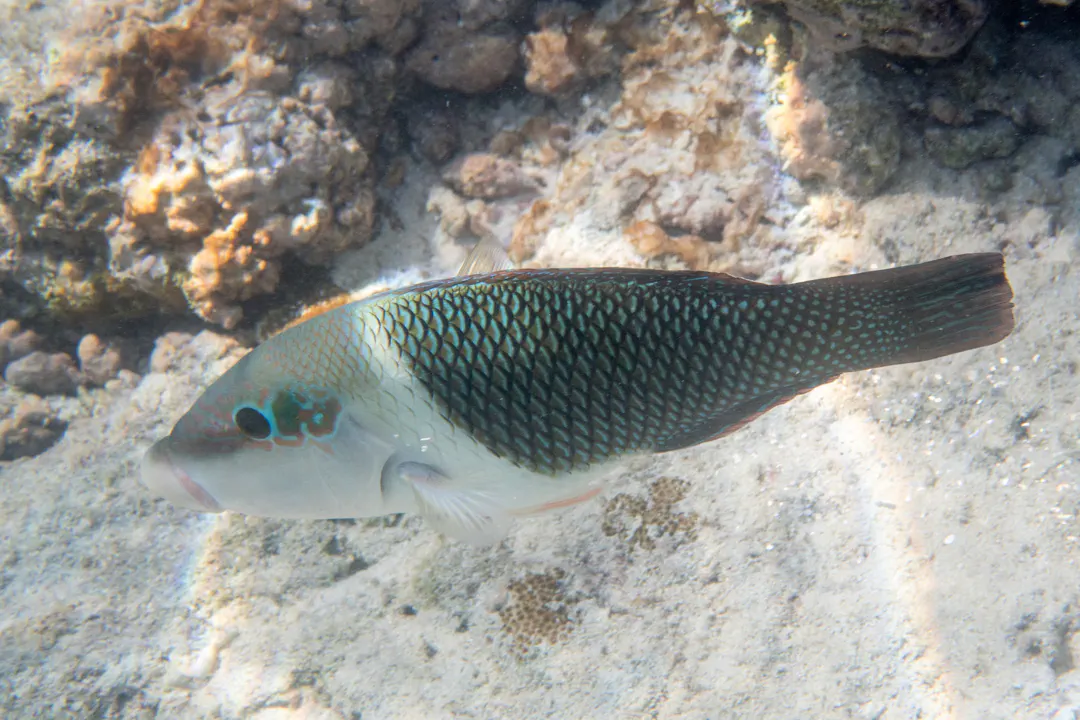
Barred Thicklip (female)
Hemigymnus fasciatus
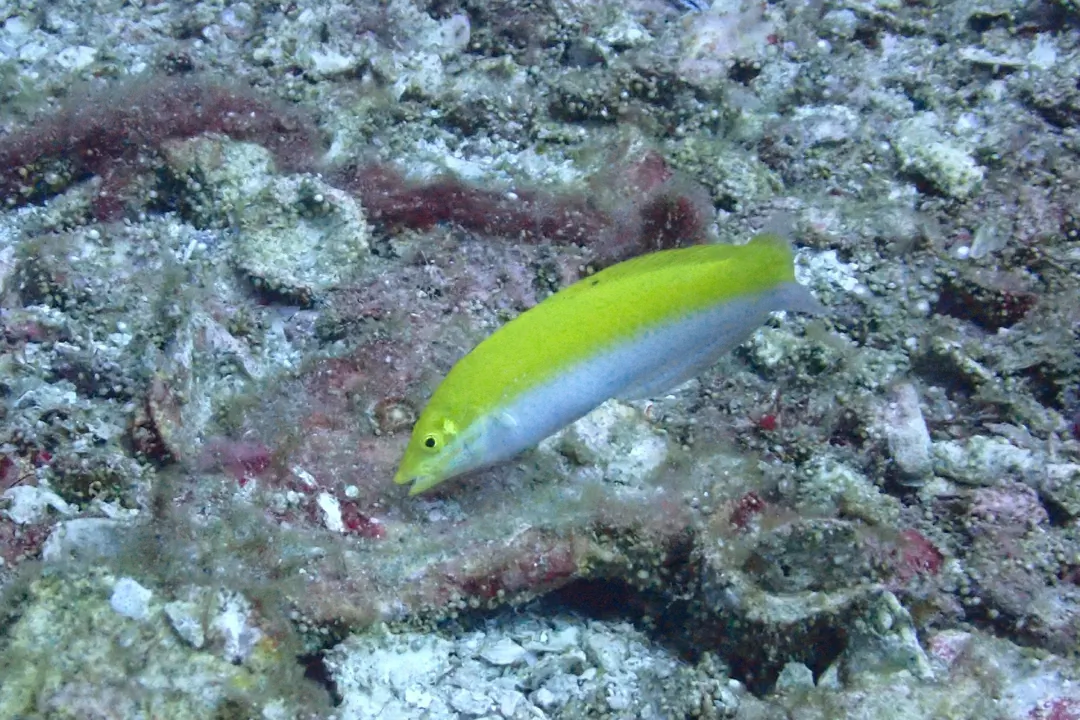
Halichoeres leucoxanthus
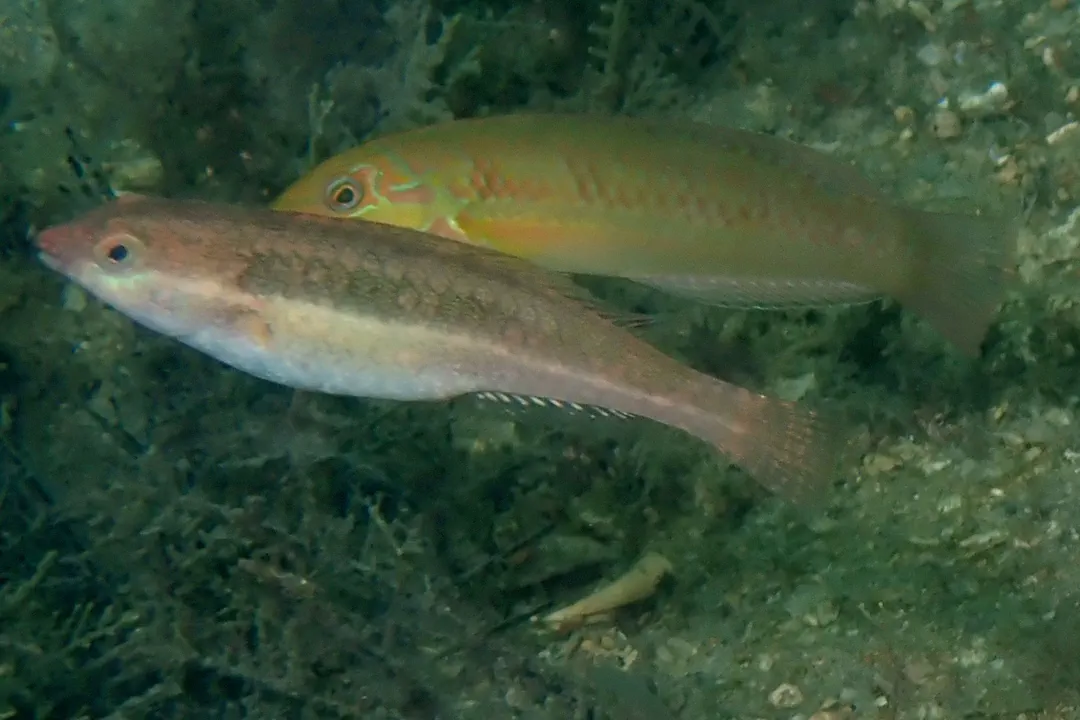
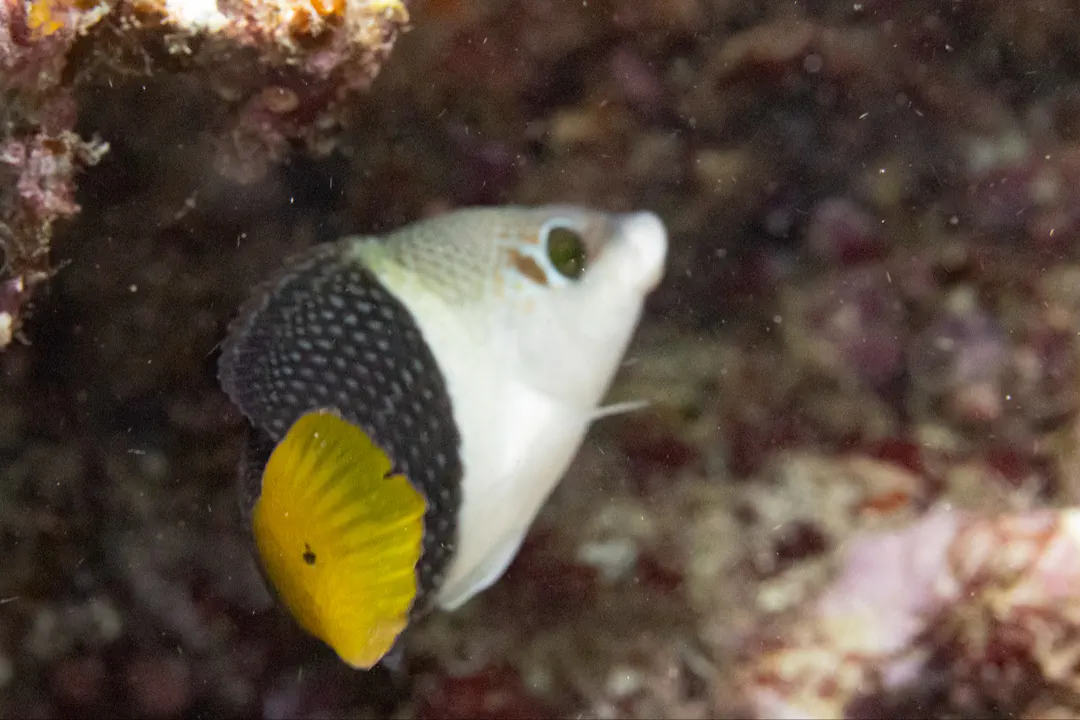
Halichoeres leucoxanthus, commonly called the Canarytop wrasse, Whitebelly wrasse or Lemon meringue wrasse, is a fish species in the wrasse family endemic to the Indian Ocean.
The canarytop wrasse is a small fish that can reach a maximum length of 12 cm.
It has a thin, elongate body with a terminal mouth. Body coloration is bright yellow and white with a few variations according to age.
During the juvenile phase, the young wrasse is completely bright yellow with two black ocellus on the dorsal fin and one on the caudal peduncle.
When reaching the initial phase, the body has two colors: white on belly and bright yellow on the back with the same ocellus plus one more on the first spines of the dorsal fin.
At terminal phase, only few change occur like the head become a mix of yellowish and greenish with pinkish lines and with age the ocellus tend to blur.
The canaritop wrasse is widespread throughout the tropical and subtropical waters of the Indian Ocean, from Laccadive/Maledives/Chagos archipelagos to the island of Java in Indonesia including the Andaman Sea.
This wrasse occurs in rubble and sandy areas close to coral reef from 10 to a depth of 50 meters.
The canaritop wrasse lives in small groups. It is a benthic predator that feeds mainly on small marine invertebrates such as crustaceans, molluscs, worms and echinoderms captured on or in the substrate.
Like most wrasse, the canari wrasse is a protogynous hermaphrodite, i.e. individuals start life as females with the capability of turning male later on.
The species is targeted but not thought to be threatened by the aquarium trade.
© Heather Dawnstar SabinCC BY 4.0 · iNaturalist  © Storm MartinCC BY 4.0 · iNaturalist
  © portioidCC BY 4.0 · iNaturalist
  © jeyreCC BY 4.0 · iNaturalist
  © Emanuele SantarelliCC BY-SA 4.0 · iNaturalist
  © cello caruso-turielloCC BY 4.0 · iNaturalist
 Canarytop Wrasse has no known danger to humans. However, always observe marine life responsibly.
Canarytop Wrasse can be found at depths of up to 60 meters.
Download Seabook free for iOS and Android.