 © Brian GratwickeCC BY 4.0 · iNaturalist
Atlantic Blue Tang
Acanthurus coeruleus
Acanthurus olivaceus
Acanthurus olivaceus is a member of the family Acanthuridae, the surgeonfishes. It lives in tropical waters of the Indo-west Pacific.
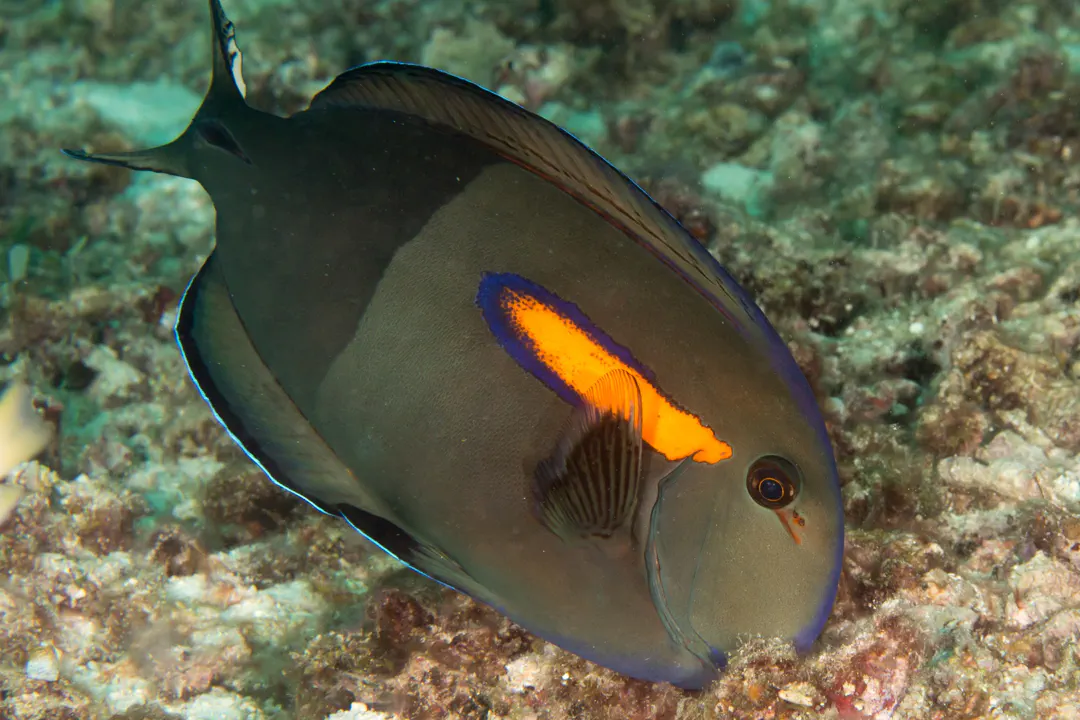
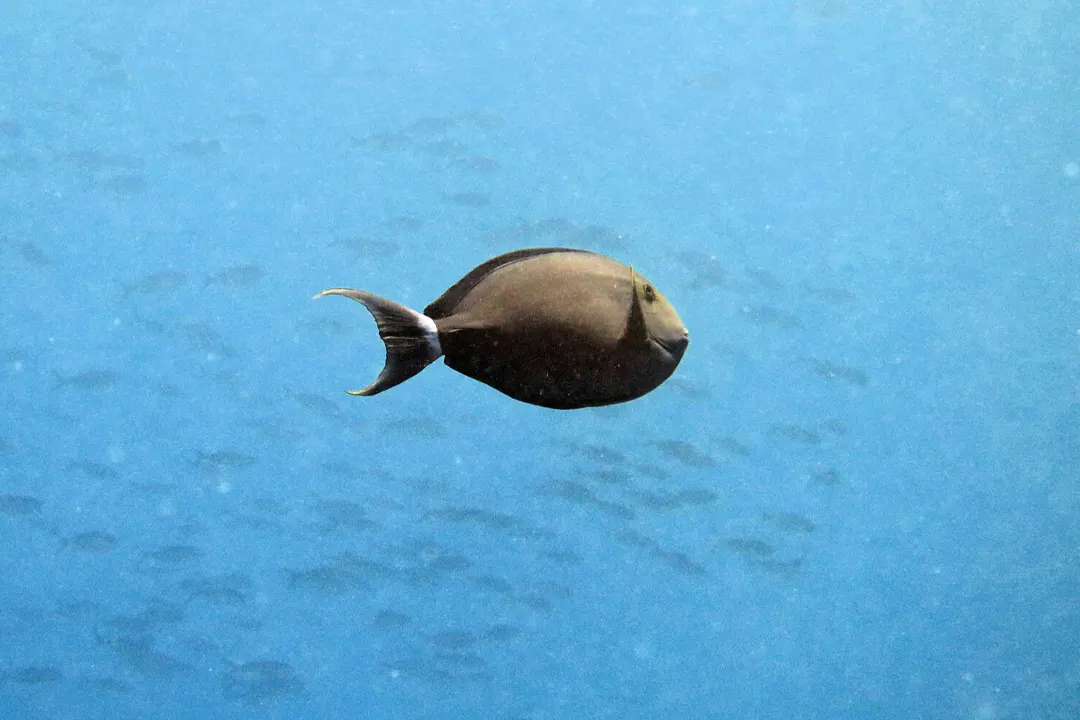
The orange band surgeonfish is a deep-bodied, laterally-compressed oval fish, rather over twice as long as it is deep, with a maximum length of 35 cm (14 in), although a more typical length is 25 cm (10 in). Both dorsal and anal fins are long and low, extending as far as the caudal peduncle. The dorsal fin has nine spines and 23 to 25 soft rays while the anal fin has three spines and 22 to 24 soft rays. The tail fin is crescent-shaped, the points growing longer as the fish gets older. The adult fish is greyish-brown; a sharp vertical line usually separates the paler front half of the fish from the darker hind portion. There is a distinctive orange bar, surrounded by a purplish-black margin, immediately behind the top of the gill cover, and blue and orange lines at the bases of the fins. Like all surgeonfish, this species has a pair of scalpel-like scales that project upward from the caudal peduncle. Larger males develop a convex snout which clearly differentiates them from females. Juvenile fish are yellow.
This fish is found in the tropical eastern Indian Ocean and the western Pacific Ocean. Its range extends from Christmas Island and the Cocos Keeling Islands to southern Japan, Western, Northern and Eastern Australia, Indonesia, the Philippines and Hawaii.
It is associated with reefs, often on outer slopes and in more exposed locations. As an adult, it is a solitary fish or sometimes joins schools, with a depth range of between about 9 and 46 m (30 and 150 ft), but juveniles are found in shallower water in sheltered locations in small groups.
The orange band surgeonfish feeds on detritus and on algae growing on the seabed, as well as the film of diatoms and filamentous algae that grows on sand and other substrates. It often forms schools with parrotfish, tangs and other species of surgeonfish, which all have similar diets; their grazing is important in maintaining biodiversity by keeping rocks free from excessive growth of algae so that coral larvae can find suitable habitat to settle. The fish can change colour from dark to pale almost instantaneously.
© Brian GratwickeCC BY 4.0 · iNaturalist 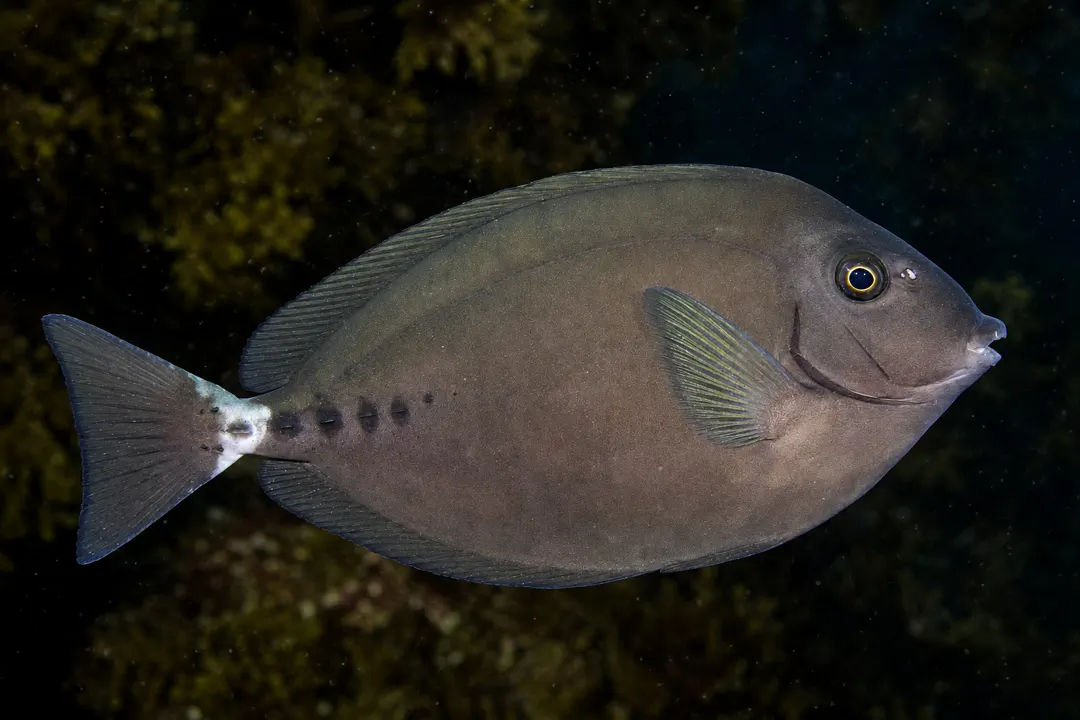 © seabook.appAll rights reserved
  © Dr. Thomas DörnerCC BY-SA 4.0 · iNaturalist
 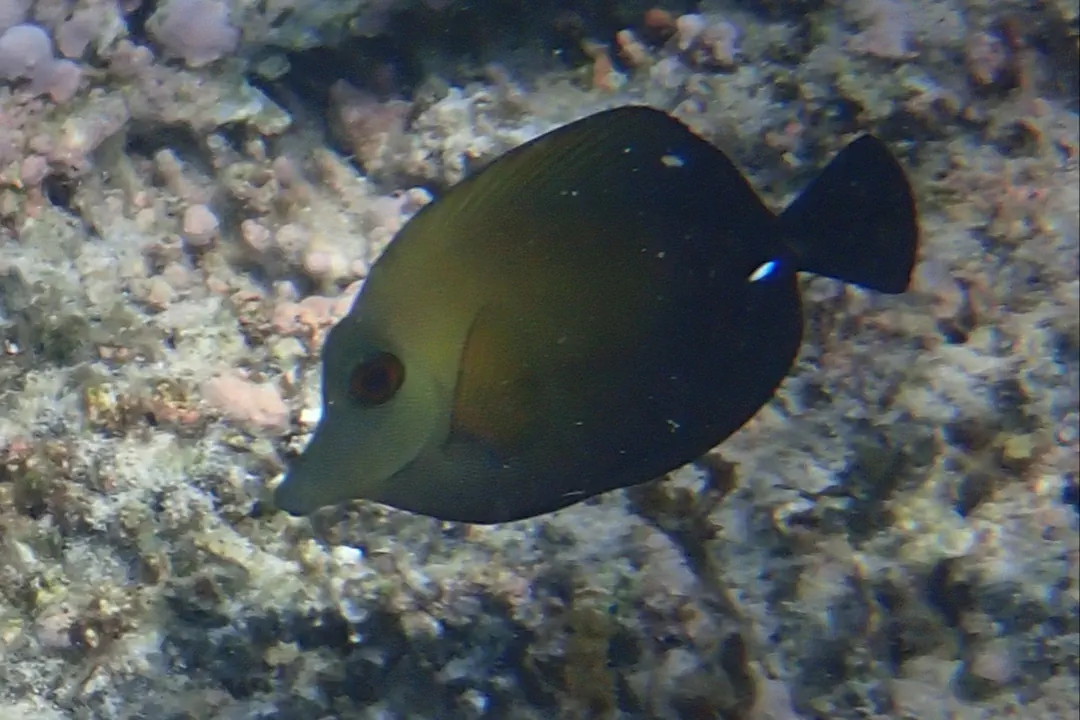 © Debra BakerCC BY 4.0 · iNaturalist
 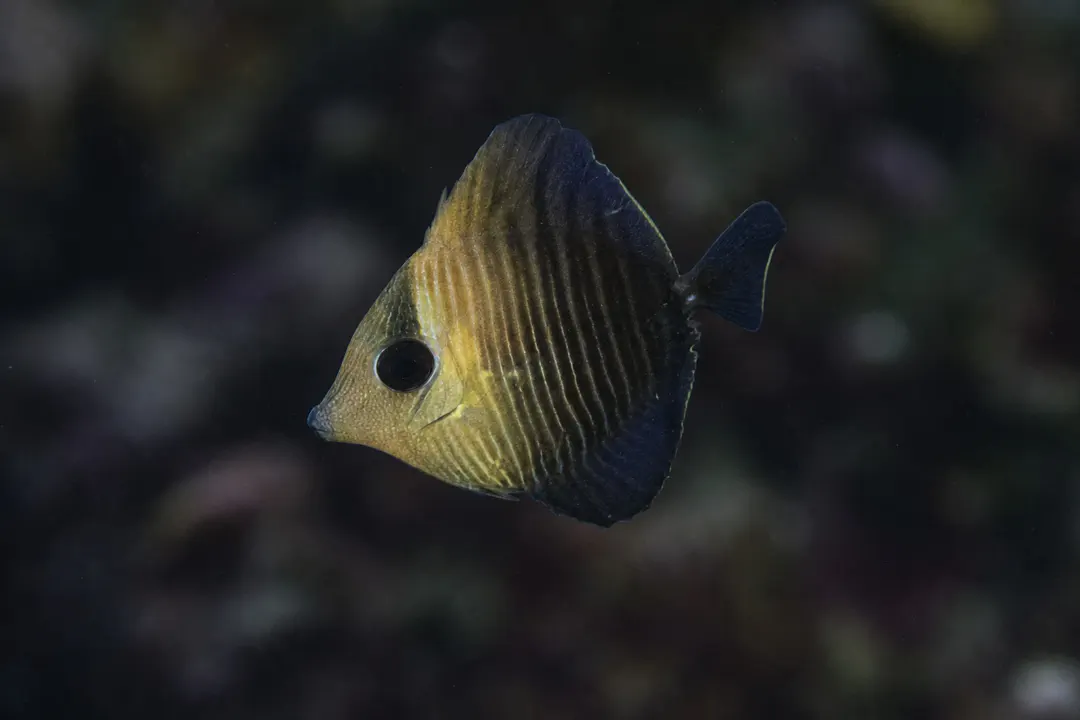 © seabook.appAll rights reserved
 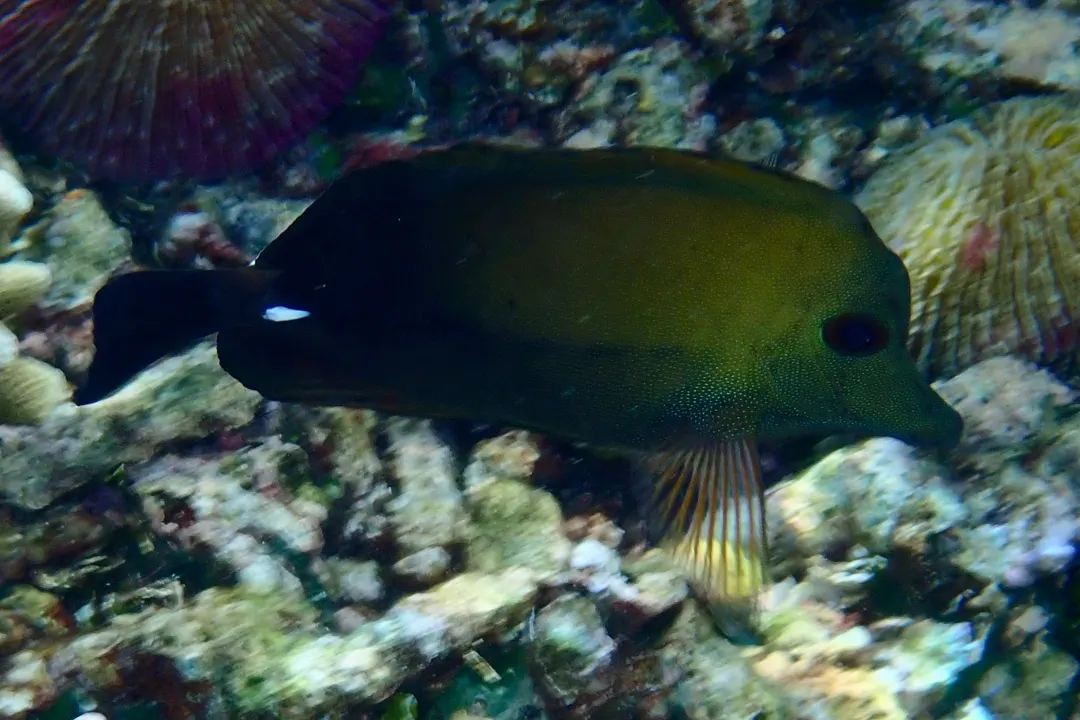 Jean-Paul BoerekampsCC0 · iNaturalist
 Orangeblotch Surgeonfish has no known danger to humans. However, always observe marine life responsibly.
Orangeblotch Surgeonfish can be found at depths of up to 46 meters.
Download Seabook free for iOS and Android.