 © Ditch TownsendCC BY-SA 4.0 · iNaturalist
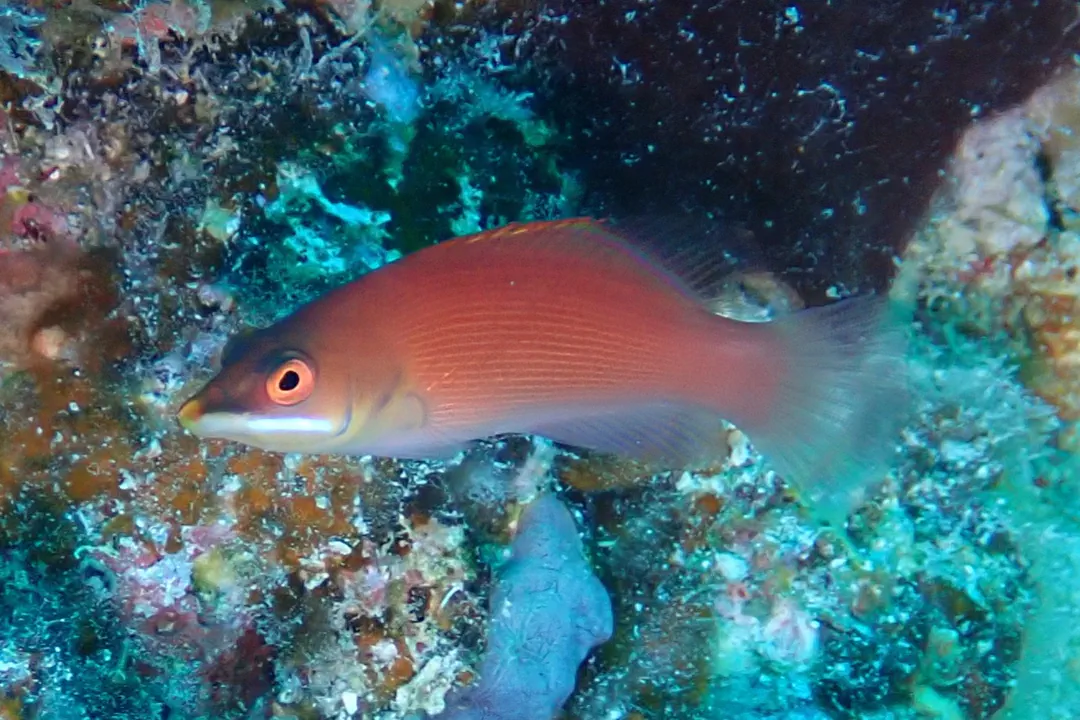
Blueside Wrasse (female)
Cirrhilabrus cyanopleura
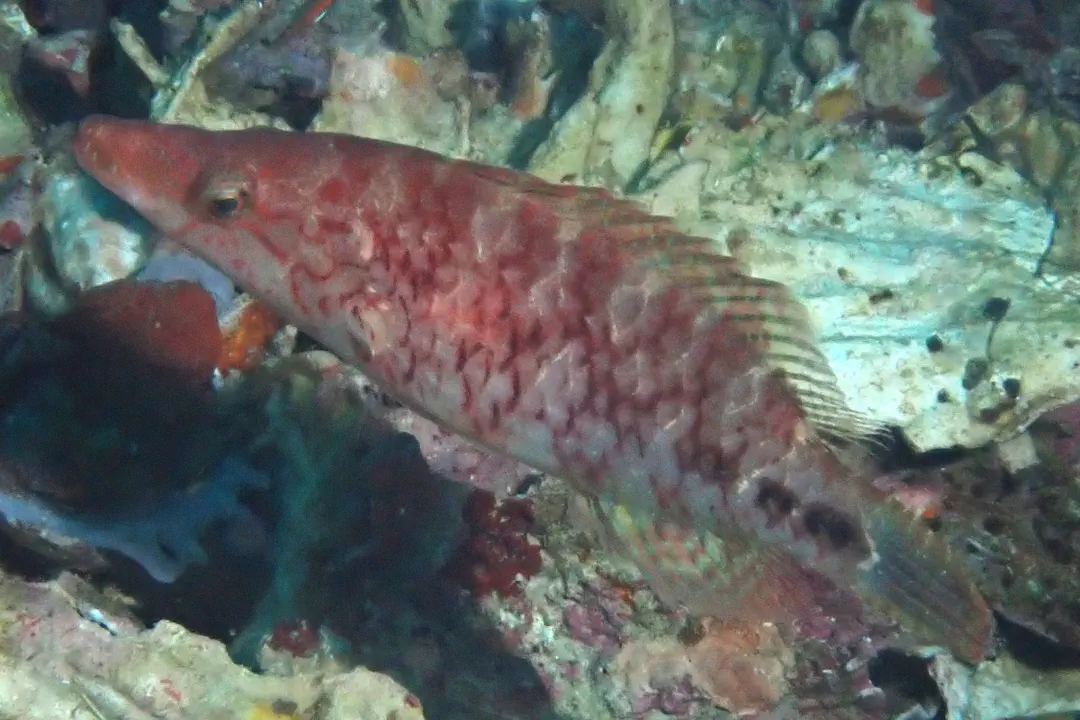
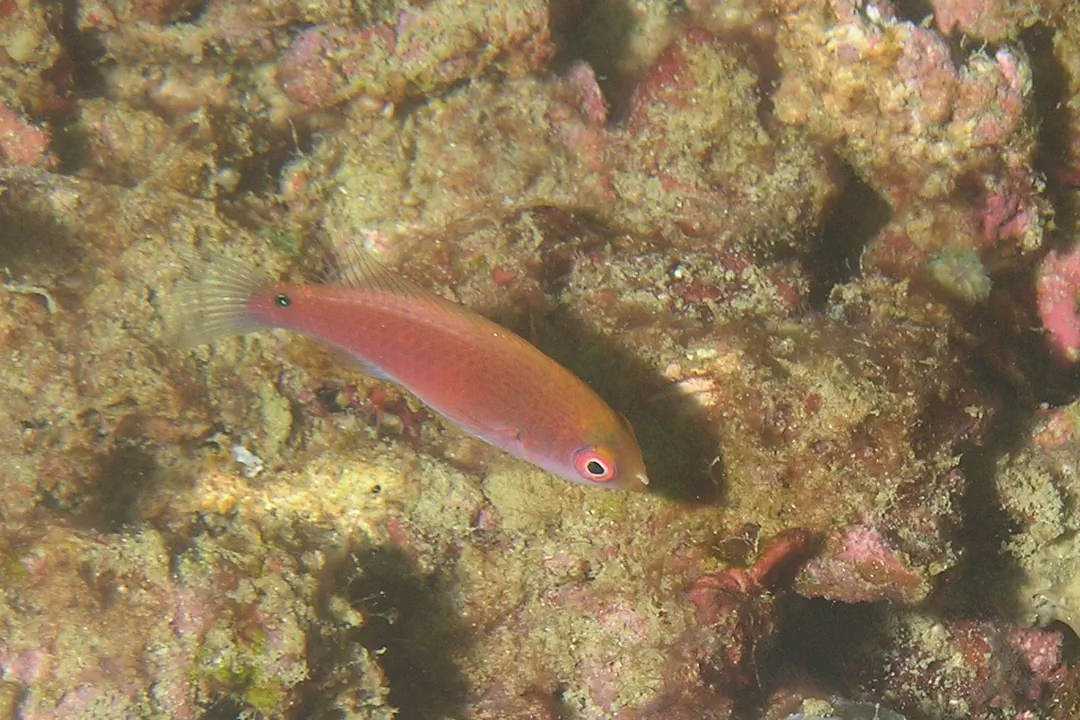
Oxycheilinus celebicus
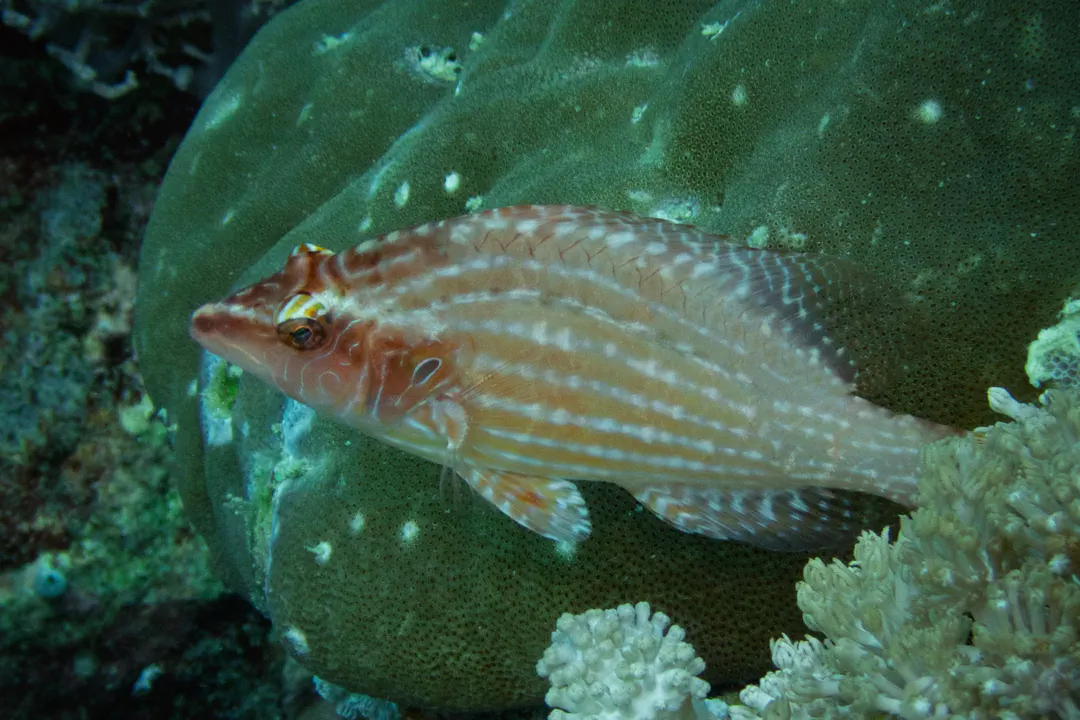
Oxycheilinus celebicus is a member of Oxycheilinus genus of wrasses native to the Indian and Pacific Oceans.
The cheek lacks the multiple lines below the eye and dorsal fin has two thin, usually irregular, red marginal lines The concave head profile of this species is similar to that of C. oxycephalus, but its coloration is distinctive. Long snout, red lines radiating from eye, mottled red-brown body, dark lateral stripe broken into rectangles that are separated by white streaks near tail, dorsal and anal fins with fine dark flecks.
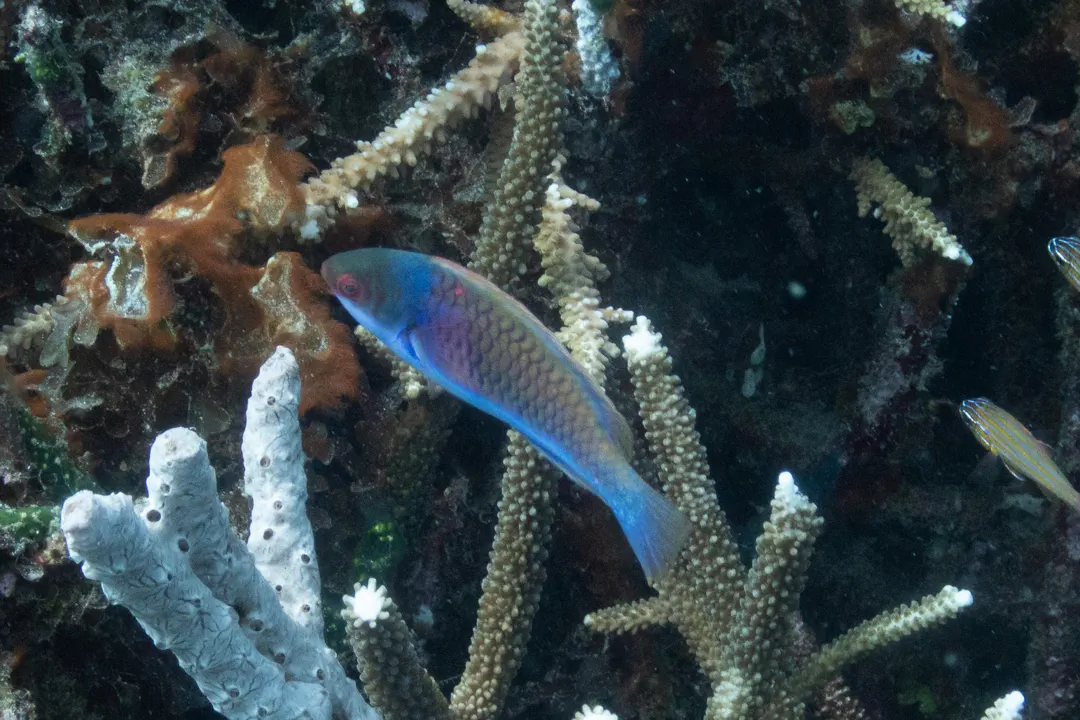
Males are mottled reddish to brownish with pale flecks on the body scales, orange lines radiating from the eye, a small blue spot on the front of the dorsal fin, and a dark blotch on the caudal peduncle. Females are densely mottled with pale red and dark brown blotches, often squarish blotches interspersed with pale bars along the midside forming a broad band that darkens towards the rear, and a small white spot on the upper rear edge of the gill cover. Juveniles have a black ocellus on the caudal-fin base.
Max length : 24.0 cm
Western Pacific: Moluccas to the Solomon Islands, north to southern Japan, south to Rowley Shoals. Recently recorded from Tonga.
Inhabits coral-rich areas of protected reefs, with a rich mix of soft and brittle hard corals and other invertebrates. Reported to be associated with the mushroom Heliofungia actiniformis. Oviparous, distinct pairing during breeding.
© Ditch TownsendCC BY-SA 4.0 · iNaturalist 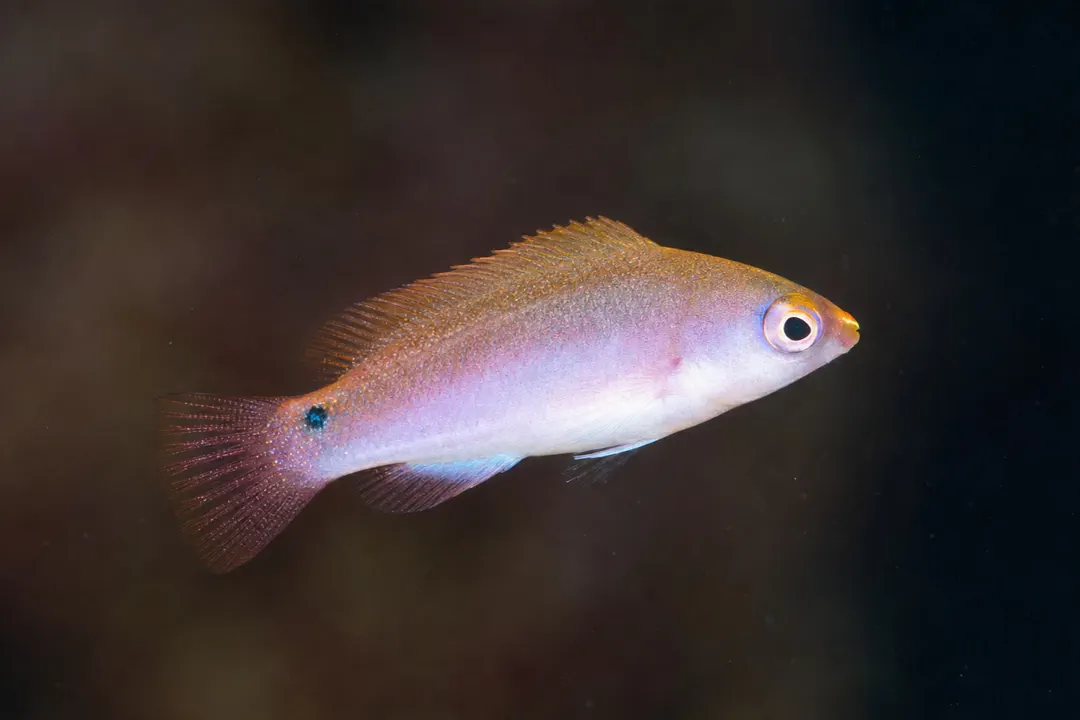 © seabook.appAll rights reserved
  Justin PhilboisCC0 · iNaturalist
  © Pierre PericardCC BY 4.0 · iNaturalist
  © Debra BakerCC BY 4.0 · iNaturalist
  © Debra BakerCC BY 4.0 · iNaturalist
 Slender Maori Wrasse (male) has no known danger to humans. However, always observe marine life responsibly.
Slender Maori Wrasse (male) can be found at depths of up to 40 meters.
Download Seabook free for iOS and Android.