 © Bernard PictonCC BY 4.0 · iNaturalist
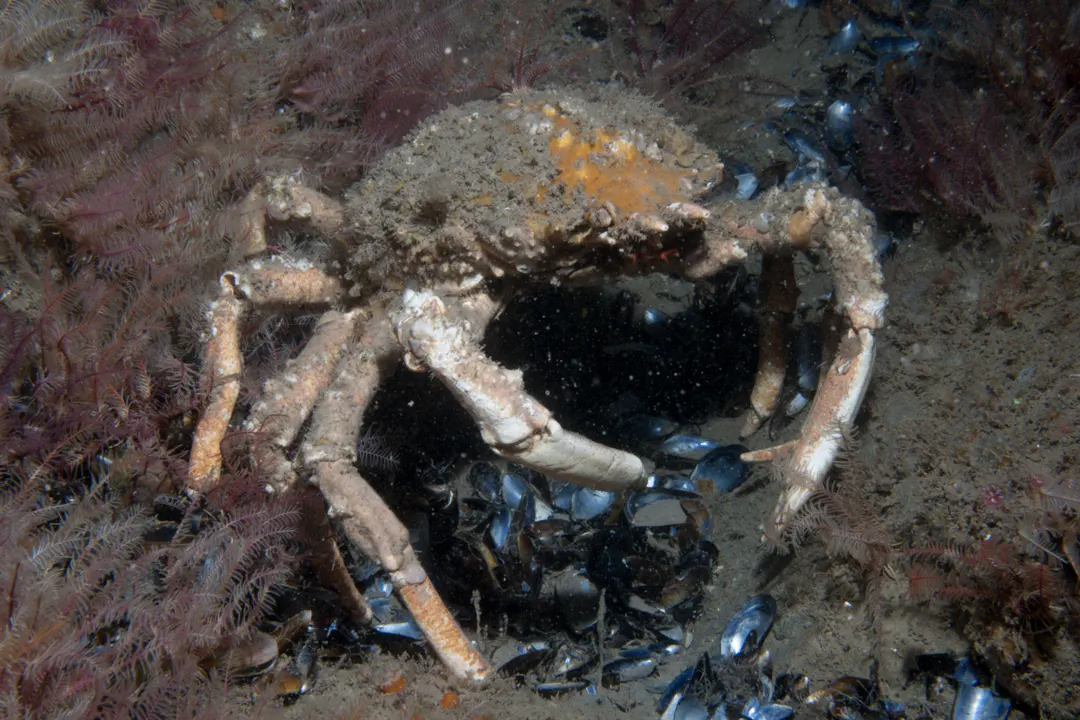
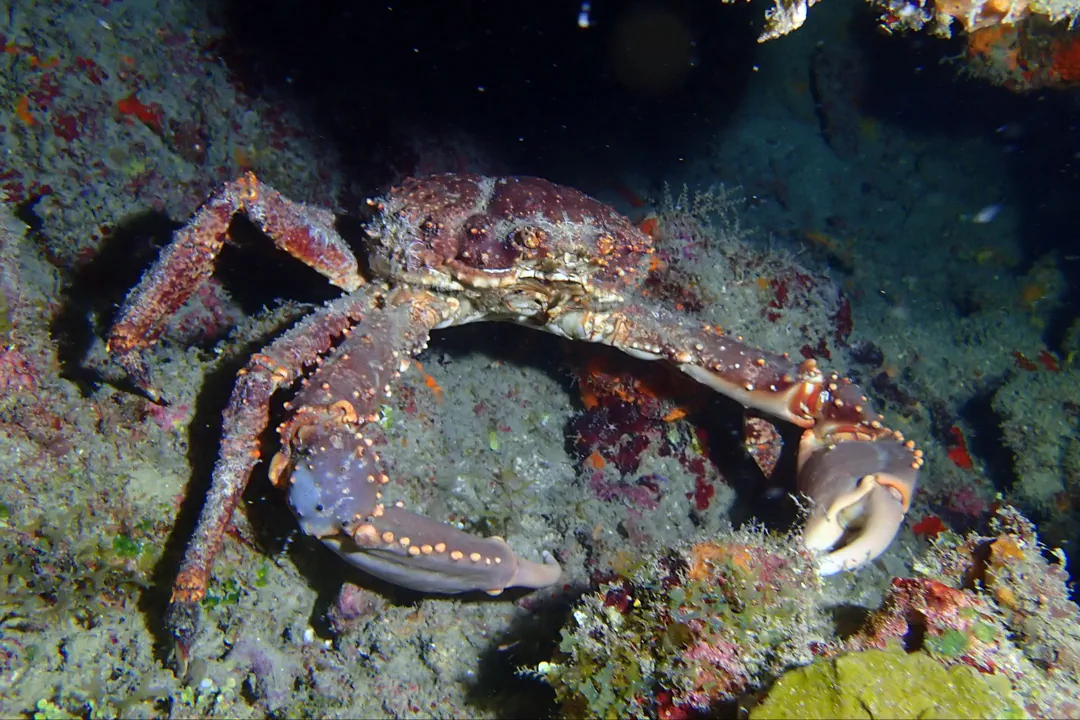
Atlantic Spinous Spider Crab
Maja brachydactyla
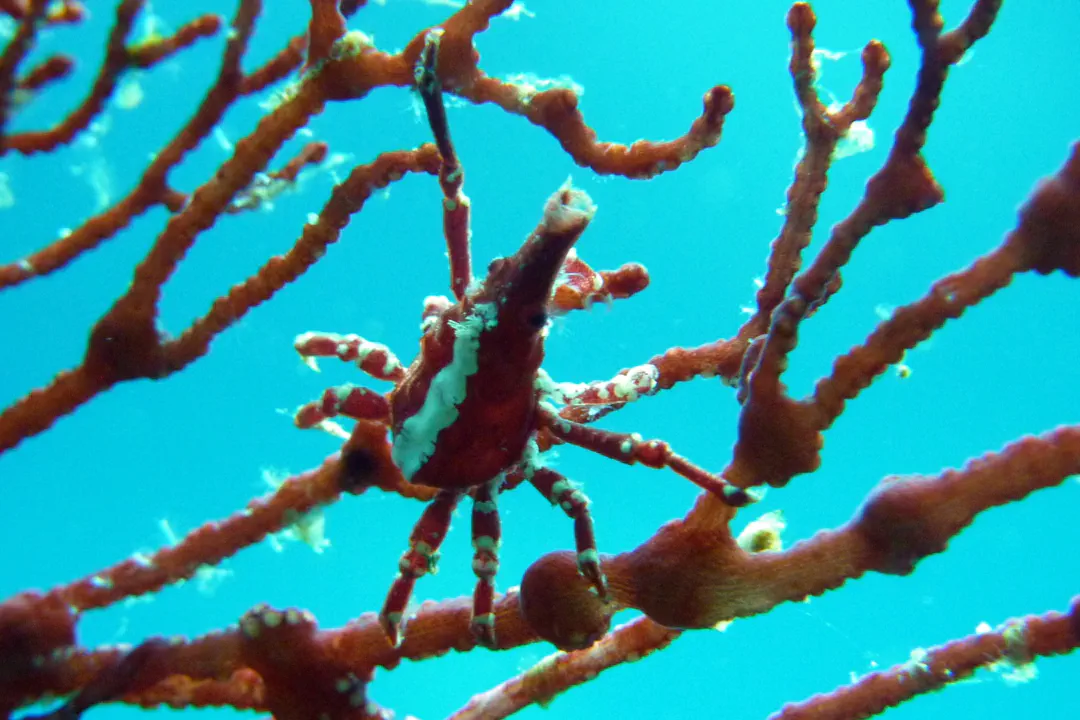
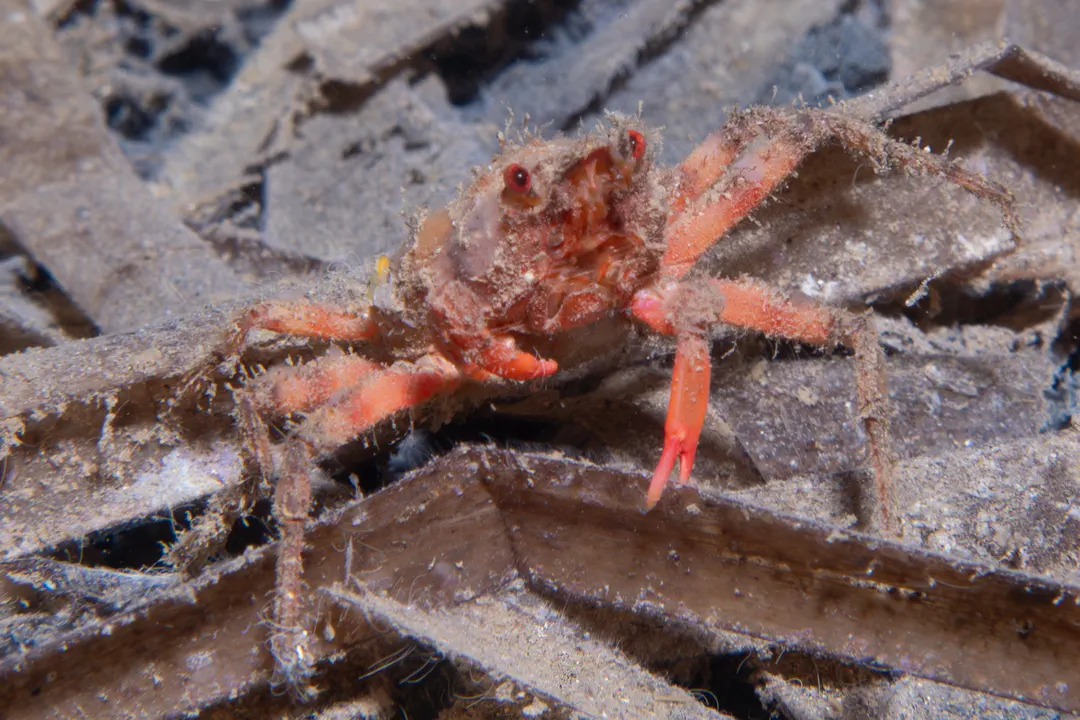
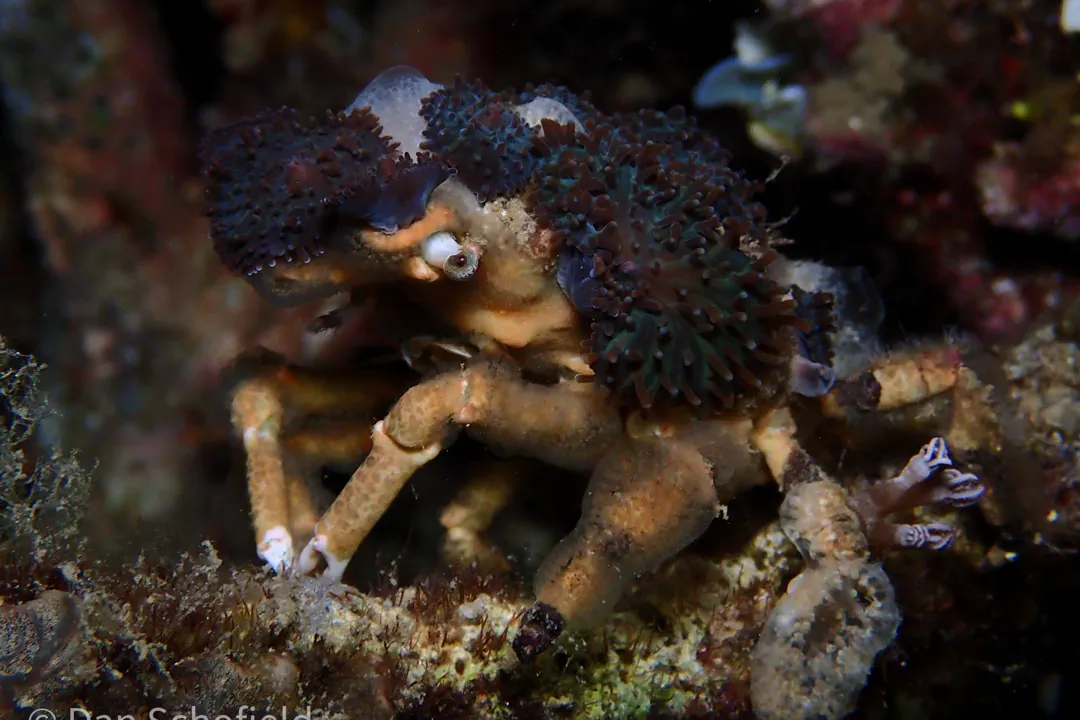
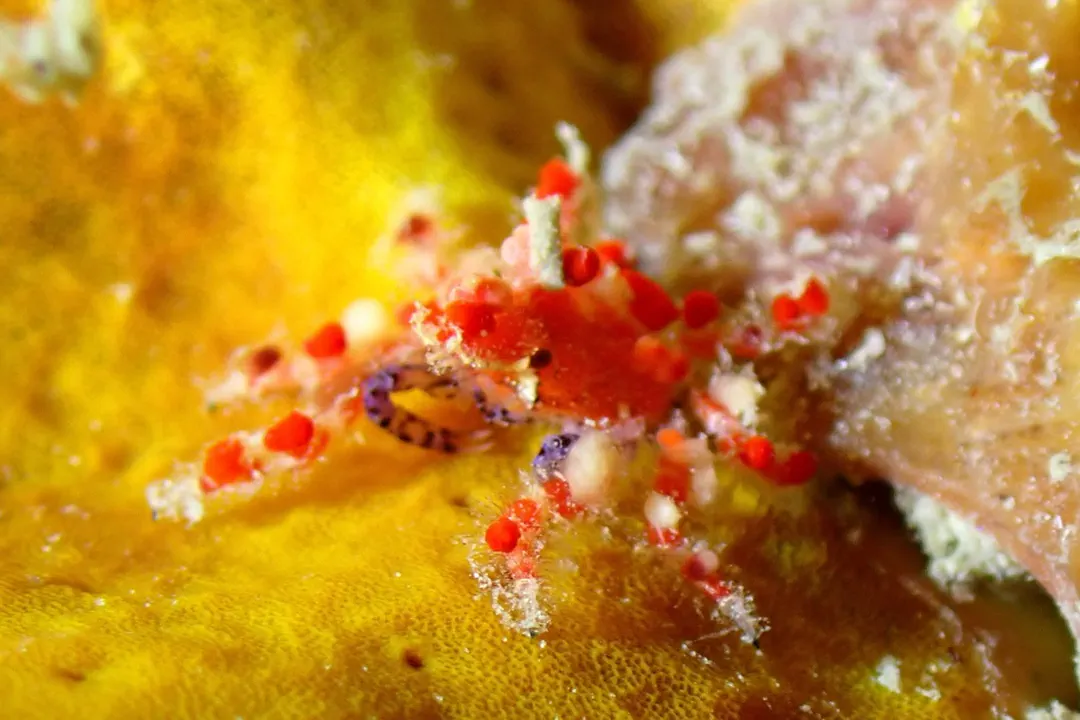
Xenocarcinus depressus
Carapace elongate-ovate, depressed, regions ill defined, gastric region convex, cardiac slightly concave, surface with unequal rounded tubercles, in the cardiac-intestinal region a plum blossom-shaped one. Branchial region with two patches of tubercles. Front produced and broadly beaked, furcated at tip, closely covered with curled long setae at the inner border. Eyestalks short and stout. Basal segment of the antenna stout, flagellum short and small. Chelipeds not stouter than ambulatory legs. Palm long, more than twice as long as the movable finger. Fingers not gaping. Dactylus claw-shaped, inner border finely toothed. First pleopod of the male with a styliform chitinous process, with long hairs distally. Abdomen elongate; sixth segment trapezoid, its basal part slightly broader than long; telson short and triangular in shape. Abdomen of female ovate, telson triangular. Carapace length of the male 13.5 mm, breadth 5.4 mm; of the female, length 14.2 mm, breadth 6.1 mm. (Dai & Yang, 1991)
Type locality: Cape Howe, New South Wales, Australia. Range: Japan - Yoron-jima and Taketomi-jima, Okinawa (Sakai, 1976a); China - Paracel Island (Chen, 1980), Hainan Island and Paracel Islands (Dai & Yang, 1991); Palau (Takeda, 1973d); Indonesia - Neira Banda (Griffin & Tranter, 1986a); Australia - Cape Howe, New South Wales (Miers, 1874), Bowen and Heron Island, Queensland (Griffin & Tranter, 1986a); New Caledonia - Poum (Takeda & Nunomura, 1976); Fiji; 8-20 m.
© Bernard PictonCC BY 4.0 · iNaturalist 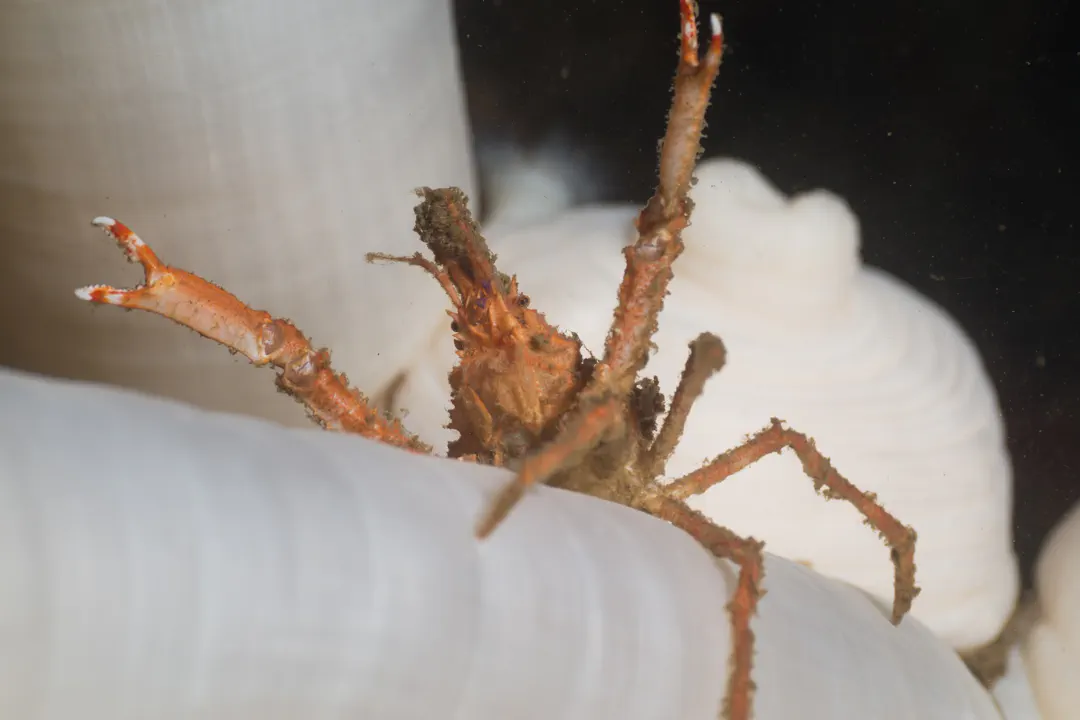 © seabook.appAll rights reserved
  © Julien RenoultCC BY 4.0 · iNaturalist
  © Robin WhiteCC BY 4.0 · iNaturalist
  © Dan SchofieldCC BY 4.0
  © Robin WhiteCC BY 4.0 · iNaturalist
 Depressed Spider Crab has no known danger to humans. However, always observe marine life responsibly.
Depressed Spider Crab can be found at depths of up to 20 meters.
Download Seabook free for iOS and Android.