 Justin PhilboisCC0 · iNaturalist
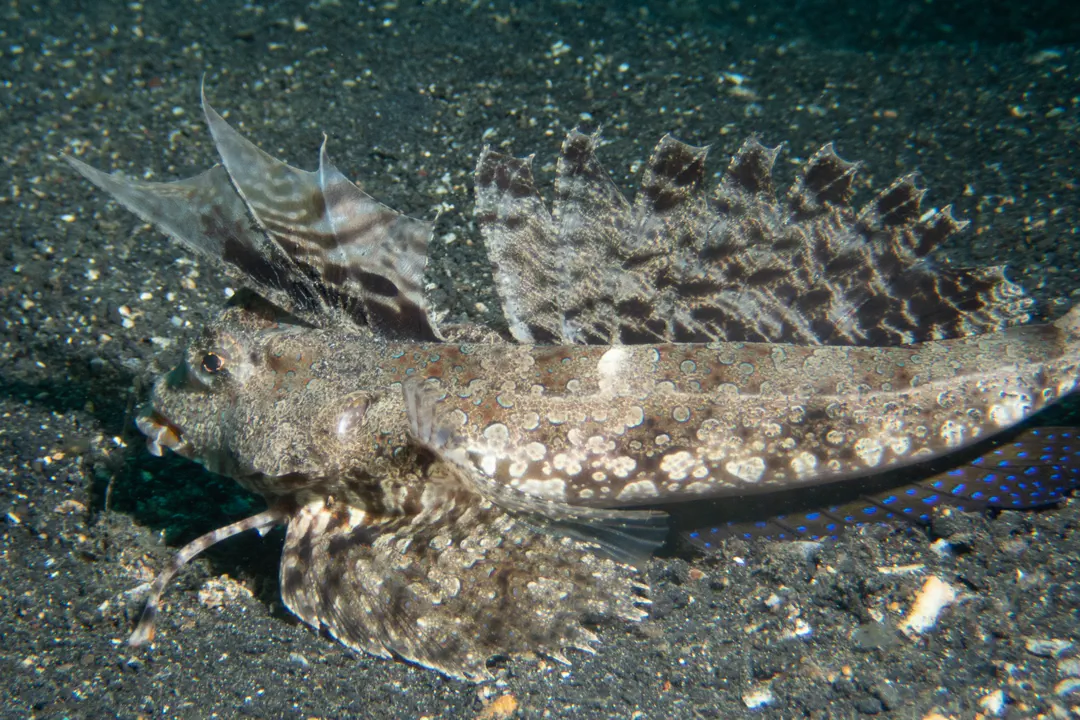
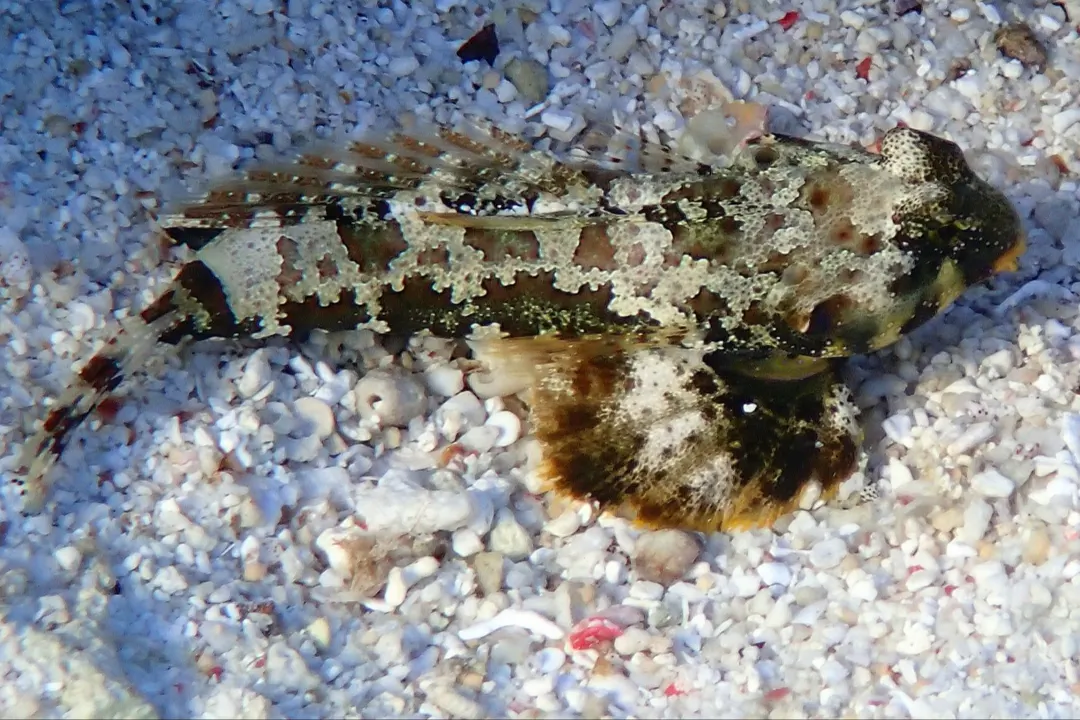
Fingered Dragonet (female)
Dactylopus dactylopus
Synchiropus picturatus
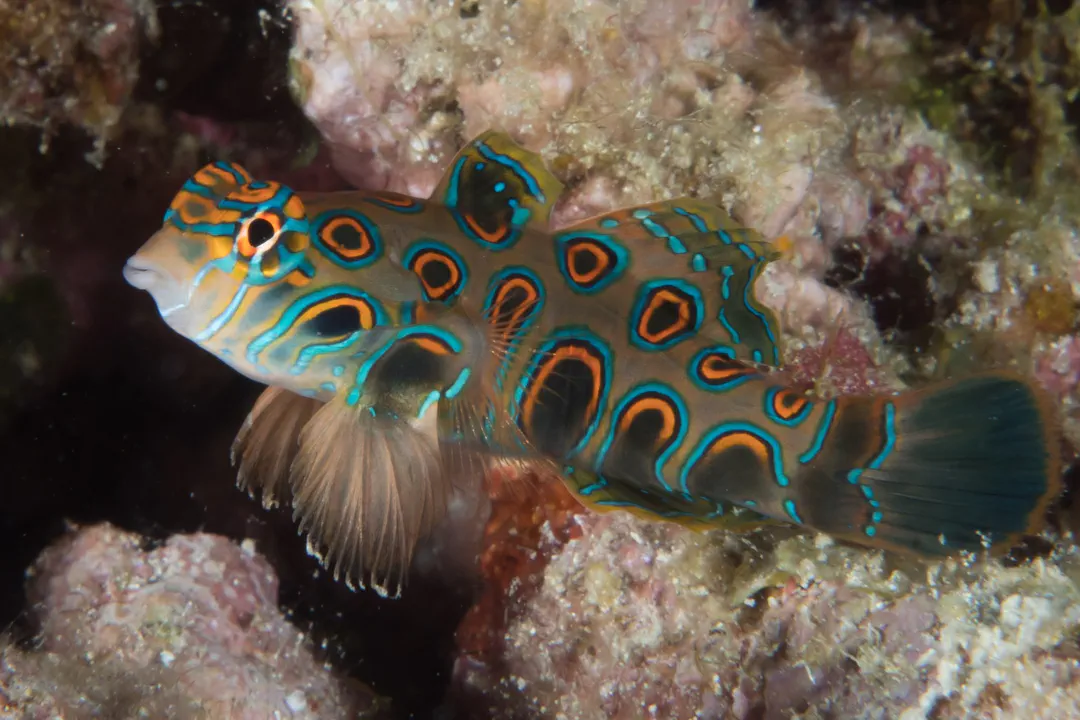
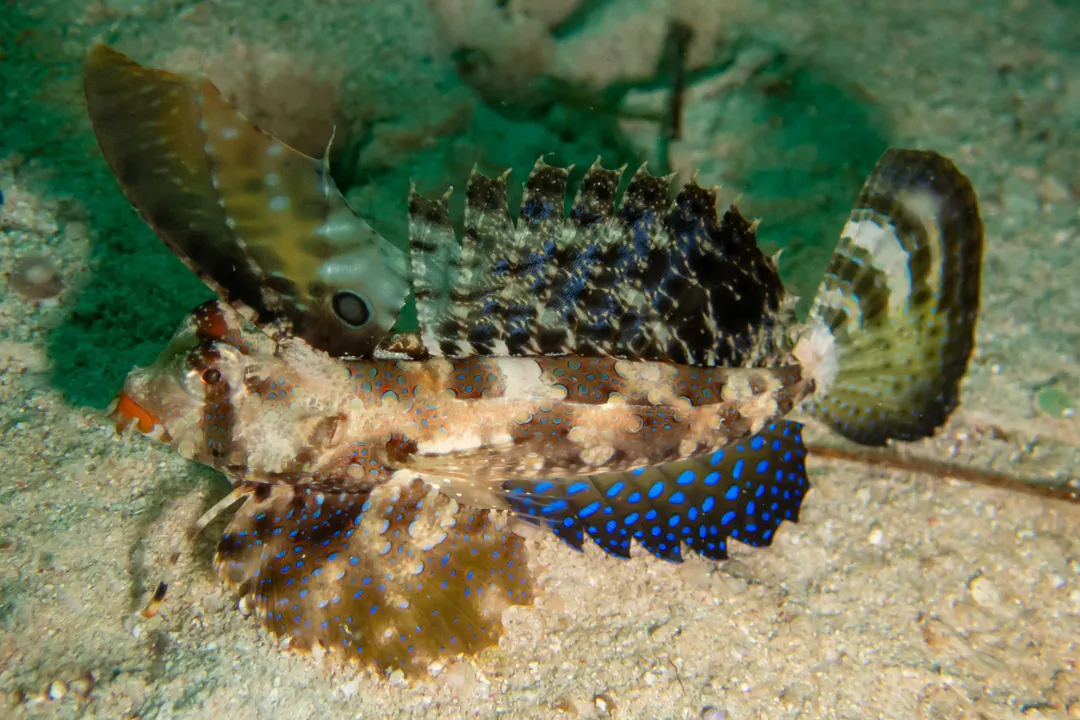
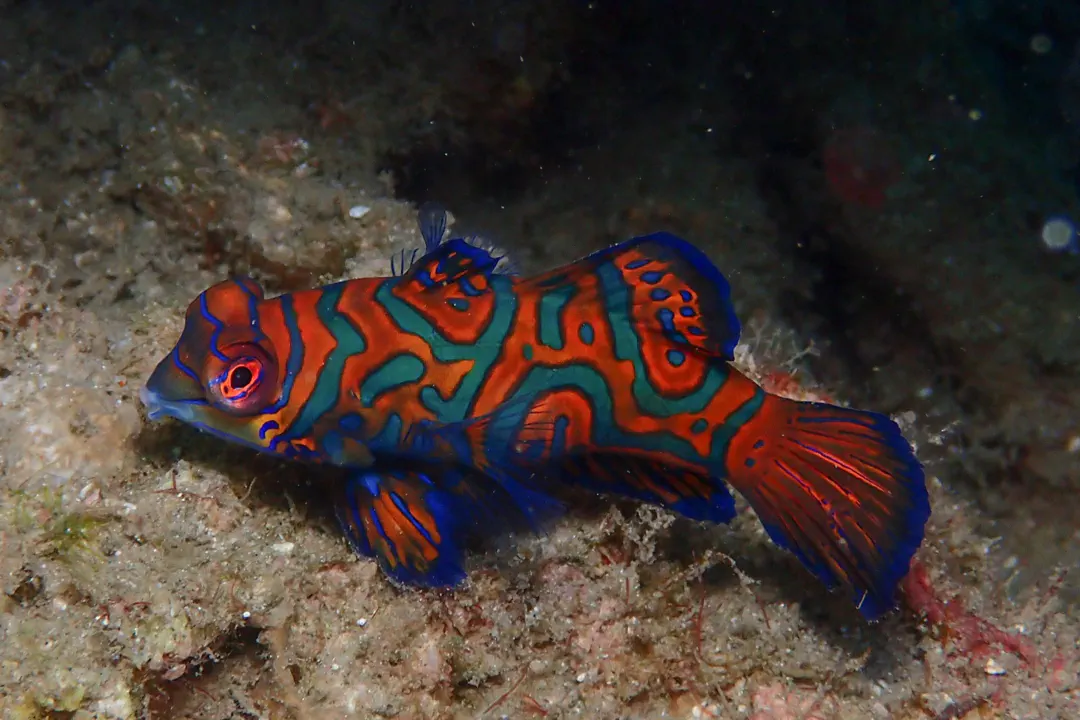
Synchiropus picturatus is a brightly colored member of the dragonet family native to the Indo-West Pacific: Philippines, eastern Indonesia and northwest Australia. It occasionally makes its way into the aquarium trade.
The picturesque dragonet may grow to a size of 7 cm in length. They have thick slime on their skin that inhibits many types of parasitic infection and minimizes the risk of disease following stress or physical trauma. This seems to help protect them from some other more aggressive fish.
Synchiropus picturatus is one of only two animal species known to have blue coloring because of cellular pigment, the other being the closely related mandarinfish (S. splendidus). The name "cyanophore" was proposed for the blue chromatophores, or pigment-containing and light-reflecting cells. In all other known cases, the colour blue comes from thin-film interference from piles of flat, thin and reflecting purine crystals.
The entire body of the fish is decorated with spots that are randomly scattered around it. If you look closely, you can see that, in fact, these spots are a few rings of irregular shape and different colors, one in another and encircling one larger spot, which is usually painted in a greenish color. Between the eyes there are turquoise and yellow strokes. In general, the color of fish can vary in rather large limits and depends on their habitat. Unlike females in males, the dorsal fin has a bright color and a larger size.
Indo-West Pacific: Philippines, eastern Indonesia and northwest Australia.
Found on sandy bottoms of shallow sheltered reefs. Secretive in rubble below living coral. Feeds on small benthic invertebrates. Forms small loose groups.
The picturesque dragonet is a reef dweller, and so a reef-like environment is ideal for them. Natural feeding habits entail constantly browsing the substrate for copepods and other small invertebrates. Systems with an additional refugium are ideal, as these can help to generate suitable levels of food organisms as it prefers to peck on live rock. Because of this it can be a hard fish to keep.
It can, however, be weaned on to frozen food such as Mysis, Artemia and other prepared foods but these alone are unlikely to sustain them, particularly if it is having to compete with other tankmates.
The picturesque dragonet is peaceful and does better with peaceful tankmates, such as seahorses.
Justin PhilboisCC0 · iNaturalist 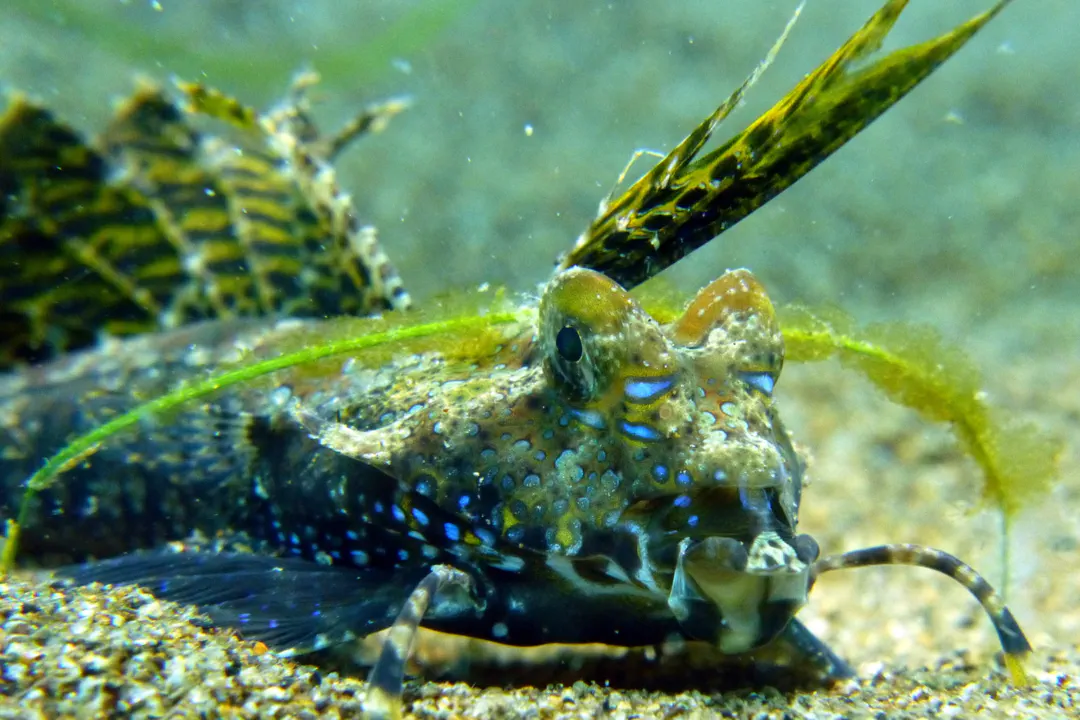 © Kai SquiresCC BY 4.0 · iNaturalist
  © portioidCC BY 4.0 · iNaturalist
  © Dan SchofieldCC BY 4.0 · iNaturalist
  © Nicola CrockfordCC BY 4.0 · iNaturalist
  © Stas KuryanAll rights reserved
 Picturesque Dragonet has no known danger to humans. However, always observe marine life responsibly.
Picturesque Dragonet can be found at depths of up to 20 meters.
Download Seabook free for iOS and Android.