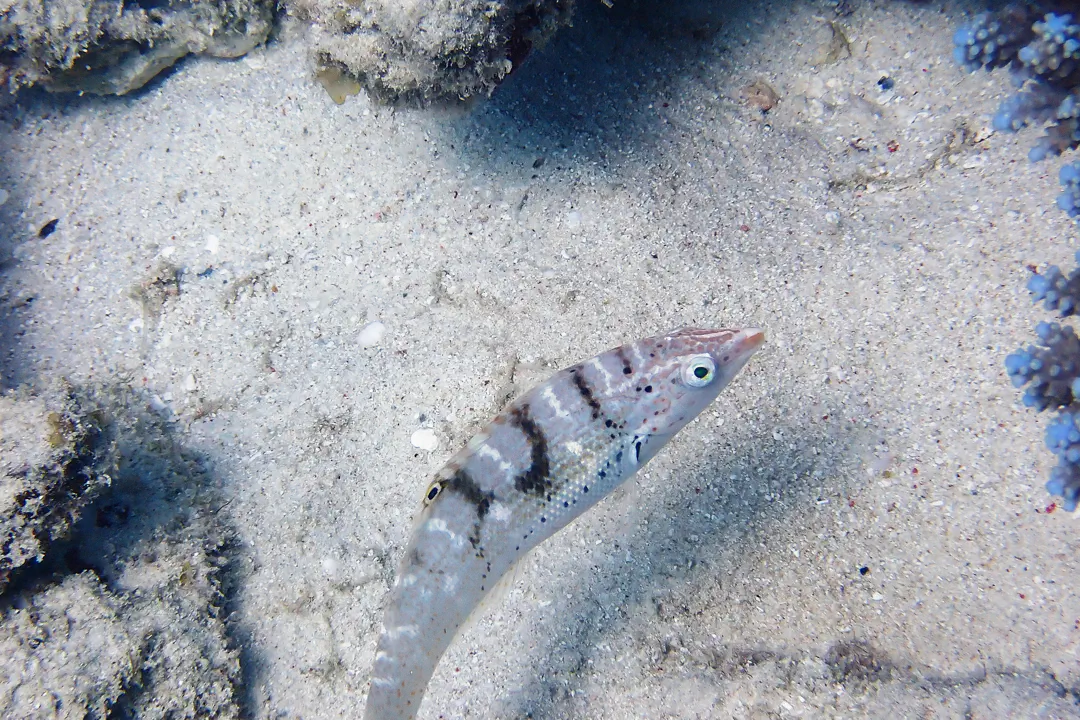
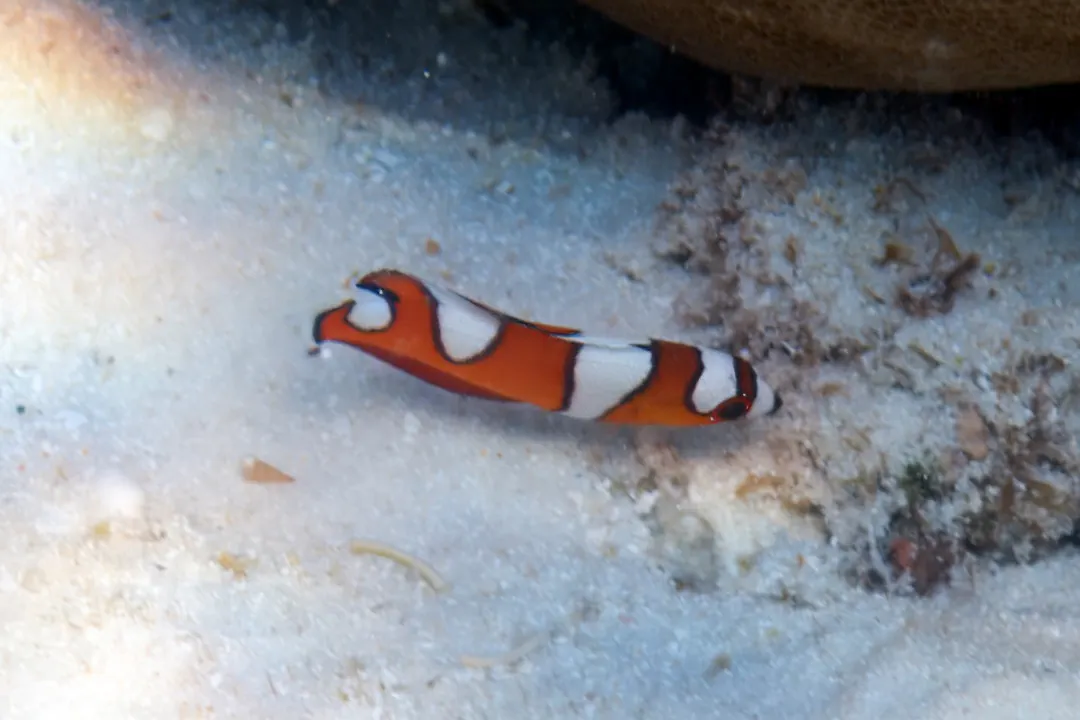
 © Darren ObbardCC BY 4.0 · iNaturalist
African Coris
Coris cuvieri
Coris schroederii
Coris schroederii, commonly known as Schroeder's rainbow-wrasse, is a marine wrasse in the family Labridae, found in the Indo-Pacific region, particularly associated with coral-reef environments such as the western and central Pacific.
Coris schroederii was described by Pieter Bleeker in 1858, originally as Julis schroederii Bleeker, 1858. The name is based on material from Amboina (Ambon), in the Moluccan Islands. The specific epithet schroederii honors T. W. Schröder, a Dutch East Indies Army captain and member of the Royal Naturalist Society who supplied the type specimen. The generic name Coris is derived from Greek korys, meaning 'helmet', referring to the scaly covering of the head, eyes, and jaws characteristic of wrasses. WoRMS currently lists Coris schroederii as a taxon inquirendum—an uncertain taxon—rather than an unambiguously accepted species. Other taxonomic databases have treated the name as a synonym of Coris batuensis, along with several later names, including Coris pallida, Coris papuensis, Coris coronata, and Platyglossus punctatus. The principal nomenclatural history is Bleeker’s 1858 Julis schroederii → Coris schroederii, with later authors alternatively placing it in Hemicoris or Halichoeres, and some databases synonymizing it with Coris batuensis.
The species has a moderately deep, laterally compressed body shape with a pointed snout and terminal mouth. It features a continuous dorsal fin and a distinct tail shape. The colour pattern can vary significantly due to environmental factors, so it is important to record the pattern rather than relying solely on apparent colour. Stable pattern details, such as markings on the head, eye region, pectoral-fin base, dorsal-fin base, and caudal peduncle, are more useful for identification than overall colour. When comparing with similar species, it is crucial to consider the same life stage and sex, as characteristics can differ markedly. For example, Coris batuensis juveniles are distinguished by their orange spots, dark mouth-to-eye stripe, narrow white bars extending from the dorsal fin, and typically three black dorsal-fin ocelli. Documentation of a full side view with visible fins, along with notes on locality, habitat, and behaviour, enhances identification accuracy.
Adults occur on clear lagoon and seaward reefs, especially in deeper reef habitats such as reef bases and adjacent sand flats. The species is less characteristic of shallow reef flats and crests. It primarily inhabits sand–rubble bottoms near reefs. Juveniles and recruits have been recorded among macroalgae, reef matrix, and rubble–sand patches. Schroeder's rainbow-wrasse has been reported from depths of approximately 2–30 m, usually between 2–15 m. The geographic distribution of the species spans the Indo-Pacific, from East Africa eastward to the Marshall Islands, north to southern Japan, and south to the Great Barrier Reef and Tonga.
The species is reported as primarily diurnal, with activity and feeding during daylight, and at night it buries itself in sand, a common sleep and refuge behaviour in Coris wrasses. Adults are generally solitary, or occasionally associated in pairs, while juveniles may form small groups; however, robust population-level observations for Coris schroederii specifically are lacking. The species is reported as oviparous, with external fertilisation, but reproductive details such as spawning season, courtship, sex change, and mating-group structure are not sufficiently established in the available authoritative sources. No species-specific, verified description of its reaction to divers was found, but it may retreat into sand or cover when disturbed, based on its nocturnal sand-burying behaviour and general wrasse behaviour, though this response has not been adequately documented for Coris schroederii.
Schroeder's rainbow-wrasse has minor local commercial-fishery importance, but it is not a major fishery target. The species occurs in the commercial aquarium trade, although available sources do not establish trade volume or collection impacts. A reliable authoritative source confirming that Schroeder's rainbow-wrasse is routinely eaten or safe for consumption was not found, so its edibility should be treated as undocumented. FishBase lists Schroeder's rainbow-wrasse as harmless to humans, with no venomous spines or documented species-specific attacks identified. The IUCN Red List categorizes Schroeder's rainbow-wrasse as Least Concern (LC), with the assessment date given as 22 February 2009. CITES and CMS status for Schroeder's rainbow-wrasse are listed as Not Evaluated, indicating a lack of formal conservation assessment. The available conservation assessment for Schroeder's rainbow-wrasse is old, and the taxonomic uncertainty surrounding the name C. schroederii suggests that species-level trade and conservation conclusions should be verified against currently accepted identification.
© Darren ObbardCC BY 4.0 · iNaturalist 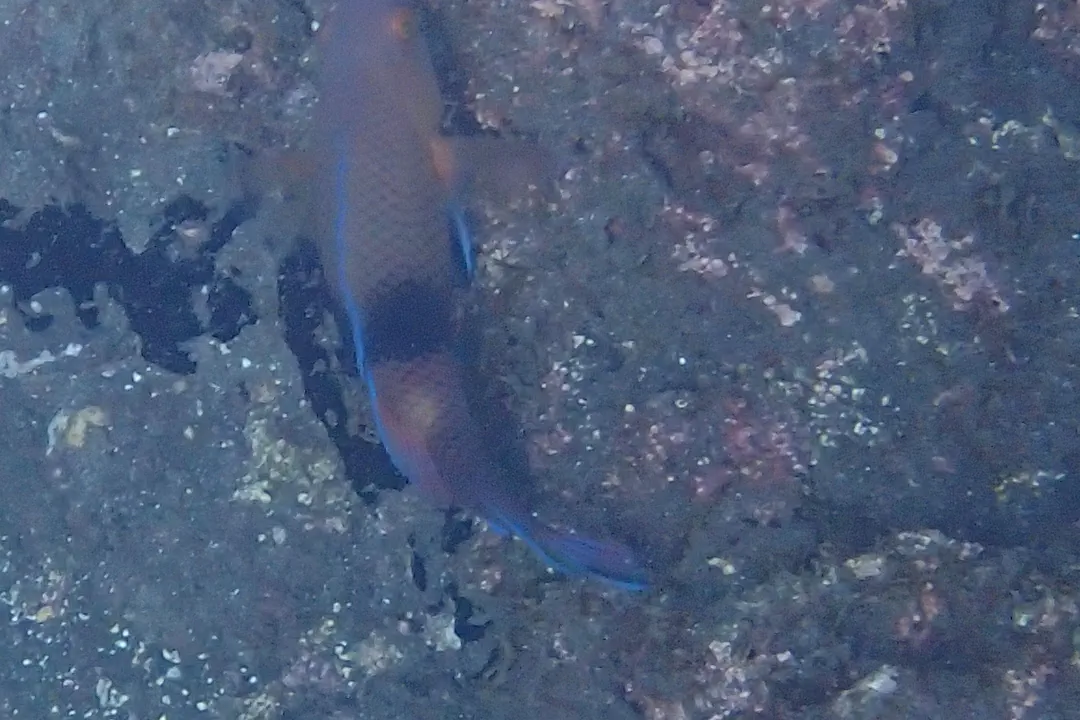 © Jan Ebr & Ivana EbrováCC BY 4.0 · iNaturalist
 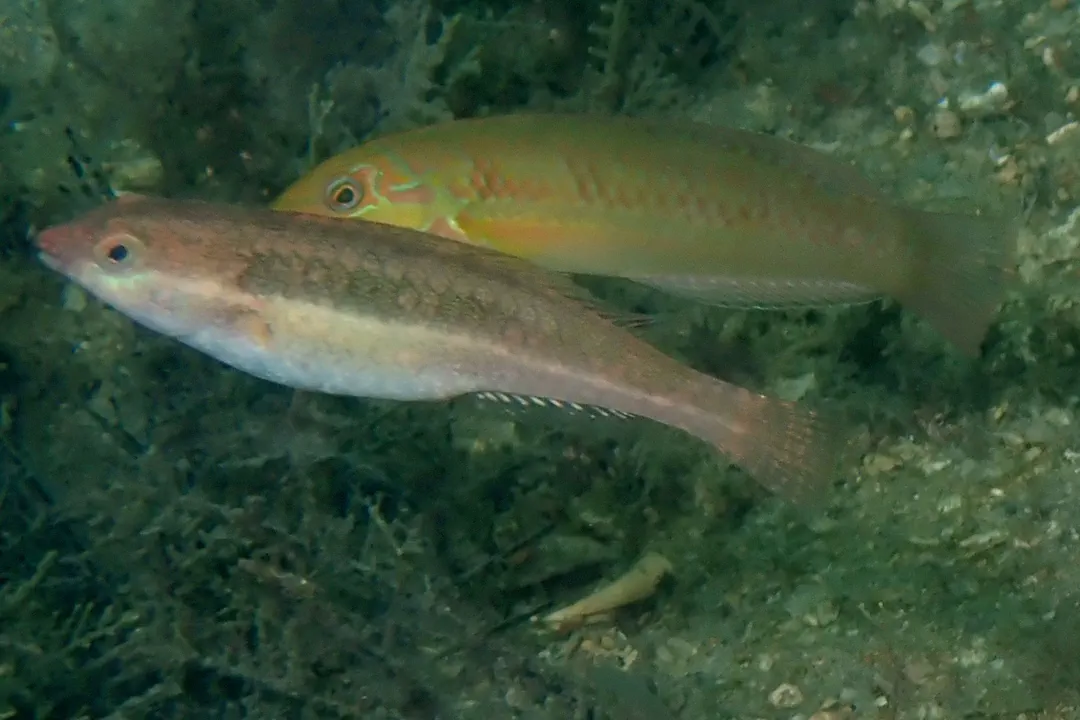 © jeyreCC BY 4.0 · iNaturalist
 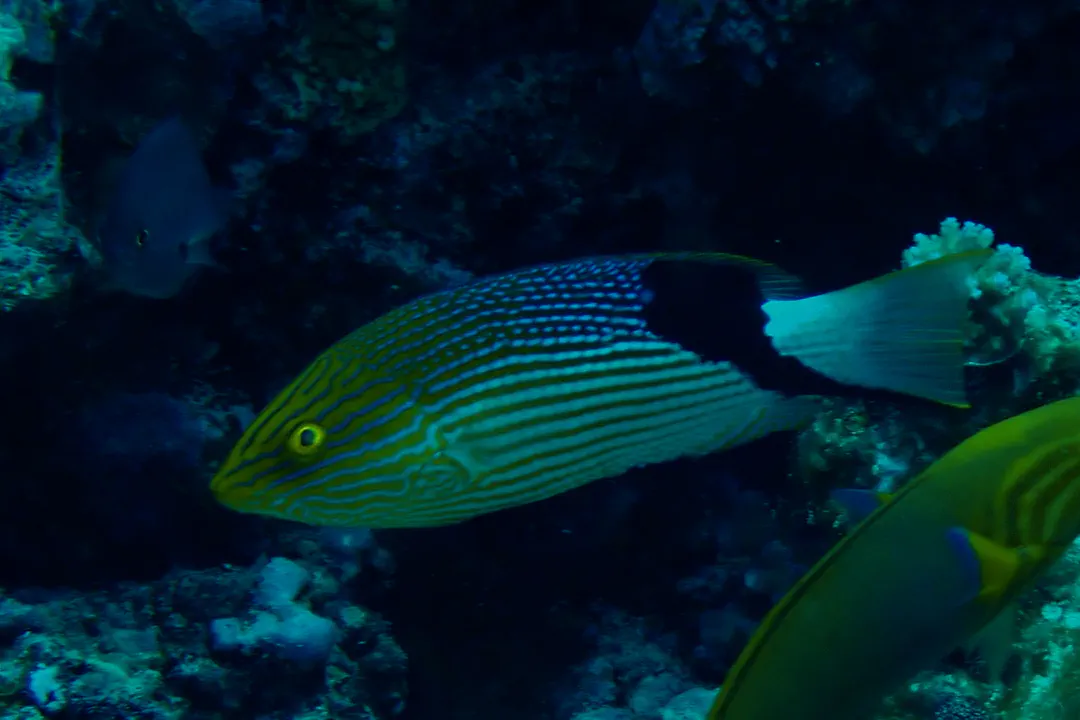 © Debra BakerCC BY 4.0 · iNaturalist
 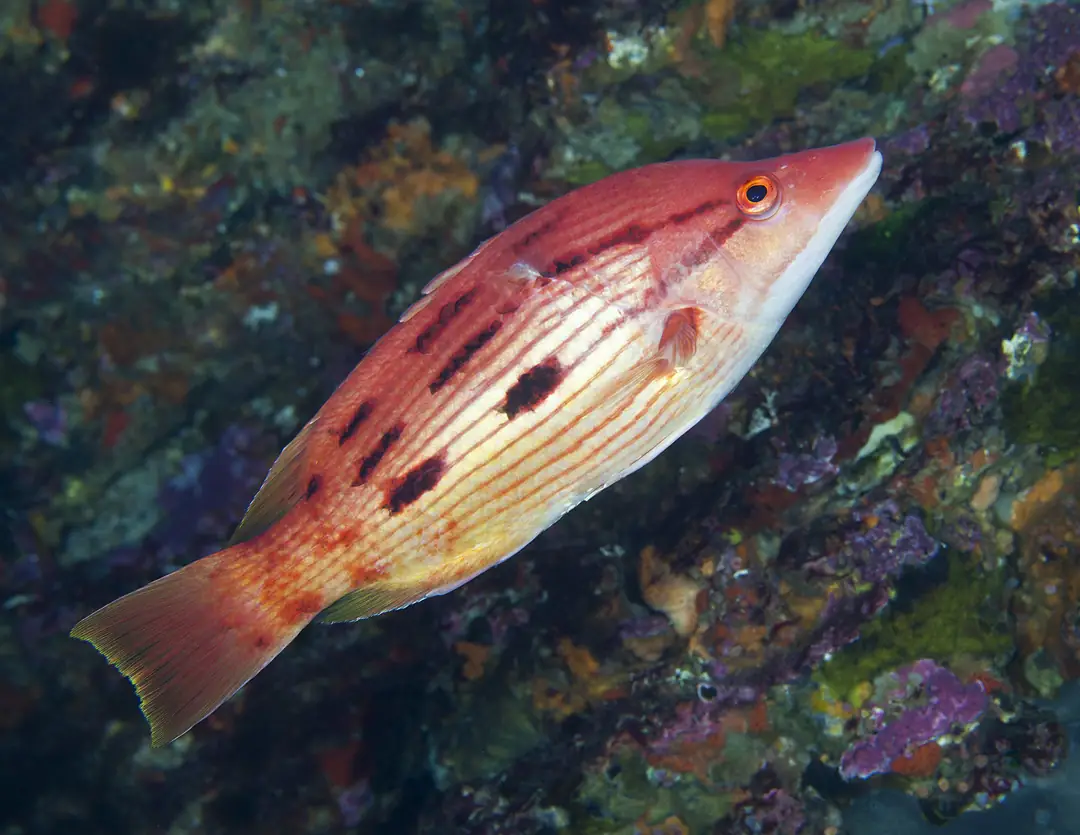 © daan_hoffmannAll rights reserved
 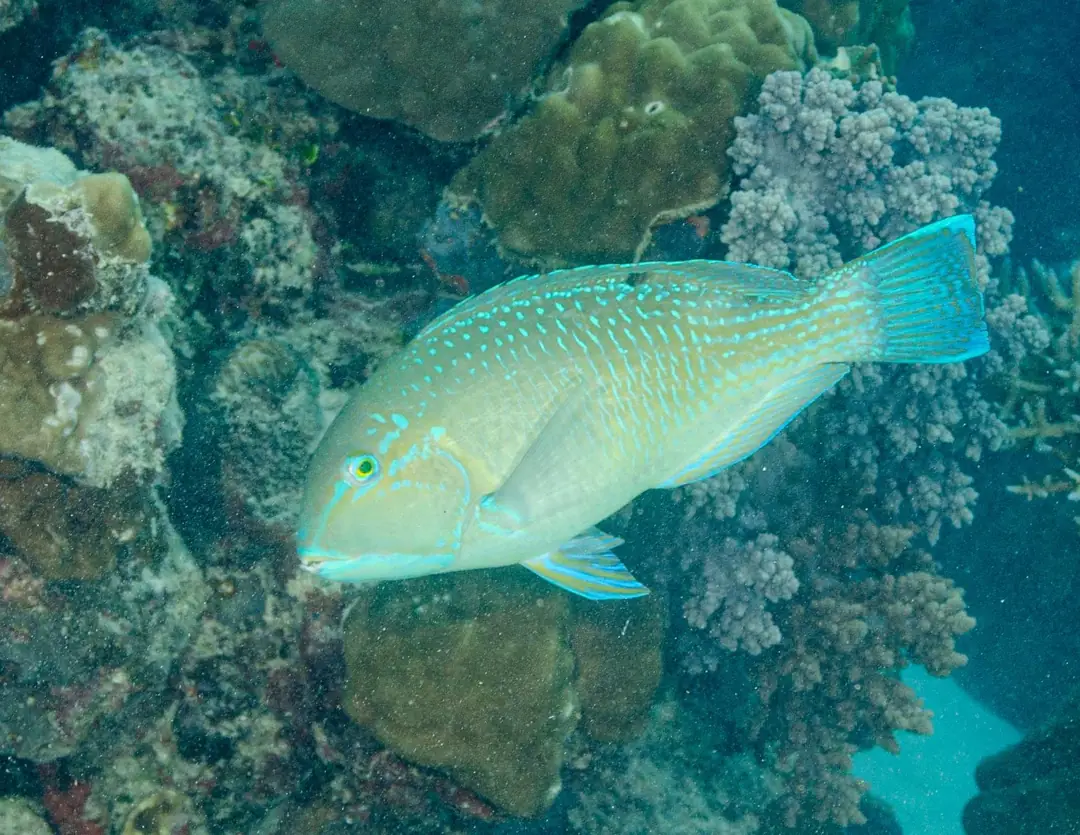 © Ian ShawAll rights reserved
 Schroeder's Rainbow Wrasse has no known danger to humans. However, always observe marine life responsibly.
Download Seabook free for iOS and Android.