 © Lesley ClementsAll rights reserved
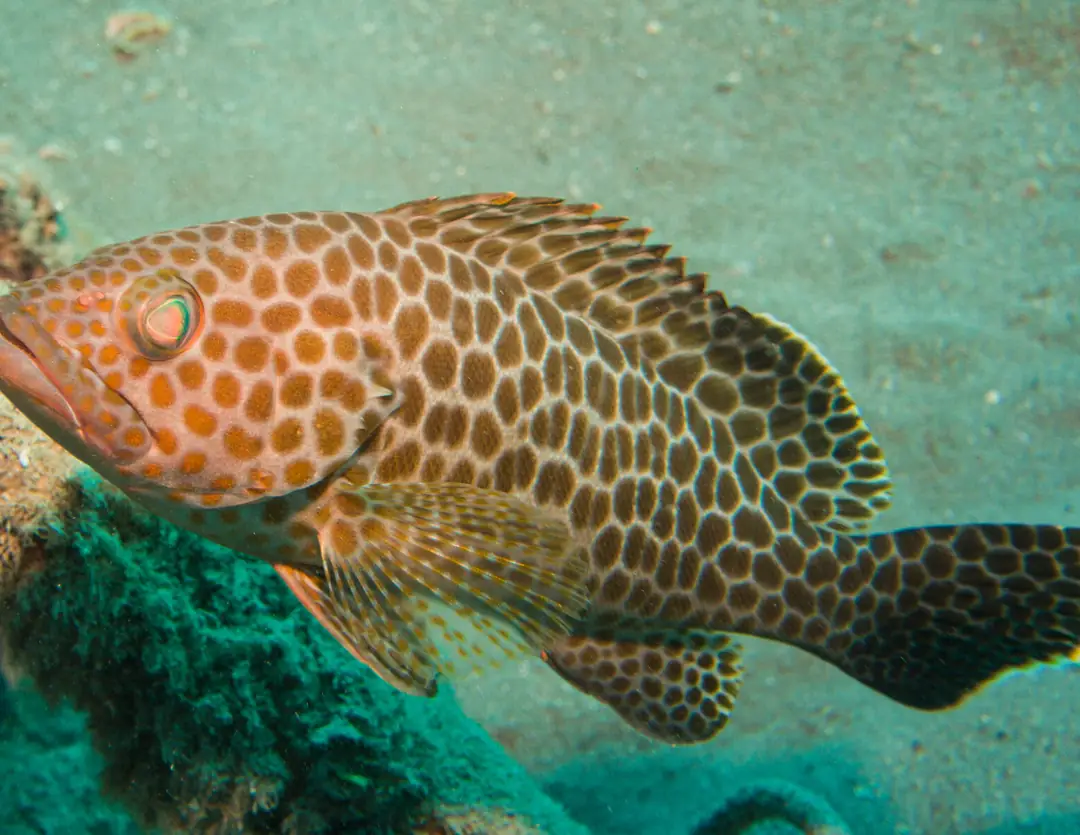
Areolate Rock Cod
Epinephelus areolatus
Epinephelus guttatus
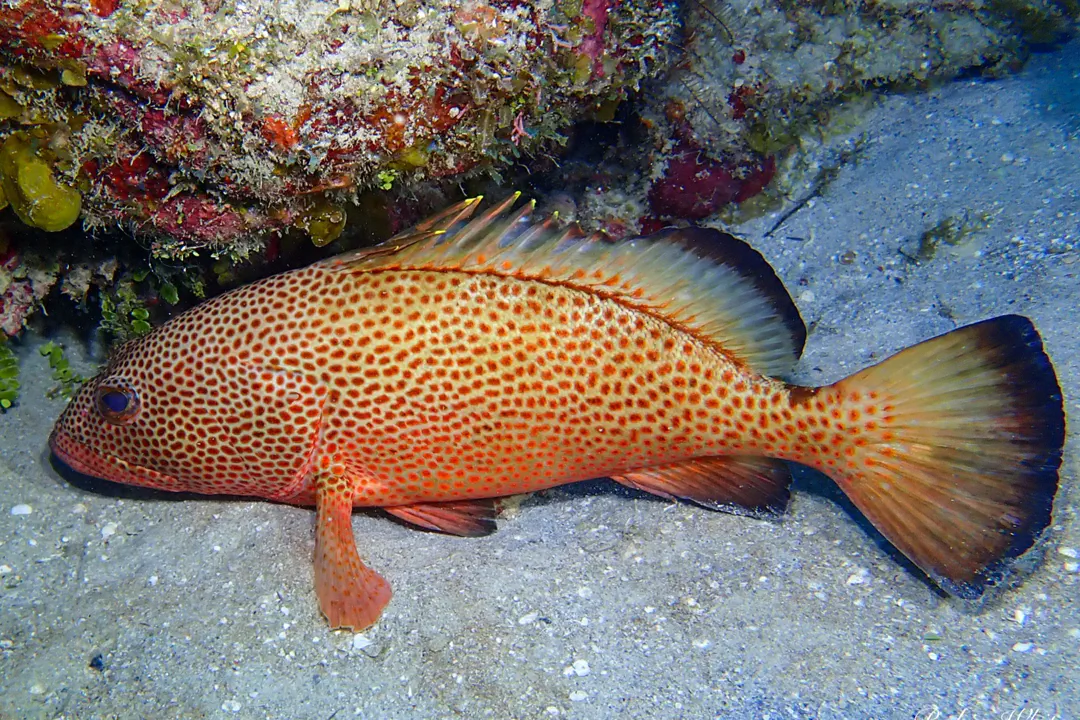
Epinephelus guttatus is a species of grouper in the family Serranidae native to the western Atlantic Ocean. Ranging from North Carolina, United States to Paraíba, Brazil, it is the most common species of Epinephelus in the Caribbean.
Reddish brown spots spread over a whitish undercoat. During spawning, females are easily distinguished from males. Females possess a pallid complexion and have swollen abdomens. The males appear dusky, mottled patterns with two or three dark bars above the anal fin and pale heads with dark areas on the sides of their lips. Max length is 76 cm, common length - 40 cm. Max published weight is 25 kg. Max reported age is 22 years.
Western Atlantic. Its range extends from Bermuda and North Carolina and along the eastern coast of the United States into the Gulf of Mexico and the Caribbean. Its range is said to extend south as far as Brazil but there are no confirmed records from south of Venezuela.
Females live on reefs of shallow to moderate depths, whereas larger males inhabit much deeper waters. Usually solitary and territorial.
Mantis shrimps make up over 15 percent of their diet. Crabs are the most common item on their diet, and fishes like Bluehead Wrasse, Thalassoma bifasciatum; Boga, Inermia vittata; goatfishes and small morays are included. Preferably, shrimps and octopuses.
Red Hind are protogynous hermaphrodites, changing from females to males during a stage in their life cycle. What triggers the change is unknown. In Puerto Rico, the fish gather in or near familiar spawning grounds along sections of the insular shelf during a one to two week period in association with the lunar cycles of January and February. In 1992, a tagged Red Hind traveled more than ten miles, crossing over water 600 feet deep, bypassing other aggregations, to spawn at a particular site.
Not much is known about the species' early life stages. Though, on rare occasions, one to two inch juveniles are sighted sneaking about near cover on patch reefs in moderate depths. They possess spaced red body spots on a bright-white background.
Most adults live for ten to eleven years.
© Lesley ClementsAll rights reserved  © seabook.appAll rights reserved
  © Lesley ClementsAll rights reserved
 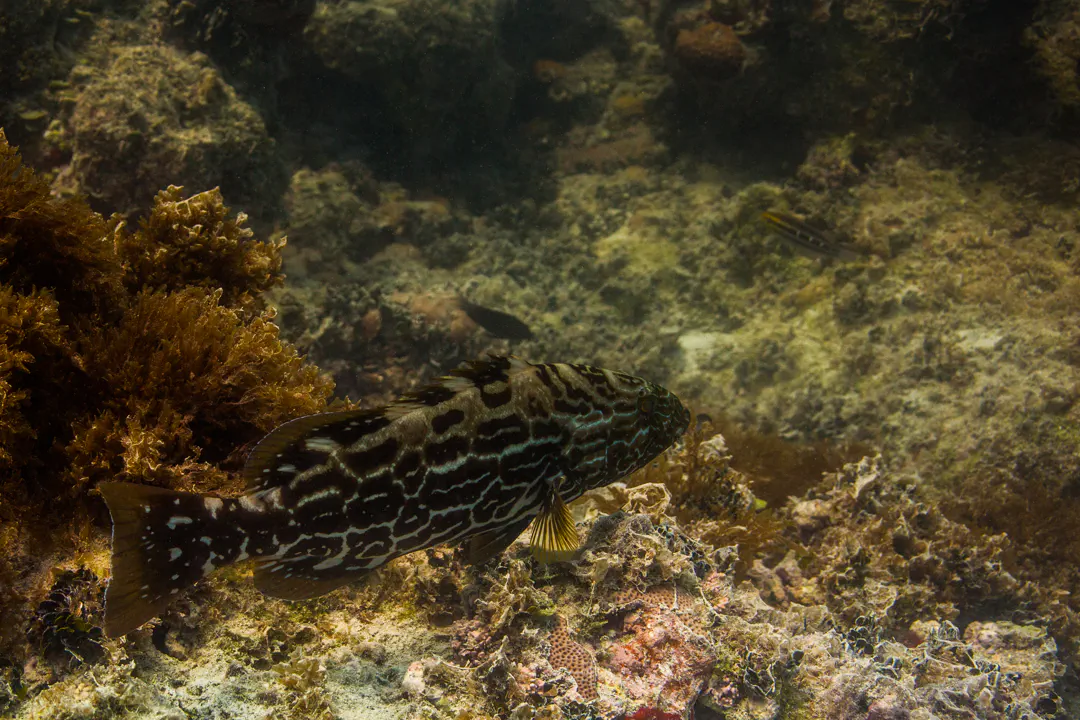 © João D'AndrettaCC BY 4.0 · iNaturalist
 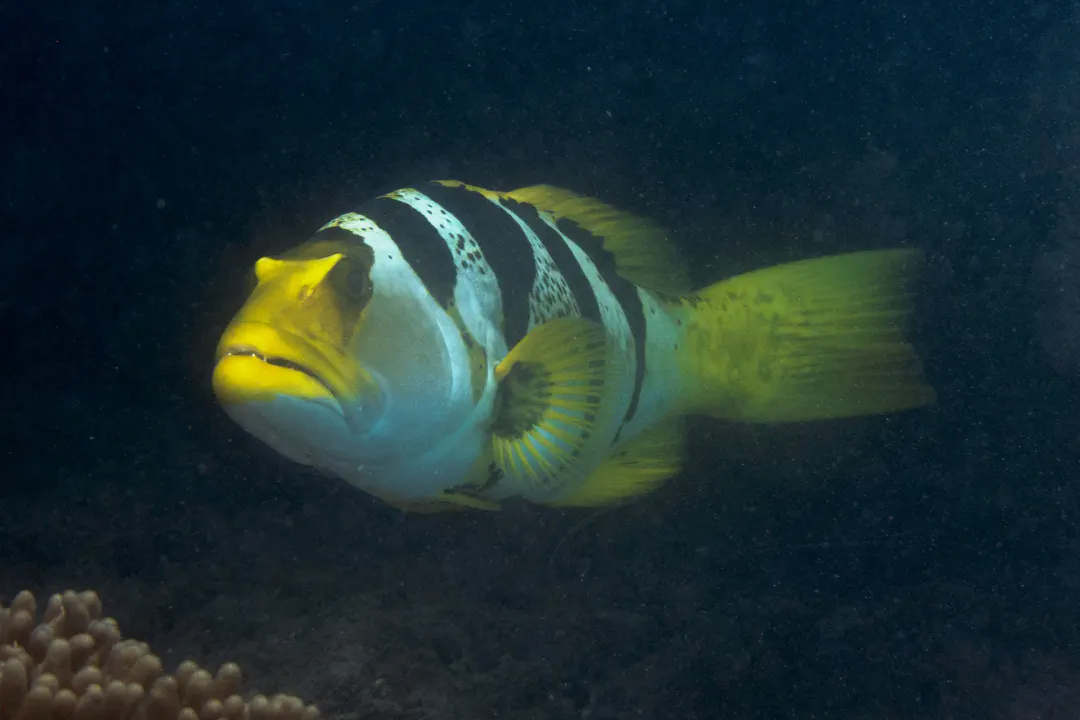 © Ewout KnoesterCC BY-SA 4.0 · iNaturalist
 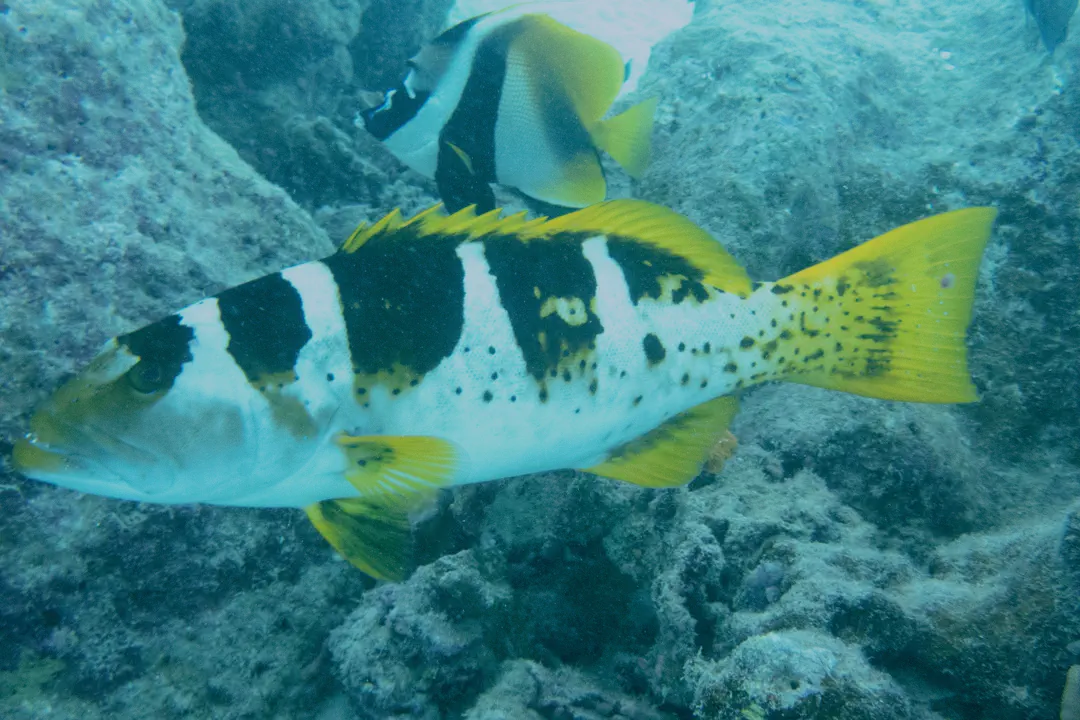 © Logan JonesCC BY 4.0 · iNaturalist
 Red Hind is classified as poisonous. Always exercise caution and keep a safe distance.
Red Hind can be found at depths of up to 180 meters.
Download Seabook free for iOS and Android.