 © Kent LeongAll rights reserved
Barred Javelinfish
Pomadasys kaakan
Haemulon sciurus
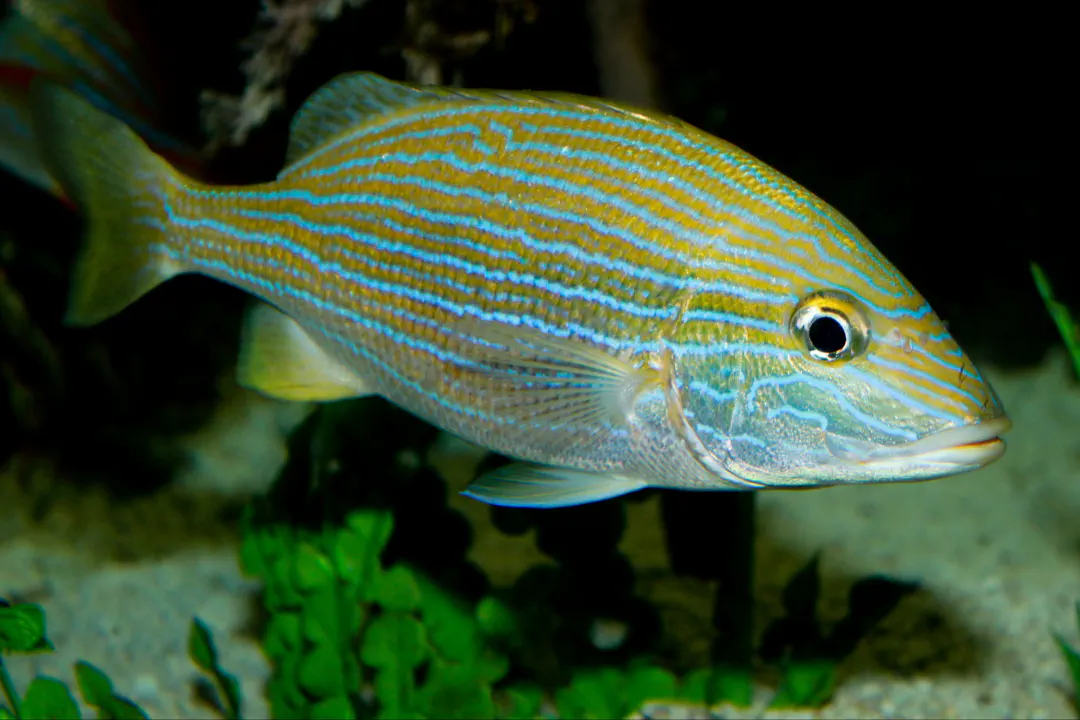
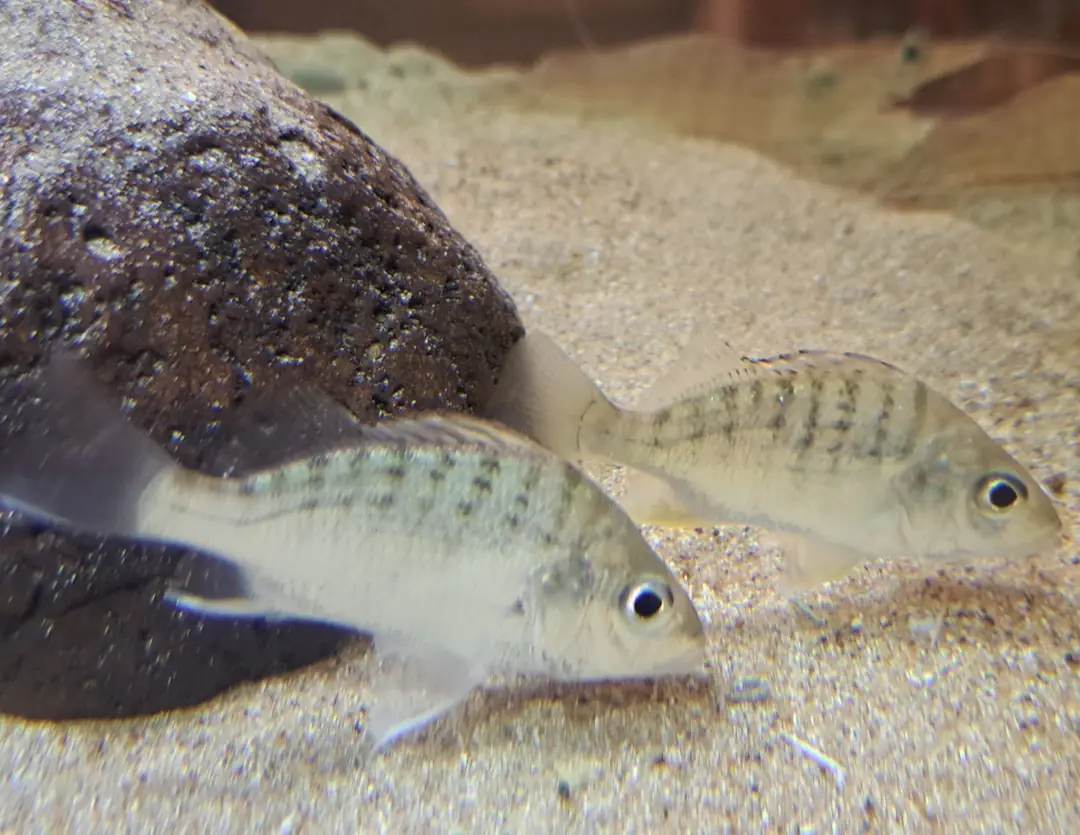
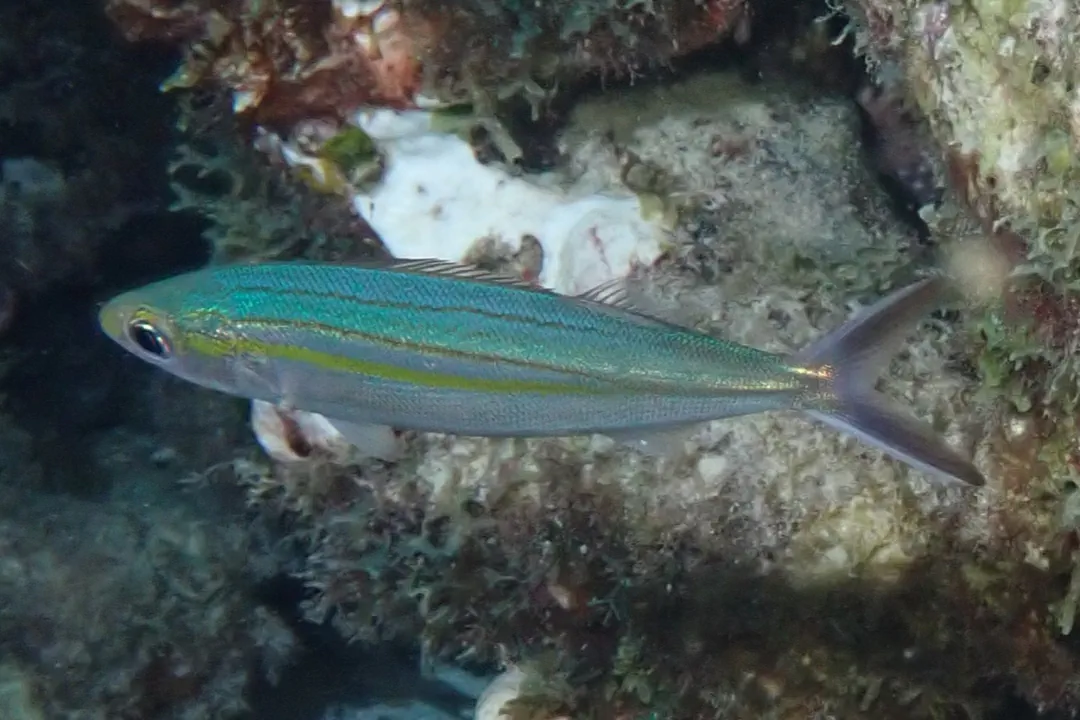
Haemulon sciurus is a subtropical species of grunt native to the western Atlantic Ocean. It was described by the English naturalist George Shaw in 1803.
The blue striped grunt commonly grows to a length of 20 to 25 cm (8 to 10 inches), and its maximum recorded length is 46 cm (18 inches). The maximum reported age is 12 years. It can weigh up to 750 grams.
The head and the body is yellow with many narrow, horizontal blue stripes. The stripe under the eye has a characteristic arch. There is one yellow dorsal fin with 12 dorsal spines and 16-17 dorsal soft rays. The anal fin is dusky yellow. It has three anal spines and nine anal soft rays. The soft dorsal and caudal fins are blackish. The scales above the lateral line are enlarged, while the scales below are oblique.
The blue striped grunt is found in mangroves, seagrass beds, dropoffs and coral reefs at depths up to 30 meters. Its range includes the Western Atlantic, Florida, Gulf of Mexico, and the Caribbean down to Brazil.
The fish travels in schools with the smaller French grunt (H. flavolineatum), a close relative. Up to 1,000 grunts can form a school. The schools generally cruise near coral.
The diet consists mainly of shrimp. It may also eat annelids, bivalves, and crustaceans.
Predators of the grunt are larger piscivorous fish, such as sharks.
The blue striped grunt is edible, and when caught, is marketed fresh. It is only of minor commercial importance, however. There have been reports of ciguatera poisoning from consumption of this fish.
Blue striped grunts are also valued as a specimen for public aquariums.
© Kent LeongAll rights reserved 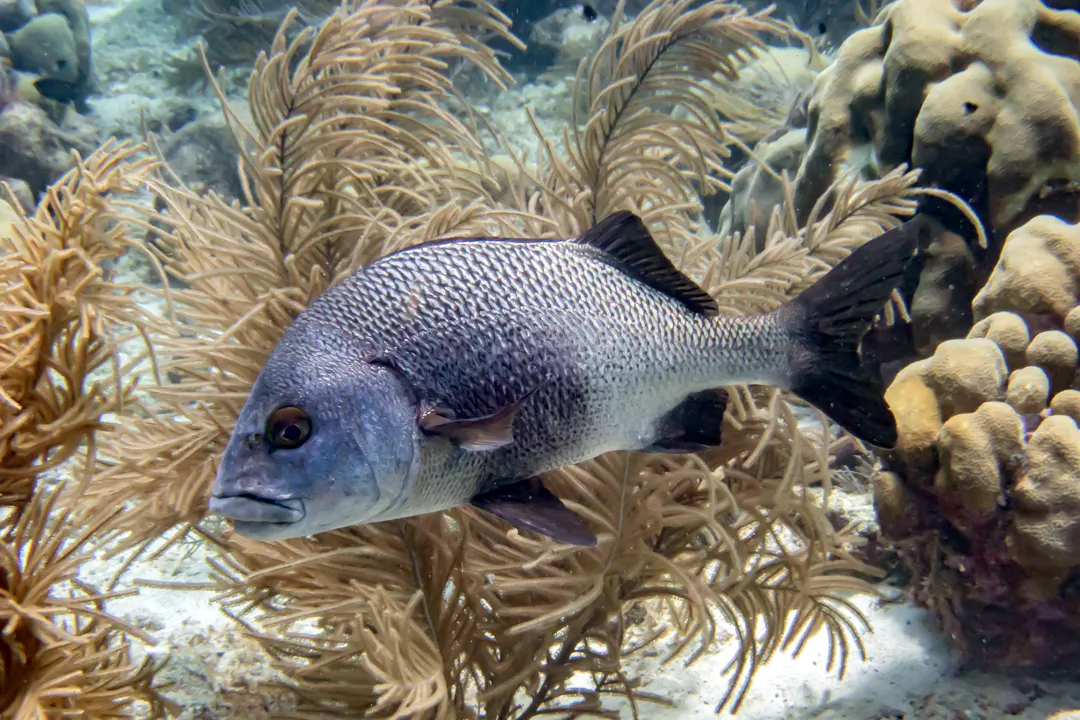 © Jay BrasherCC BY 4.0 · iNaturalist
  © Roger RittmasterCC BY 4.0 · iNaturalist
 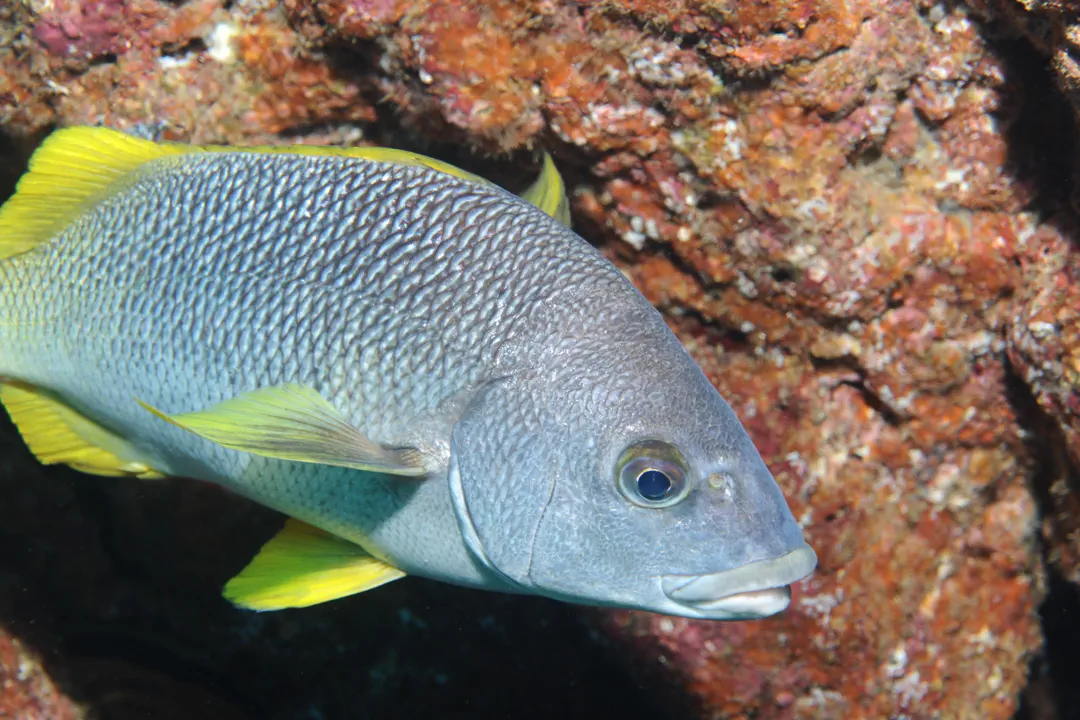 © fede2crCC BY 4.0 · iNaturalist
 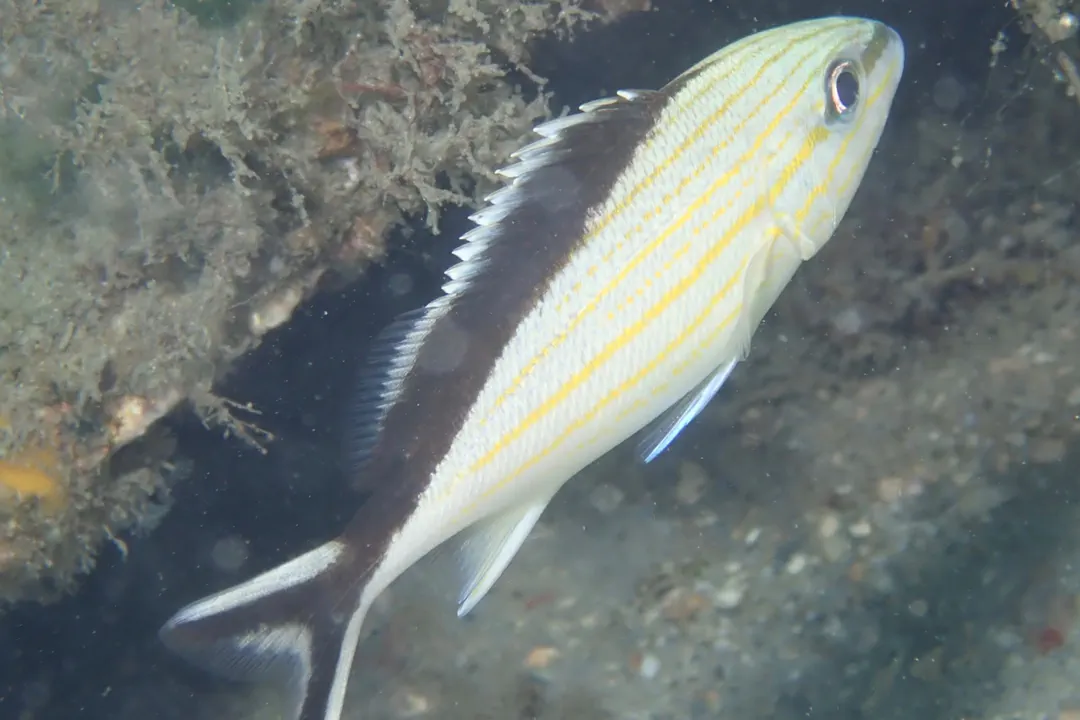 © jeyreCC BY 4.0 · iNaturalist
 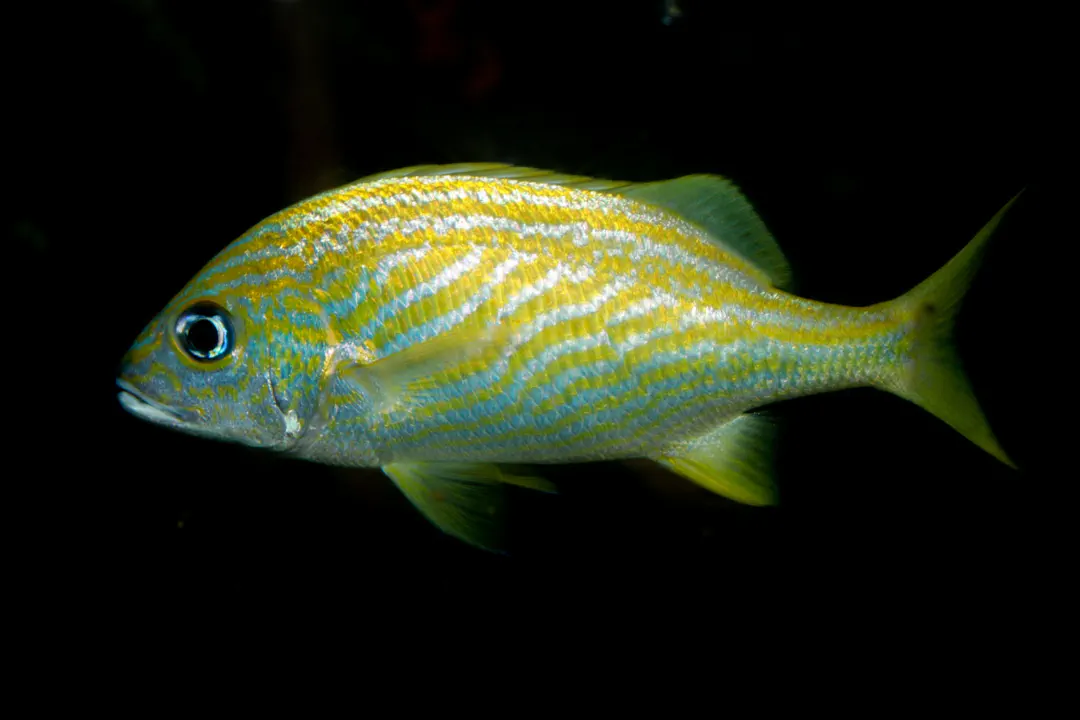 © Brian GratwickeCC BY 4.0 · iNaturalist
 Blue Striped Grunt is classified as poisonous. Always exercise caution and keep a safe distance.
Blue Striped Grunt can be found at depths of up to 30 meters.
Download Seabook free for iOS and Android.