 © Dan SchofieldCC BY 4.0 · iNaturalist
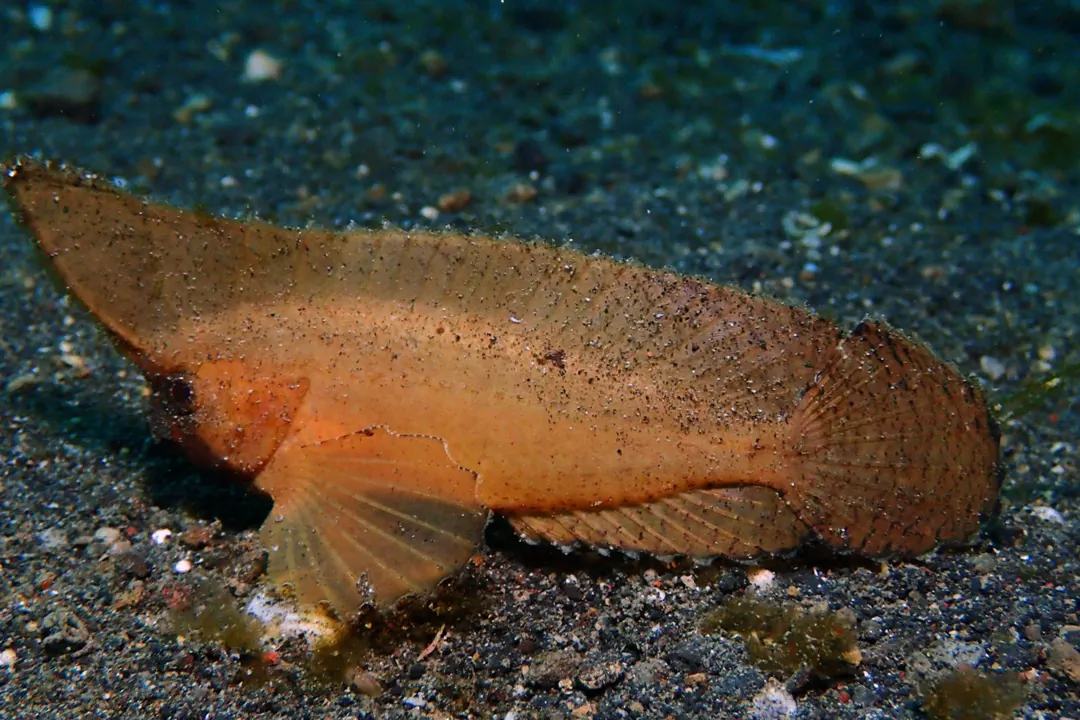
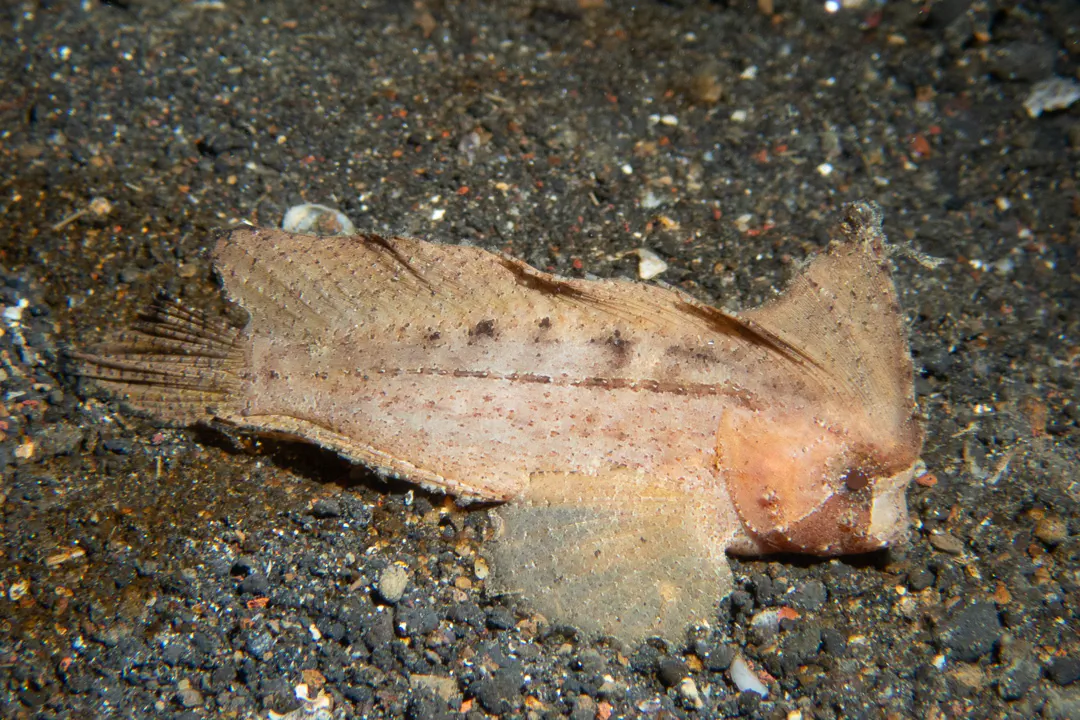
Cockatoo Waspfish
Ablabys taenianotus
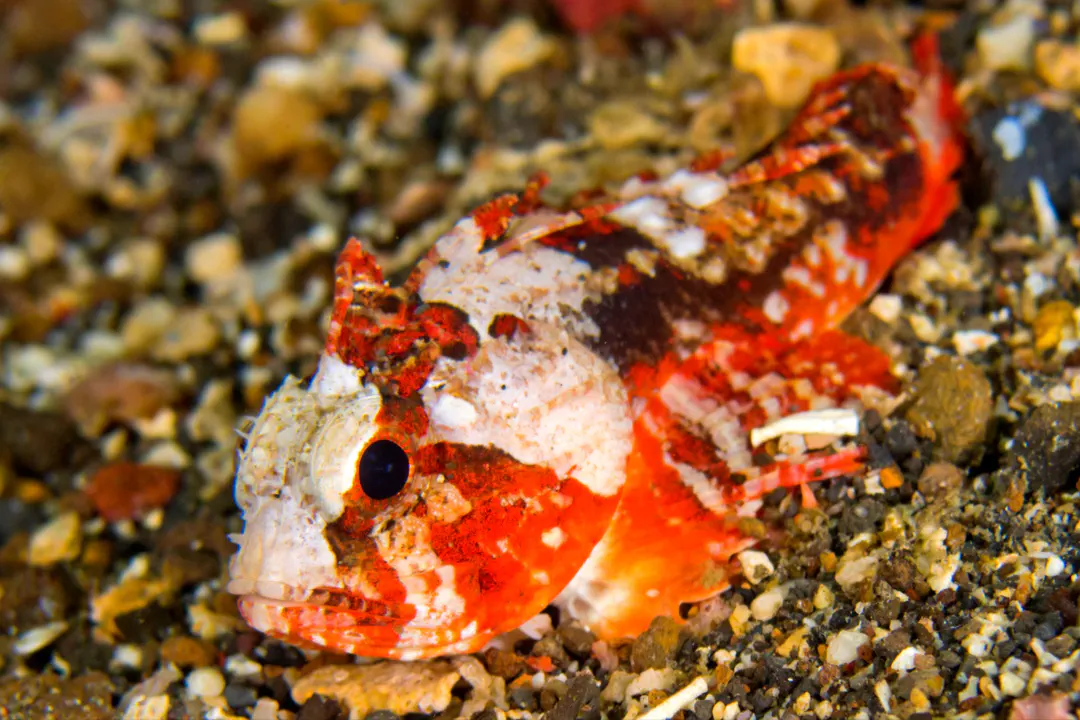
Paracentropogon longispinis
Paracentropogon longispinis is a small fish species that belongs to the scorpionfishes family (Scorpaenidae). It is found in the central Indo-West Pacific.
The size of this fish is up to 13 cm (5.1 in). Its body is compressed laterally and is endowed with a dorsal fin starting from the top of the head until joining practically the superior base of the caudal fin. When the dorsal fin is spread, it looks like a toothed crest. The 12 to 15 spines of the dorsal fin are venomous, and it has seven or eight soft rays. It remains in the substratum and moves using its pectoral fins. Its body color is mainly red-brown with one or two bright white spots above the lateral line and it "wears" a bright white mask starting from the top of its head to the inferior lip. Individuals from Thailand have large dark blotches over the body, while those from Indonesia and Australia are usually more mottled. It is able to change its color from lighter to darker to a certain extent. In appearance, it is somewhat similar to the cockatoo waspfish, Ablabys taenianotus.
P. longispinis is found in the central Indo-Pacific region. Its range extends from southern India, Thailand, and Malaysia through Indonesia to western, northern, and eastern Australia.
It is found at depths from 2 to 60 ft on sandy, silty, muddy, or rubble bottoms, and also in fields of Zosteraceae. It is a nocturnal benthic species, an ambush predator, feeding by hunting from a hide by mimicking a crumpled, dead leaf or a drifting piece of seaweed. It feeds on shrimps and other tiny crustaceans which it sucks into its mouth.
© Dan SchofieldCC BY 4.0 · iNaturalist 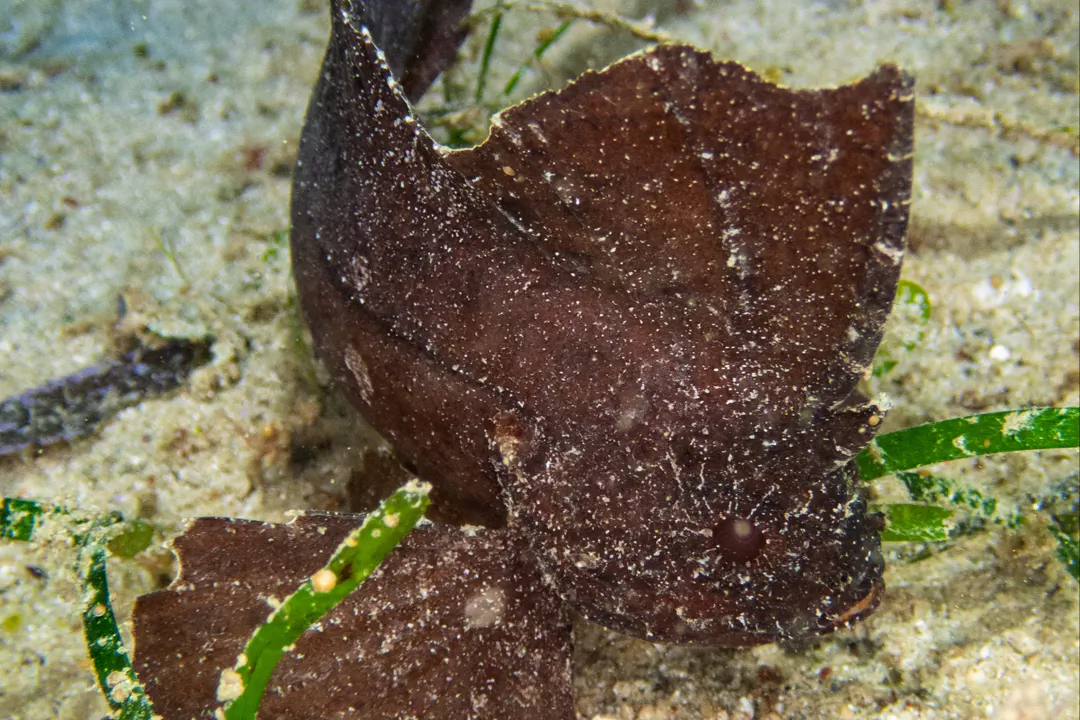 © Pierre PericardCC BY 4.0 · iNaturalist
  Justin PhilboisCC0 · iNaturalist
 Whiteface Waspfish is classified as venomous. Always exercise caution and keep a safe distance.
Whiteface Waspfish can be found at depths of up to 70 meters.
Download Seabook free for iOS and Android.