 © Lesley ClementsAll rights reserved
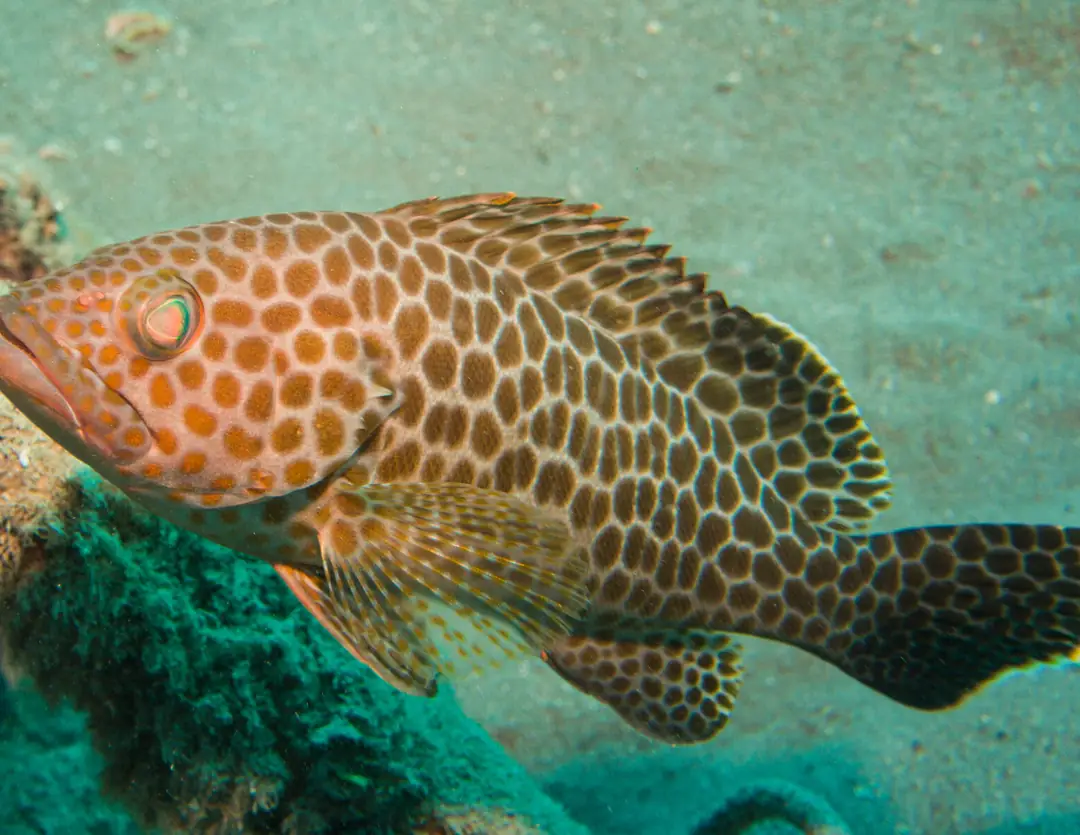
Areolate Rock Cod
Epinephelus areolatus
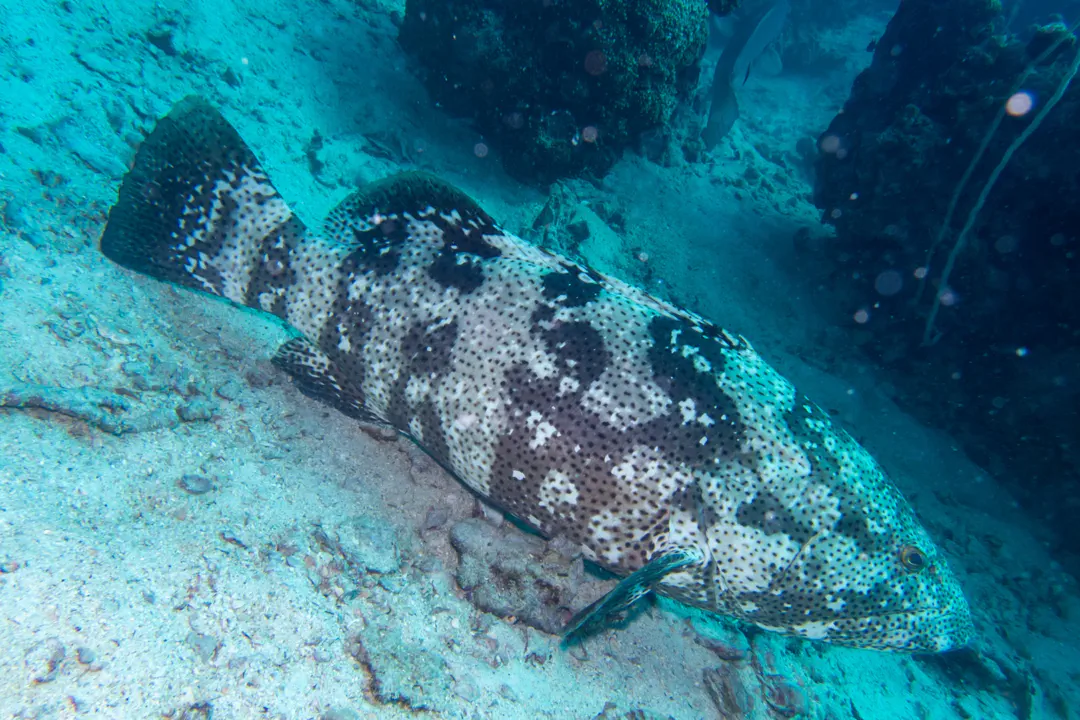
Epinephelus malabaricus
Epinephelus malabaricus, is a species of marine fish in the family Serranidae.
The Malabar grouper can reach a length up to 234 cm (92 in), but average size is usually around 100 cm (39 in). It has a light grey to light brownish background color, with a number of dark brown spots randomly scattered, which increase in number with age. The body has also a various number of brown diagonal stripes. Younger fish have a number of wide, broken vertical bands of darker shade across their bodies, but in maturity they seem to become a uniform darker colour. Young fish have numerous brown spots. The tail fin is rounded.
The Malabar grouper is widespread throughout the tropical waters of the Indo-West Pacific area from the eastern coast of Africa to the Tonga Islands, Red Sea included. This grouper lives in various habitats, such as lagoons, mangroves, coral and rocky reefs, sandy and muddy bottom areas, between 2 and 150 m deep. The juveniles prefers lagoon or brackish areas.
Malabar grouper are voracious predators, they feed on fish, crustaceans, and occasionally, cephalopods.
As most fish, the Malabar grouper harbours a variety of parasites, including the diplectanid monogeneans Pseudorhabdosynochus manifestus, P. maaensis, P. malabaricus, P. manipulus, P. marcellus, and P. maternus.
Malabar groupers are harvested for food, sport, and commercially; some are grown in aquaculture.
© Lesley ClementsAll rights reserved  © seabook.appAll rights reserved
  © Lesley ClementsAll rights reserved
 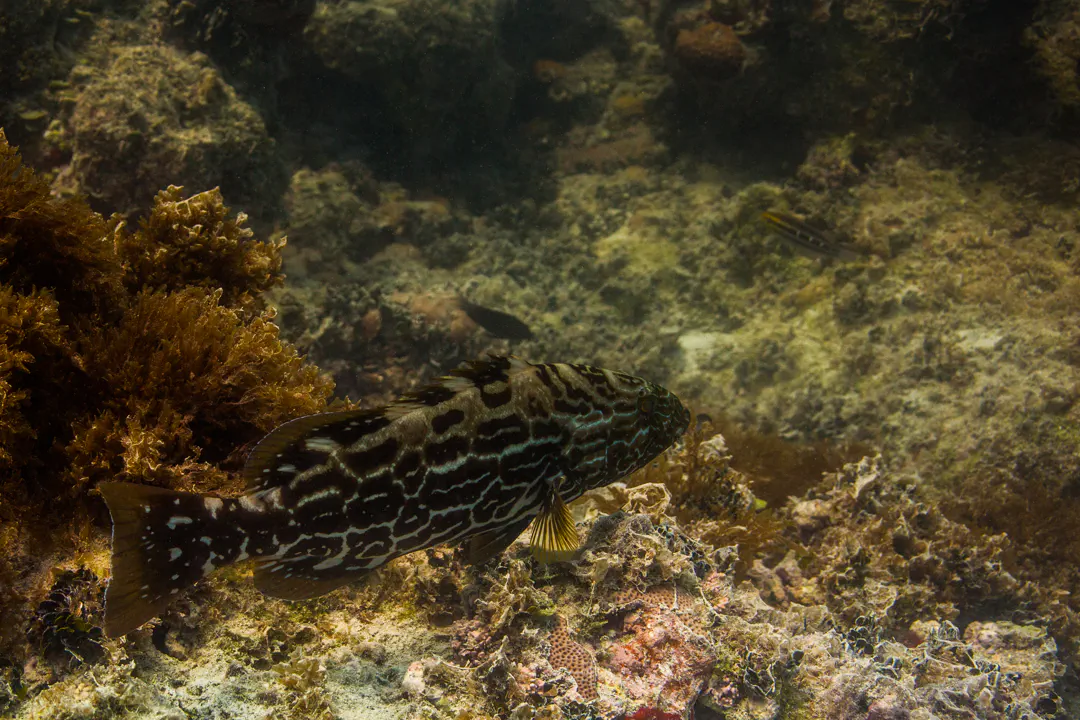 © João D'AndrettaCC BY 4.0 · iNaturalist
 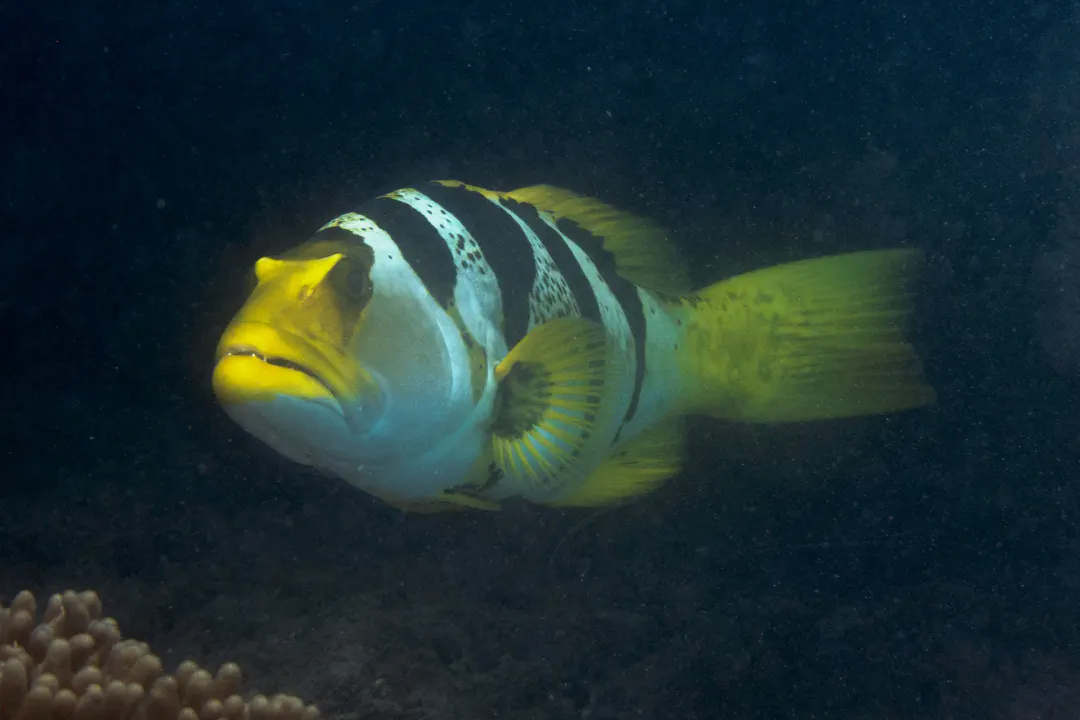 © Ewout KnoesterCC BY-SA 4.0 · iNaturalist
 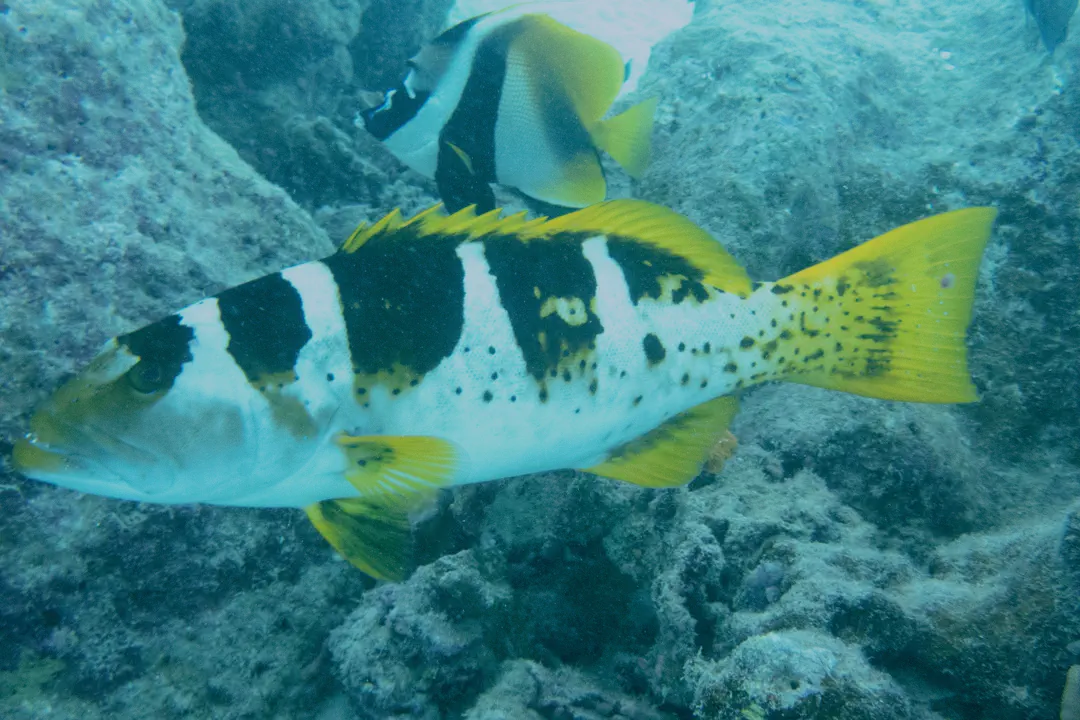 © Logan JonesCC BY 4.0 · iNaturalist
 Malabar Grouper has no known danger to humans. However, always observe marine life responsibly.
Malabar Grouper can be found at depths of up to 150 meters.
Download Seabook free for iOS and Android.