 © Heather Dawnstar SabinCC BY 4.0 · iNaturalist
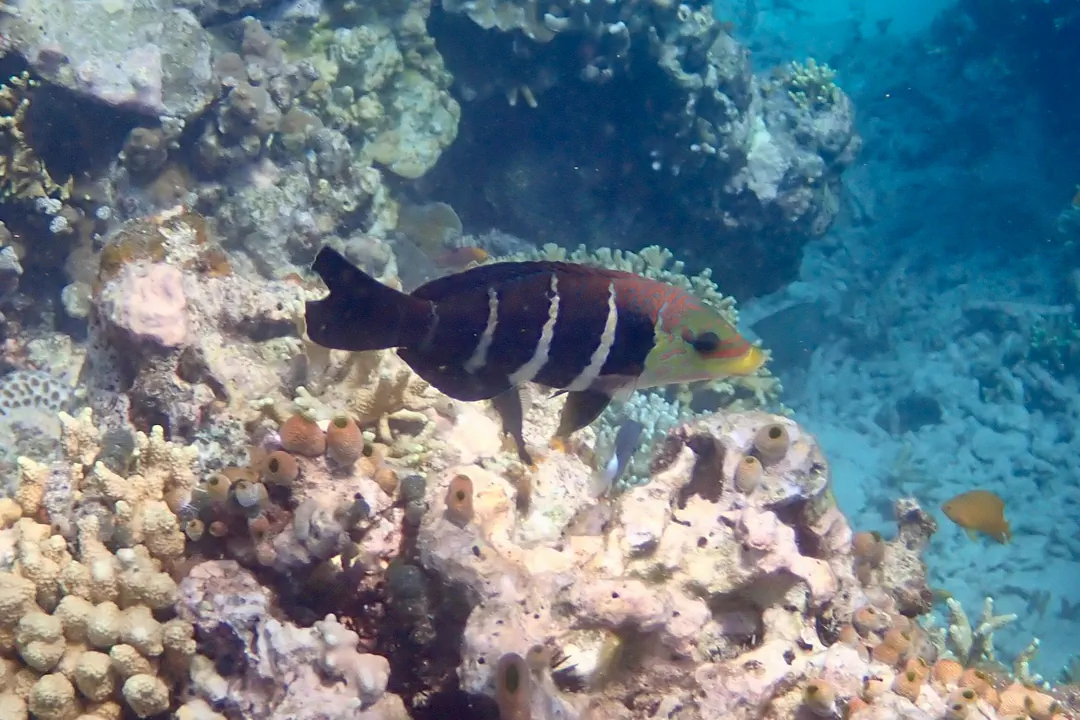
Barred Thicklip (female)
Hemigymnus fasciatus
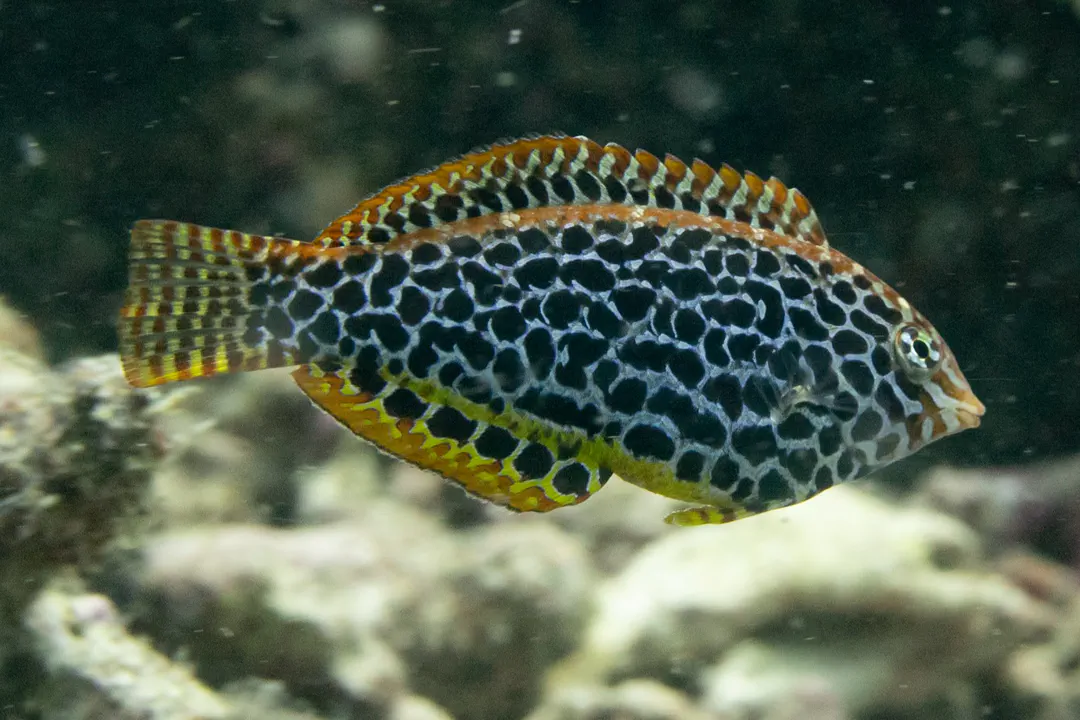
Macropharyngodon meleagris
Macropharyngodon meleagris, the Black-spotted wrasse, is a species of wrasse native to the eastern Indian Ocean and the Pacific Ocean. It occurs on coral reefs at depths of from the surface to 30 metres (98 ft). This species can reach a length of 15 centimetres (5.9 in) SL. It can also be found in the aquarium trade.
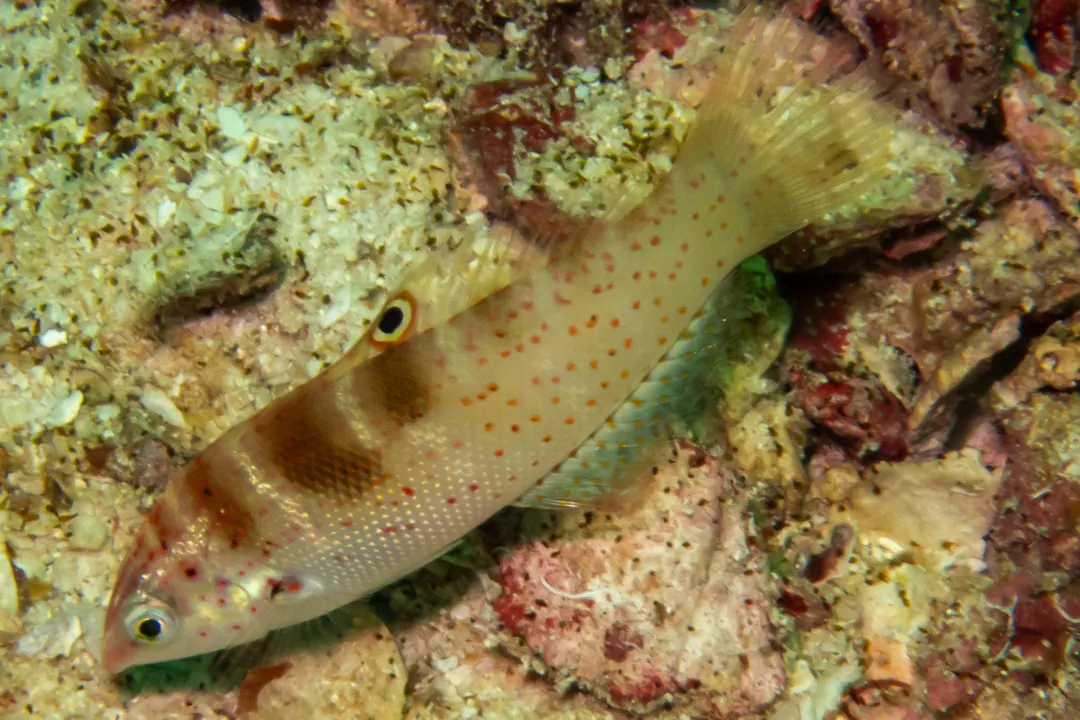
Juveniles display different color patterns than adults with dominating light colors and eyespots blending in with soft coral habitats and potentially avoiding predation.
Males (terminal phase) are reddish-orange with a greenish spot on each scale (spots edged in blue and black), a black spot containing a few smaller yellow spots on the shoulder, and greenish bands on the head. Females and juveniles are whitish to greenish with numerous large irregular black spots.
Indo-Pacific: Cocos-Keeling Islands in the eastern Indian Ocean to western Pacific and islands of Oceania.
Inhabits subtidal reef flats and outer lagoon and seaward reefs. Usually in areas with mixed sand, rubble, and coral. Feeds mainly on gastropods, other hard-shelled prey, and foraminiferans. Rarely marketed.
Oviparous, distinct pairing during breeding.
© Heather Dawnstar SabinCC BY 4.0 · iNaturalist 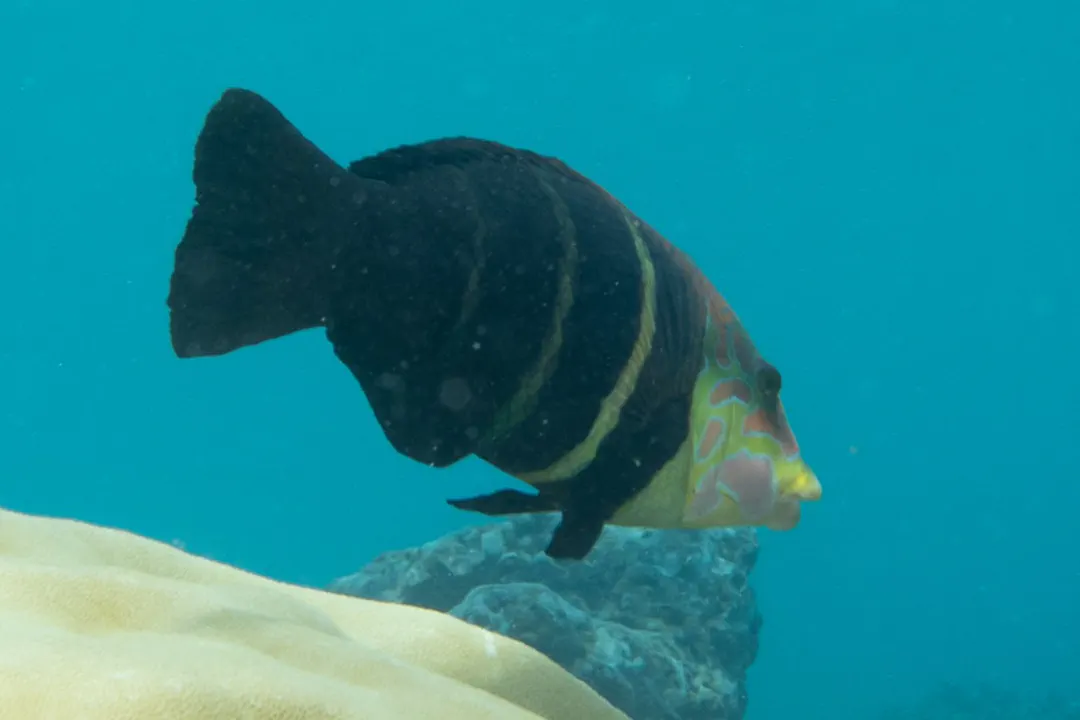 © Storm MartinCC BY 4.0 · iNaturalist
  © portioidCC BY 4.0 · iNaturalist
 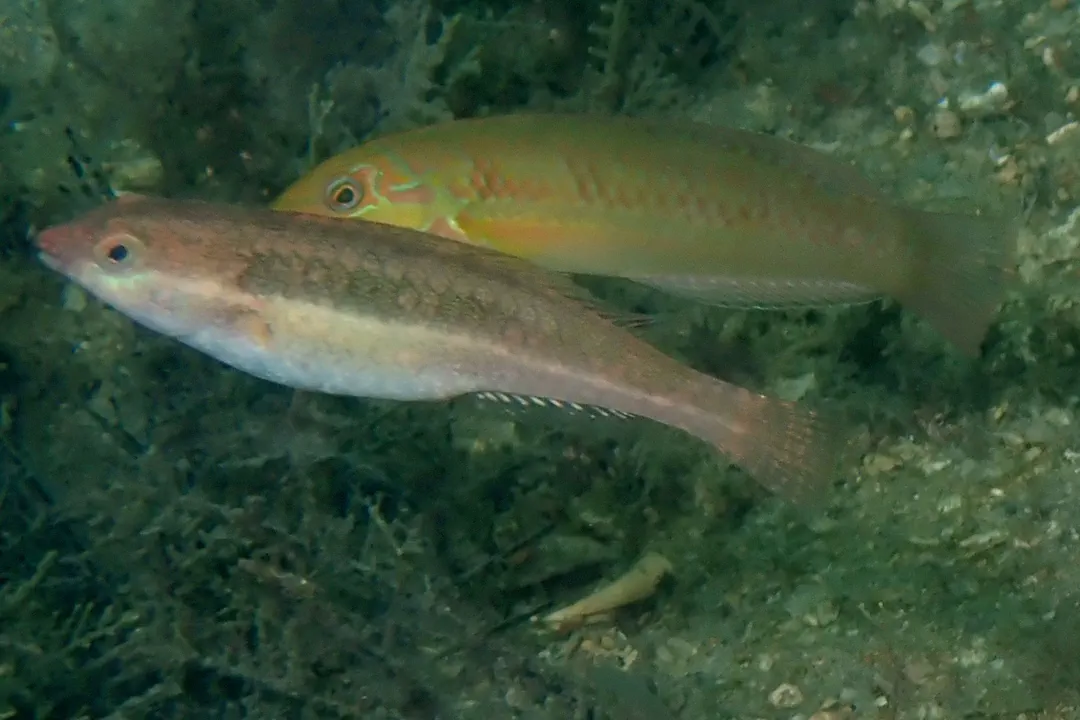 © jeyreCC BY 4.0 · iNaturalist
 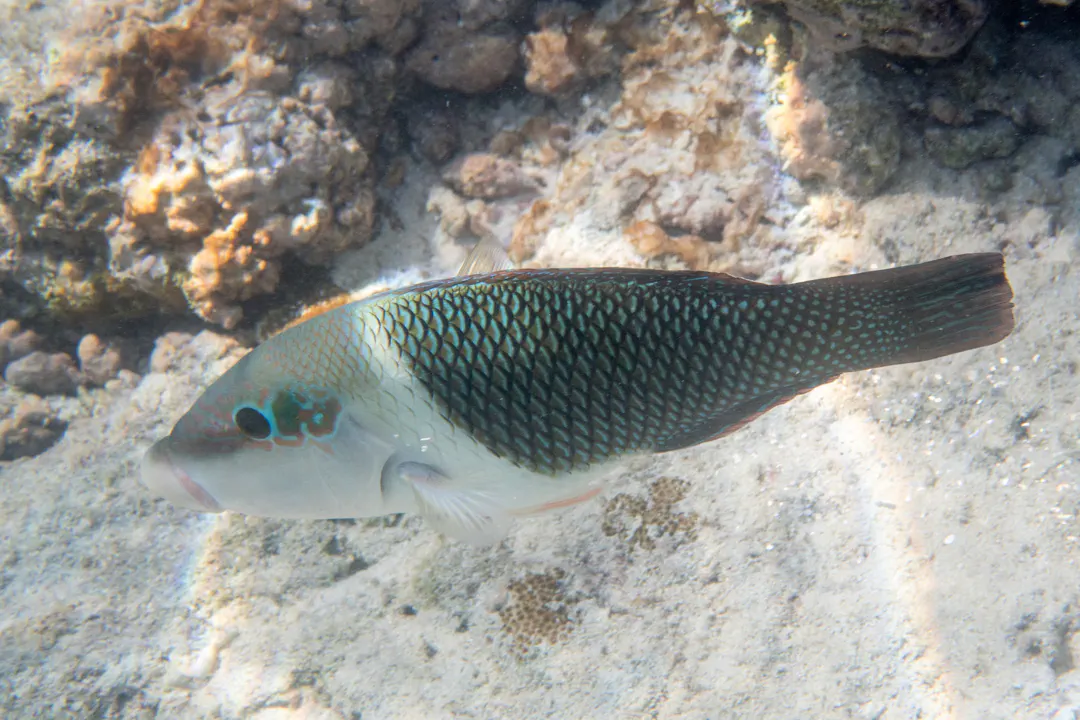 © Emanuele SantarelliCC BY-SA 4.0 · iNaturalist
 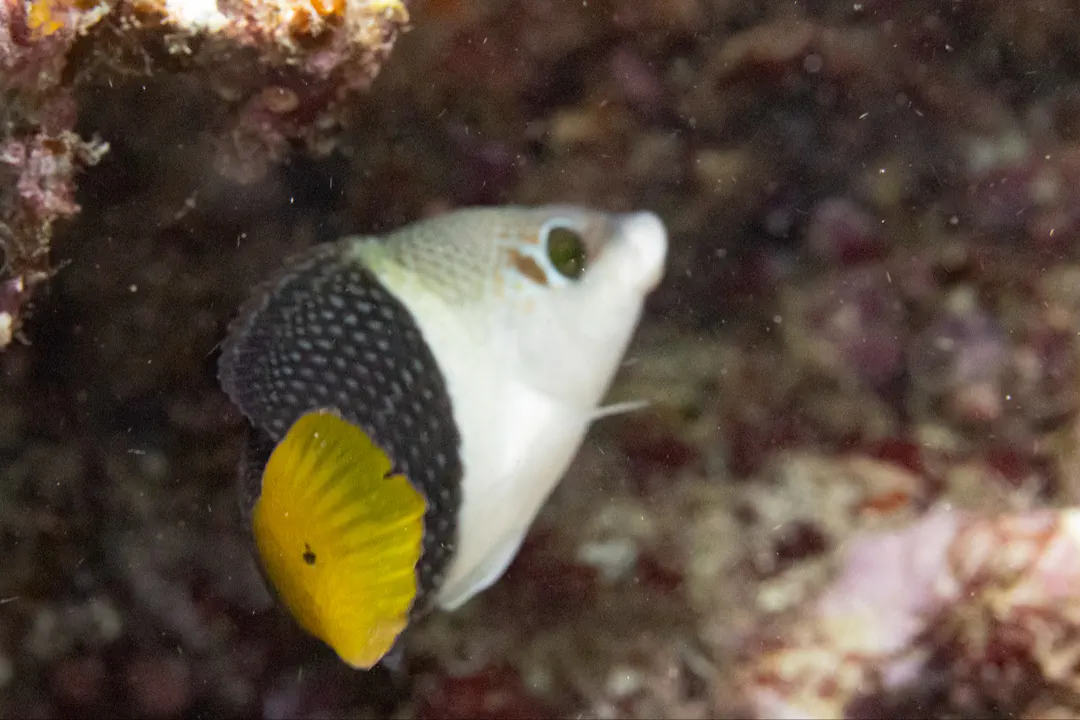 © cello caruso-turielloCC BY 4.0 · iNaturalist
 Leopard Wrasse has no known danger to humans. However, always observe marine life responsibly.
Leopard Wrasse can be found at depths of up to 60 meters.
Download Seabook free for iOS and Android.