 © Heather Dawnstar SabinCC BY 4.0 · iNaturalist
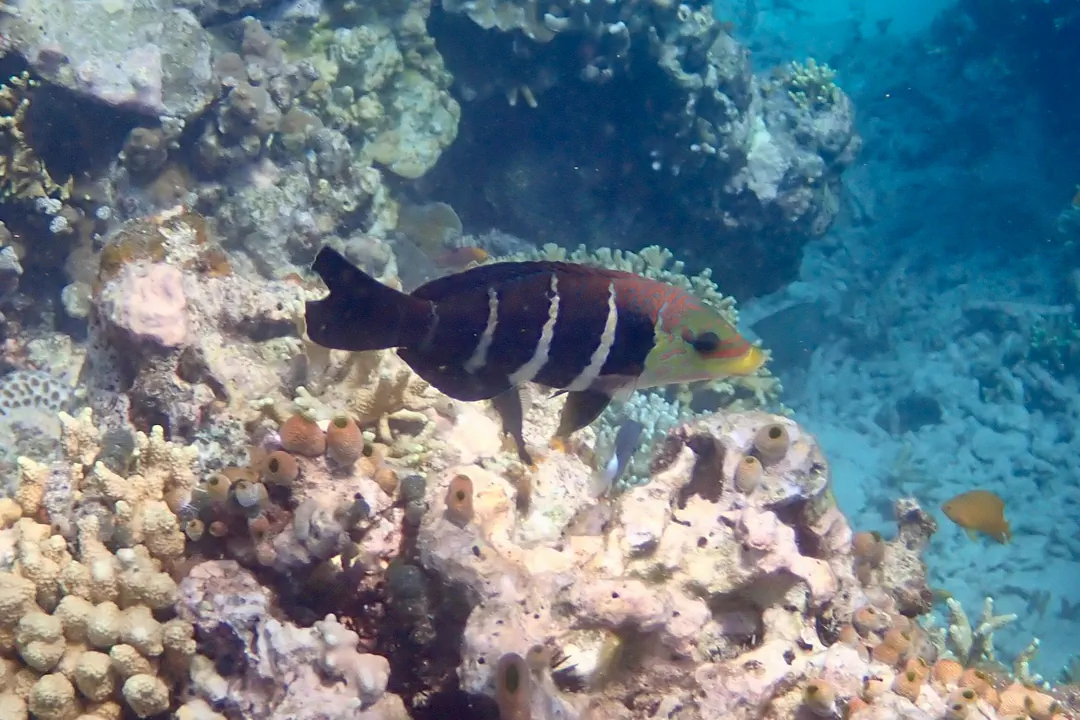
Barred Thicklip (female)
Hemigymnus fasciatus
Coris aygula
Coris aygula is a species of wrasse native to the Indian Ocean and the western Pacific Ocean.
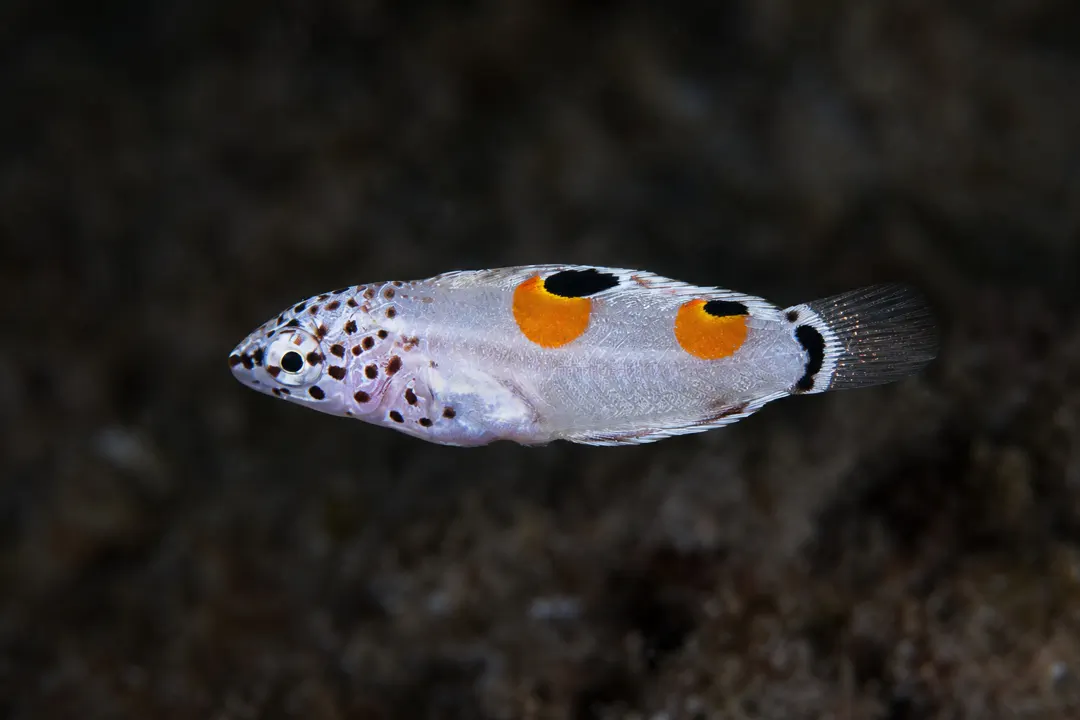
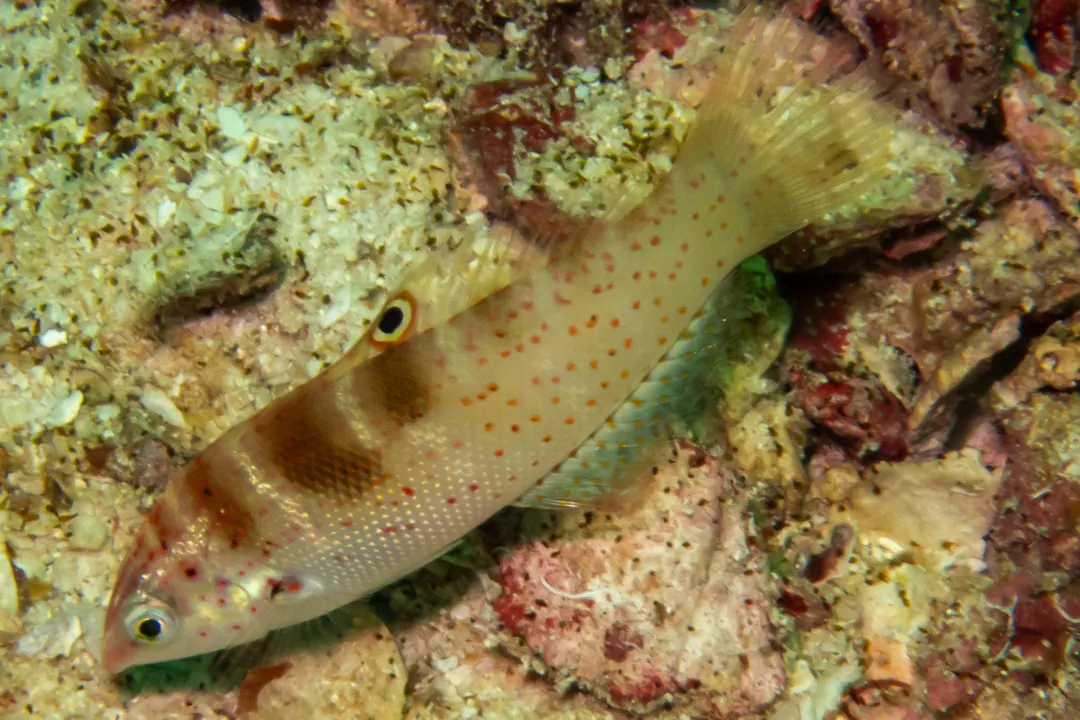
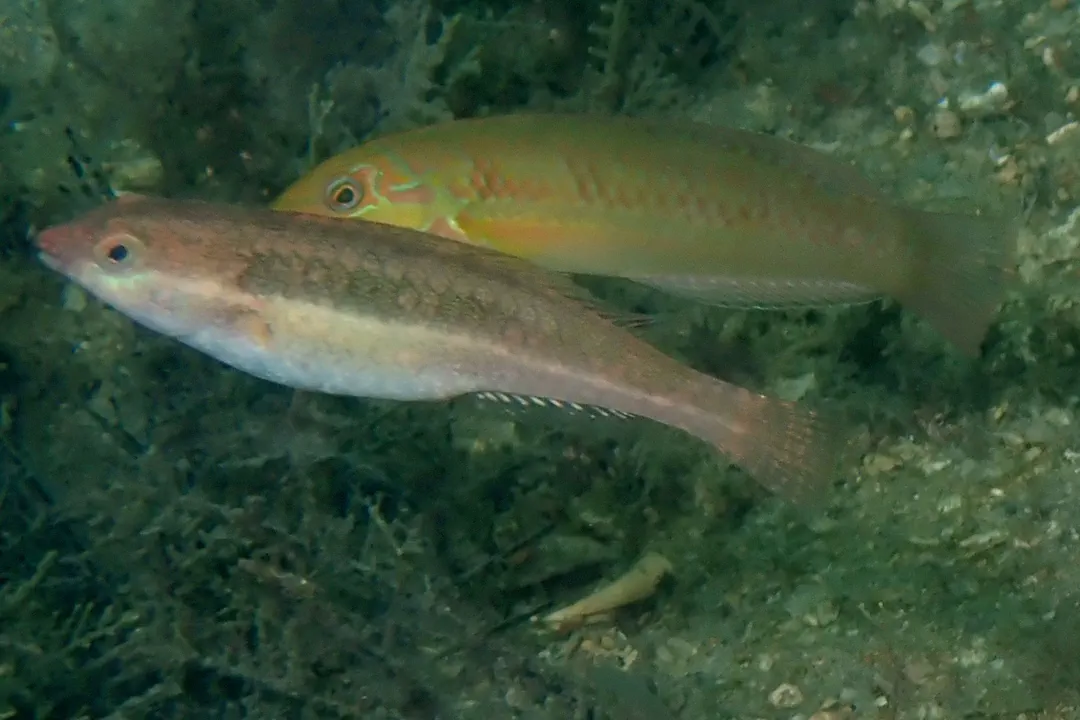
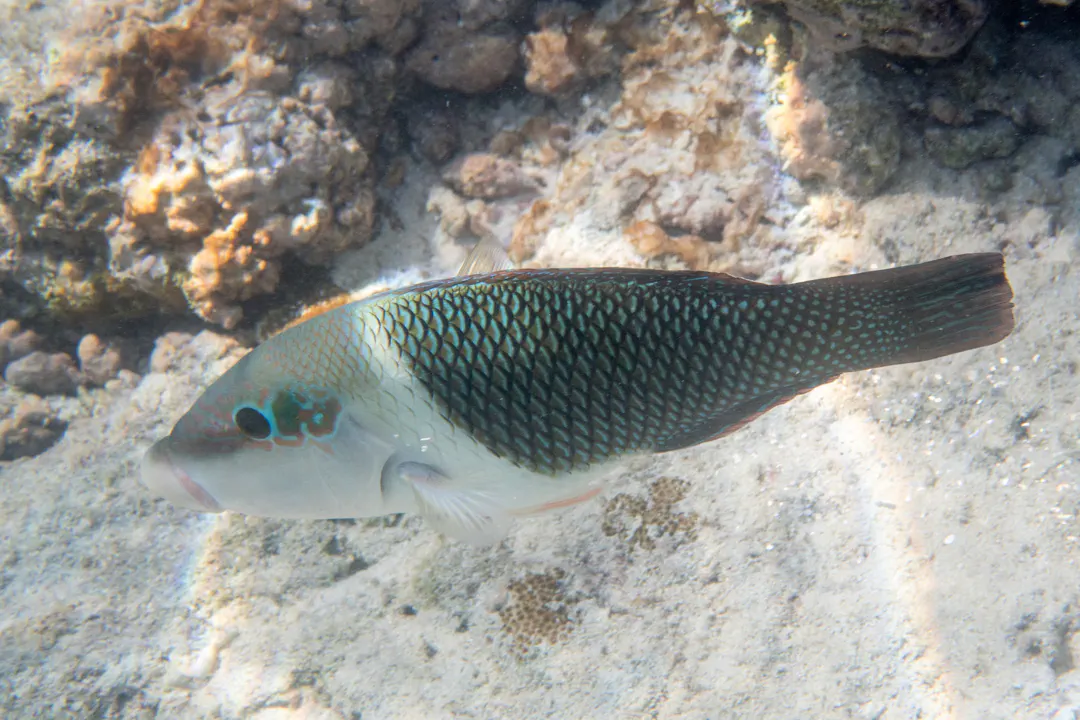
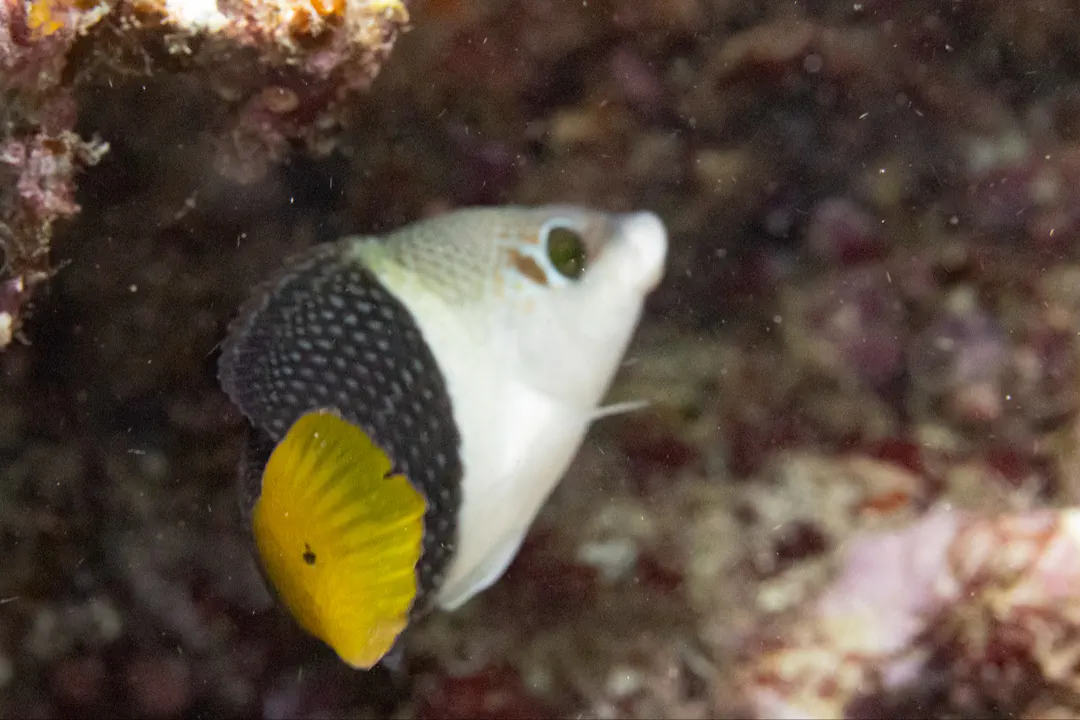
This species can reach a total length of 120 cm (47 in). Males and females are slightly different. Males develop a hump on the forehead. The caudal fin of the famale is slightly more rounded than that of the male. Also, males have very long pelvic fins. Females have a white-colored streak in front of the anal fin. They also have light yellow or green coloring on the body with small, maroon spots and scales with dark edges, while males are blue-green in color. Onmales there are often broad, pale, green bars along the middle of the body. Juveniles have an extremely different appearance than adults. They are white and have black spots on each dorsal fin. They also have 2 circular orange/red spots on their back.
Feeds mainly on hard-shelled beenthic invertebrates including crustaceans, mollusks and sea urchins.
C. aygula is an inhabitant of coral reefs where they prefer areas of sand or rubble at depths from 2 to 30 m (6.6 to 98.4 ft). They are generally solitary as adults, while juveniles can often be found in tide pools.
This species can be found from the Red Sea and the African coast eastward to the Line Islands and Ducie Island and from southern Japan to Lord Howe Island.
These specific names have been determined to be junior synonyms of C. aygula:
© Heather Dawnstar SabinCC BY 4.0 · iNaturalist 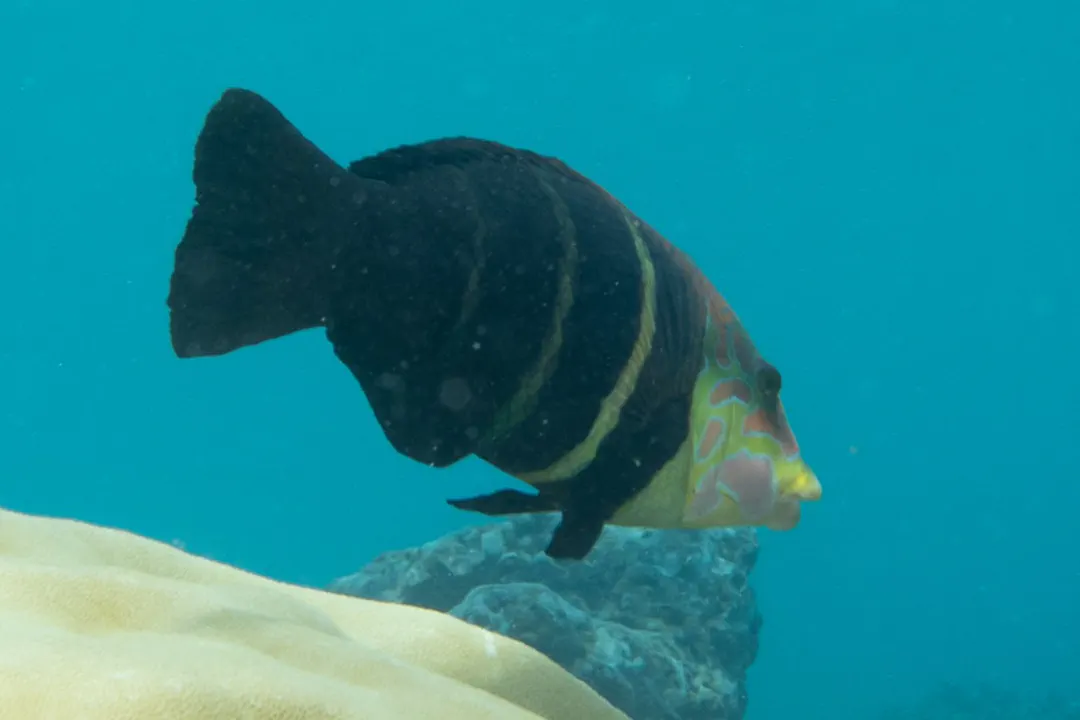 © Storm MartinCC BY 4.0 · iNaturalist
  © portioidCC BY 4.0 · iNaturalist
  © jeyreCC BY 4.0 · iNaturalist
  © Emanuele SantarelliCC BY-SA 4.0 · iNaturalist
  © cello caruso-turielloCC BY 4.0 · iNaturalist
 Clown Coris (juvenile) has no known danger to humans. However, always observe marine life responsibly.
Clown Coris (juvenile) can be found at depths of up to 30 meters.
Download Seabook free for iOS and Android.