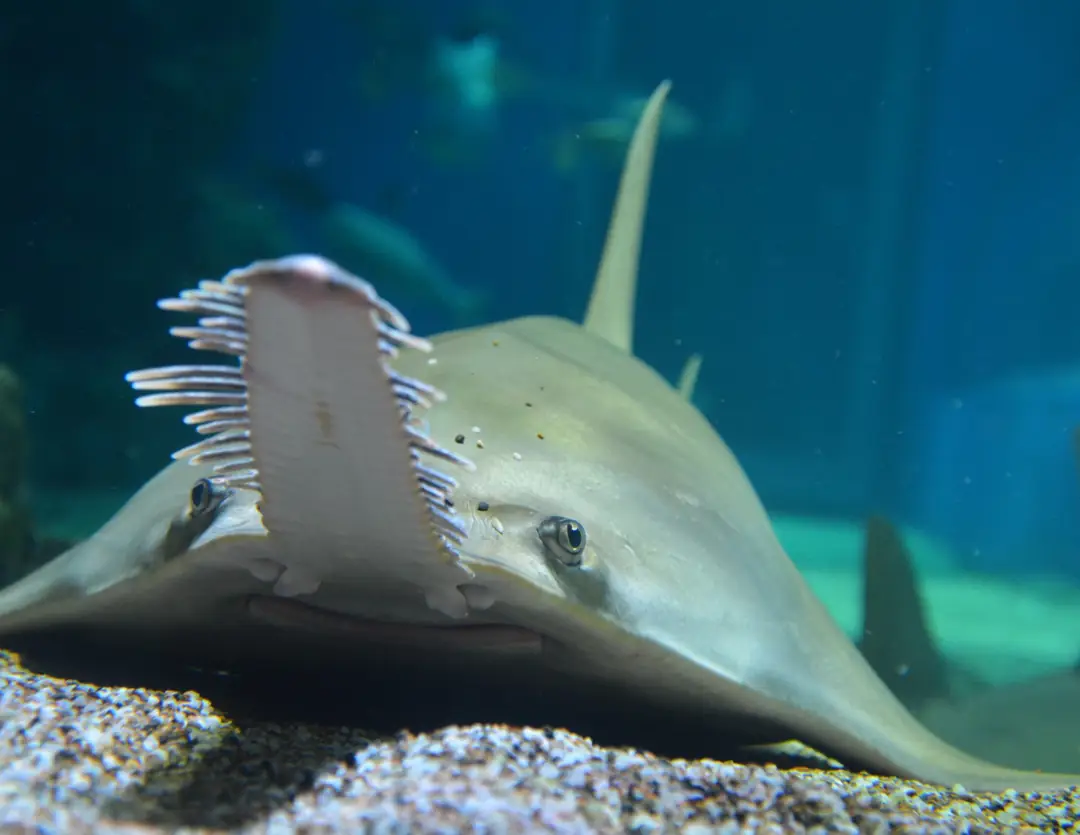
 © Jo KuykeAll rights reserved
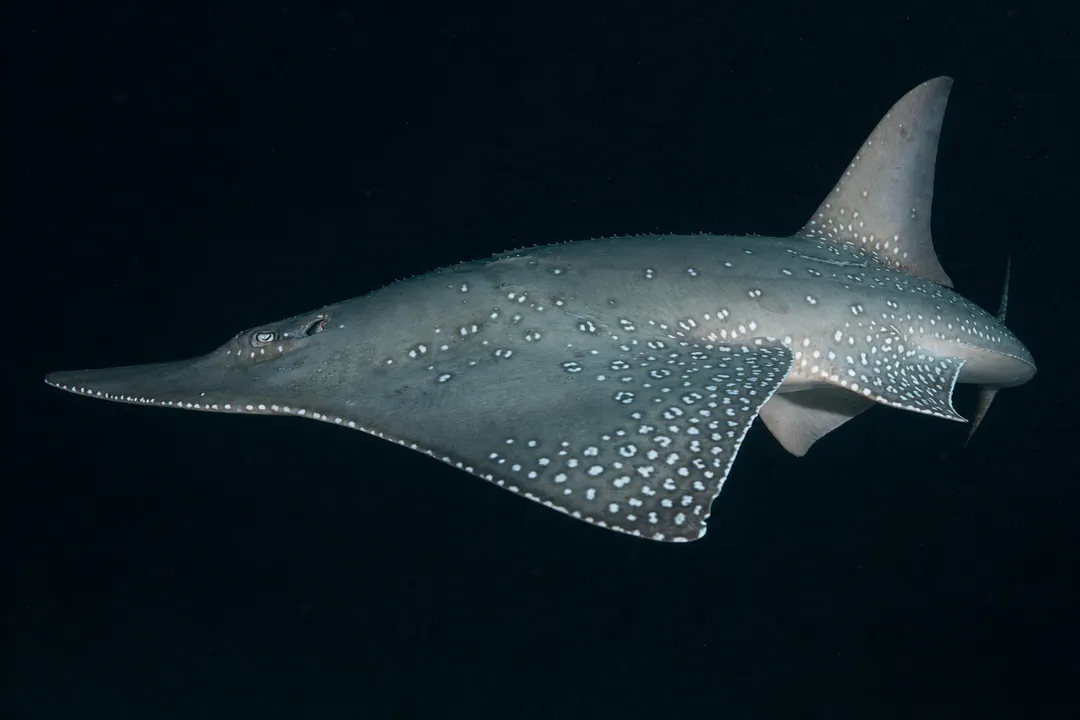
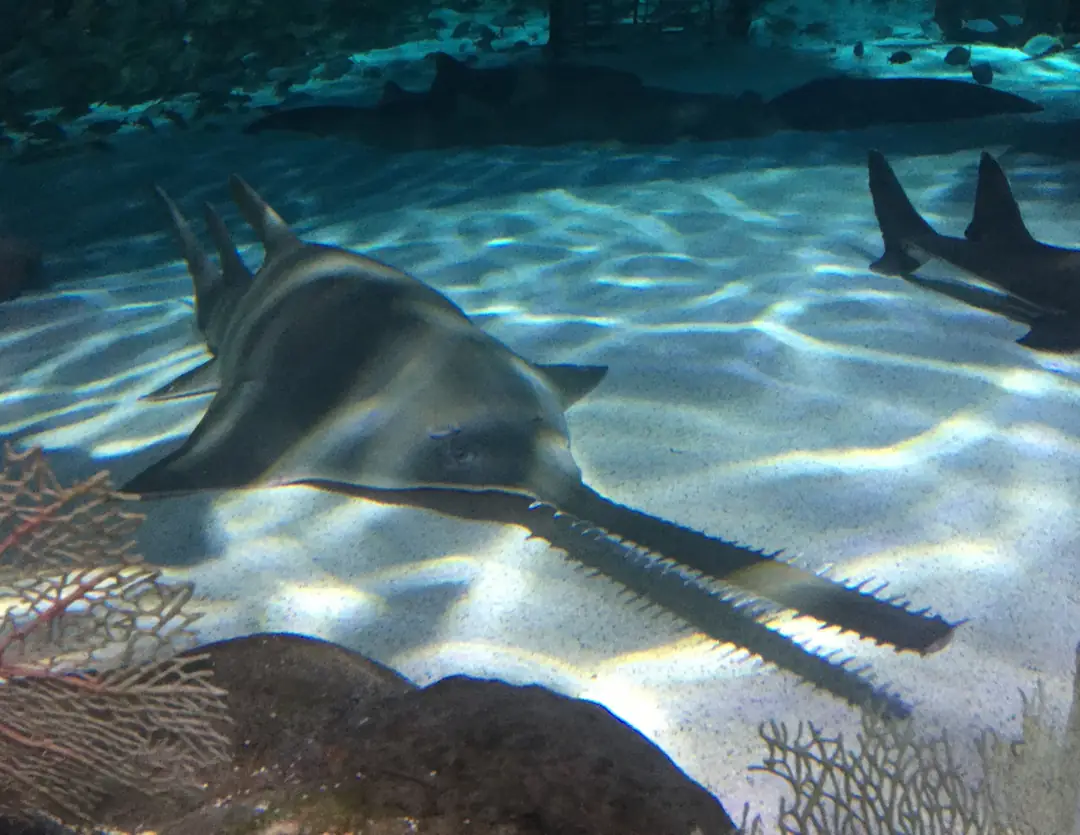
Dwarf Sawfish
Pristis clavata
 © Andrew HarveyAll rights reserved
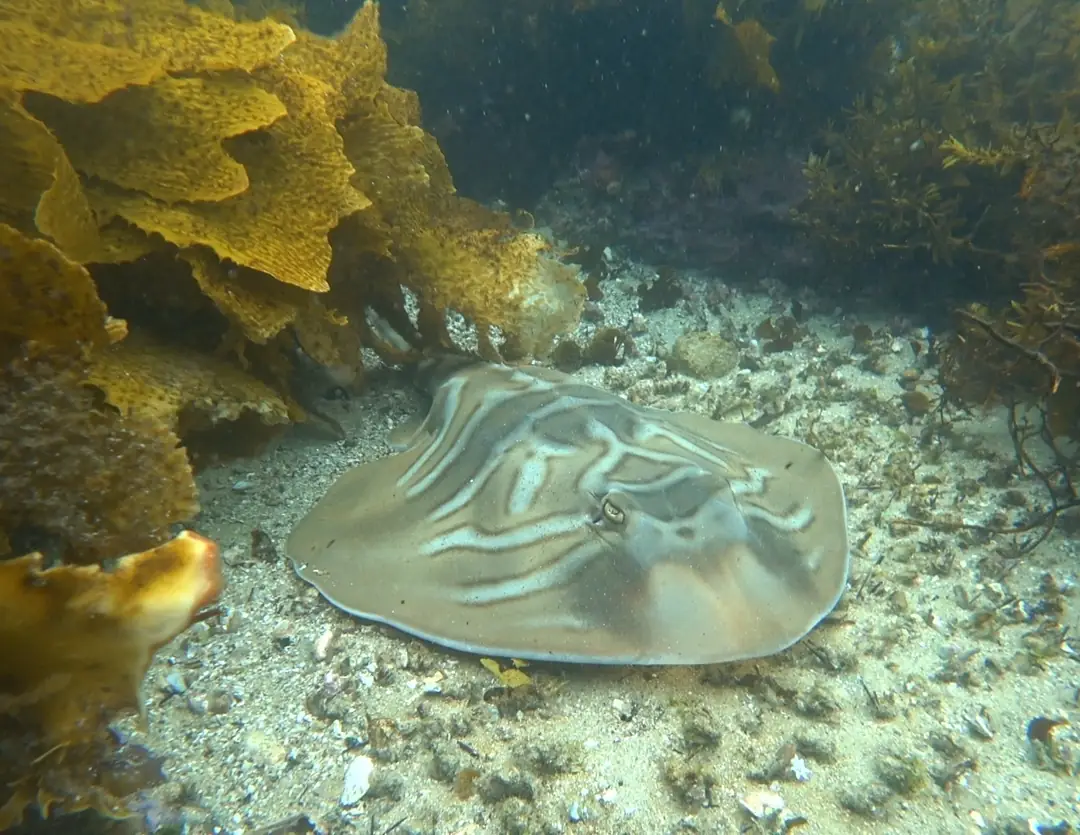
Trygonorrhina fasciata
The eastern fiddler ray (Trygonorrhina fasciata), also called the banjo shark, fiddler ray, fiddler, green skate, magpie fiddler ray, parrit, southern fiddler ray or southern fiddler, is a species of fish in the Rhinobatidae family. It is endemic to eastern Australia. Its natural habitat is open seas.
A large brownish to greyish shovelnose ray with an almost oval-shaped disc and a broadly rounded snout. The Eastern Fiddler Ray is easily identified by the pattern of broad lilac-coloured dark-edged bands including a triangular or diamond-shaped marking on the head just behind the eyes.
Disc suboval, slightly longer than wide; snout short & broadly rounded; ridges of sharp thorn-like denticles on shoulders and midline of disc; tail 1.3-1.4 times longer than disc in adults; dorsal fins large, widely-spaced.
Fiddler rays have internal fertilisation and are aplacental viviparous (ovoviviparous) - meaning that the embryos develop inside eggs and hatch within the uterus of the mother before birth. Females produce litters of 2-3 pups, which are born at a length of about 25 cm TL.
Endemic to eastern Australia from southern Queensland, to east of Wilsons Promontory, Victoria. Occurs mostly on inshore sandy areas and on the inner continental shelf in depths to about 100 m.
© Jo KuykeAll rights reserved 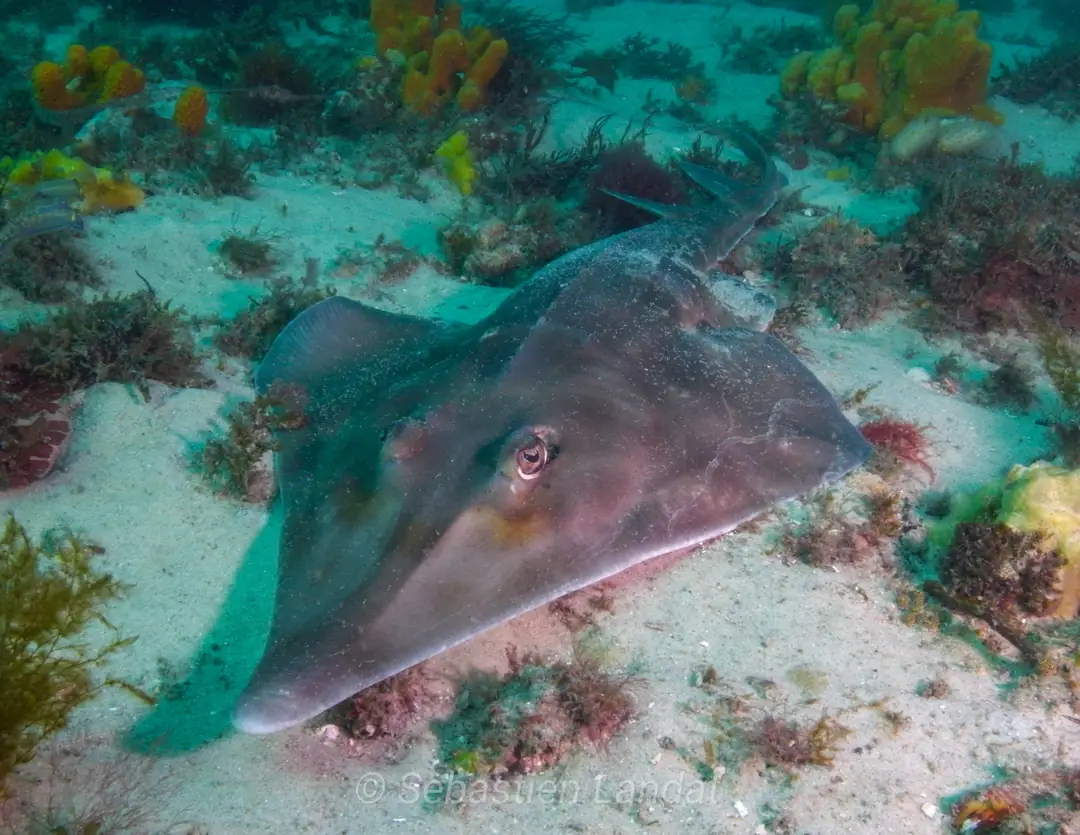 © Sebastien LandatAll rights reserved
 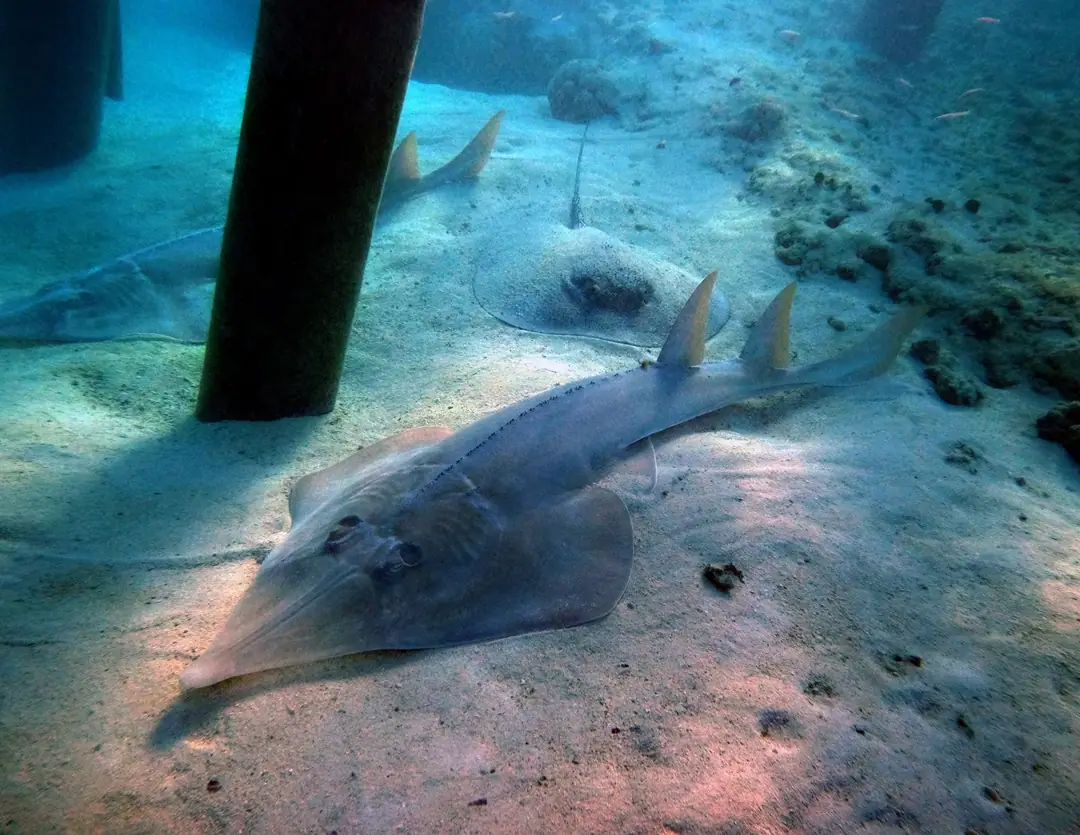 © Sophia VolzkeAll rights reserved
  © SidvicsCC BY-SA 4.0
  © seabook.appAll rights reserved
  © Christopher SimmonsAll rights reserved
 Banjo Ray has no known danger to humans. However, always observe marine life responsibly.
Banjo Ray can be found at depths of up to 100 meters.
Download Seabook free for iOS and Android.