 © Kai SquiresCC BY 4.0 · iNaturalist
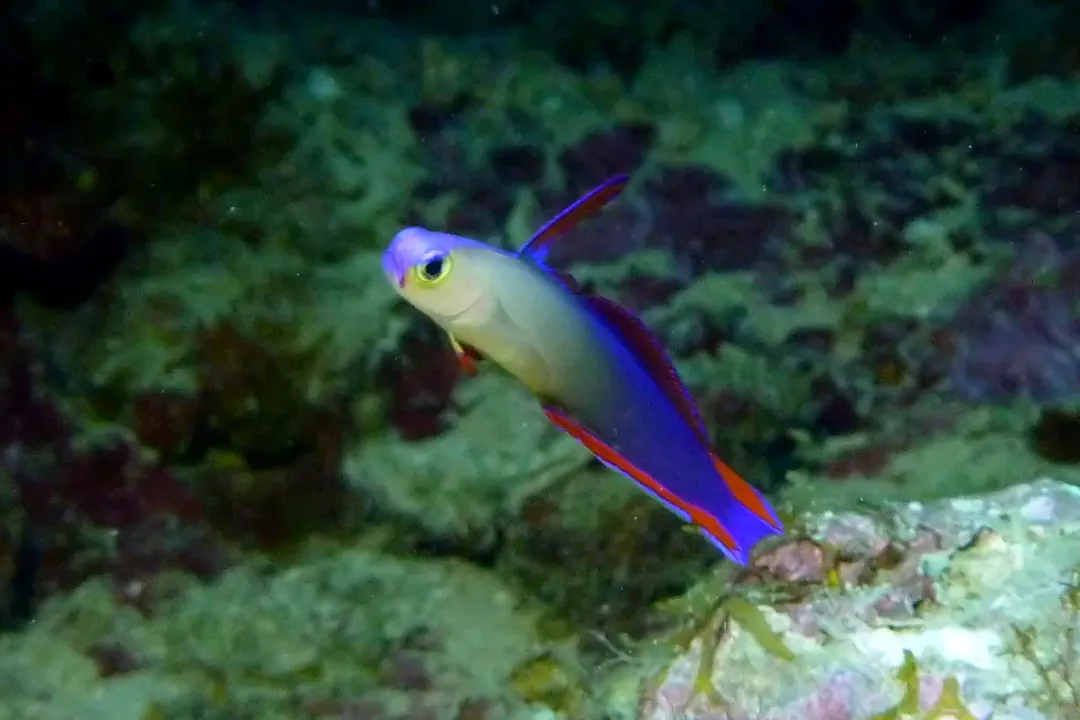
Elegant Firefish
Nemateleotris decora
Ptereleotris evides
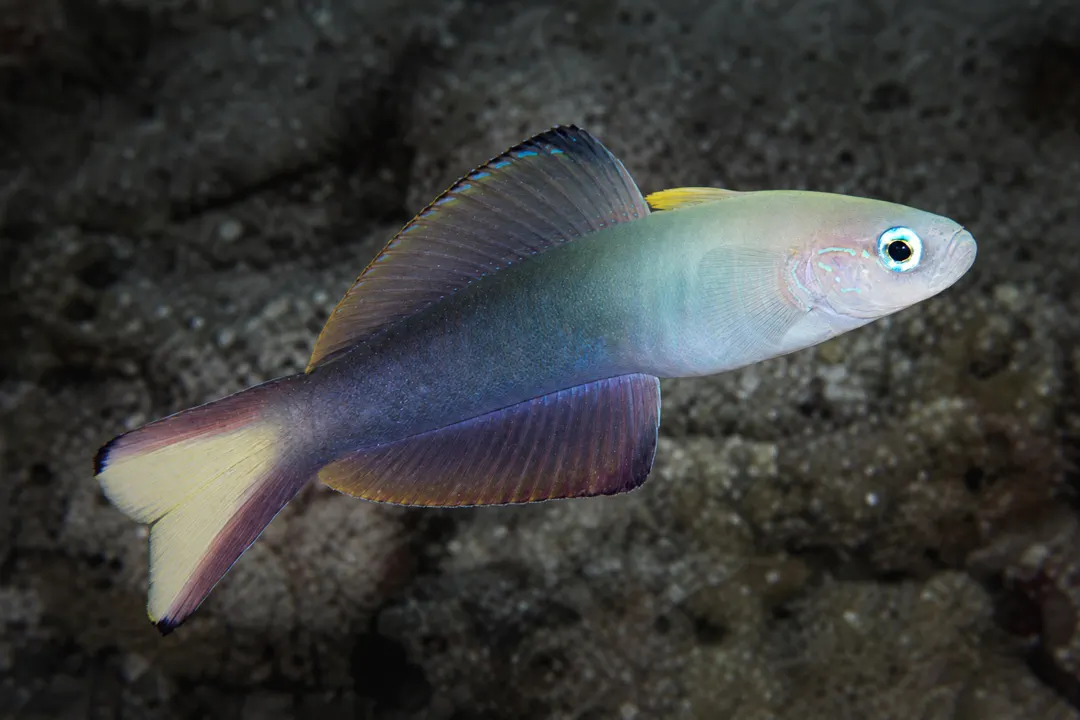
Ptereleotris evides is a species of dartfish native to the Indian Ocean and the western Pacific Ocean. It is a reef inhabitant and can be found at depths of from 2 to 15 metres (6.6 to 49.2 ft). This species can reach a length of 14 centimetres (5.5 in) TL. It can also be found in the aquarium trade.
Dorsal spines (total): 7; Dorsal soft rays (total): 23-26; Anal spines: 1; Anal soft rays: 23 - 26; Vertebrae: 26. Light bluish gray in life, shading posteriorly to black; snout blackish; operculum with iridescent blue markings. Chin with a low fleshy protuberance, narrowing posteriorly to a low longitudinal fold. Caudal fin lobes blackish to dark reddish, broad centro-posterior region of fin whitish to yellowish; 1st dorsal fin dull orangish; 2nd dorsal and anal fins largely blackish; pectoral base with an orange to orange-red bar edged in blue. Juveniles with an oval black spot larger than eye at lower base of caudal fin.
Indo-Pacific: Red Sea and East Africa to the Line and Society islands, north to the Ryukyu and Ogasawara islands, south to New South Wales, Lord Howe Island, and Rapa.
Occurs in outer reef slopes, also inhabits lagoons and bays. Usually in pairs as adults and in small aggregations as juveniles, Ref. 48637. Monogamous. Feeds on zooplankton while hovering 1 to 2 m above the bottom. Swims away from danger rather than retreat to its burrow.
© Kai SquiresCC BY 4.0 · iNaturalist 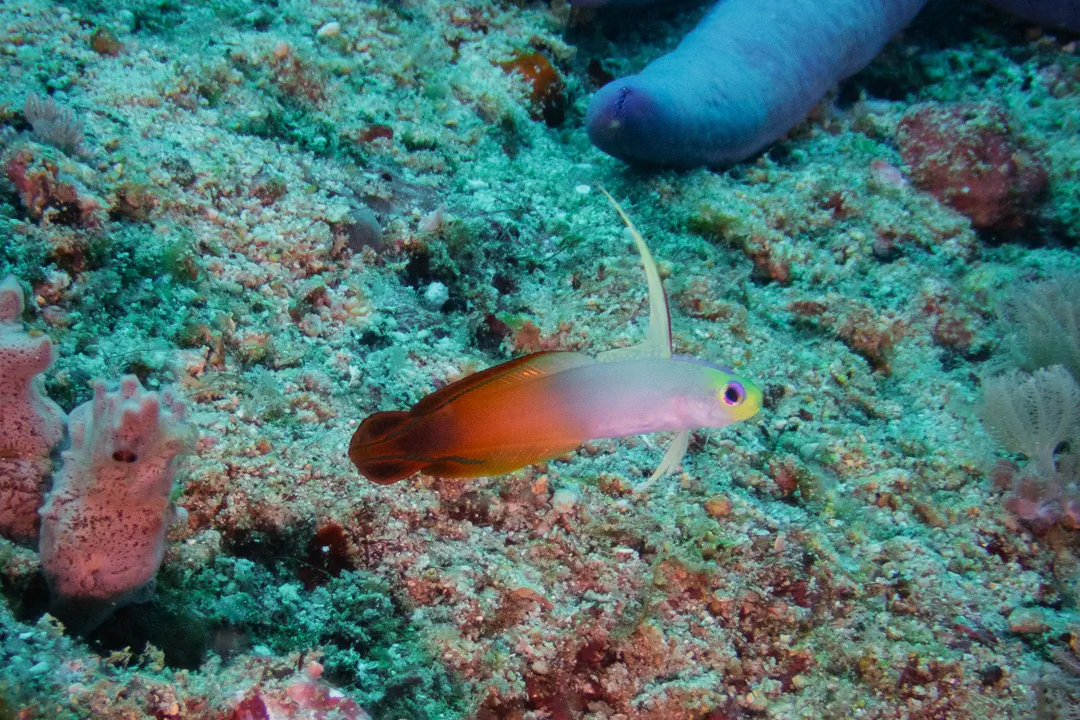 © Pierre PericardCC BY 4.0 · iNaturalist
 Blackfin Dartfish has no known danger to humans. However, always observe marine life responsibly.
Blackfin Dartfish can be found at depths of up to 30 meters.
Download Seabook free for iOS and Android.