 © Ian ShawAll rights reserved
Red Moki
Cheilodactylus spectabilis
Cheilodactylus zonatus
Cheilodactylus zonatus is a species of morwongs.
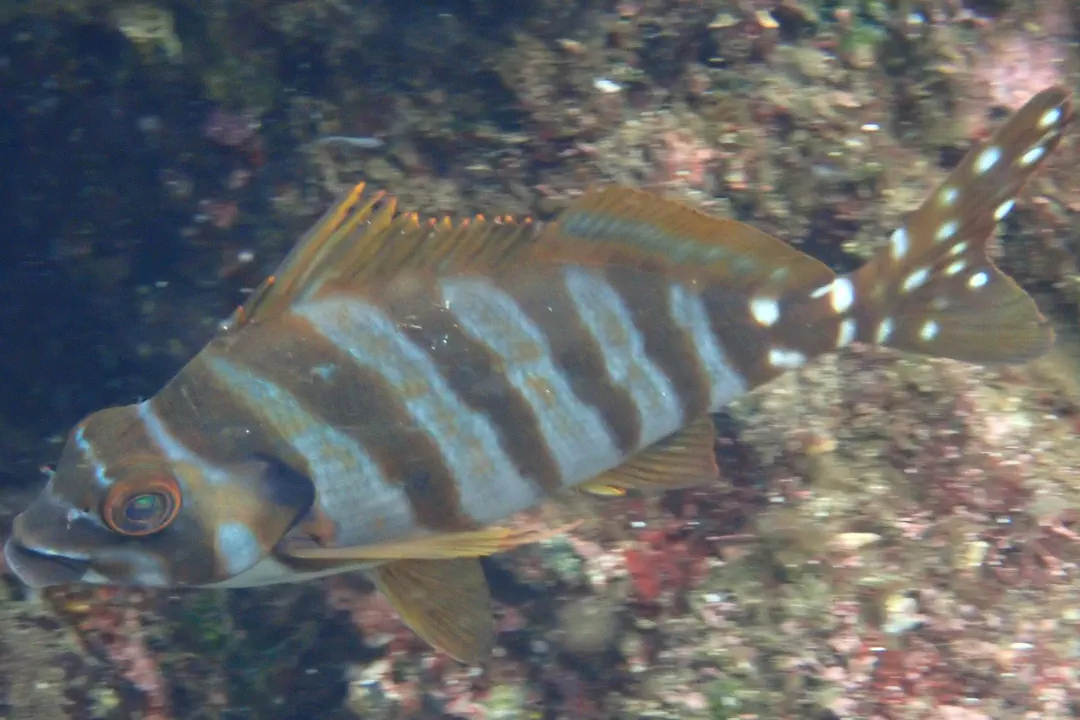
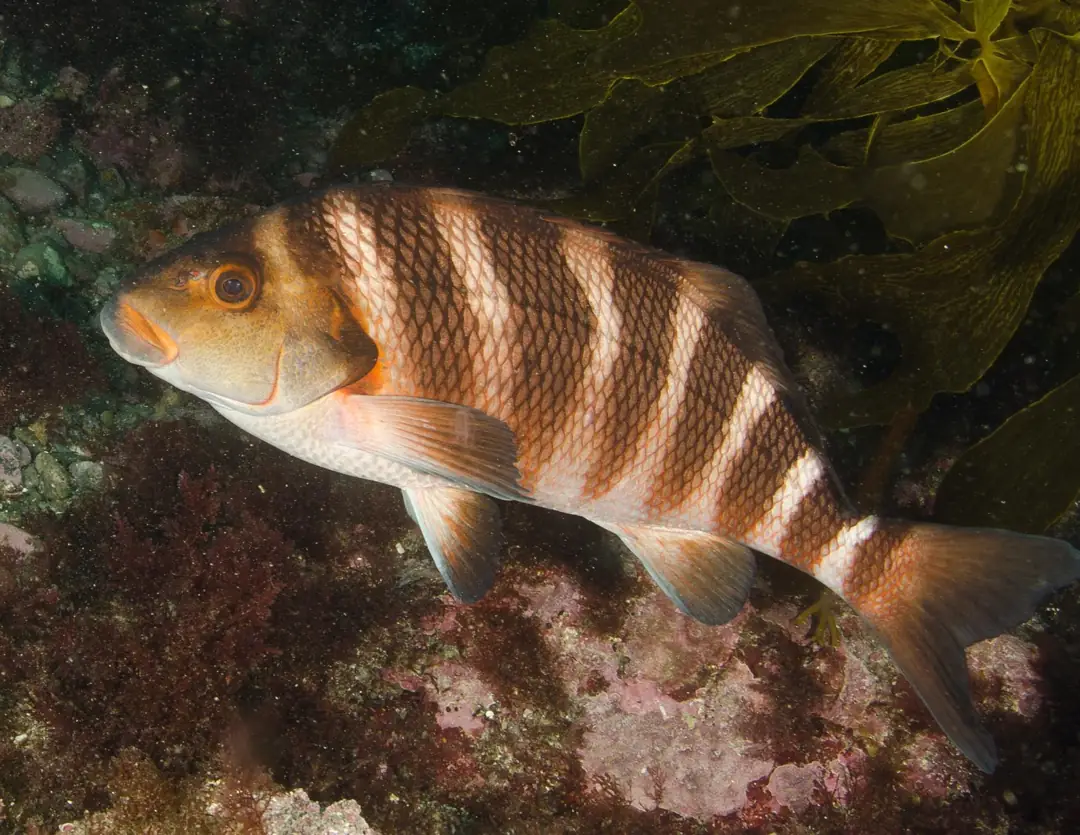
The body is long ellipse with flat sides; the back of the eyes bulges to the highest near the starting point of the dorsal fin, and then gradually descends. The eyes are large; the mastoid process above the eyes is obvious. The mouth is small and terminal; the lips are thick and grayish yellow. The teeth are small, portal teeth; the hoe bone is toothed. There is a flat spine on the posterior upper corner of the operculum. The gill membranes are connected but separated from the isthmus of the larynx. The body is rounded; the lateral line is complete. The dorsal fin is continuous, hard spines XVII, the number of soft rays is 32; the anal fin hard spines III, the number of soft rays is 8; the pectoral fin is hypertrophy, and the end of the ray is less than the anus; the caudal fin is deep fork-shaped. The body is yellowish brown, with 9 orange diagonal bands on the side and head, all reaching below the pectoral fins. The fins are orange; the dorsal fin rays have a blue longitudinal band parallel to the base; the caudal peduncle and caudal fin have some white spots scattered like pupils.
Pacific Ocean: central Honshu southward, South China Sea and Taiwan.
Inhabits at the bottom of the reef-sand mixed area, moves with one swim and one stop, often staying above the reef, waiting for opportunities to hunt for food, or on the sandy mud bottom, using the extended pectoral fins to search for prey. Crustaceans are the staple food.
© Ian ShawAll rights reserved Spottedtail Morwong has no known danger to humans. However, always observe marine life responsibly.
Download Seabook free for iOS and Android.