 © seabook.appAll rights reserved
Giant Oceanic Manta Ray
Mobula birostris
Mobula tarapacana
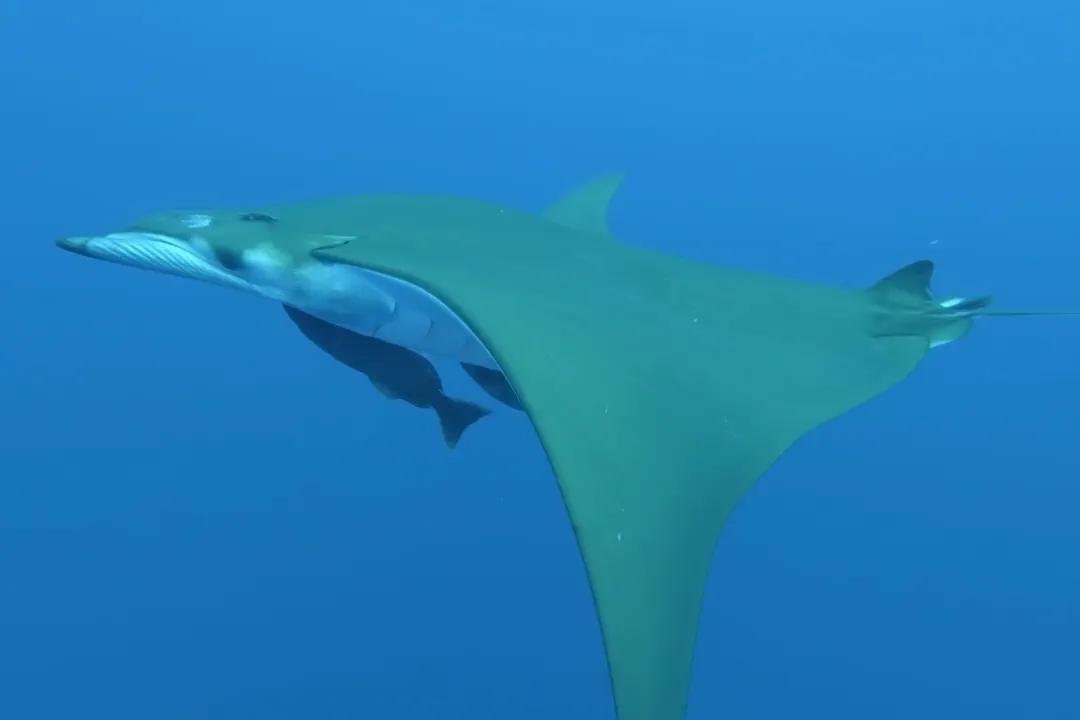
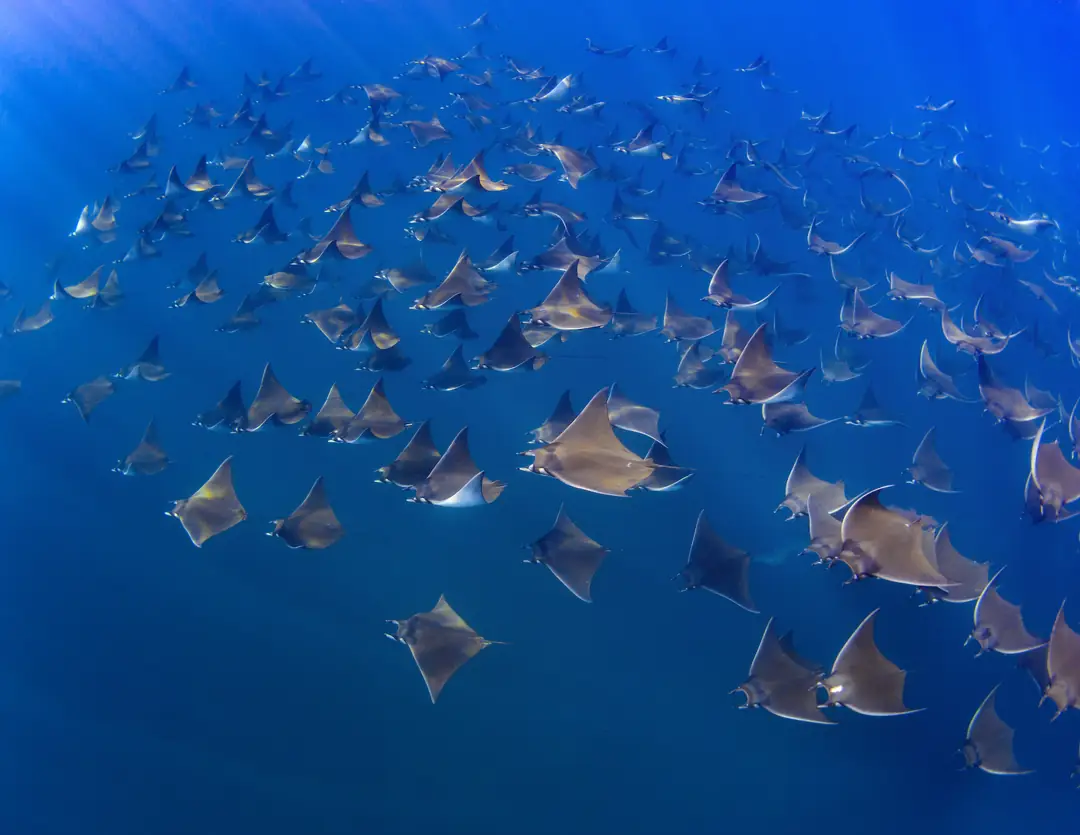
Mobula tarapacana is a species of fish in the family Myliobatidae.
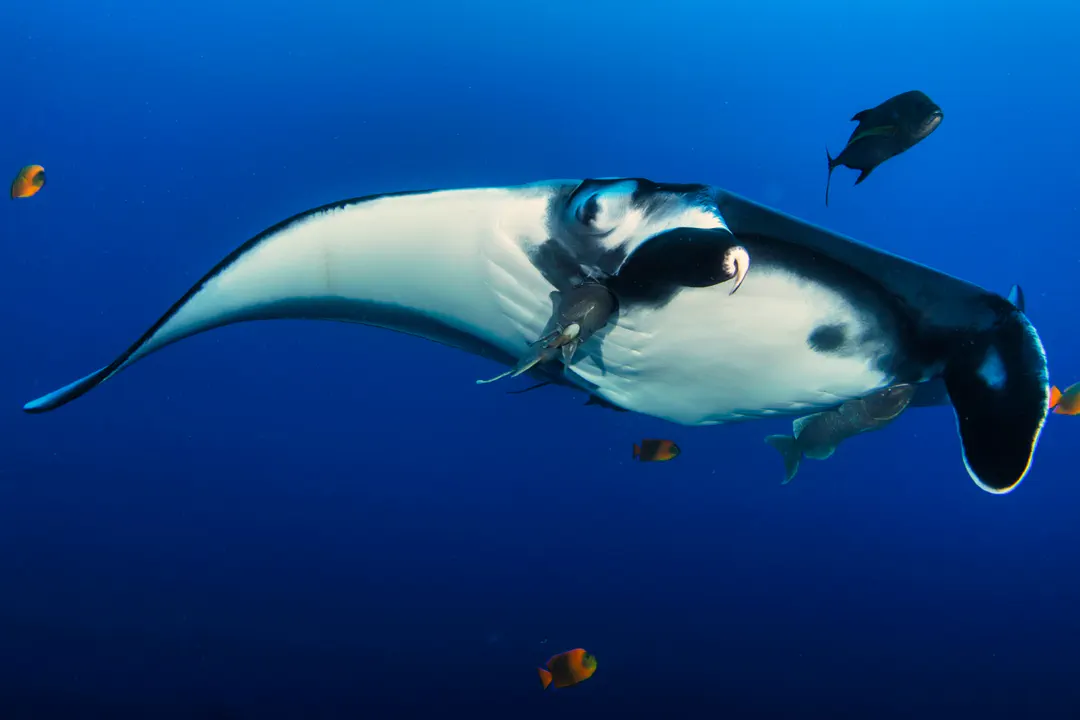
A large devil ray with a long head bearing short head fins; dorsal fin plain, and pectoral fins with strongly curved, swept-back tips; upper disc densely covered with small, pointed denticles and tail shorter than disc with no spine. Dark blue, olive-green to brownish above; ventral side white anteriorly, grey posteriorly, with an irregular but distinct line of demarcation. No caudal fin. There are two distinct deep dive patterns; the first, which is usually only performed once every 24 hours, is diving to the maximum depth and resurfacing after 60 to 90 minutes; the second, which is less frequent, is dives up to 1,000 meters for a maximum of 11 hours. The latter pattern may be associated with traveling rather than feeding. It can reach a disc width of up to 3.7 m (12 ft).
It is found in Brazil, Cape Verde, Chile, Ivory Coast, Egypt, Indonesia, Japan, Mexico, Palau, South Africa, Taiwan, the United States, and Venezuela. Its natural habitats are open seas, shallow seas, and coral reefs. These fish have been discovered to feed at depths up to 1,848 metres (6,063 ft) during deep dives, and are among the deepest-diving ocean animals.
© seabook.appAll rights reserved 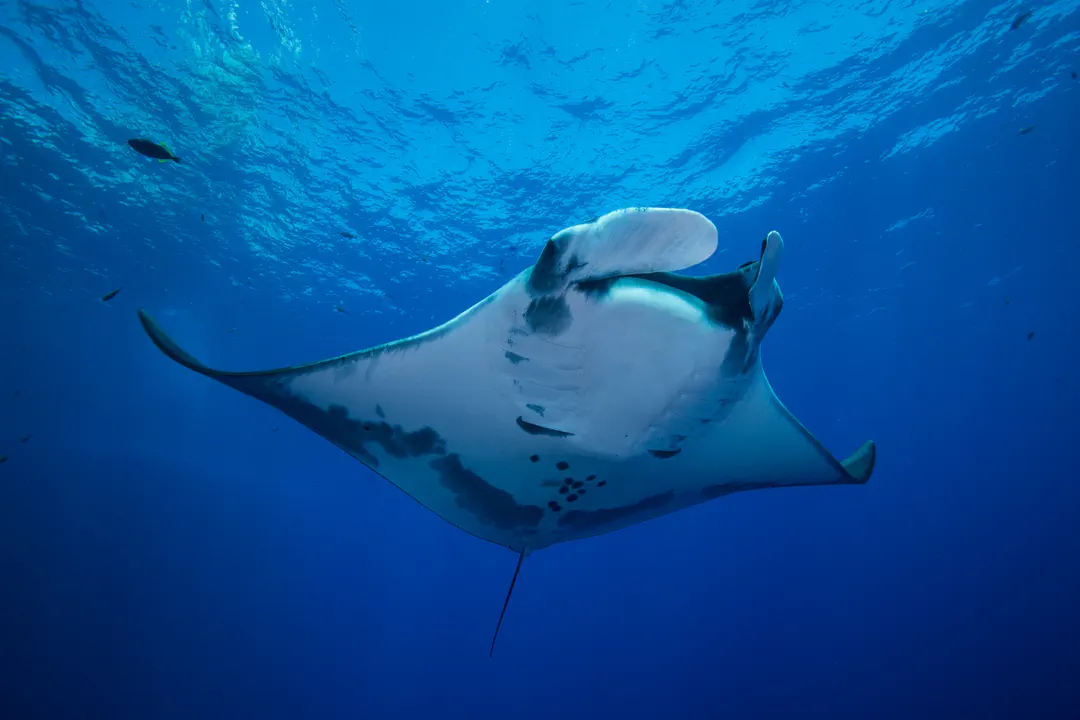 © seabook.appAll rights reserved
  © seabook.appAll rights reserved
 Chilean Devil Ray has no known danger to humans. However, always observe marine life responsibly.
Chilean Devil Ray can be found at depths of up to 1896 meters.
Download Seabook free for iOS and Android.