 © Bernard DUPONTCC BY 4.0 · iNaturalist
Golden Spadefish
Platax boersii
Platax orbicularis
Platax orbicularis is a popular aquarium fish which occurs naturally in the tropical waters of the Indian and Pacific Oceans.
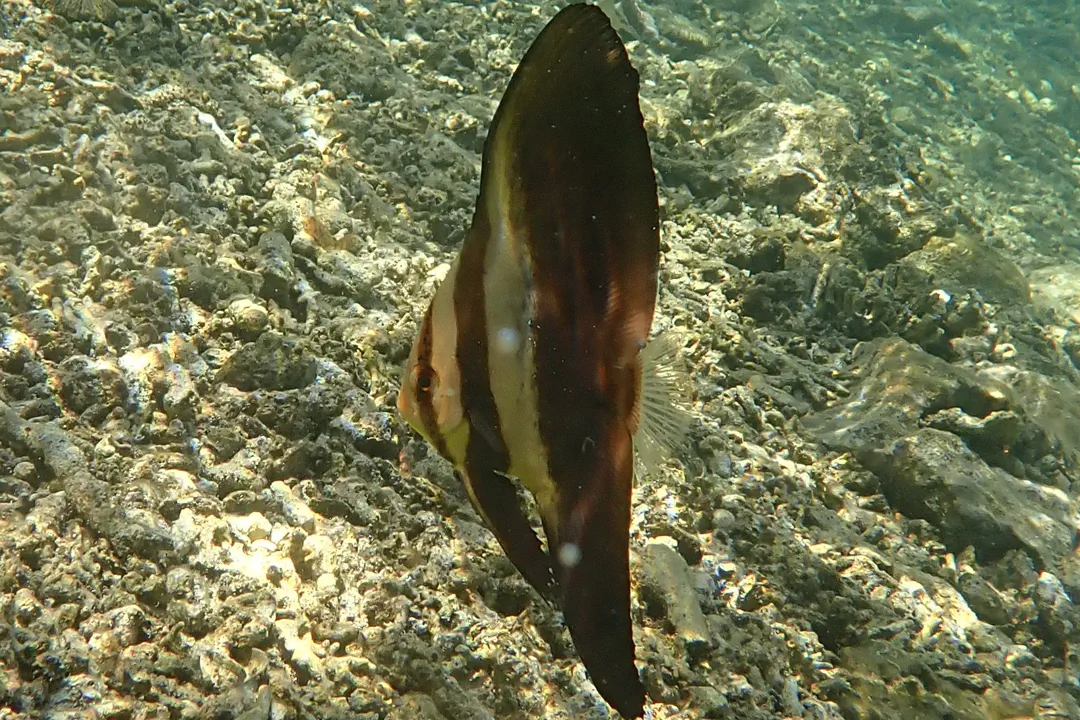
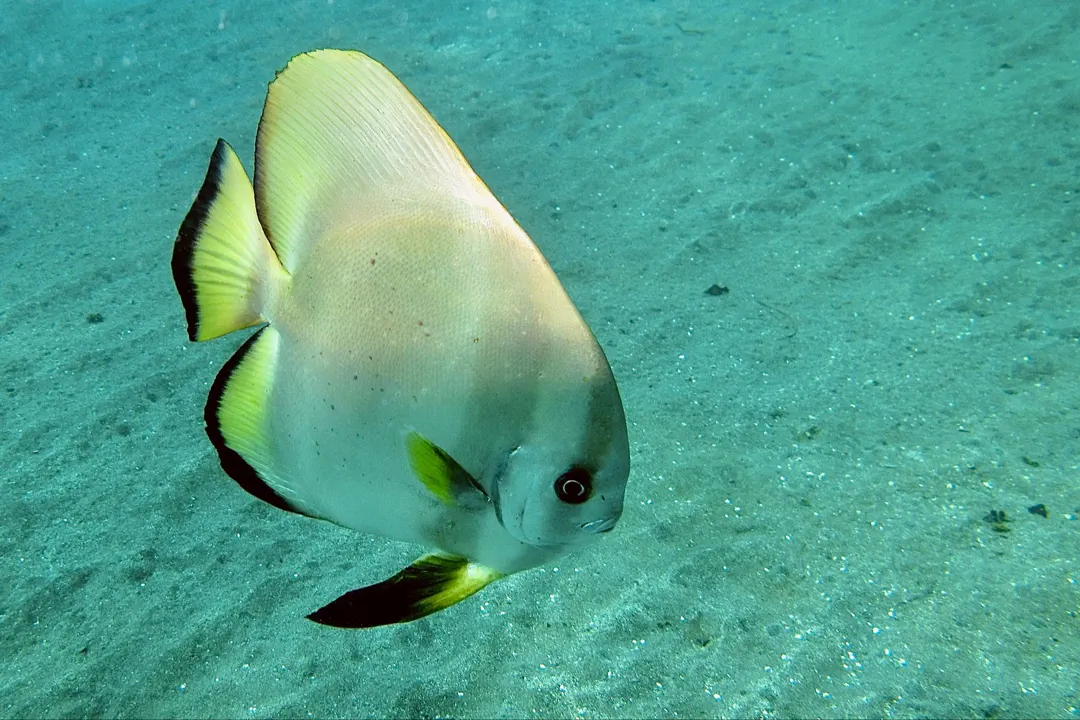
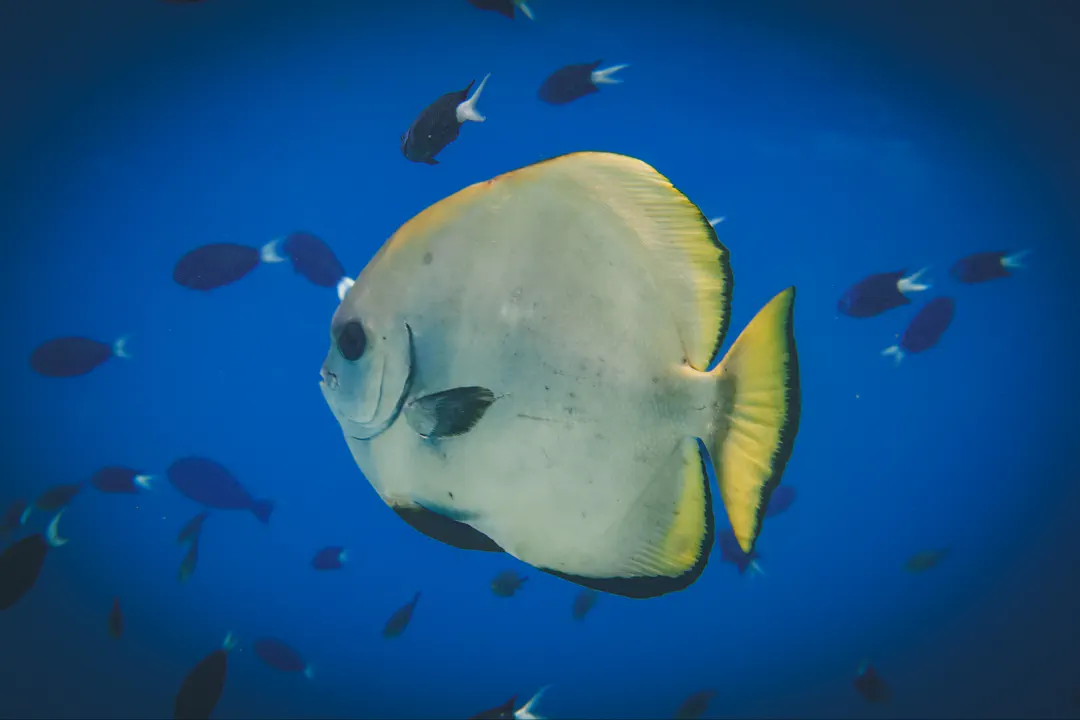
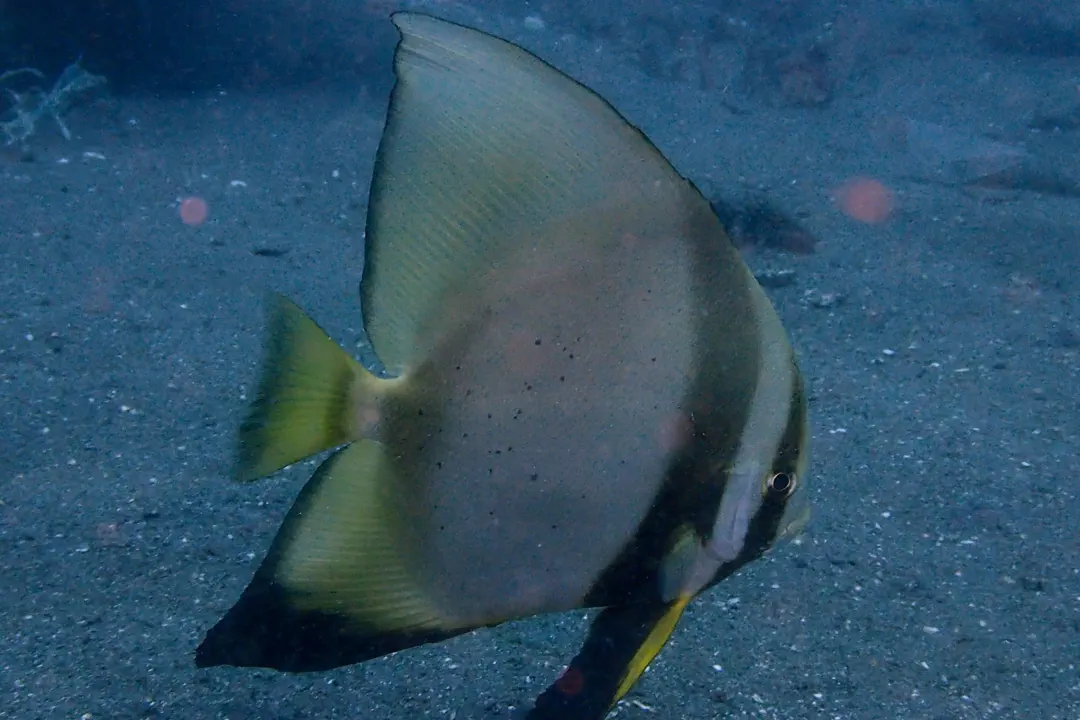
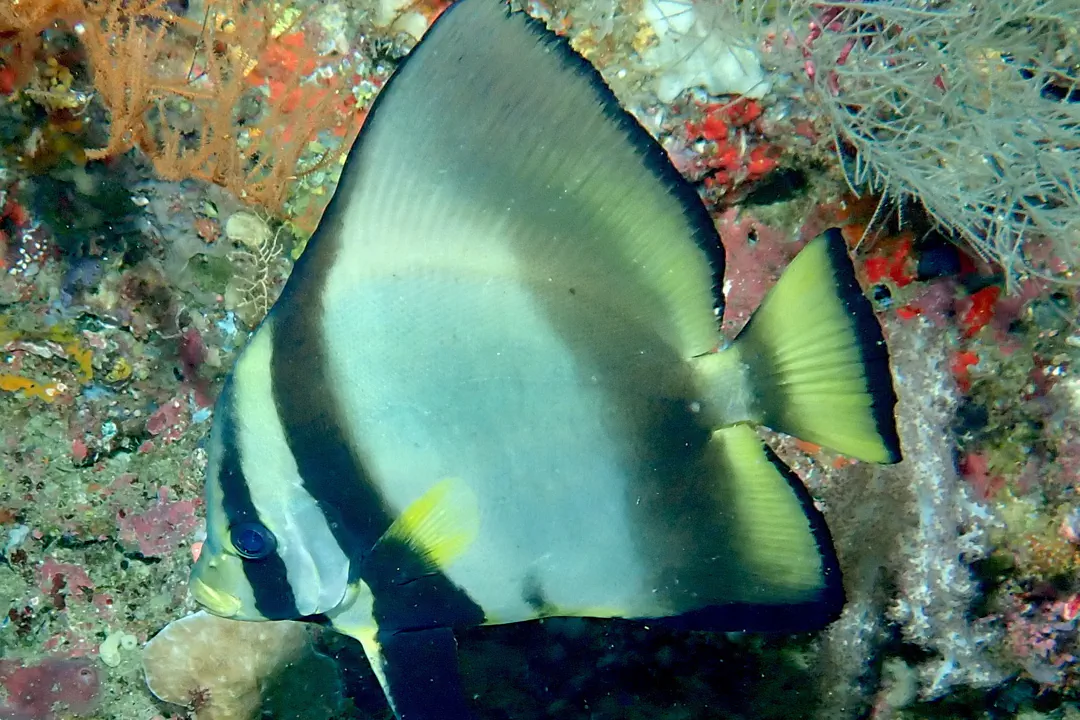
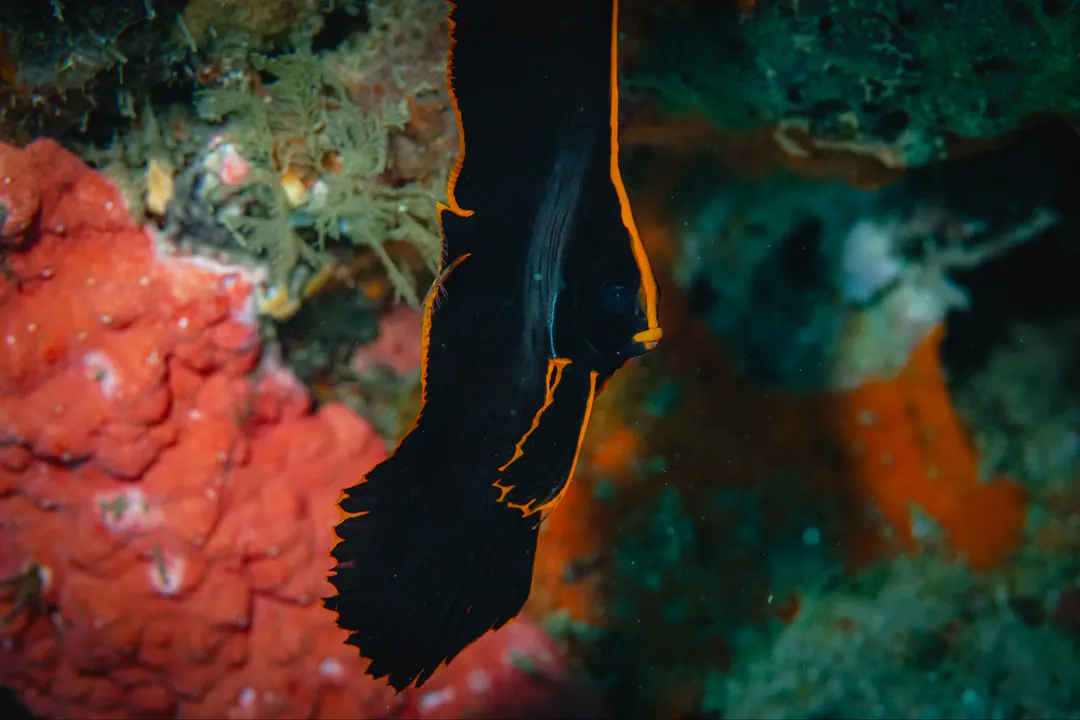
The body of Platax orbicularis is almost disc-shaped, and very thin. Its tail, about 20% of the body length, is fan-shaped and is taller than it is long. Males can grow to up to 50 cm in length, though aquarium specimens are generally much shorter. The ocular band of adult specimens with a series of dark vermiculations. Adults (above 20 cm) yellowish silvery or dusky, dark bar through eye and another bar just behind head. Occasionally with a few small, scattered black spots on body. Median fins yellowish, with black margins posteriorly. Pelvic fins black. Small juveniles reddish brown, with irregular black spots and blotches and small, white (black-edged) ocelli on body. Small black spot at base of last 3 dorsal- and anal-fin rays. Caudal fin transparent except for base, which is reddish brown. Body orbicular and strongly compressed, its depth more than twice length of head and 0.9 to 1.4 times SL. Head length 3.4 to 3.8 times SL. Snout profile of large adults (above 40 cm total length) concave, with bony swelling between eyes. Interorbital width 38 to 48% head length. Jaws with bands of slender, flattened, tricuspid teeth, the middle cusp about twice length of lateral cusps. No teeth on palatines or vomer. Five pores on each side of lower jaw. Preopercle smooth. Opercle without spines.
In the wild, the orbicular batfish is found in brackish or marine waters, usually around reefs, at depths from 5 to 30 metres. Its range extends from the Red Sea and East Africa in the east to the Tuamotu Islands in French Polynesia in the west, and from southern Japan in the north to northern Australia and New Caledonia. It has been recorded off the coast of Florida, though this may be the result of dumping of aquarium specimens.
Juvenile fish are solitary or live in small groups, among mangroves or other inner sheltered lagoons. Adults are found in more open waters and at greater depth.
© Bernard DUPONTCC BY 4.0 · iNaturalist 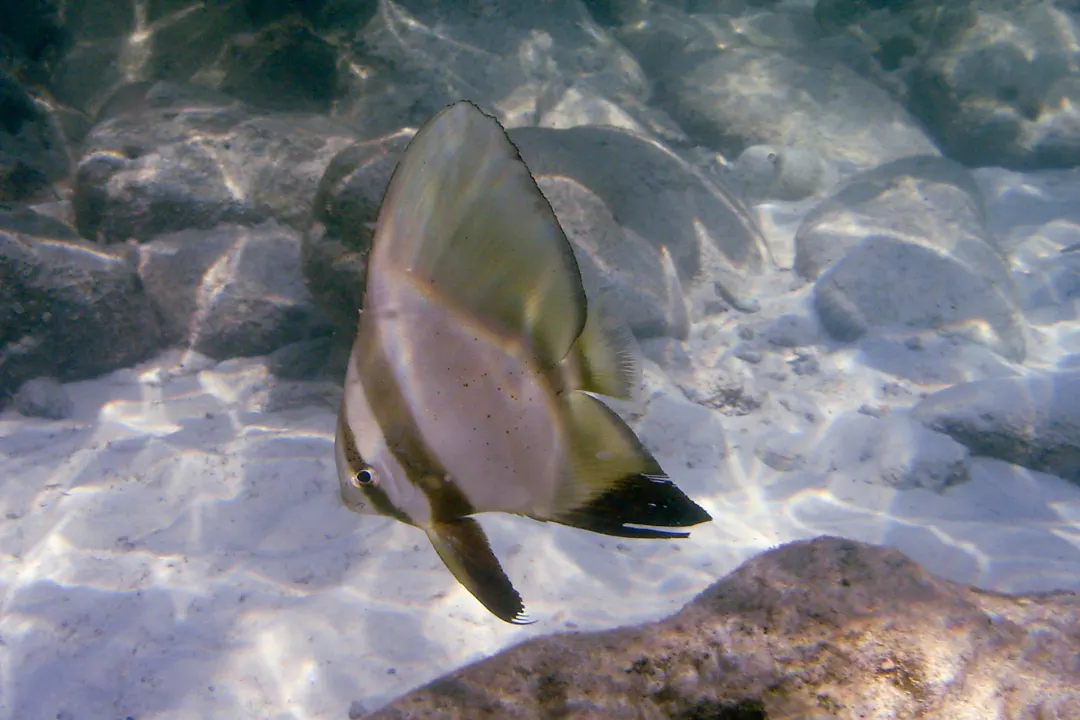 © Julien RenoultCC BY 4.0 · iNaturalist
  © Olka KuryanAll rights reserved
  © Dan SchofieldCC BY 4.0 · iNaturalist
  © desertnaturalistCC BY 4.0 · iNaturalist
  © Stas KuryanAll rights reserved
 Orbicular batfish (juvinile) has no known danger to humans. However, always observe marine life responsibly.
Orbicular batfish (juvinile) can be found at depths of up to 30 meters.
Download Seabook free for iOS and Android.