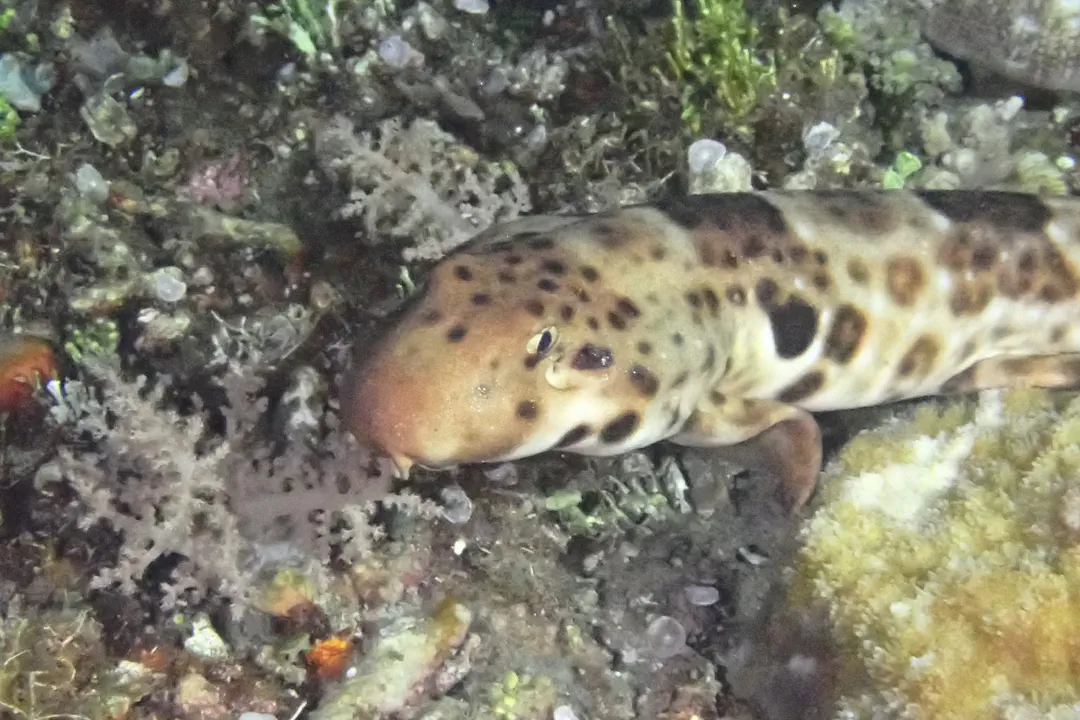
 © Ben CostamagnaCC BY 4.0 · iNaturalist
Halmahera epaulette shark
Hemiscyllium halmahera
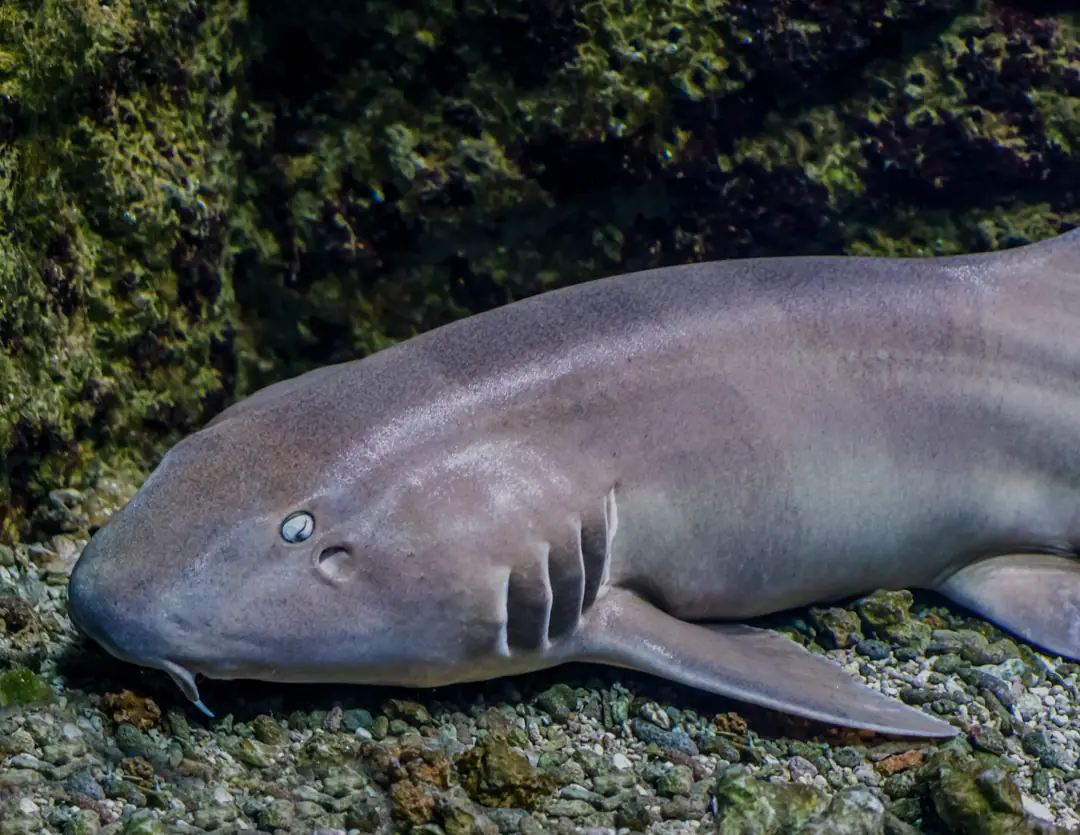 © seabook.appAll rights reserved
Chiloscyllium punctatum
Chiloscyllium punctatum, is a bamboo shark in the family Hemiscylliidae found in the Indo-West Pacific from Japan to northern Australia, between latitudes 34° N and 26° S, to depths of 85 metres (279 ft). Its length is up to 1.04 metres (41 in). Classified as Near Threatened (NT) on the IUCN Red List. It is regularly bred in public aquaria, and is arguably the shark most suited to aquaria.
Juvenile sharks are marked with dark bands across the body and scattered dark spots. Adults are light brown with very faint or no banding visible. These sharks have long slender bodies with two spineless dorsal fins of equal size.
Its minimum population doubling is 4.5–14 years range. The major threats to these sharks are the loss of their habitat, pollution, and hunting (both for aquarium trade as well as food).
Reproduction is oviparous.
Concave posterior margined dorsal fin. No color patterns for the adults but the juveniles have dark transverse bands with some dark spots.
These sharks are nocturnal animals and can survive out of the water for up to 12 hrs. These sharks have barbels, which are sensory organs that look like whiskers. Hence the common name for these sharks is “Cat shark”.
Indo-West Pacific: Andaman Island and India east to Philippines, north to Japan and south to Australia.
These sharks live around coral reefs and tide pools.
The minimum size of the tank that can carry an adult cat shark is about 180 gallons. Because these sharks are nocturnal species they will need some type of shaded area within the tank where the shark could hide. Although these sharks do not swim around too much, it is highly suggested that the items within the tank should be stable; cat sharks are very strong and will knock down anything that is not stable inside the tank. Also this shark should not be placed with Triggers and Puffers, they will nip at the shark’s fins, nor should they be placed with aggressive feeders.
These sharks are carnivores that should be fed 2-3 times a week; some of their diet includes fresh shrimp, scallop, squid, and marine fish. Along with the food, these sharks should take some iodine supplements to prevent goiter disease. Two things to be aware of when feeding the shark: one is to make sure that the meals are bite-sized or else it will throw it back up and the second is sometimes juveniles are difficult to get to eat so adding a flavor enhances their interest .
© Ben CostamagnaCC BY 4.0 · iNaturalist Brownbanded Bambooshark has no known danger to humans. However, always observe marine life responsibly.
Brownbanded Bambooshark can be found at depths of up to 85 meters.
Download Seabook free for iOS and Android.