 © Ken-ichi UedaCC BY 4.0 · iNaturalist
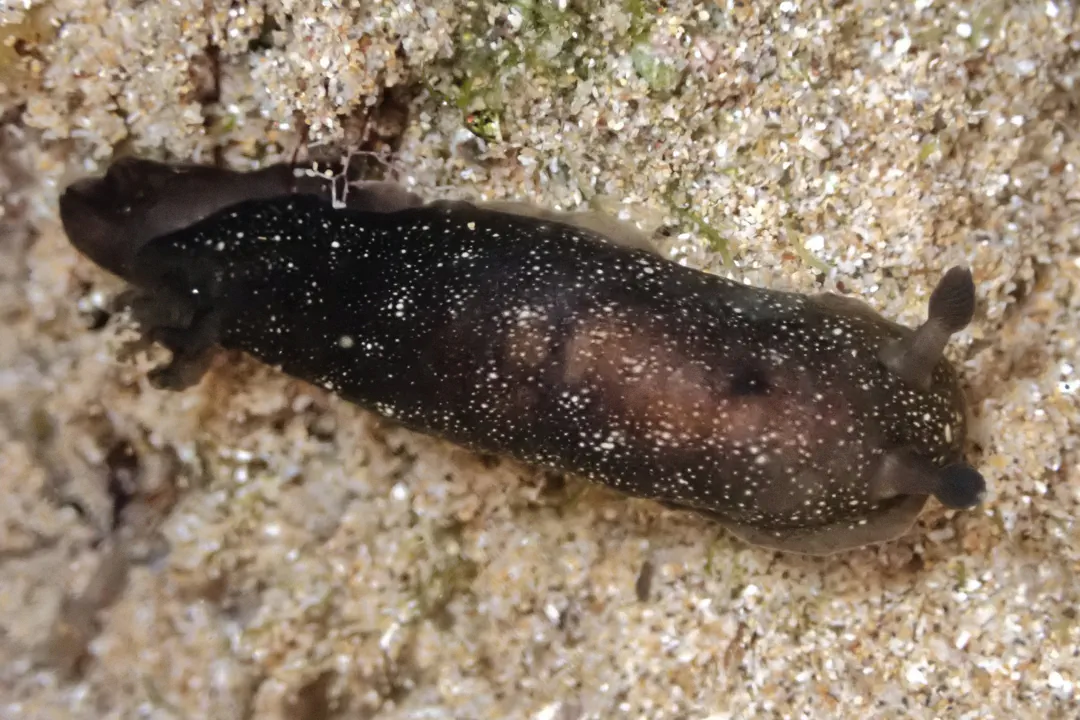
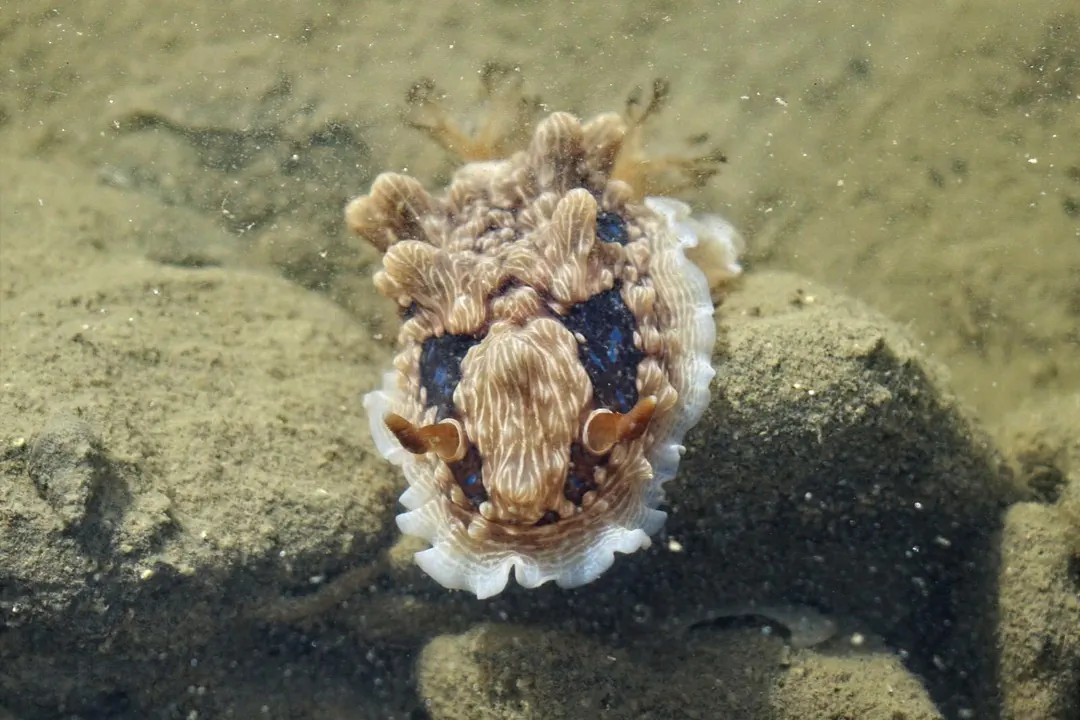
Black Doris
Dendrodoris nigra
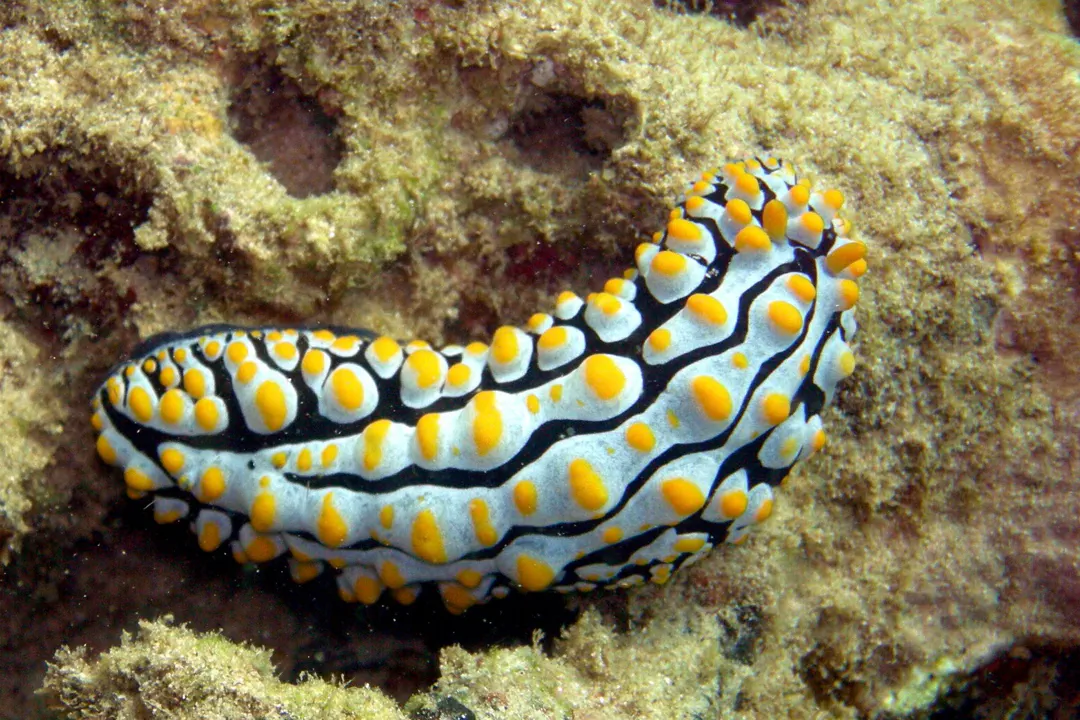
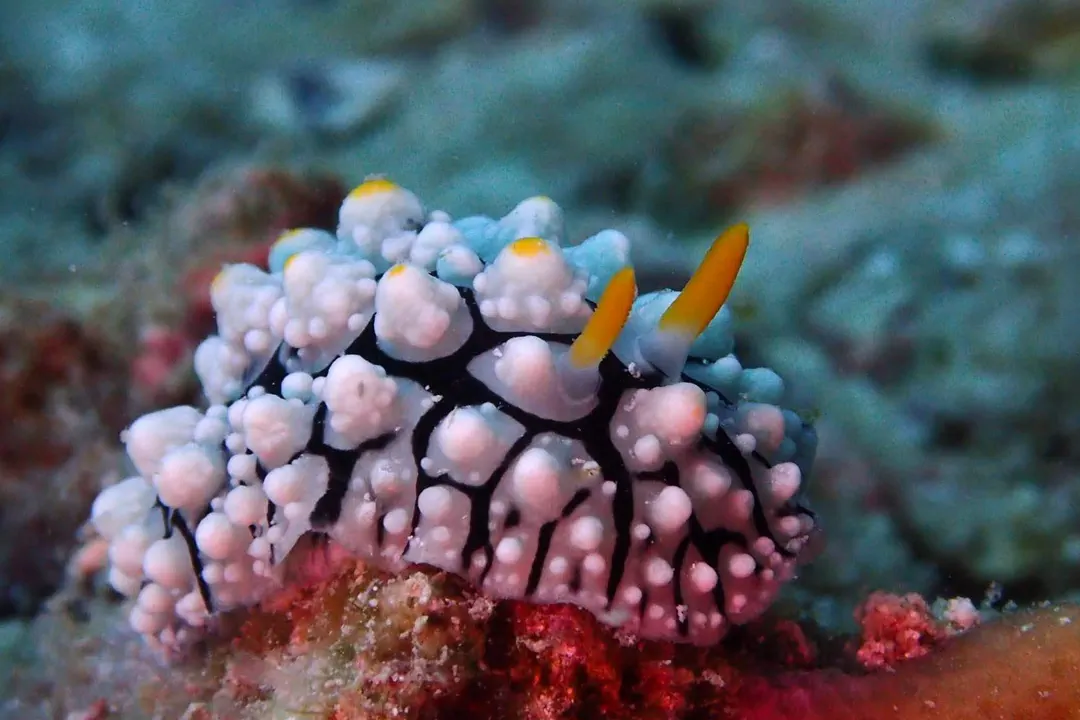
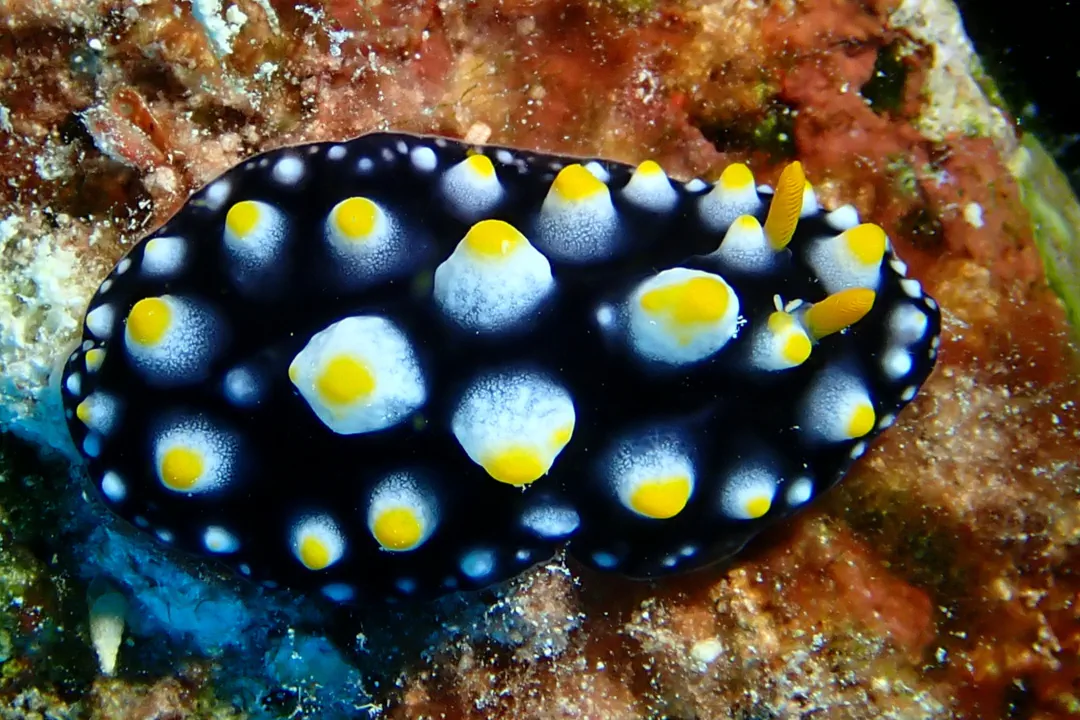
Phyllidia varicosa
Phyllidia varicosa is a species of sea slug, a dorid nudibranch, a shell-less marine gastropod mollusc in the family Phyllidiidae.
This is a large species that can be distinguished by its numerous (3 to 6), longitudinal, tuberculate notal ridges. The ridge and bases of the tubercles are a blue-grey colour. The tubercles are capped in yellow. The foot sole has a black longitudinal foot stripe.
This species is widely distributed throughout the Indo-West Pacific Oceans including the central Pacific and the Red Sea.
Juveniles of the sea cucumber, Pearsonothuria graeffei are brightly coloured and closely resemble Phyllidia varicosa. They are white and blue or black, with a few large, yellow, thorn-like projections. These bright colours warn predators of the toxicity of the nudibranch, and this mimicry on the part of the sea cucumber species serves to protect it also. The adult sea cucumber has much duller colouration, but it is also much larger than the sea slug and has its own toxic chemicals at this stage.
© Ken-ichi UedaCC BY 4.0 · iNaturalist  © Stas KuryanAll rights reserved
  © Dan SchofieldCC BY 4.0 · iNaturalist
  © Jacqui GeuxCC BY 4.0 · iNaturalist
  © Debra BakerCC BY 4.0 · iNaturalist
  © Bernard PictonCC BY 4.0 · iNaturalist
 Varicose Wart Slug has no known danger to humans. However, always observe marine life responsibly.
Varicose Wart Slug can be found at depths of up to 20 meters.
Download Seabook free for iOS and Android.