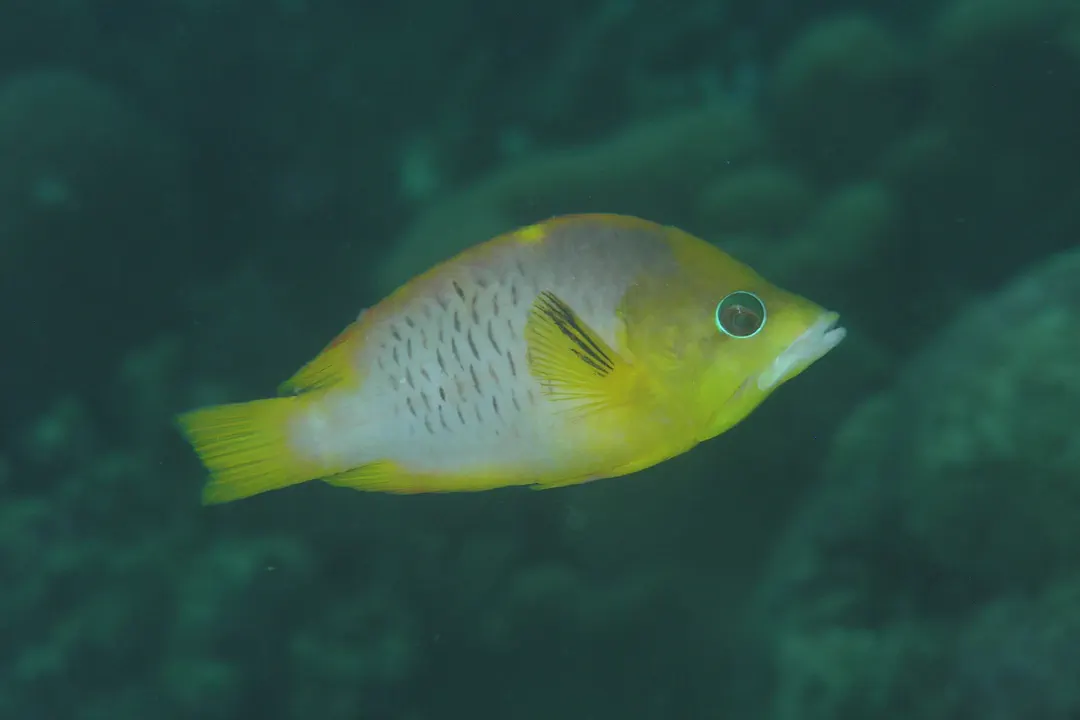
Latent Slingjaw Wrasse (female)
Epibulus brevis
Max Size
See in AppMax Weight
—
Max Depth
18 m
The Latent Slingjaw Wrasse, Epibulus brevis, is a species of Cheilinine wrasse native to the tropical waters of the West Pacific from Indonesia to Papua New Guinea.
Other names: Dwarf Slingjaw Wrasse
Description
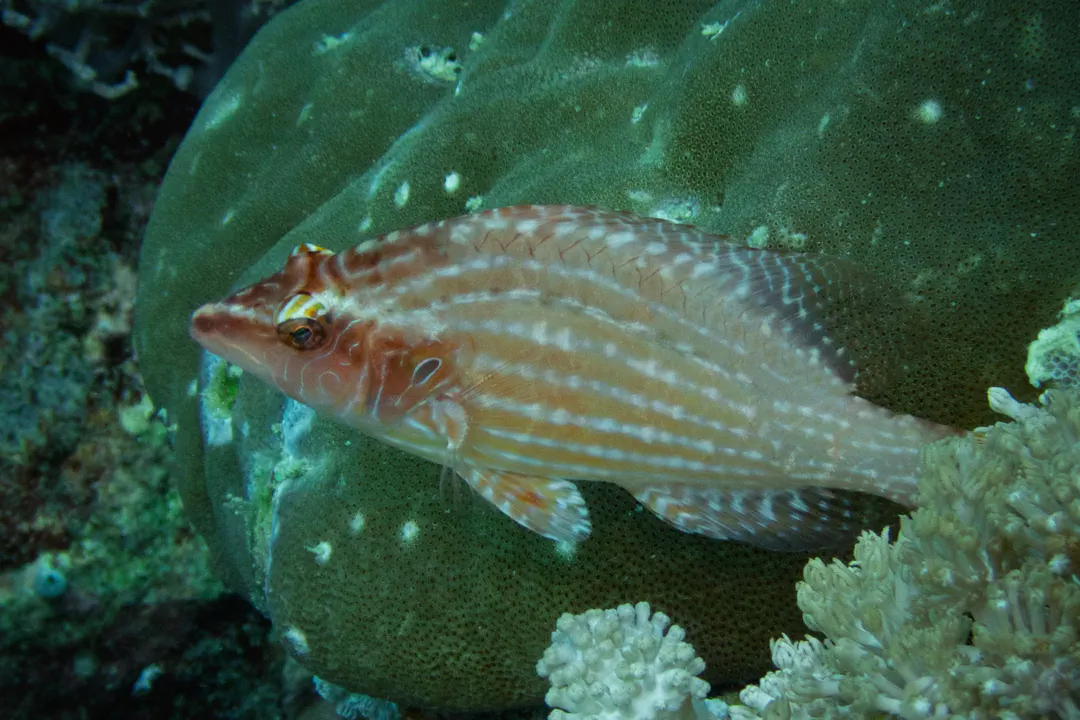
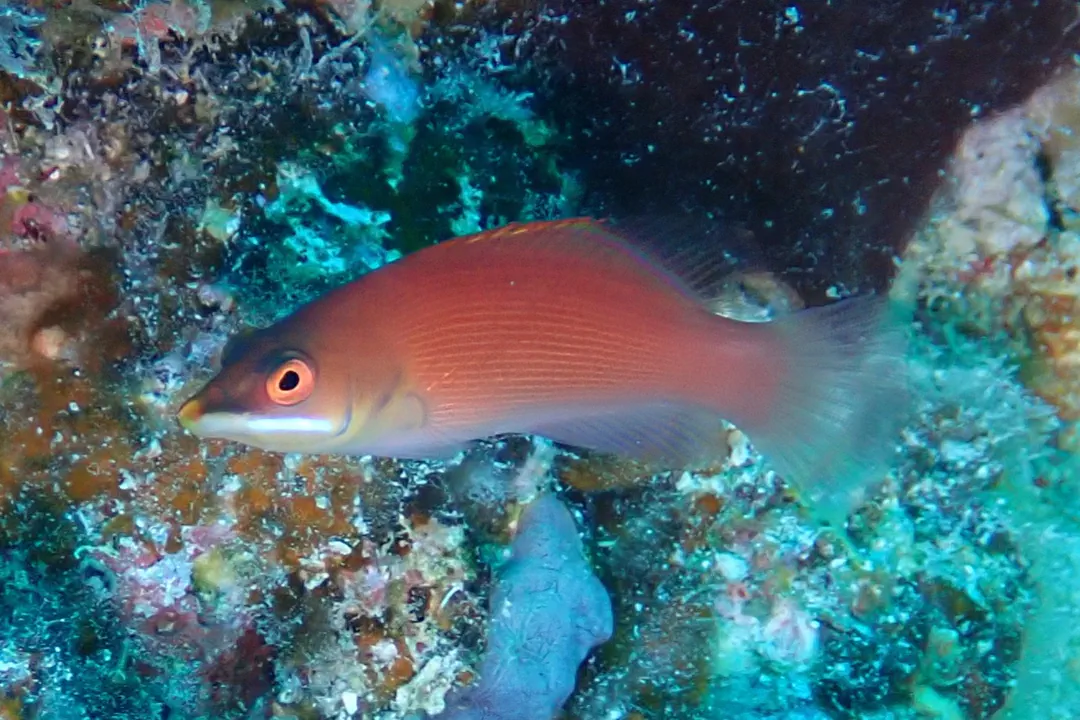
Similar to the widespread Epibulus insidiator (Slingjaw Wrasse). Males are brown with yellow on the throat area, yellowish caudal-fin lobes, and a yellow marking at the opercular flap. Females vary in colour from dark to pale brown, or yellow or almost white, with black markings on the pectoral fins.
Juveniles are brown to greenish-brown with white lines on the head and body and a black spot on both the dorsal and anal fins. They resemble possum wrasses of the genus Wetmorella in both appearance and behaviour. Like possum wrasses, juvenile slingjaw wrasses are very secretive, and usually shelter in crevices or among branching corals.
The Dwarf Slingjaw Wrasse is deeper-bodied and attains a smaller size than the similar Slingjaw Wrasse. It also has relatively longer pectoral fins, and lacks the black stripe through the eye.
Max length : 18.5 cm SL male/unsexed; 13.5 cm SL (female).
Biology
A protogynous hermaphrodite. Courtship and spawning are variable, and spawning has been observed in Palau in the late afternoon, not correlated with the high tide. Although males do not display in such an obvious manner as E. insidiator, they swim conspicuously around a territory, often a short distance above the bottom, but sometimes higher in the water column, presumably to be more visible to the females. The male’s courtship posture is distinctly different from that of E. insidiator, with the caudal fin folded, and the dorsal and anal fins held close to the body. Males swim around prospective females, displaying in a very subtle manner. The spawning rush varies, ranging from a low arch to a short and relatively slow upward movement. At the time of spawning the median fins of the male are more widely spread.
Distribution
Western Pacific: Palau, Philippines, Papua New Guinea and Indonesia.
Habitat
Usually inhabits protected inshore reefs and lagoons, and also occurs in adjacent seagrass areas. Depth range 3 - 18 m. It feeds mostly on crabs and shrimps, along with fishes and other crustaceans.
Colors
Habitat and Environment
Coral reef
Conservation status
(LC) Least concern
Poisonous
See in SeabookDanger to human
See in SeabookVenomous
See in SeabookSimilar Species
Frequently Asked Questions
Is Latent Slingjaw Wrasse (female) dangerous?
Latent Slingjaw Wrasse (female) is classified as: No, No, No. Always exercise caution and keep a safe distance.
Where can you find Latent Slingjaw Wrasse (female)?
How deep does Latent Slingjaw Wrasse (female) live?
Latent Slingjaw Wrasse (female) can be found at depths of up to 18 meters.