 © Brian GratwickeCC BY 4.0 · iNaturalist
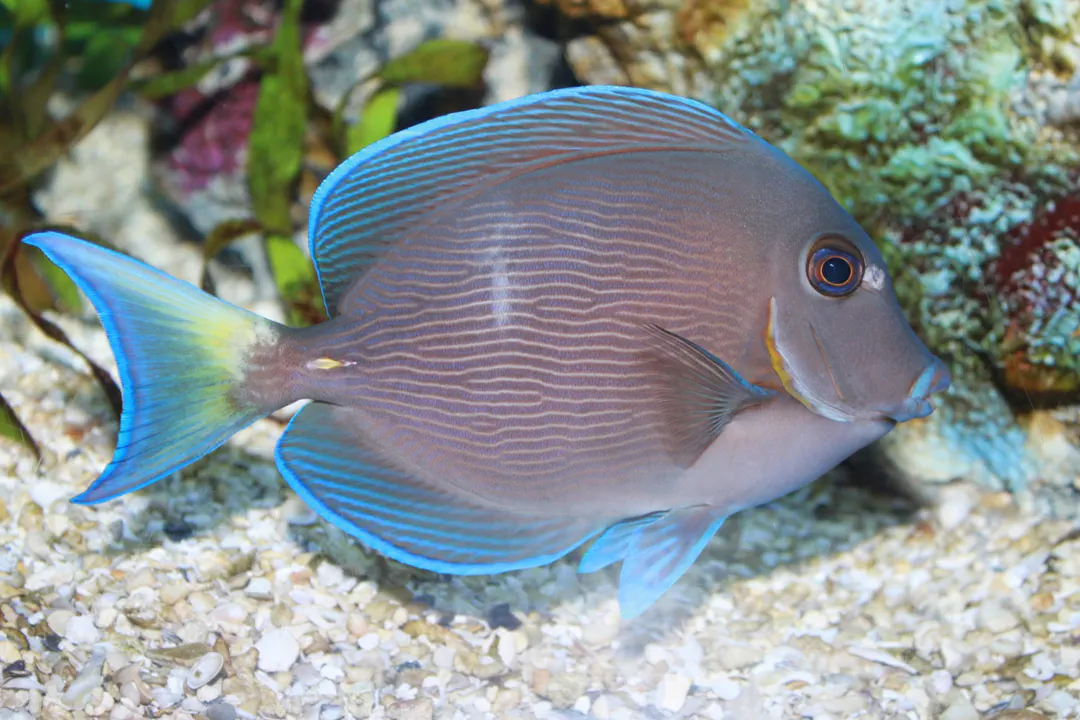
Atlantic Blue Tang
Acanthurus coeruleus
Paracanthurus hepatus
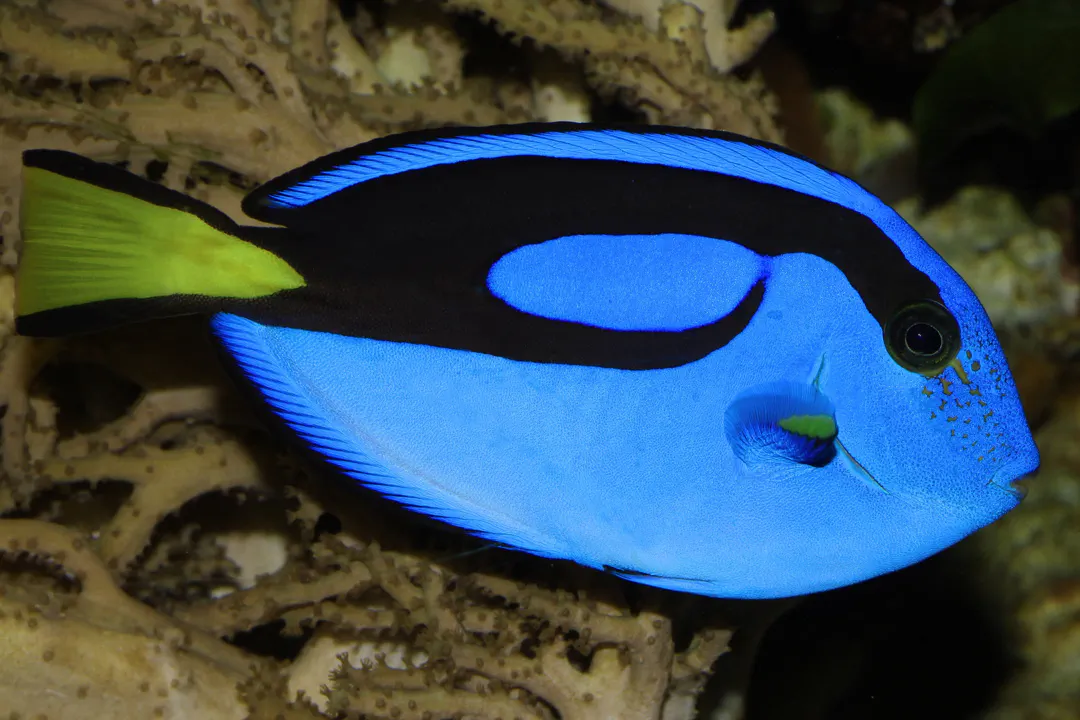
Paracanthurus hepatus is a species of Indo-Pacific surgeonfish. A popular fish in marine aquaria, it is the only member of the genus Paracanthurus.
Paracanthurus hepatus has a royal blue body, yellow tail, and black 'palette' design. The lower body is yellow in the west-central Indian Ocean. It grows to 30 cm (12 in.). This fish is rather flat, like a pancake, with a circular body shape, a pointed snout-like nose, and small scales. The blue tang has 9 dorsal spines, 26–28 dorsal soft rays, 3 anal spines, and 24–26 anal soft rays.
The species' range is broad, but it is common nowhere. It can be found throughout the Indo-Pacific. It is seen in reefs of East Africa, Japan, Samoa, New Caledonia, and the Great Barrier Reef. The regal blue tang is one of the most common and most popular marine aquarium fish all over the world. They live in pairs, or in a small groups of up to 10 or 12 individuals. These fish reach sexual maturity at 9–12 months of age.
The regal blue tang is ranked LC (least concern) by the World Conservation Union (IUCN), but is of low vulnerability.
As a juvenile, its diet consists primarily of plankton. Adults are omnivorous and feed on plankton, but will also graze on algae. Spawning occurs during late afternoon and evening hours. This event is indicated by a change in color from a uniform dark blue to a pale blue. The fish is important for coral health as it eats algae that may otherwise choke it by overgrowth.
Males aggressively court female members of the school, leading to a quick upward spawning rush toward the surface of the water during which eggs and sperm are released. The eggs are small, approximately 0.8 mm in diameter. The eggs are pelagic, each containing a single droplet of oil for flotation. The fertilized eggs hatch in twenty-four hours, revealing small, translucent larvae with silvery abdomens and rudimentary caudal spines. Regal blue tangs can also, when faced with danger or dark spaces, make themselves semi-transparent, in order to help with evasion and light passivity, respectively.
The regal blue tang is of minor commercial fisheries importance, however, it is a bait fish. The flesh has a strong odor and is not highly prized. This fish may cause ciguatera poisoning if consumed by humans. However, regal blue tangs are collected commercially for the aquarium trade. Handling the tang risks the chances of being badly cut by the caudal spine. These spines, on both sides of the caudal peduncle, are extended from the body when the fish becomes excited. The quick, thrashing sideways motion of the tail can produce deep wounds that result in swelling and discoloration, posing a risk of infection. It is believed that some species of Acanthurus have venom glands while others do not. The spines are used only as a method of protection against aggressors. Two sharp spines stick out at the caudal peduncle - the area where the tail joins the rest of the body.
The regal tang is commonly found in the aquarium trade, despite being one of the more fragile popular fish. In particular, it needs a source of spirulina to regularly graze from, and achieves a respectable size of 30cm (12 inches). In addition, it is prone to parasitic infections and lateral line disease.
A regal blue tang appeared in a 1989 Maybelline television commercial featuring Lynda Carter.
In the 2003 Disney/Pixar film, Finding Nemo, and its 2016 sequel, Finding Dory, the character Dory (voiced by Ellen DeGeneres) is a regal blue tang.
© Brian GratwickeCC BY 4.0 · iNaturalist  © seabook.appAll rights reserved
  © Dr. Thomas DörnerCC BY-SA 4.0 · iNaturalist
 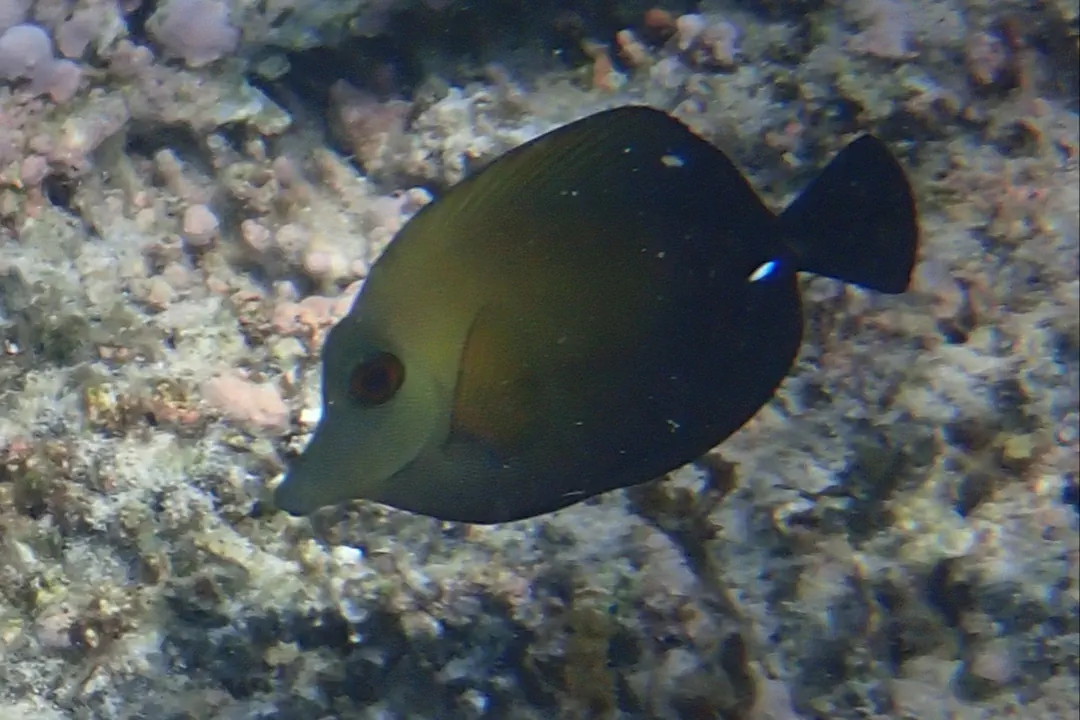 © Debra BakerCC BY 4.0 · iNaturalist
 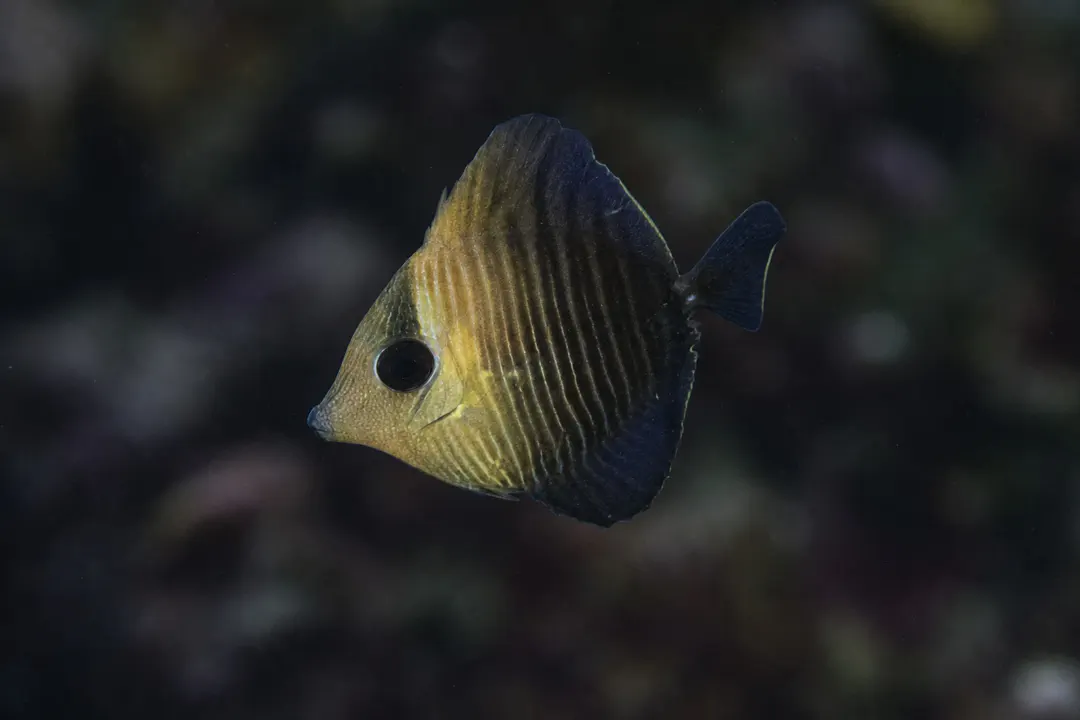 © seabook.appAll rights reserved
 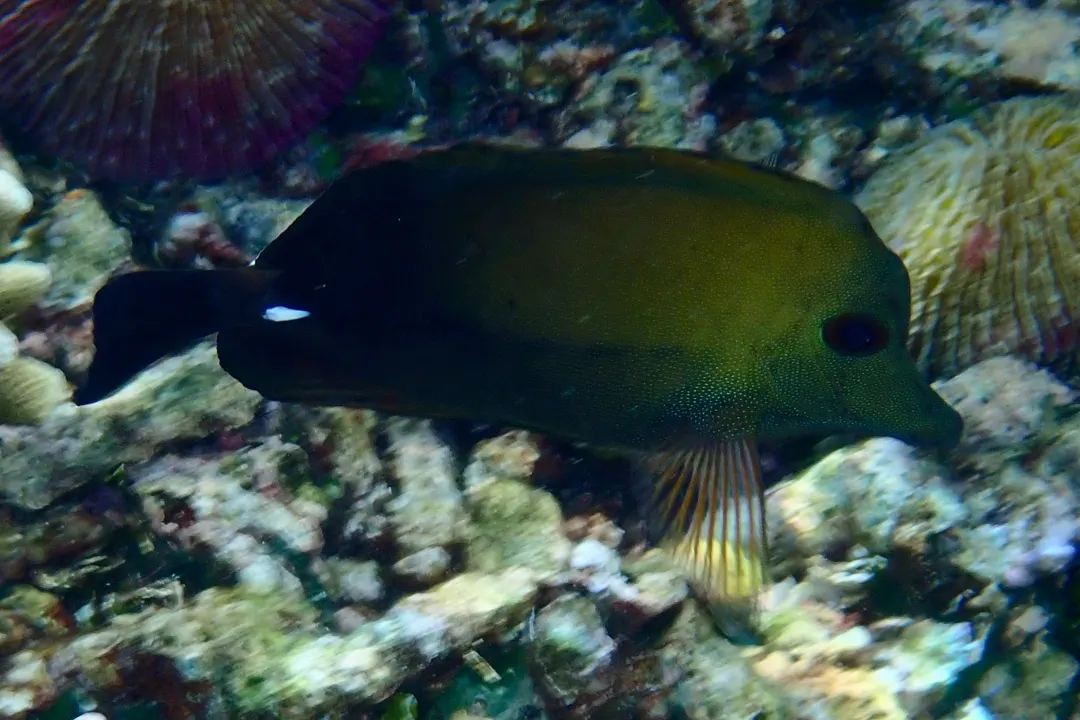 Jean-Paul BoerekampsCC0 · iNaturalist
 Palette Tang is classified as venomous, dangerous to humans. Always exercise caution and keep a safe distance.
Palette Tang can be found at depths of up to 40 meters.
Download Seabook free for iOS and Android.