 © Heather Dawnstar SabinCC BY 4.0 · iNaturalist
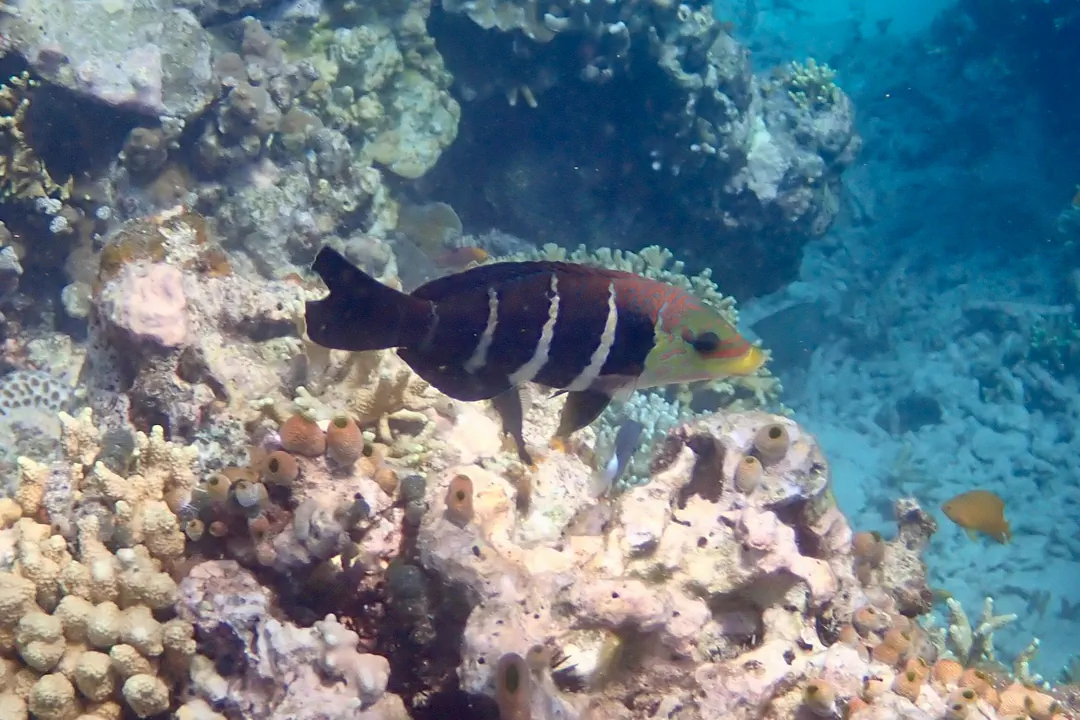
Barred Thicklip (female)
Hemigymnus fasciatus
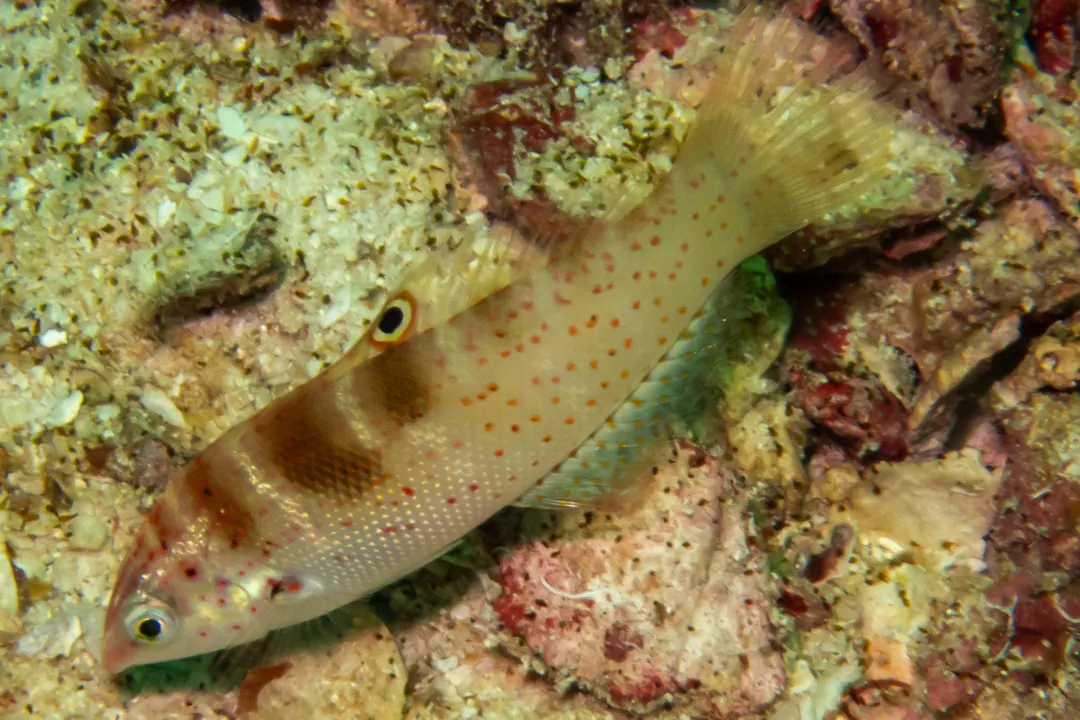
Stethojulis albovittata
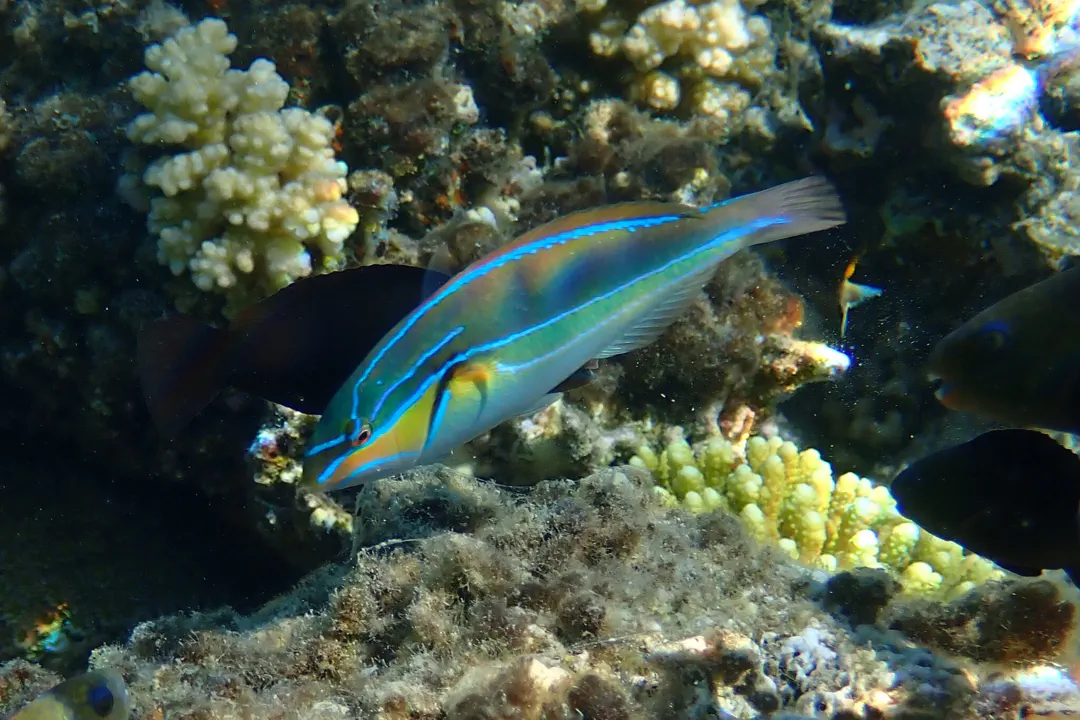
Stethojulis albovittata is a species of wrasses native to the Indian Ocean.
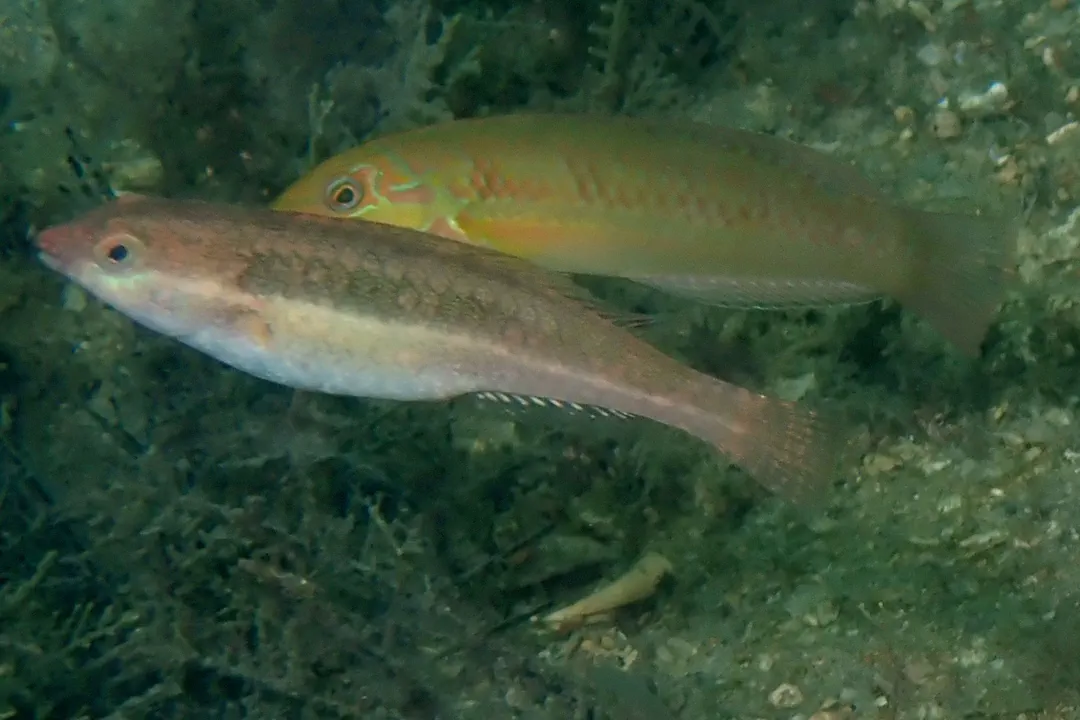
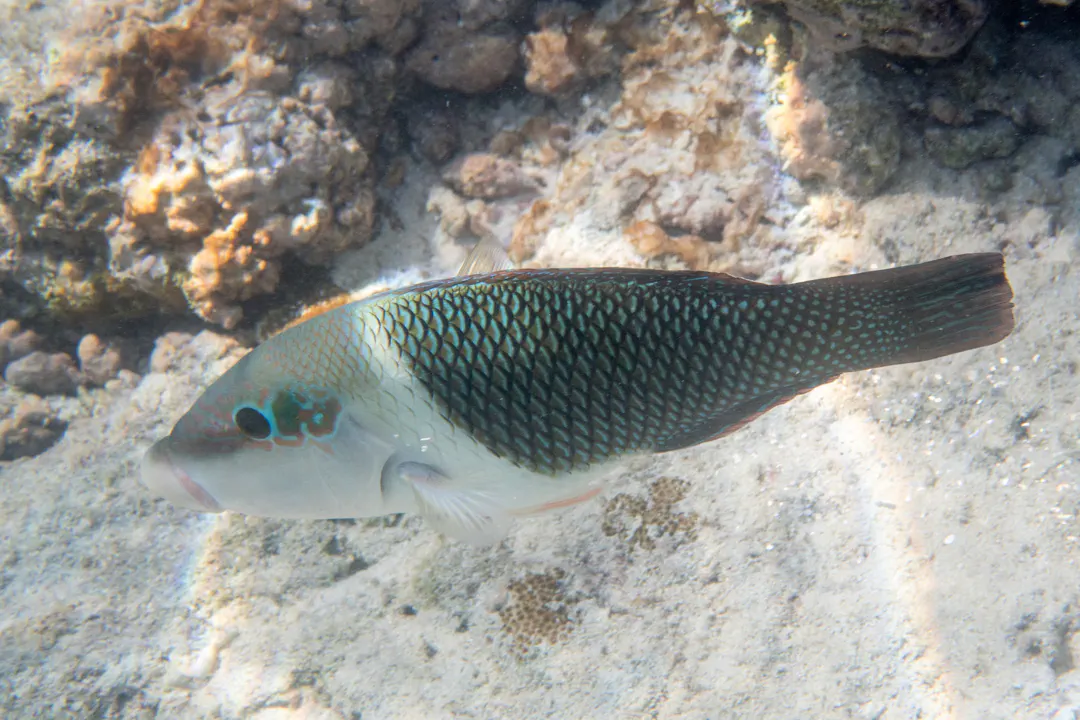
The adult female or initial phase as seen above has an elongated body with green-black upper body with small white dots on it. The lower body is a light purple colour and the scale edges have darker purple black markings. just behind the mouth there is a yellow stripe and above the pectoral fin there is a characteristic orange mark. In the caudal area there are often one or two but up to three white dots with a black center.
The terminal stage males are attractive looking fish and images do not really do them justice as they often have a blue tint to them that makes them stand out on the reef. The lower body is a light white color and the mid body is a greenish color, changing to a brown red color on the upper body and caudal area. The body has four blue lines across it, with the one behind the eye being short and not going the full distance across the body. There is a yellow mark on the pectoral fin base and the eye is ringed in yellow. They grow up to 15 cm in length.
Western Indian Ocean: Red Sea to Natal, South Africa and east to Maldives and Chagos Islands.
The Blue-lined wrasse is fairly common on Tanzanian reefs between 10 and 18 meters. The females are usually in groups of two to three and often feed with other wrasse species and goatfish. They are quick to hide and if threatened will bury themselves in the sand. The males are far more active and patrol the reef at quite high speeds. There are less males than females and each male seems to have a large territory with several groups of females in it. They are constantly on the move and hardly seem to stop and feed.
The Blue-lined Wrasse feeds on small crustaceans and mollusks. They sometimes usually feed on their own but will usually follow a shoal of goatfish and other wrasse species feeding across the reef.
© Heather Dawnstar SabinCC BY 4.0 · iNaturalist 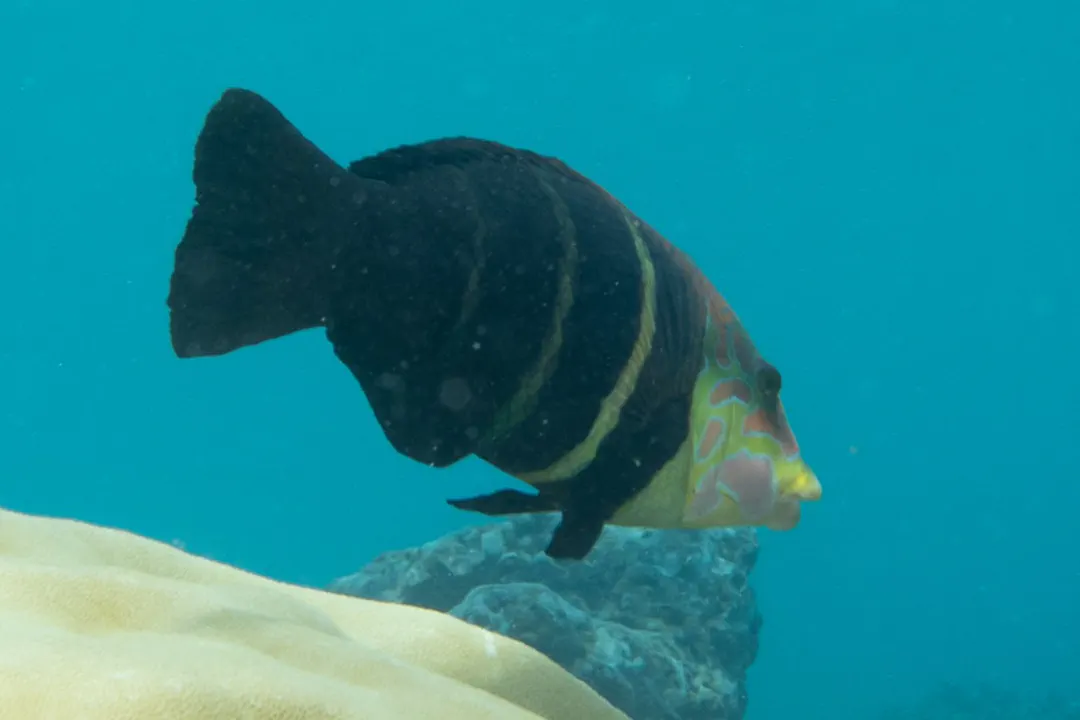 © Storm MartinCC BY 4.0 · iNaturalist
  © portioidCC BY 4.0 · iNaturalist
  © jeyreCC BY 4.0 · iNaturalist
  © Emanuele SantarelliCC BY-SA 4.0 · iNaturalist
  © cello caruso-turielloCC BY 4.0 · iNaturalist
 Blueline Wrasse (male) has no known danger to humans. However, always observe marine life responsibly.
Blueline Wrasse (male) can be found at depths of up to 15 meters.
Download Seabook free for iOS and Android.