 © Dan SchofieldCC BY 4.0 · iNaturalist
Atlantic Peacock Flounder
Bothus lunatus
Bothus podas
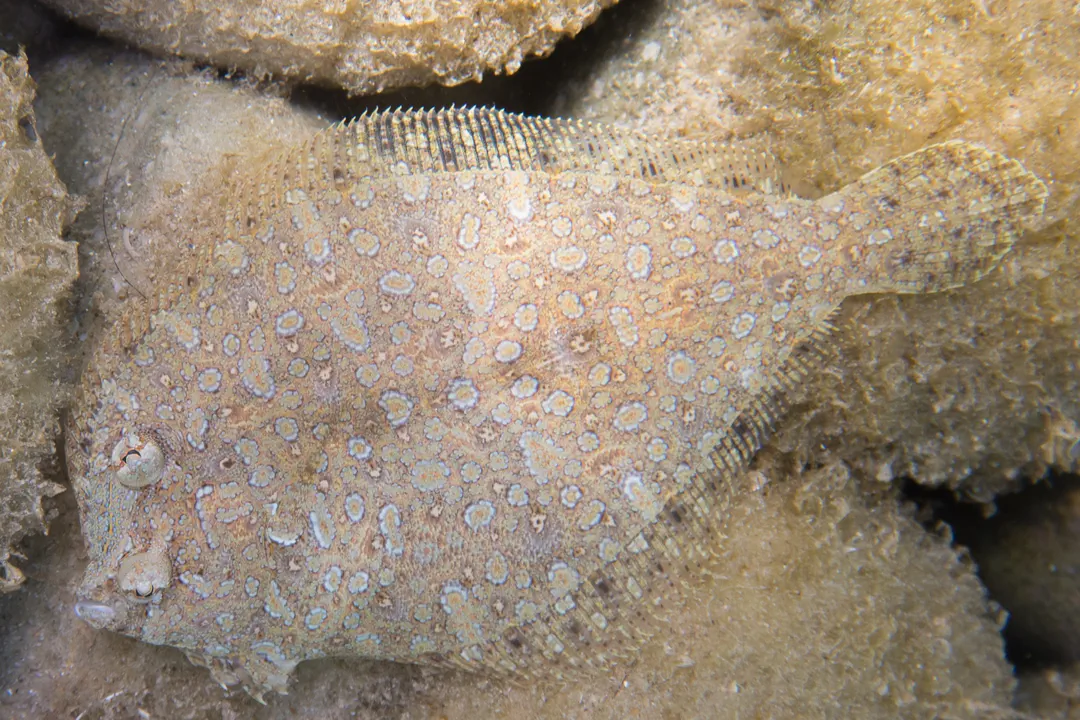
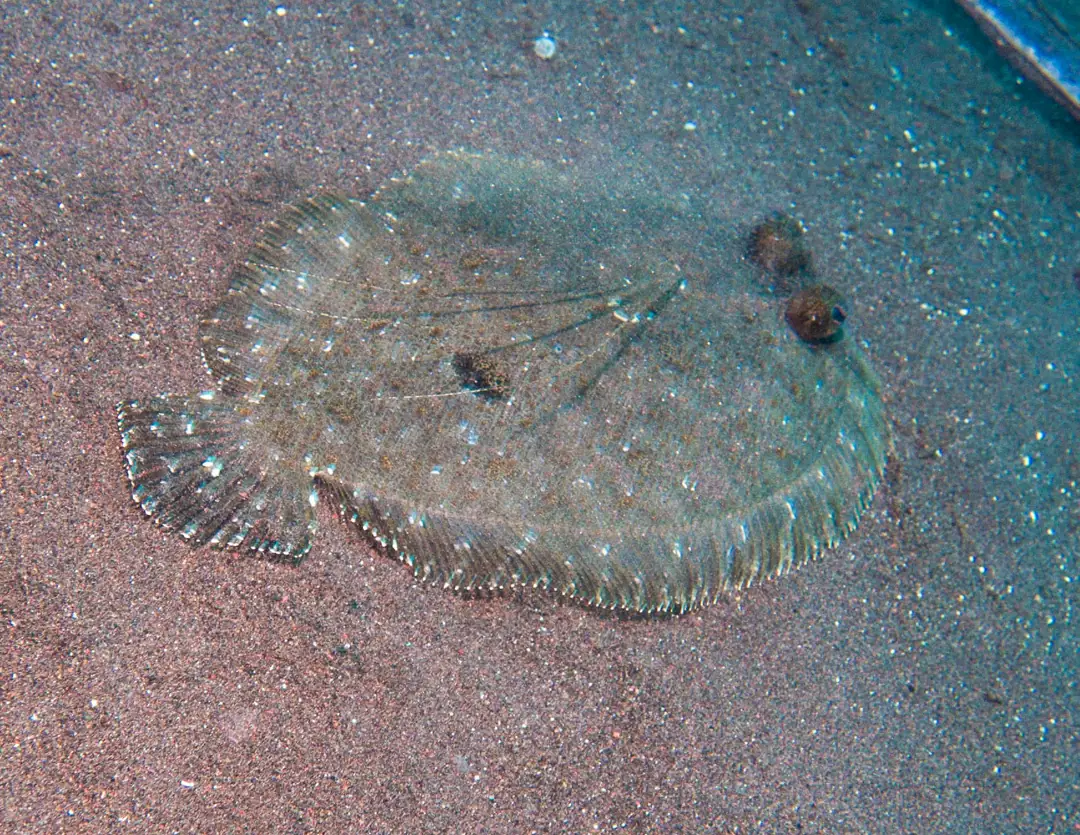
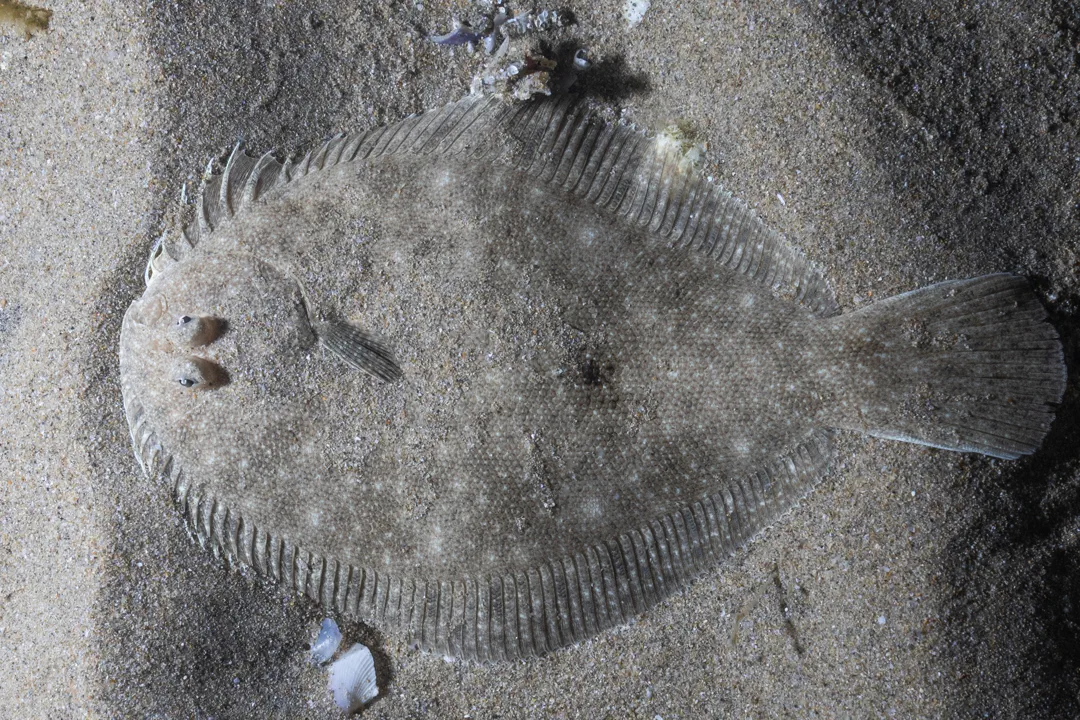
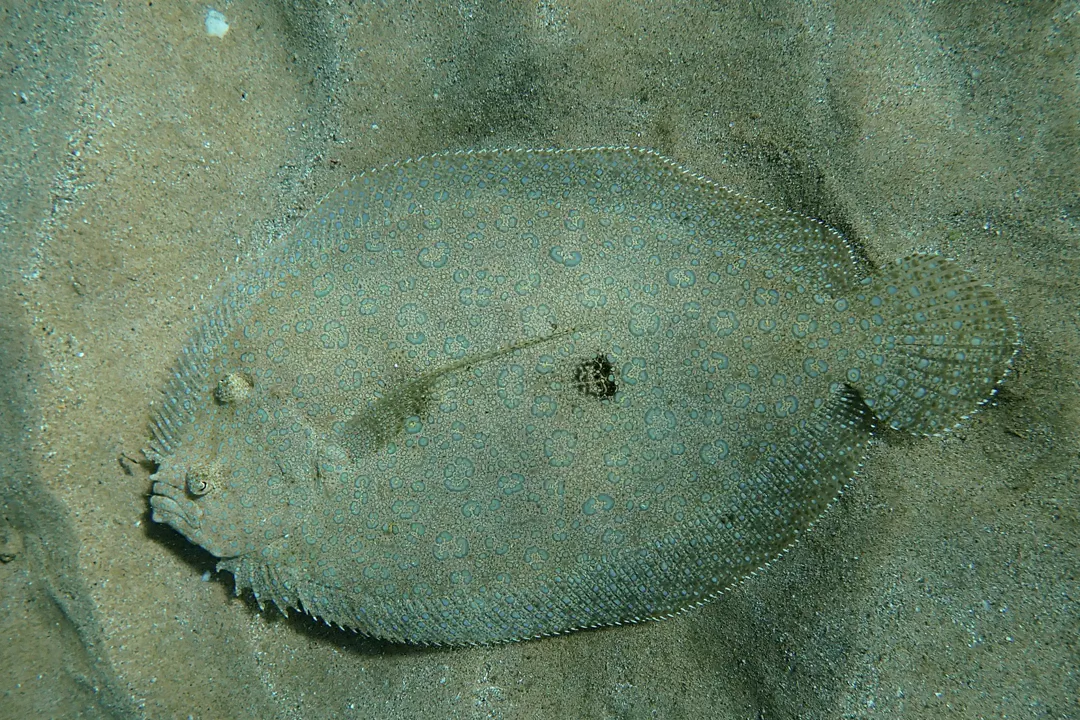
Bothus podas is a flounder in the genus Bothus, native to the Mediterranean Sea and the Atlantic Coast of Africa.
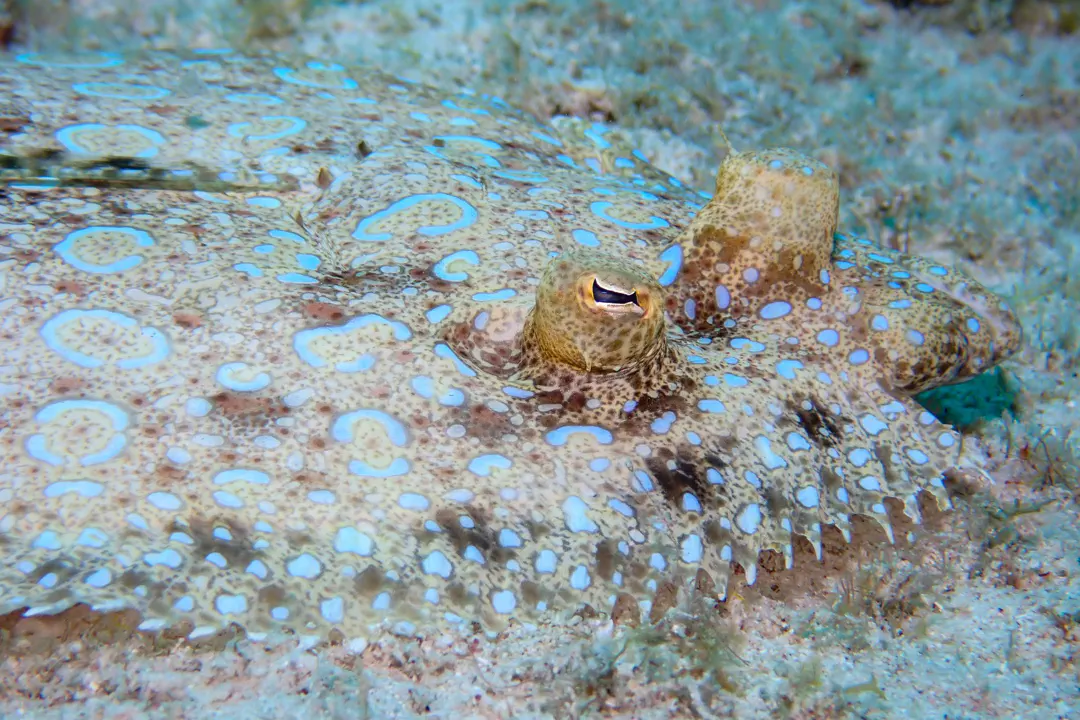
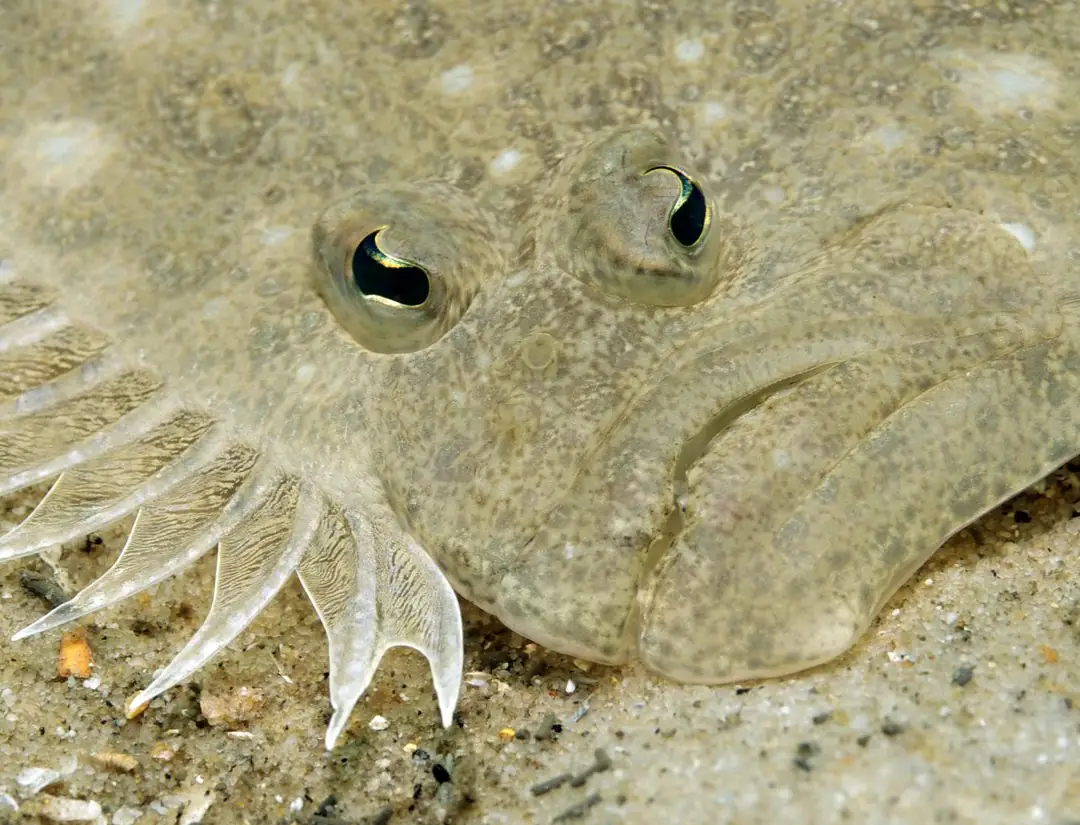
They are called "lefteye flounders" because most species lie on the sea bottom on their right sides, with both eyes on their left sides. A helpful reminder when trying to recall the family name for this fish is that "Bothidae (Both o' dey) eyes are on the same side o' dey head." The family is also distinguished by the presence of spines on the snout and near the eyes.
Its body is sand-coloured and may be brighter or darker depending on the substrate. Irregularly spotted patterns can be seen over the entire upper part. Furthermore, the body of the Wide-Eyed Flounder is flat. Its shape is elongated oval. With a open tail fin, it looks like a shell. The eyes are very wide and the mouth is vertical. In addition, the entire fish is asymmetric. The male’s eyes are farther apart than those of the female.
Dorsal soft rays (total): 85-95; Anal soft rays: 63 - 73. The scales on the eyed side are ctenoid and cycloid on the blind side. The inter-orbital width is much wider in males. The upper pectoral fin rays are not prolonged. The subspecies in the Mediterranean and African coast, P. podas has 75-86 lateral line scales, with 13-20 scales making up the curved portion. Its eyed side has alight brown color, bearing darker spots. The subspecies in Madeira and the Canaries, B. p. maderensis, has 88-91 lateral line scales, with 20-21 on the lateral line curve. Its eyed side appears dark brown to dark violet and seldom spotted.
Max length is 45 cm, common length is 13 cm. Max published weight is 700 g.
Eastern Atlantic: Mediterranean and the Adriatic Sea; Mauritania to Angola, including Madeira, Cape Verde and the Canary Islands.
It is found in shallow waters, over sandy and muddy bottoms of the continental plateau at depths varying from 5m to 400m. Bothus podas‘s diet consists mainly of fish spawn, benthic small fishes and invertebrates such as crustaceans and polychaetes. They ambush their prey, feeding at soft muddy areas of the sea bottom, near bridge piles, docks and coral reefs.
In its life cycle, an adult flounder has two eyes situated on one side of its head, while at hatching one eye is located on each side of its head. One eye migrates to the other side of the body through a process of metamorphosis as it grows from larval to juvenile stage. As an adult, a flounder changes its habits and camouflages itself by lying on the bottom of the ocean floor as protection against predators. As a result, the eyes are then on the side which faces up. The side to which the eyes migrate is dependent on the species type.
During the reproductive season, males court and mate successively with females in their territories, and females seem to show mating fidelity to their dominant male. Data also show that courtship plays an important role in determining male success in mating. Reproduction occurs between May and August.
© Dan SchofieldCC BY 4.0 · iNaturalist 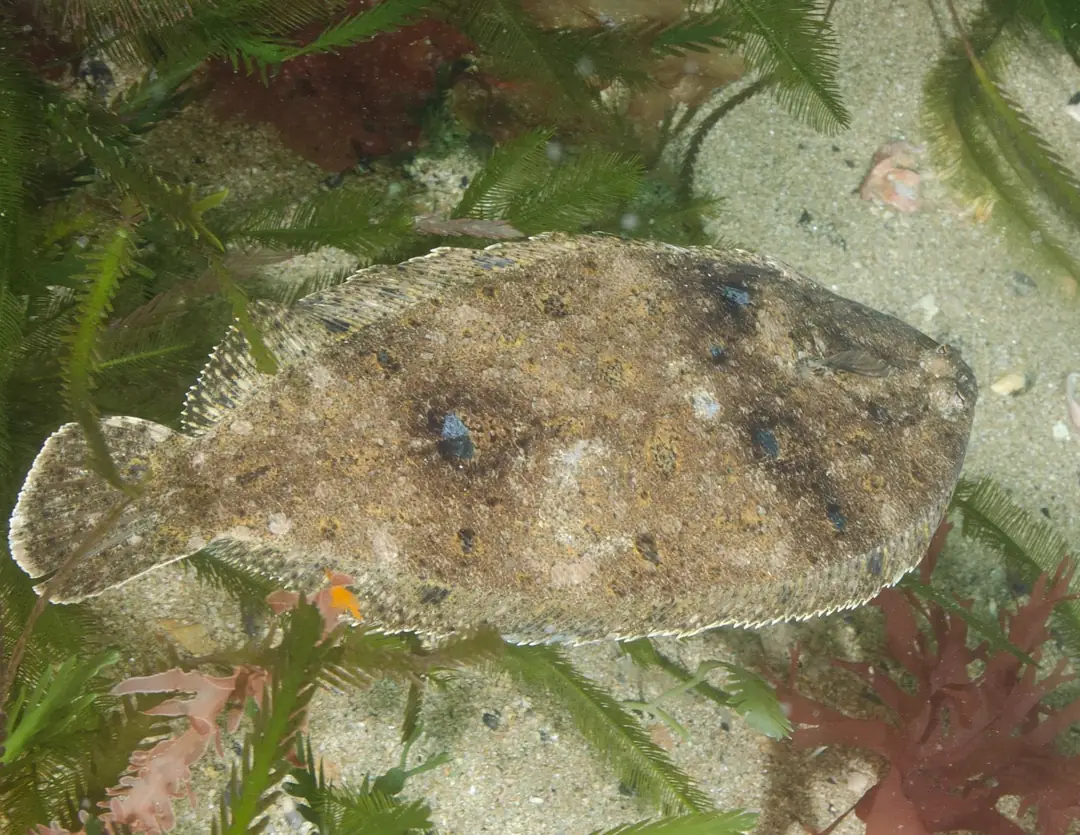 © Ian ShawAll rights reserved
  © Richard VeversAll rights reserved
  © Lesley ClementsAll rights reserved
  © Lawrence HyltonCC BY 4.0 · iNaturalist
  Kyle NessenCC0 · iNaturalist
 Left-eye Flounders has no known danger to humans. However, always observe marine life responsibly.
Left-eye Flounders can be found at depths of up to 400 meters.
Download Seabook free for iOS and Android.