 © Heather Dawnstar SabinCC BY 4.0 · iNaturalist
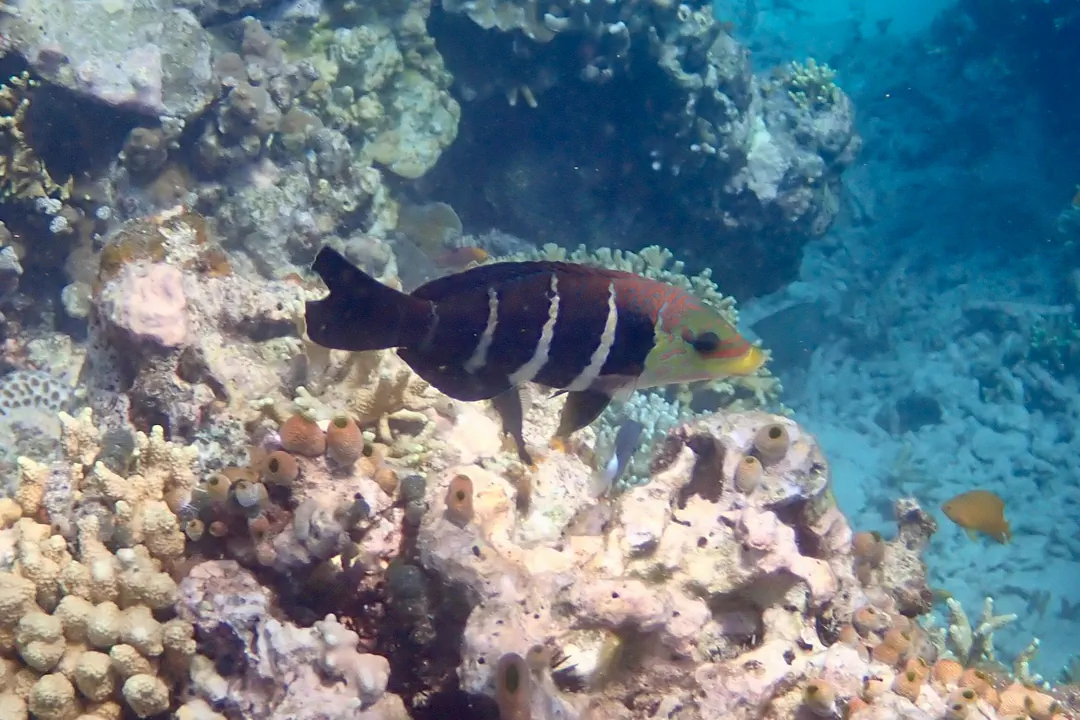
Barred Thicklip (female)
Hemigymnus fasciatus
Hologymnosus doliatus
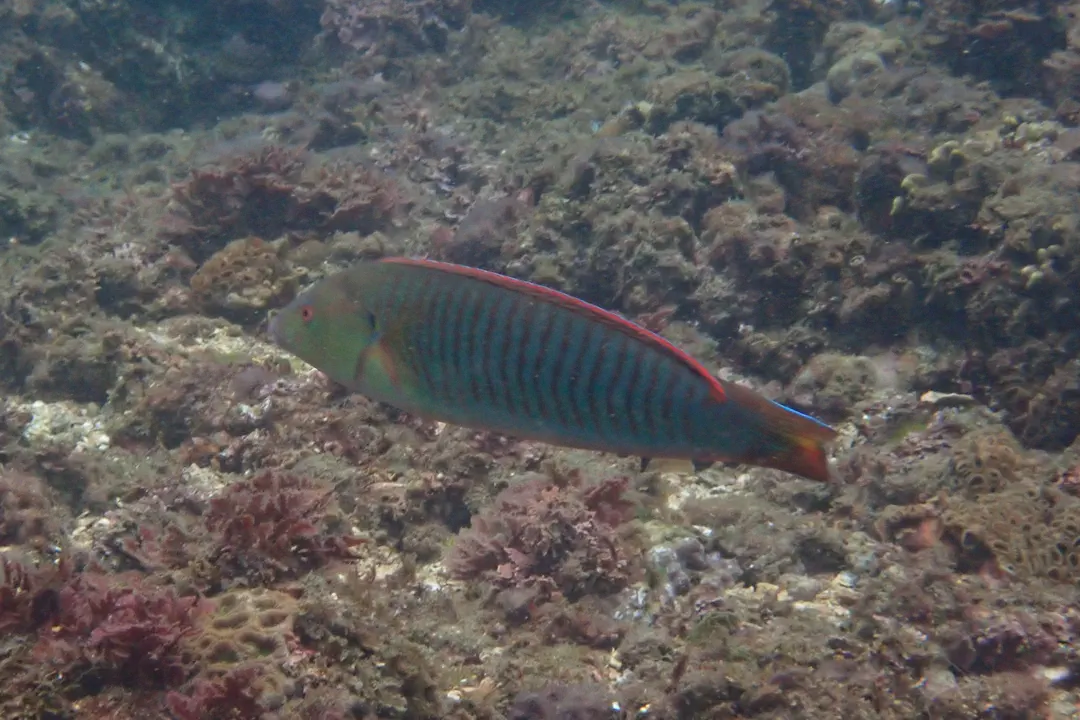
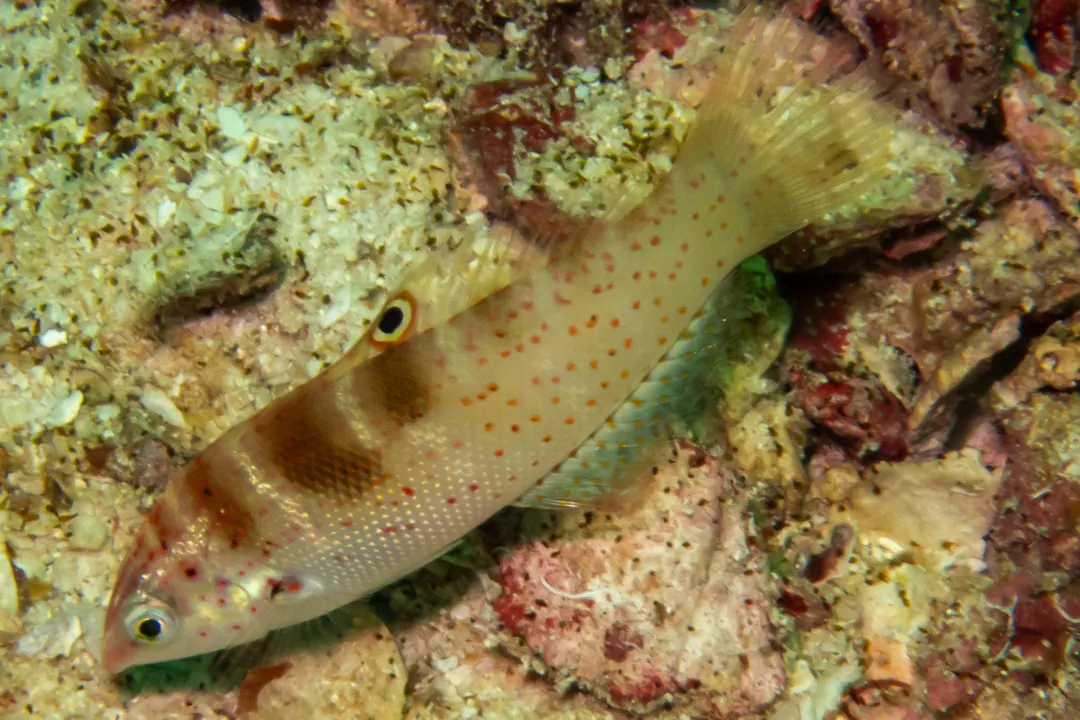
Hologymnosus doliatus is a marine fish belonging to the Labridae family, native from the Indo-Pacific area.
Other name is Pastel ringwrasse.
Elongated compressed body with small scales. Scaleless head. Juveniles whitish with three narrow orange-red stripes. Caudal fin slightly rounded in juveniles to double emarginate in large adults. Initial phase pale bluish, greenish or pinkish gray with 20-23 orange brown bars on body, a black spot on opercular flap, body of terminal males light blue-green, pinkish or yellowish with lavender-blue to purple bars, and often a pale yellowish bar in pectoral region bordered by purple bars, head pale green with a purplish red band in each lopeand elongate spots in central part.
Max length : 50.0 cm TL male/unsexed; common length : 38.0 cm TL male/unsexed
Indo-Pacific: East Africa south to southern Natal, South Africa and east to Samoa and the Line Islands.
Inhabit seaward reefs, in areas of mixed sand, rubble and coral to at least 30 m depth. Juveniles seen in groups near the bottom while adults found high above the bottom. Juveniles and females usually in small groups. Males solitary and territorial, patrolling large sections of reefs. Feed mainly on fishes (about 50%) and crustaceans (shrimps) and to a lesser extent on brittlestars and polychaetes.
© Heather Dawnstar SabinCC BY 4.0 · iNaturalist 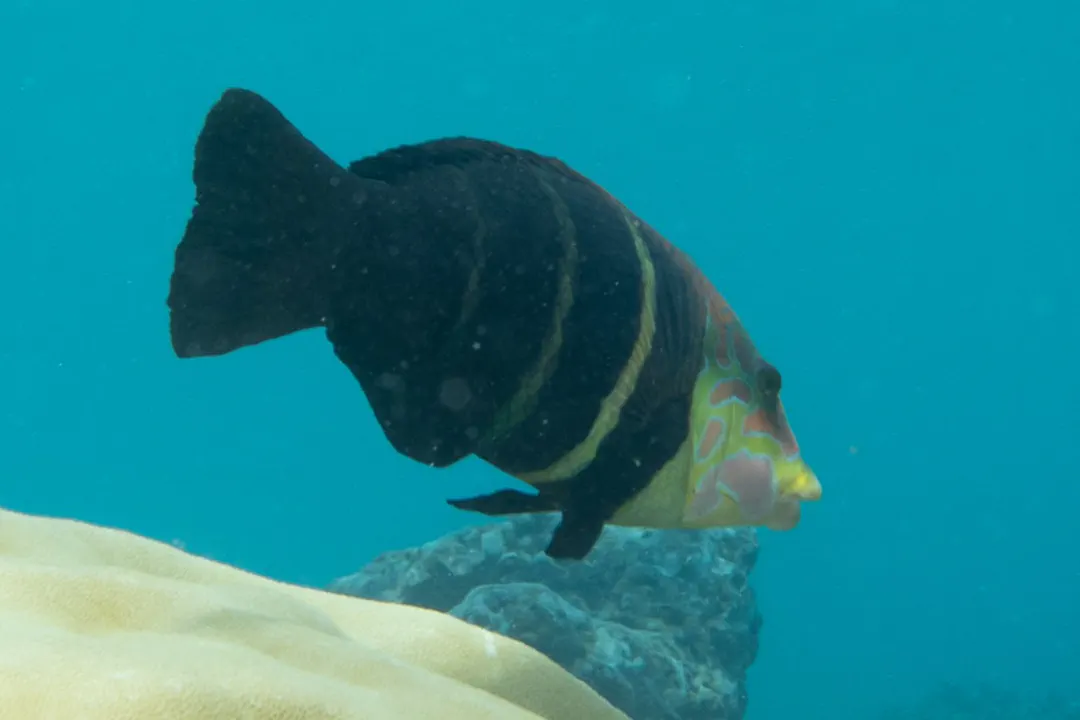 © Storm MartinCC BY 4.0 · iNaturalist
  © portioidCC BY 4.0 · iNaturalist
 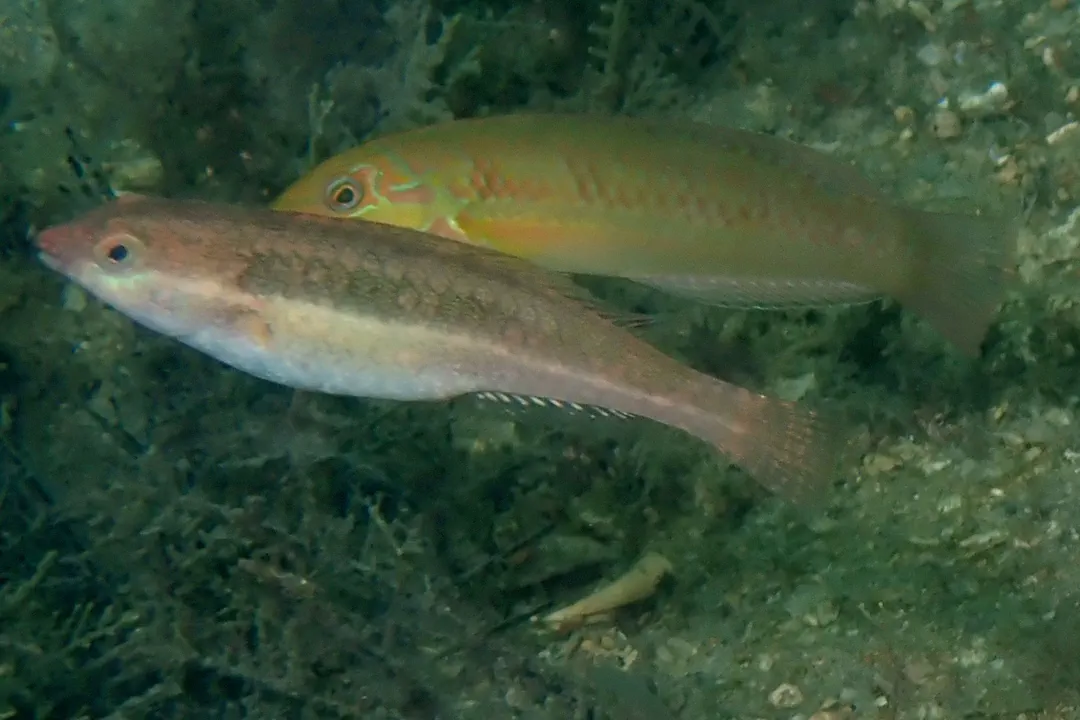 © jeyreCC BY 4.0 · iNaturalist
 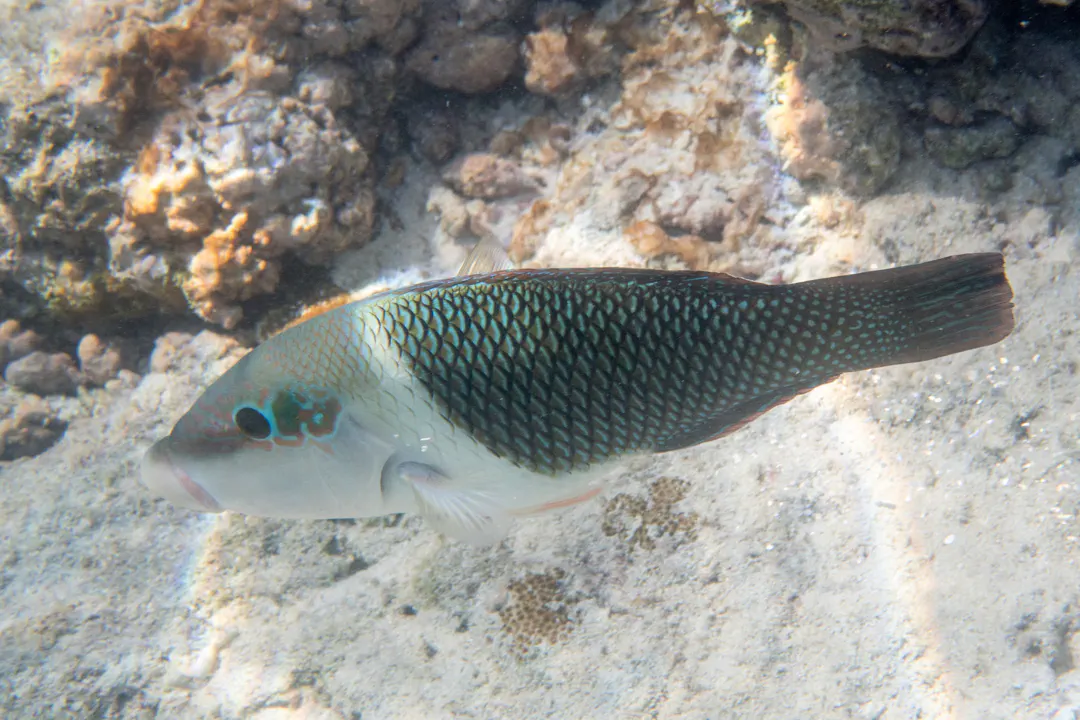 © Emanuele SantarelliCC BY-SA 4.0 · iNaturalist
 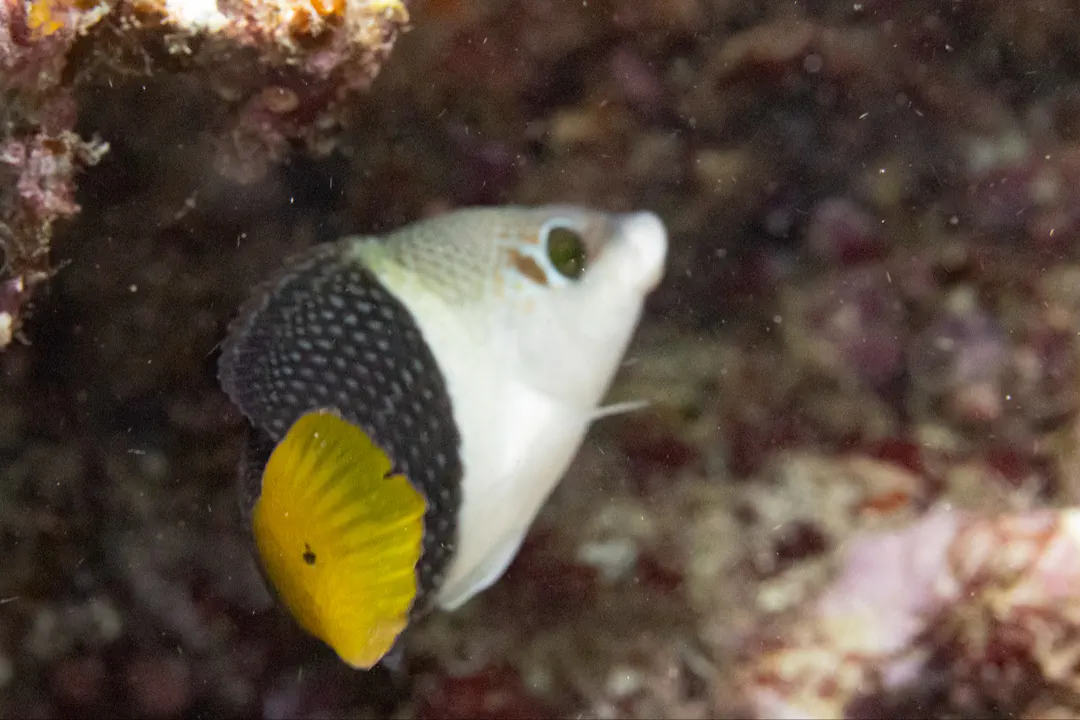 © cello caruso-turielloCC BY 4.0 · iNaturalist
 Pastel Ring Wrasse has no known danger to humans. However, always observe marine life responsibly.
Pastel Ring Wrasse can be found at depths of up to 35 meters.
Download Seabook free for iOS and Android.