 © Dan SchofieldCC BY 4.0 · iNaturalist
Live Sharksucker
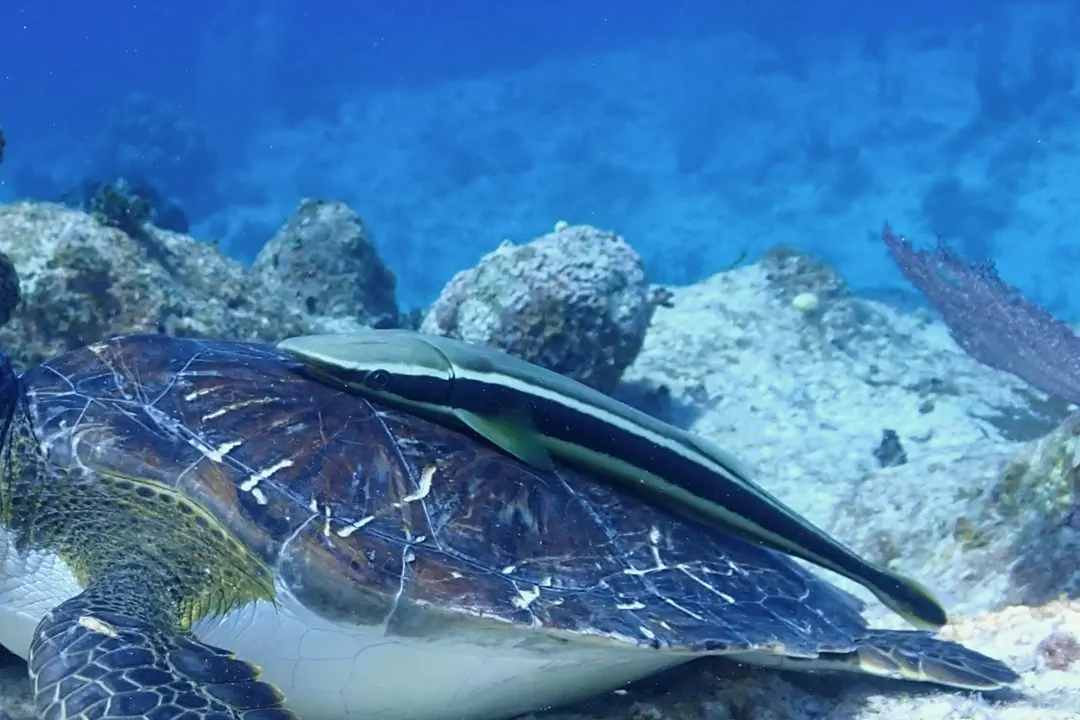
Echeneis naucrates
Remora remora
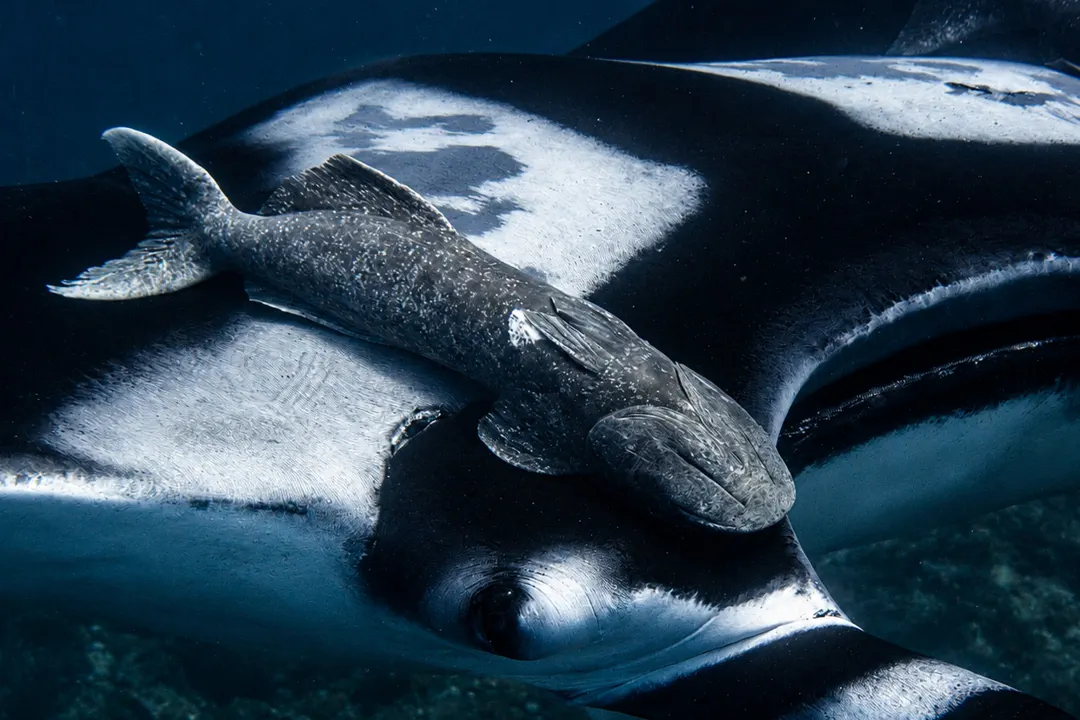
Remora remora is a pelagic marine fish belonging to family Echeneidae. R. remora is different from other remoras in the family Echeneidae by the modification of its dorsal fin. The dorsal fin, which has 22 to 26 soft rays, acts as a suction cup, creating a vacuum to allow it to attach to larger marine animals, such as whales, dolphins, sharks, and sea turtles.
It is deeper-bodied than Echeneis naucrates. The common remora has a suckerlike dorsal fin and an anal fin. Its body can be brown, black or grey in color. This species can reach 86.4 cm (34.0 in) in total length, though most do not exceed 40 cm (16 in). The maximum known weight of this species is 1.1 kg (2.4 lb).
R. remora and its host seem to partake in a symbiotic relationship; the common remora does not seem to have a negative overall effect on its host. The host provides the remora with fast-moving water to bathe its gills, a steady flow of food, transportation, and protection. The remora benefits the host by feeding in part on some of its parasites, but increases its hydrodynamical drag. The common remora's attachment to one host can last for up to three months. During this time, the remora can move its attachment site if it feels threatened. The common remora cannot survive in still water; it needs water flow over its gills to provide it oxygen.
This remora is commonly found in warm marine waters and have been seen in the western Mediterranean and the Atlantic, as well as the North Sea.
A mating couple may attach to the same host, and have host fidelity. It is not clear when during the year the common remora spawns, and little is known about the fish's reproductive behavior.
The remora consumes food scraps from its host, as well as plankton and parasitic copepods.
No known negative impacts for humans are known. Remoras can be caught as fishing bycatch and put in aquaria. Remoras have been used in fishing. Humans may attach fishing line to the remora and wait for it to cling to a larger fish.
© Dan SchofieldCC BY 4.0 · iNaturalist Common Remora has no known danger to humans. However, always observe marine life responsibly.
Common Remora can be found at depths of up to 200 meters.
Download Seabook free for iOS and Android.