 © Brian GratwickeCC BY 4.0 · iNaturalist
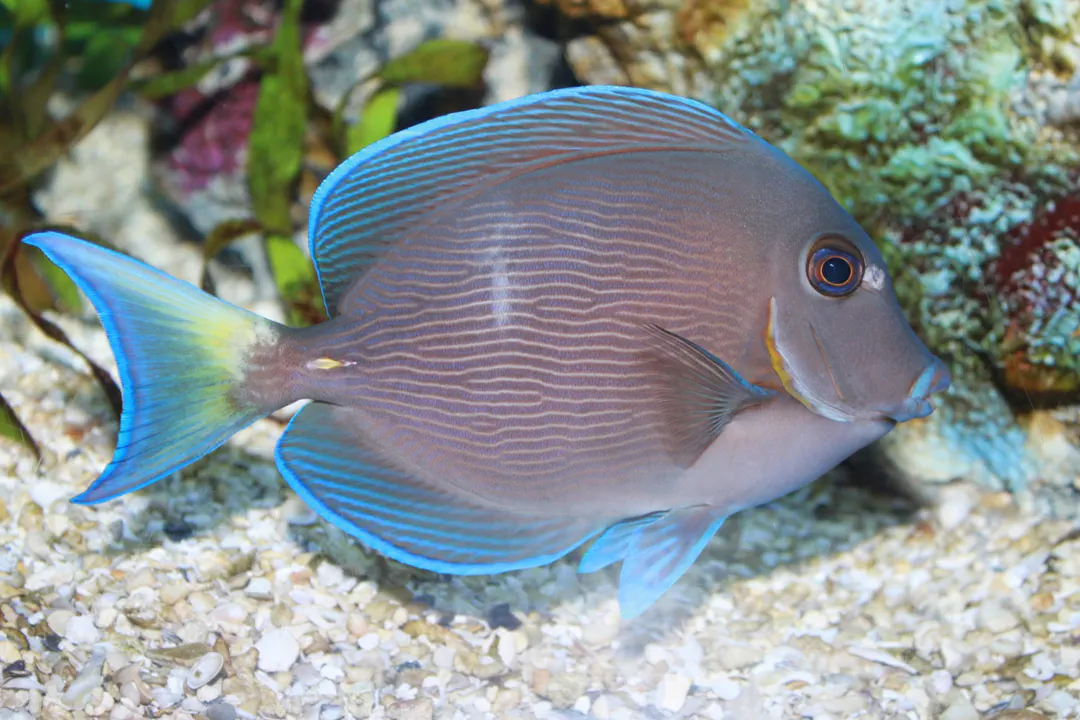
Atlantic Blue Tang
Acanthurus coeruleus
Ctenochaetus truncatus
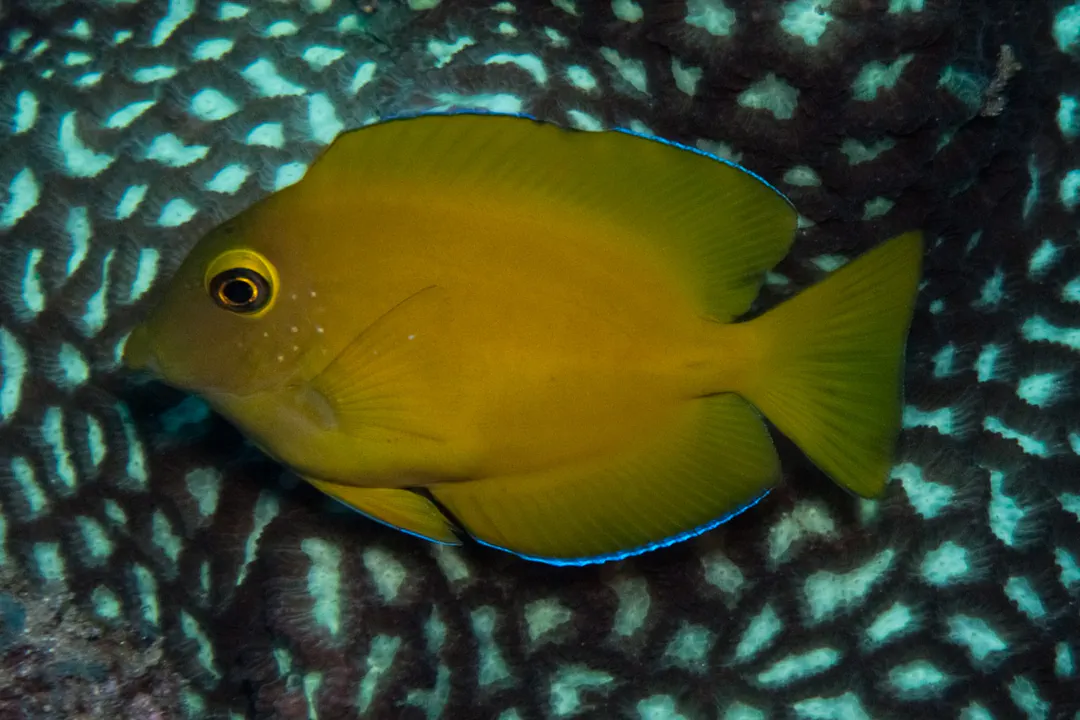
Ctenochaetus truncatus is a tropical fish found in the Indian Ocean. It was first named by Randall and Clements in 2001, and is known commonly as the Indian gold-ring bristletooth.
C. truncatus juveniles are quite striking with a bright yellow body that is covered with light spots. They are sometimes confused with their Pacific cousin, the Yellow Eye Kole Tang (C. striganus) as they are similar in color.
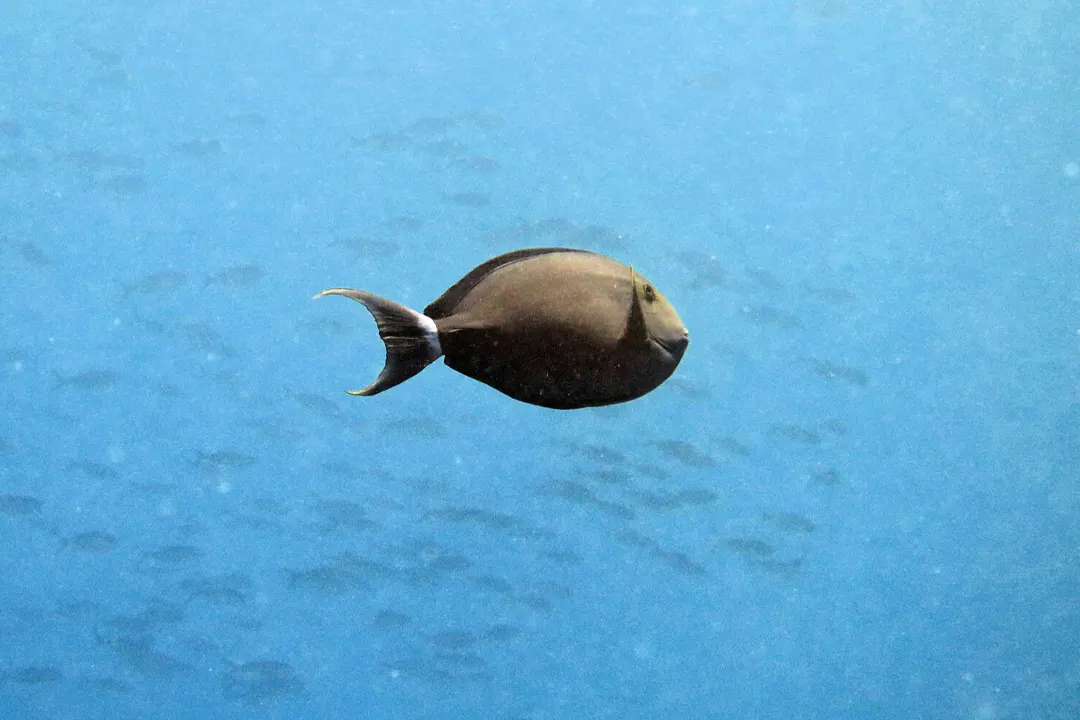
Adults boast a brown to orange body with pale blue to bright yellow spots on the head, body, and base of the dorsal fin. Both species sport a yellow eye ring and yellow dorsal fins, but the body of C. truncatus is covered in small, light blue spots, while C. striganus has small spots on the head area and light blue horizontal stripes on the rest of its body.
Although considered herbivores, surgeonfish of the Ctenochaetus genus are detrivores. They have a protruding specialized mouth with several rows of flexible bristle or comb like teeth that are used to scrape, lift and sift detritus, diatoms, algae, and other organics from rocks, sand, and other surfaces.
C. truncatus is found throughout the Indian Ocean at depths from 1 to 21 meters (approx. 3 to 69 ft.) where they inhabit inner reef crests and slopes.
© Brian GratwickeCC BY 4.0 · iNaturalist 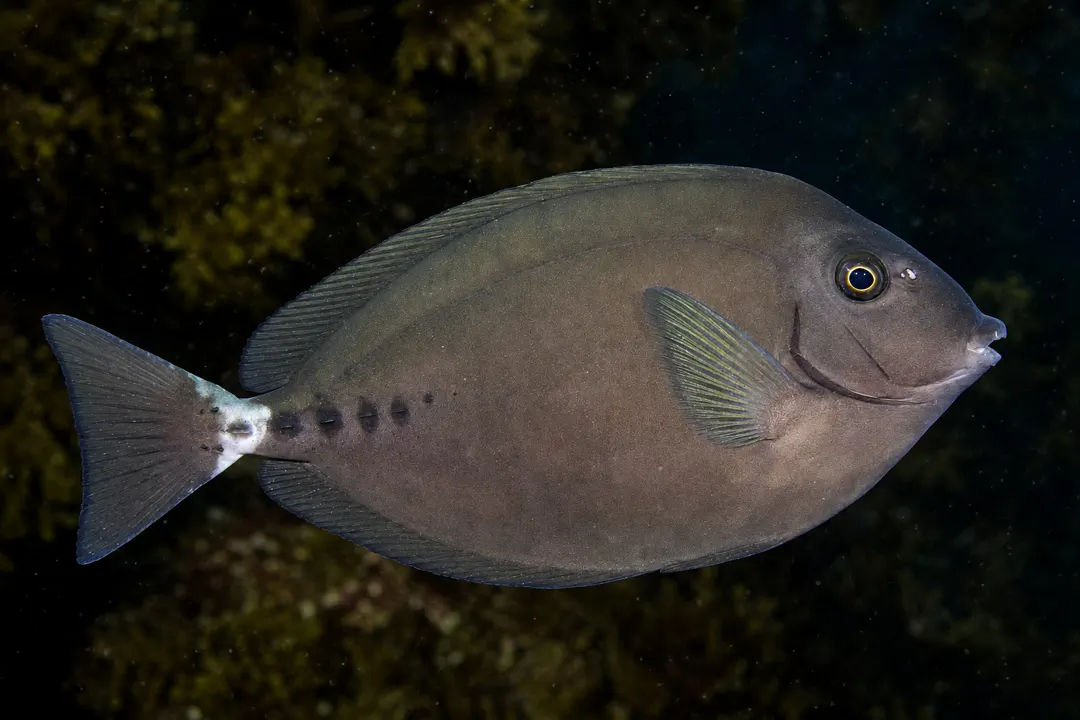 © seabook.appAll rights reserved
  © Dr. Thomas DörnerCC BY-SA 4.0 · iNaturalist
 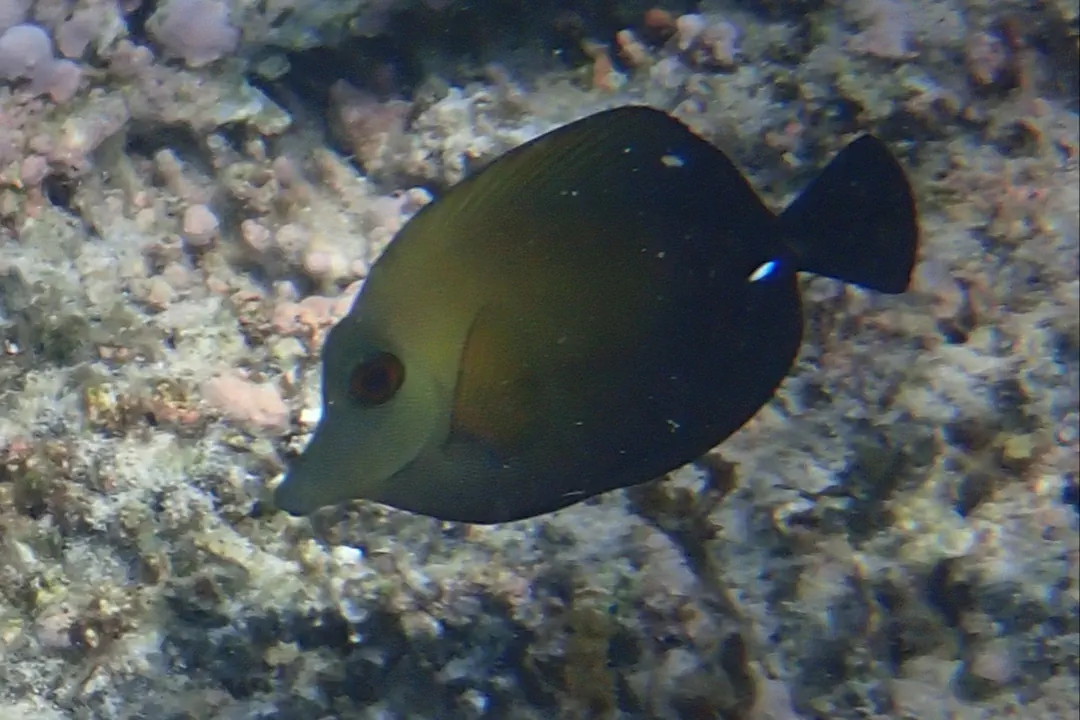 © Debra BakerCC BY 4.0 · iNaturalist
 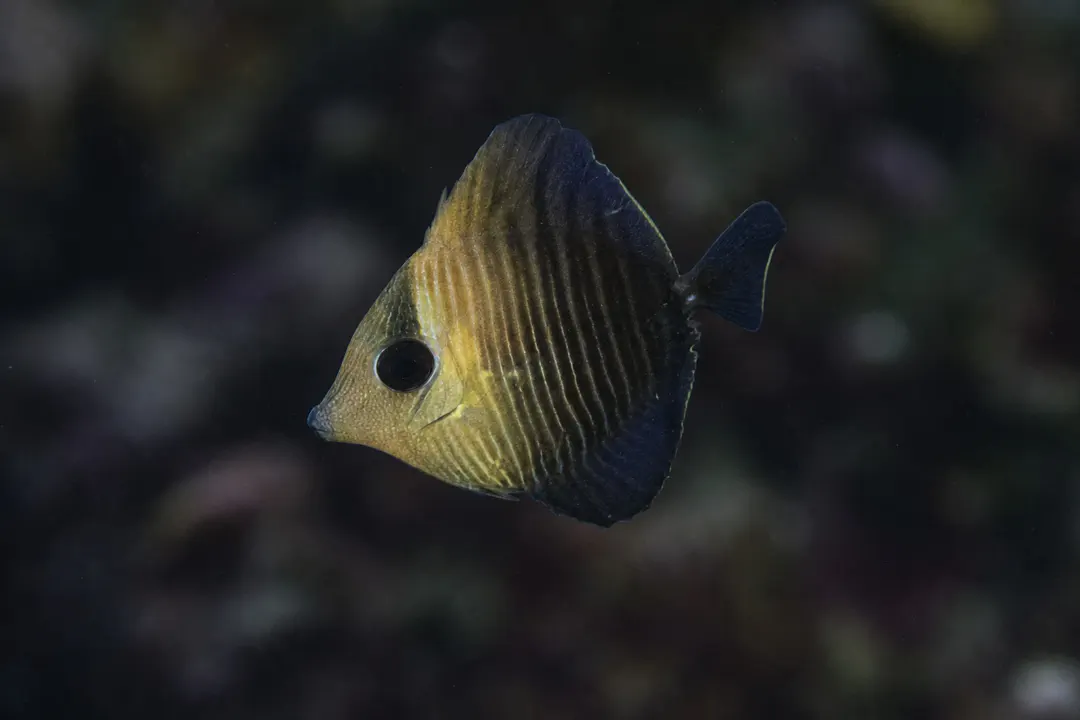 © seabook.appAll rights reserved
 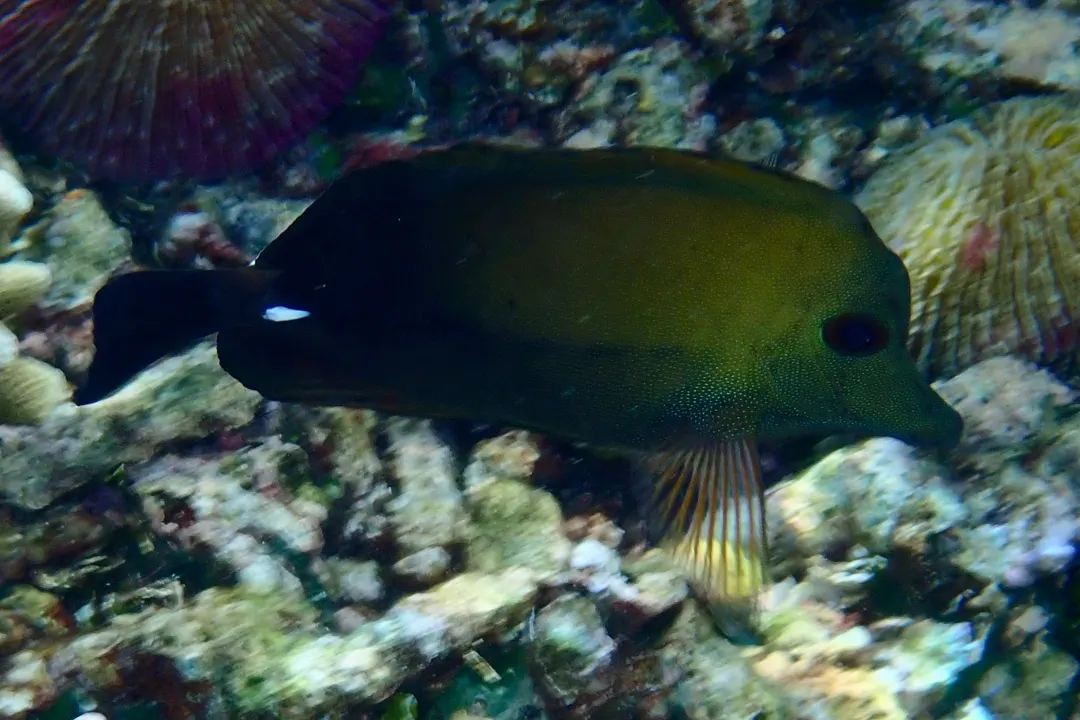 Jean-Paul BoerekampsCC0 · iNaturalist
 Indian Gold-ring Bristletooth (juvenile) has no known danger to humans. However, always observe marine life responsibly.
Indian Gold-ring Bristletooth (juvenile) can be found at depths of up to 21 meters.
Download Seabook free for iOS and Android.