 © Susan PriorCC BY 4.0
Australian bluefish
Girella cyanea
Kyphosus cinerascens
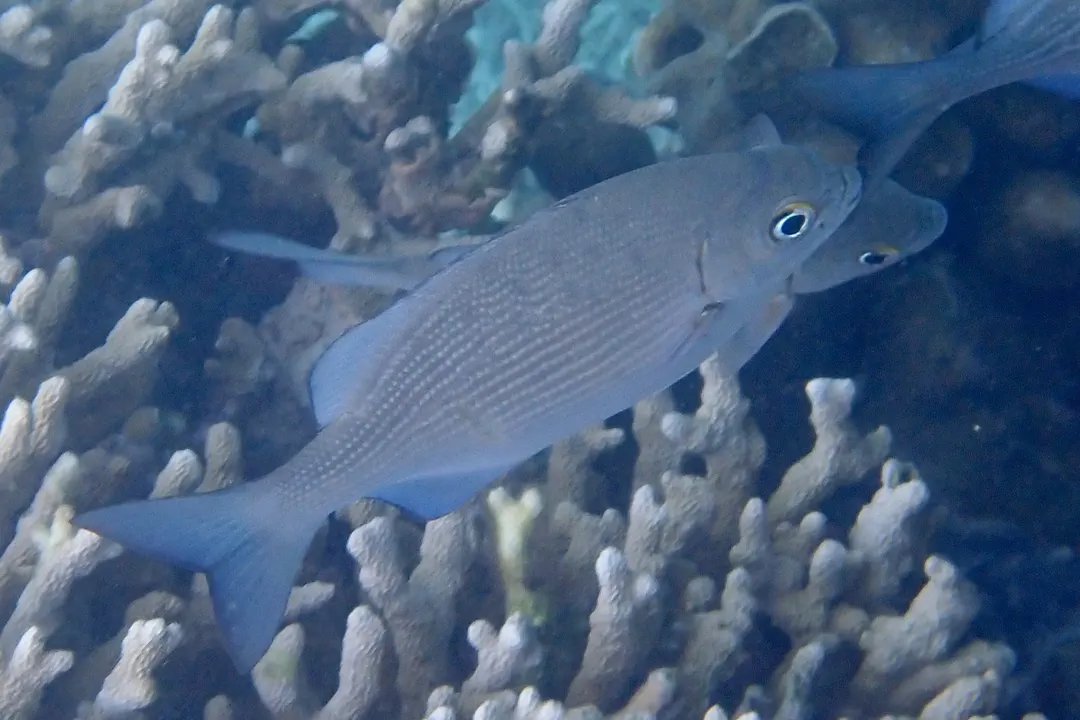
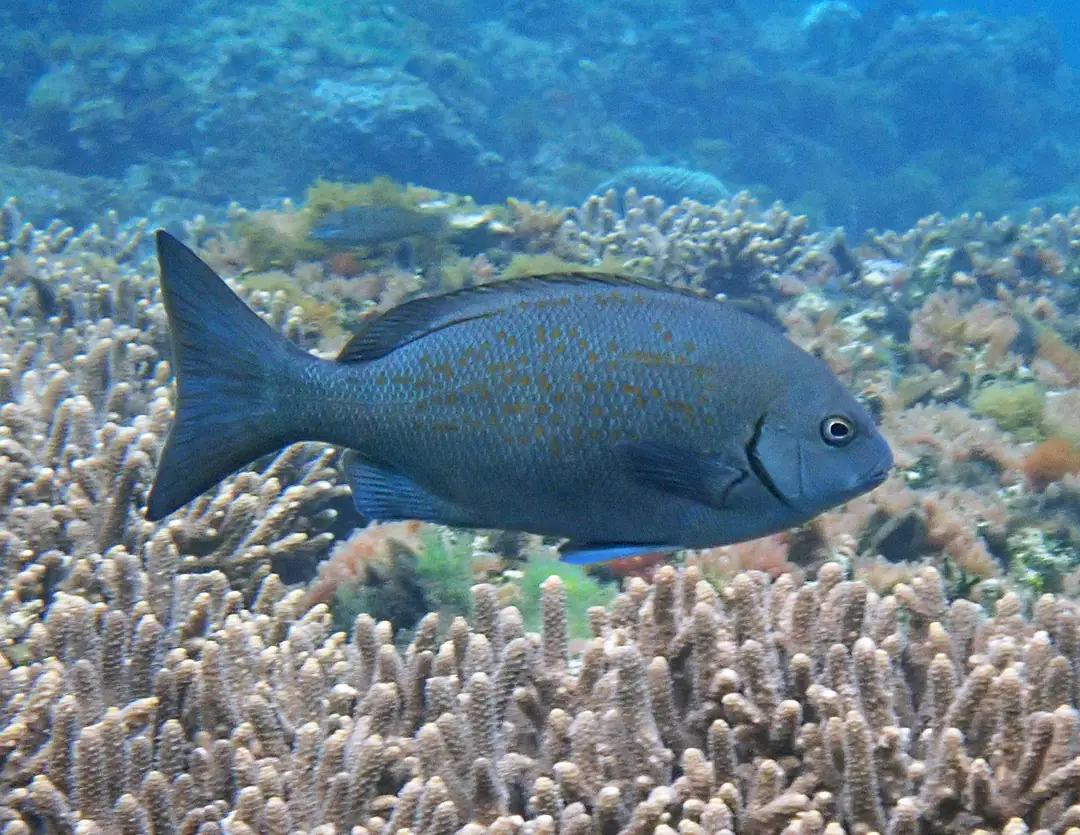
Kyphosus cinerascens is a species of marine ray-finned fish. It is a sea chub from the family Kyphosidae.
It has a bluish grey to brown or blackish body, some scales iridescent blue. The body of pale fish has dark lines along scale rows. It has distinctly elevated (tall) fin rays on the rear of the dorsal and anal fins, and a more pointed snout than other drummer species.
Body is oval, compressed, relatively deep. The head is small pointed; snout relatively short, pointed or beak-like, with a distinct hump before eye. The mouth is small, opens slightly downwards, below the center of the head. The bottom profile of the head straight to slightly concave; the top jawbone slips partially under the under-eye bone when the mouth is closed. Teeth are immovable incisiform, bases set horizontally in mouth, rounded tips and a curved, hockey-stick shape. Teeth are on center of roof of mouth and on tongue. Gill rakers 27 (25-30; 6-10+17-22). Dorsal fin is continuous, X-XI spines that fold down into a scaly groove, 12 (12-13) rays. Tail fin is forked. Anal rays III, 11 (11-13); soft dorsal and anal fins relatively high, 4th dorsal ray 8.7-19.1% of SL, 2nd anal ray 10.4-22.3% of SL, soft rays of dorsal distinctly higher than spines, profile of anal fin deeply angular. Paired fins are relatively short; origin of the pelvics behind the base of the pectoral fin; scales small, thick and rough, covering the body & head (except forward of eyes) and soft portions of the median fins, present between eyes; lateral line scales 56-75, 54 (50-60) with pores, longitudinal scales 56 (50-61) (the row from edge of operculum to end of tail base, immediately under the lateral line scale row).
Indo-Pacific: Red Sea and East Africa to the Hawaiian, Line and Tuamoto islands, north to southern Japan, south to Australia.
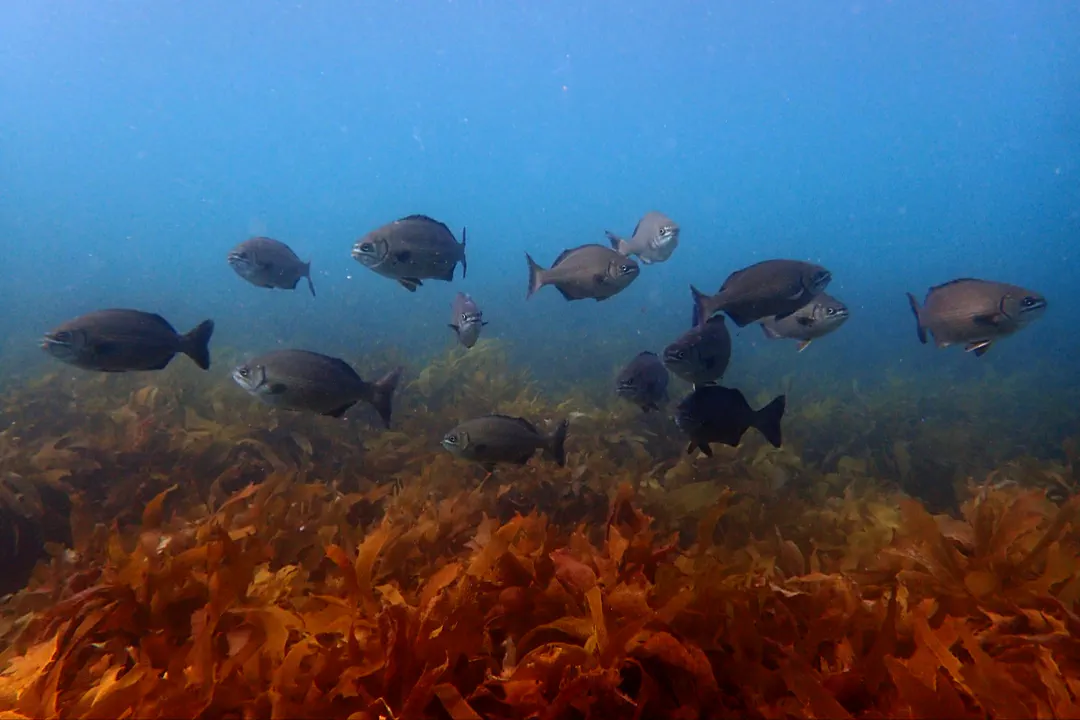
Found in aggregations over hard, algal coated bottoms of exposed, surf-swept outer reef flats, lagoon and seaward reefs, to a depth of at least 24 m. Benthopelagic. Juveniles associated with floating material. Mainly herbivorous, feeding on seaweed and associated invertebrates.
Appear to be more commonly involved in hallucinogenic fish poisoning than most other related species.
© Susan PriorCC BY 4.0 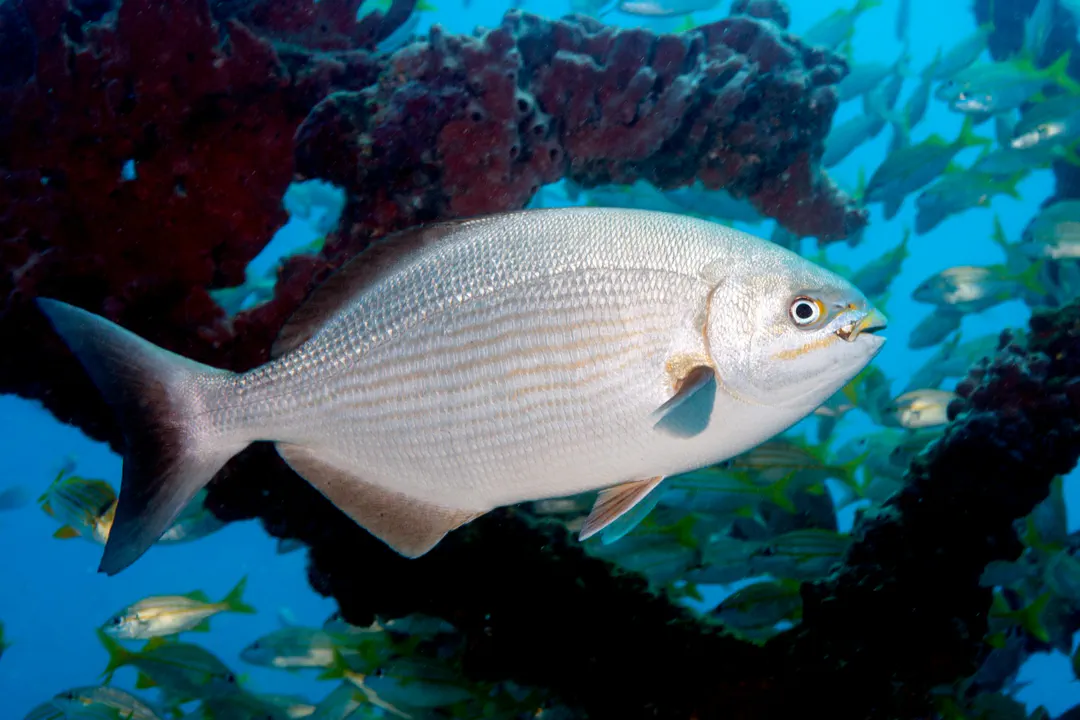 © R VasconcellosCC BY 4.0 · iNaturalist
  © Oscar DoveCC BY 4.0 · iNaturalist
 Highfin Chub is classified as poisonous. Always exercise caution and keep a safe distance.
Highfin Chub can be found at depths of up to 45 meters.
Download Seabook free for iOS and Android.