 © portioidCC BY 4.0 · iNaturalist
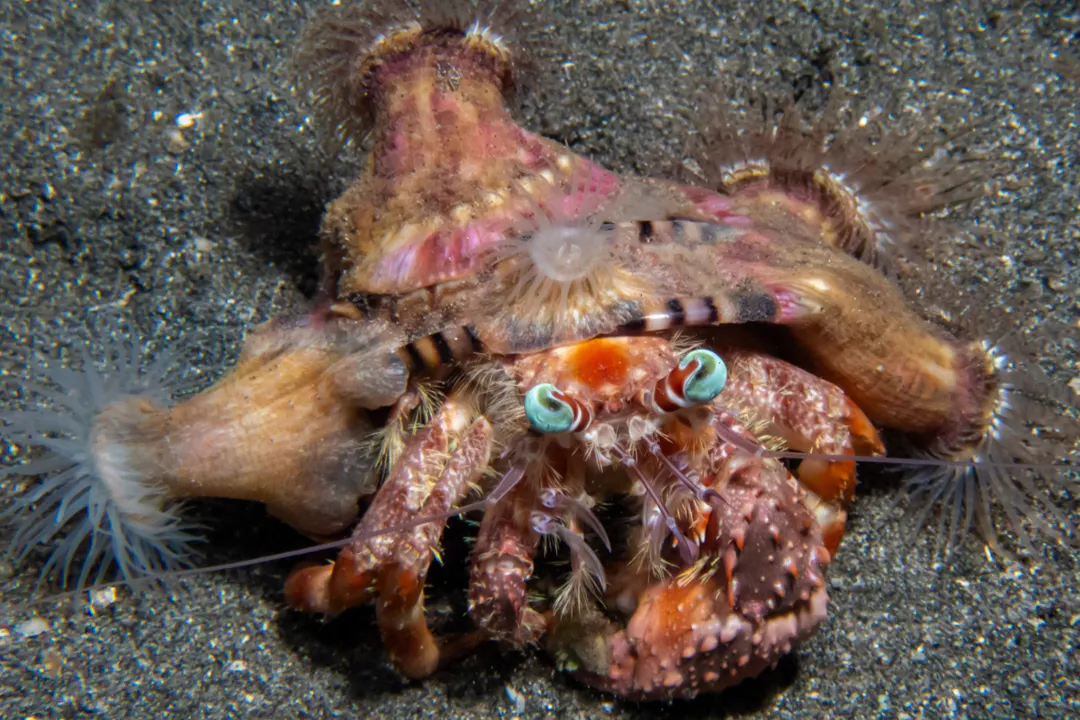
Anemone Hermit Crab
Dardanus pedunculatus
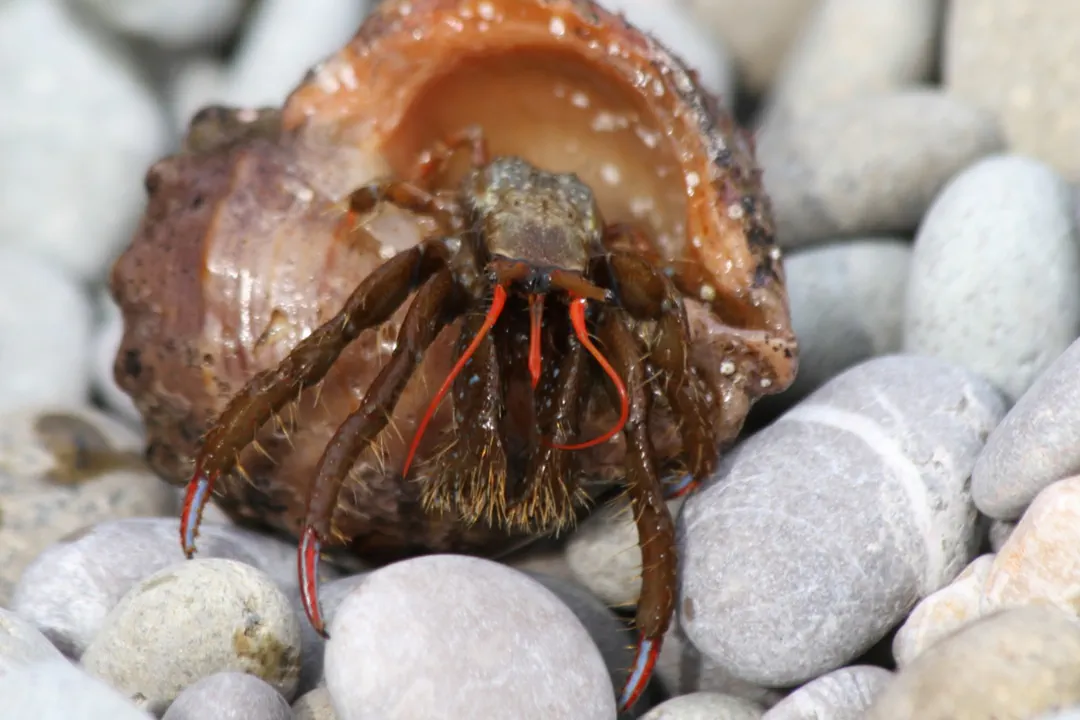
Clibanarius erythropus
Clibanarius erythropus is a species of hermit crab that lives in rockpools and sublittoral waters. It is found in the Mediterranean Sea, Black Sea and eastern Atlantic Ocean from the Azores to Brittany, the Channel Islands and as far north as the south Cornwall coast. Individuals may grow up to a carapace length of 15 millimetres (0.6 in).
The cephalothorax is elongated, slightly widened posteriorly. The rostrum (a pointed protrusion in the preorbital region of the skull) is small, pointed, slightly protruding beyond the rounded lateral protrusions of the anterior edge of the cephalothorax.
The eye stalks are long with small eye scales, slightly exceeding the stalk of the antennae. The scales of the eye are triangular, touching with the inner sides, serrated and provided with bristles.
Scaphocerites (the outer branches of the bifurcated limb of crustaceans, often undergoing greater or lesser reduction) are short hairy. The outer jaws are brought together at their bases. Pincer legs are short, toes move horizontally, with horny spoon-shaped depressions at the end.
Claws of the first pereiopods swollen at the base, fingers with dark horny ends; the surface of the palm and fingers with hairs and sharp tubercles. The second and third pereiopods by the length of the dactylus exceed the claw-nosed legs, their fingers with a horn claw. The fourth pair of pereopods with a false claw. Abdomen without paired genital appendages on the first segment in both sexes.
The hermit crab has no shell, its abdomen is bare. Covered with a hard shell - cuticle, which is shed during molting.
A variety of different gastropod shells are used by C. erythropus, the most frequent being Littorina striata, Mitra, Nassarius incrassatus and Stramonita haemastoma, which collectively account for 85% of all the individuals studied in the Azores; in the Mediterranean, shells of Cerithium, Alvania montagui and Pisania maculosa are most used by C. erythropus.
Like other hermit crabs, C. erythropus feeds on "organic debris, decayed and fresh macro-algae with associated fauna and epiphytic algal flora, small invertebrates, and macroscopic pieces of dead and live animal tissues". It has been shown that C. erythropus individuals select substrates where they can cover large distances, and that globose shells allow them greater mobility than elongate ones.
A grown hermit crab finds itself an empty shell of a gastropod mollusk and climbs into it, exposing its legs and sensory organs - eyes on stalks and two pairs of antennae. Without a shelter shell, the hermit crab is defenseless and a welcome prey for many predators.
Clibanarius erythropus moves forward, in contrast to the hermit crab Diogenes (Diogenes pugilator), also living in the Black Sea, which moves backward.
Clibanarius erythropus uses many different shells of gastropods. In the Azores, this hermit crab most often uses (85%) the shells of Littorina striata, Mitra, Nassarius incrassatus and Stramonita haemastoma; in the Mediterranean, it most often lives in the shells of Cerithium, Alvania montagui and Pisania maculosa.
Hermit crabs Clibanarius erythropus choose substrates where they can travel long distances. Spherical shells provide them with greater mobility than elongated shells.
Like other hermit crabs, Clibanarius erythropus feeds on organic debris, decomposed and fresh macroalgae containing fauna and epiphytic flora, small invertebrates and macroscopic pieces of dead and living animal tissue.
In 2016 the BBC Springwatch programme highlighted Clibanararius erythropus and ran a competition to provide a vernacular name. The winning name was St Piran's crab, a process supported by National Trust West Cornwall and the Cornwall Wildlife Trust. St Piran is the patron saint of Cornwall, and was a hermit who survived being thrown into the sea.
© portioidCC BY 4.0 · iNaturalist  © Gabby RCC BY-NC 4.0 · Seabook
  © Daniel EisenhauerCC BY 4.0 · iNaturalist
 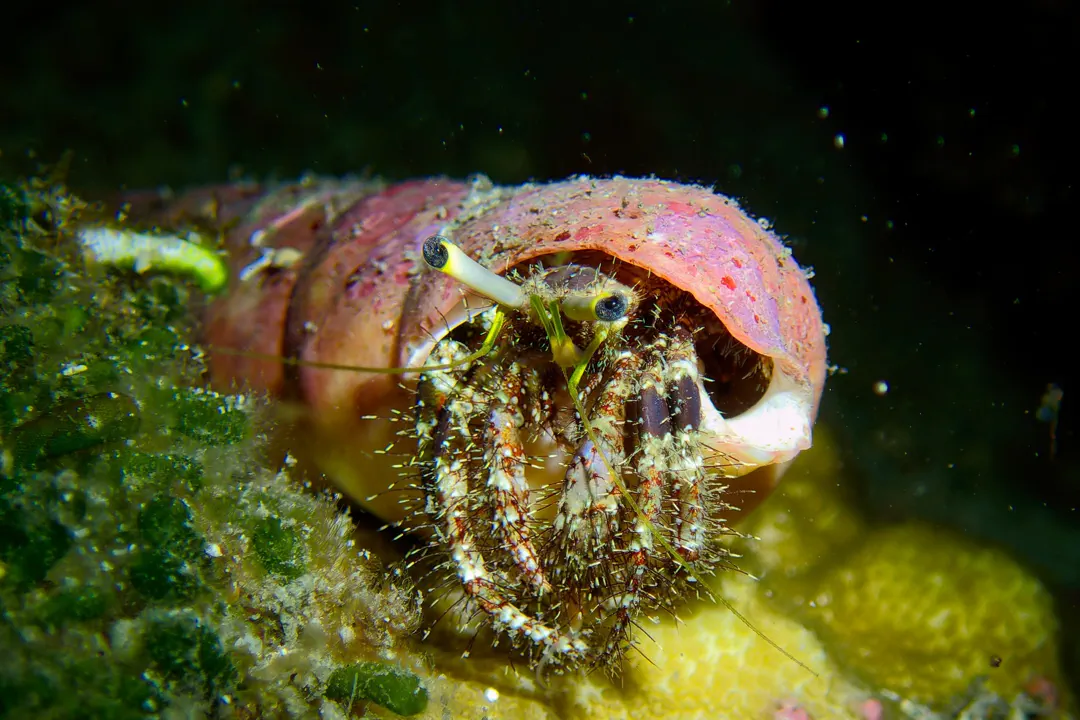 © Jay ParolineCC BY 4.0 · iNaturalist
 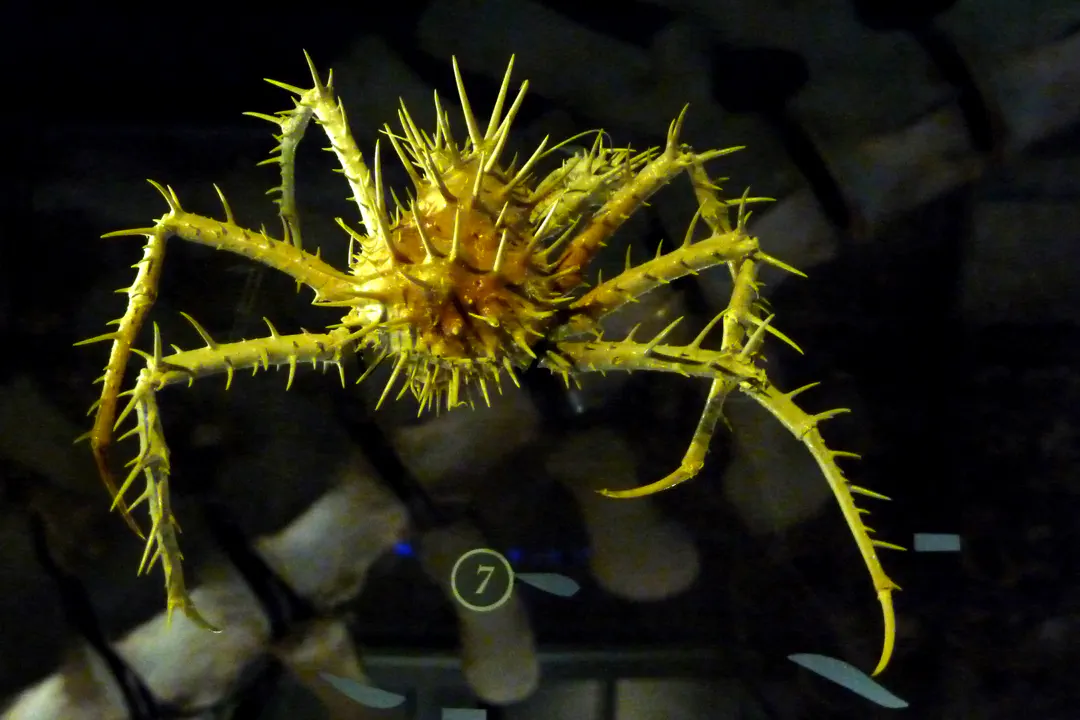 © SitronCC BY-SA 4.0 · iNaturalist
 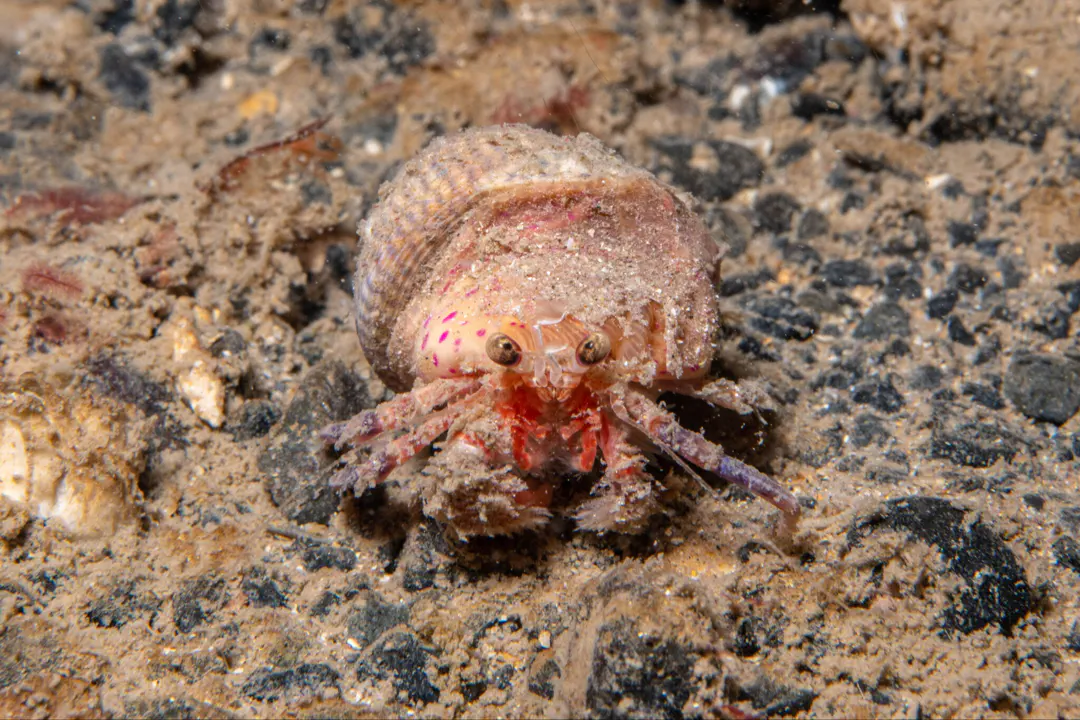 © Libby KeatleyCC BY 4.0 · iNaturalist
 St. Piran's Crab has no known danger to humans. However, always observe marine life responsibly.
Download Seabook free for iOS and Android.