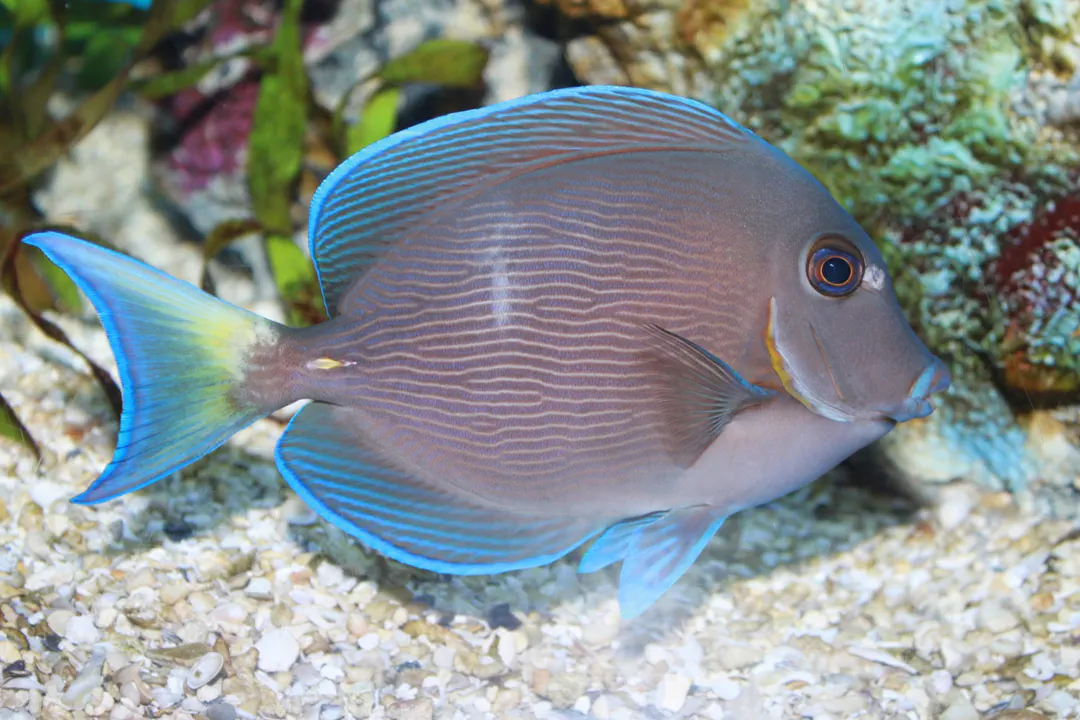
 © Brian GratwickeCC BY 4.0 · iNaturalist
Atlantic Blue Tang
Acanthurus coeruleus
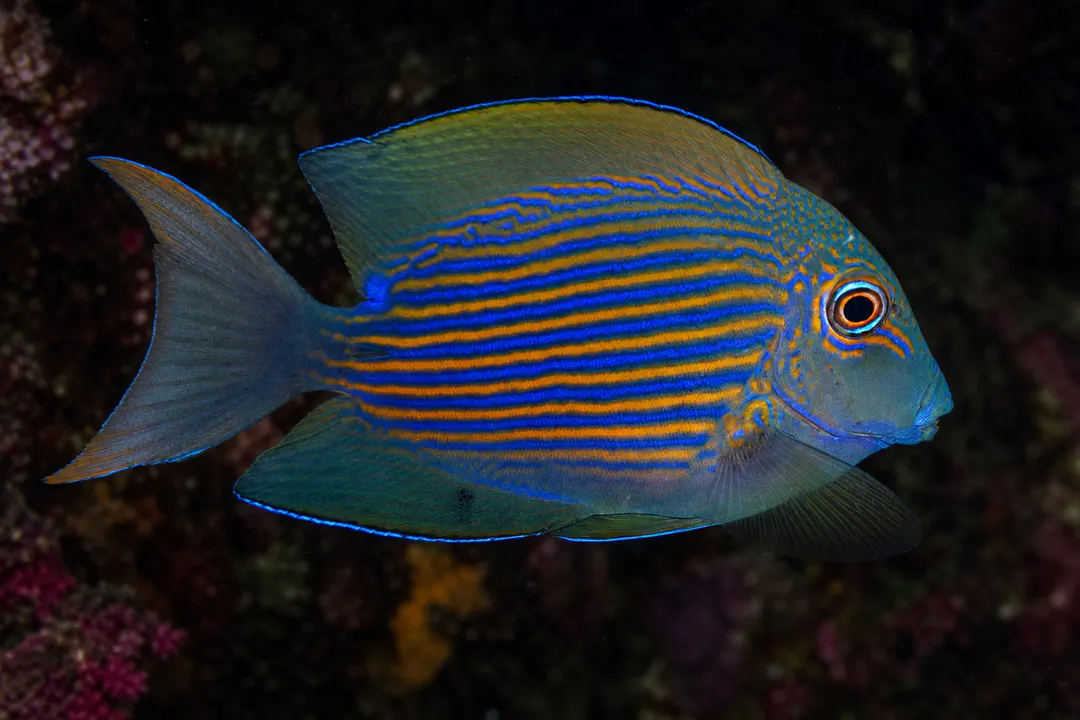 © seabook.appAll rights reserved
Ctenochaetus striatus
Ctenochaetus striatus is a species of marine fish in the family Acanthuridae.
Dorsal spines (total): 8; Dorsal soft rays (total): 27-31; Anal spines: 3; Anal soft rays: 24 - 28. This species is distinguished by the following characters: body deep and compressed, its depth 1.9-2.3 times in standard length or SL; mouth small, teeth numerous (> 30 in jaws of adults), movable, slender and elongate, with expanded incurved tips which are denticulate on the lateral margin (6 denticulations on upper and 4 on lower teeth); total gill rakers on first gill arch 27-36; a continuous unnotched dorsal fin with VIII,27-31; AIII,24-28; caudal fin lunate, concavity 3.7-6 times in SL; a lancet-like spine on caudal peduncle which folds into a deep horizontal groove. Colour is dark olive to yellowish brown with blue or blue-grey lengthwise lines on body and small orange spots on head and nape; dorsal and anal fins with about 5 lengthwise dark bluish bands; pectoral fins pale with brownish yellow rays; a small blackish spot at rear base of dorsal fin of juveniles and small adults.
The striated surgeonfish can reach a maximum size of 24 cm in length, but its common size is observed to be around 18 cm.
Indo-Pacific: throughout the region except the Hawaiian, Marquesas and Easter islands.
Inhabits reef flats and lagoon and seaward reefs to a depth of over 30 m. Occurs over coral, rock, pavement, or rubble substrates. May occur singly or in small to very large, often mixed-species aggregations. Feeds on surface film of blue-green algae and diatoms (making this species a key link in the ciguatera food chain) as well as on various small invertebrates.
The striated surgeonfish is one of the few herbivorous fishes which are occasionally toxic. Ciguatera poisoning is caused by the accumulation of a toxin produced by certain microscopic dinoflagellates which it ingests while feeding on algae. If a contaminated fish is eaten by humans, the concentrated poison contained within its tissues causes neurological damage that can be fatal.
© Brian GratwickeCC BY 4.0 · iNaturalist 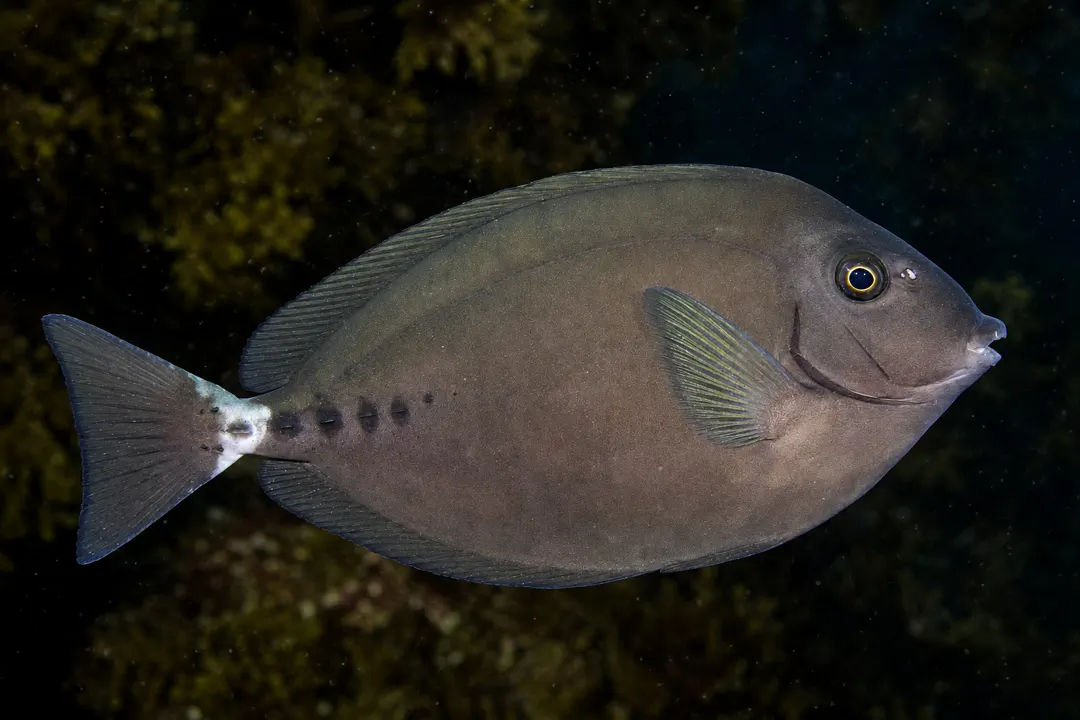 © seabook.appAll rights reserved
 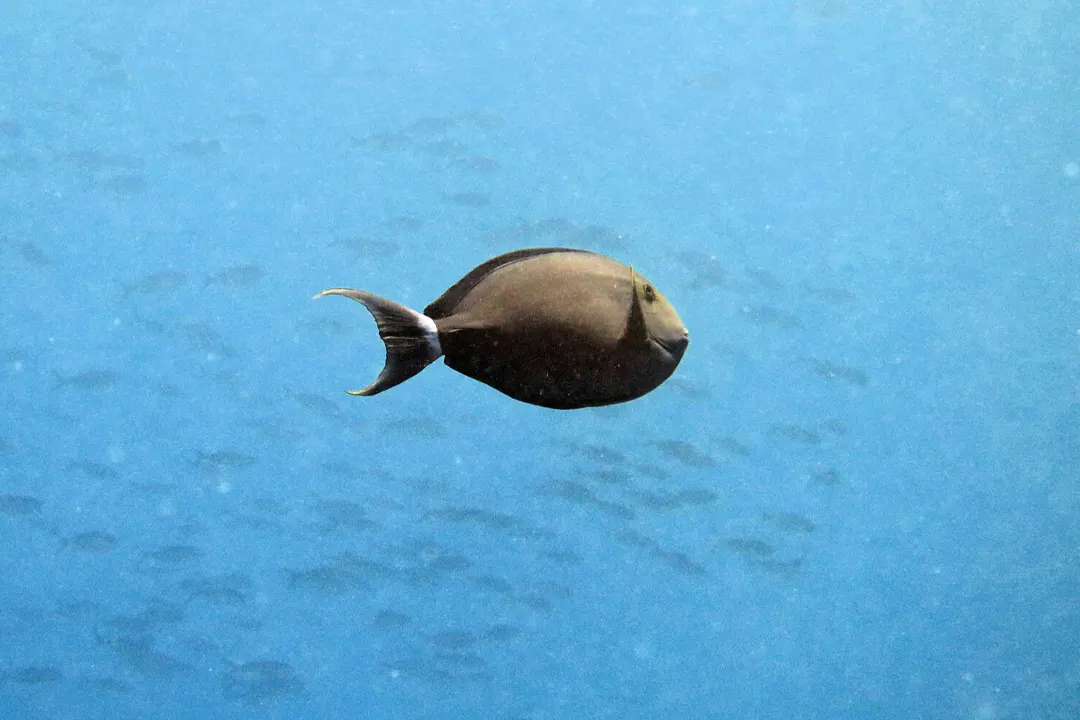 © Dr. Thomas DörnerCC BY-SA 4.0 · iNaturalist
 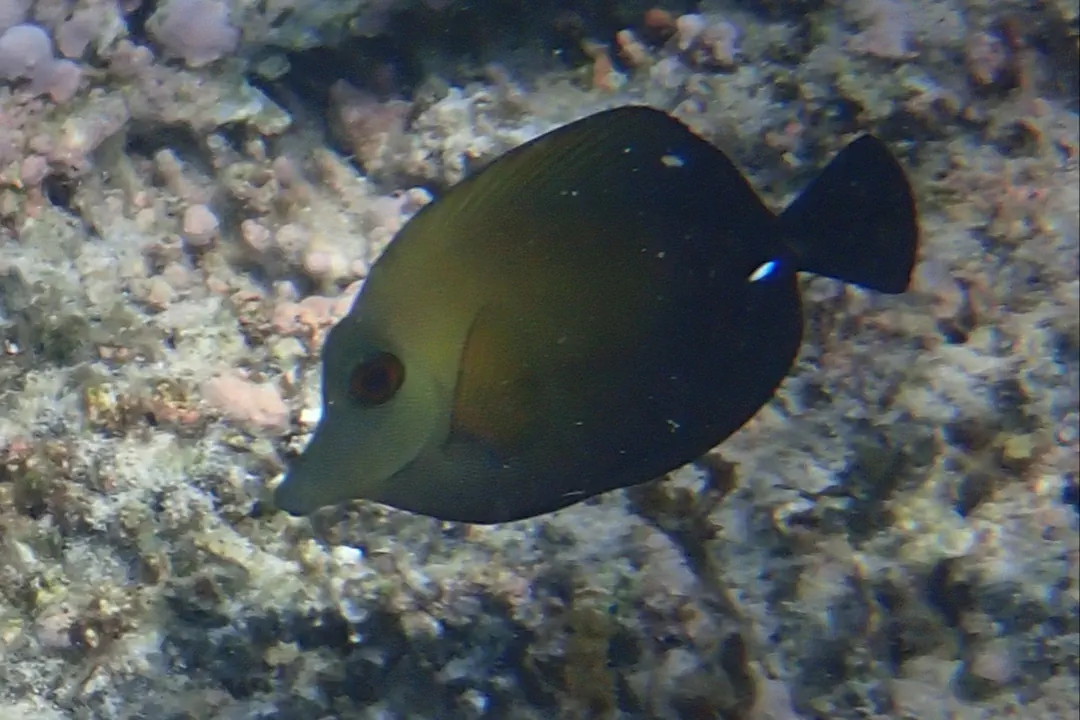 © Debra BakerCC BY 4.0 · iNaturalist
 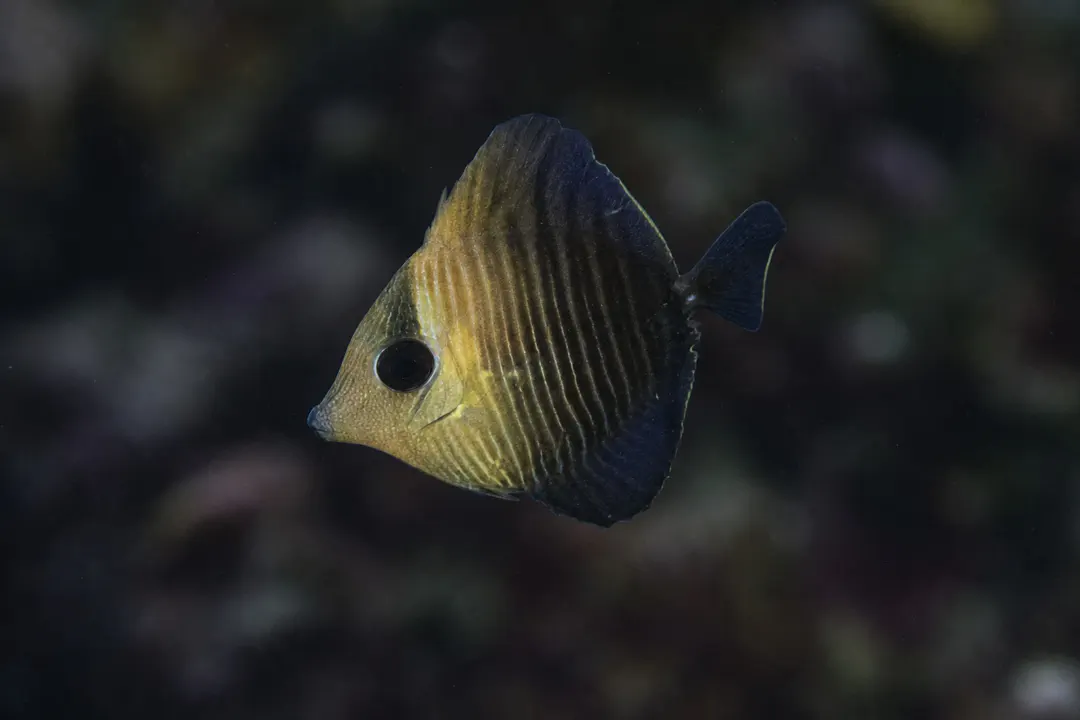 © seabook.appAll rights reserved
 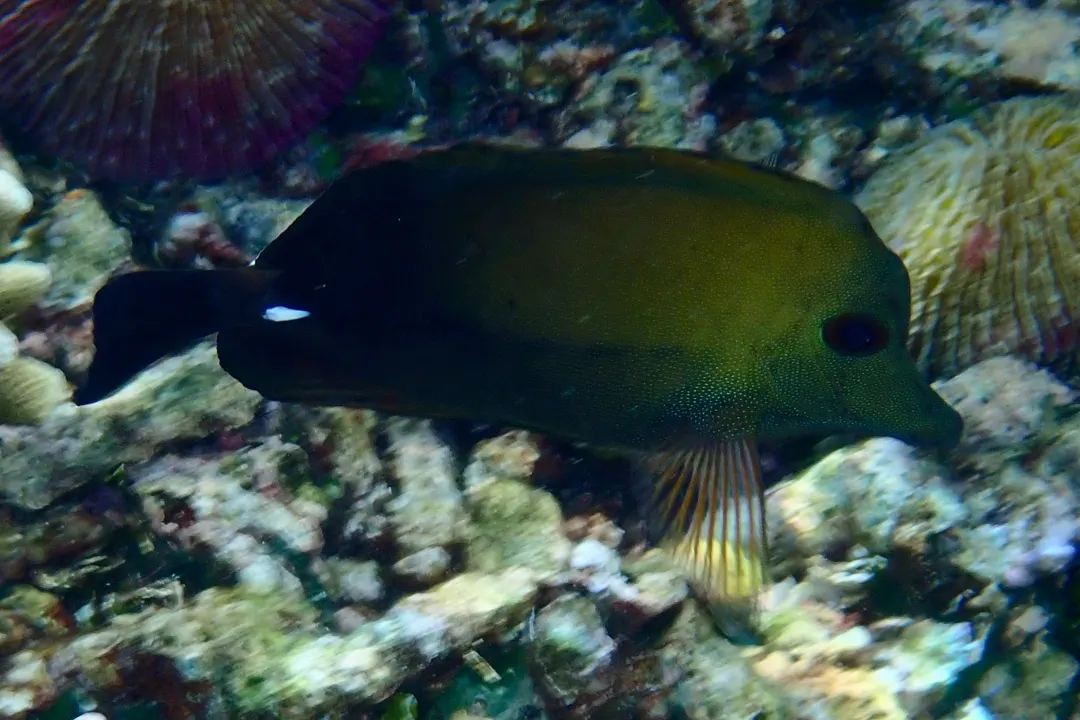 Jean-Paul BoerekampsCC0 · iNaturalist
 Striated Surgeonfish (juvenile) is classified as poisonous. Always exercise caution and keep a safe distance.
Striated Surgeonfish (juvenile) can be found at depths of up to 60 meters.
Download Seabook free for iOS and Android.