Ornate Cowfish (female)
Aracana ornata
Shaw's Cowfish (male teen)
Aracana aurita
- Max size
- View in app
- Max depth
- 50 m
- Found in
- 4 regions
How to recognise it
- Colours
- whitebrownyelloworangegreenblue
- Body shape
- Globelike, Other
- Pattern
- Blotches or dots, Camouflage pattern, Horizontal markings, Spines pattern
Aracana aurita is a species of boxfish native to the Eastern Indian Ocean. The species was first described by George Shaw in 1798. It is carnivorous and exposes prey in the benthic zone by blowing a jet of water onto sediment.
Description
It has a compact, oval-shaped body completely encased in a rigid shell made of fused scales. This armor provides protection from predators but limits mobility, making the fish a slow swimmer. It maneuvers primarily using its pectoral fins.
Male Characteristics
- Coloration: Males exhibit striking colors, including a golden-yellow or orange base with dark rings and stripes. These patterns create a "ringed" appearance, giving the species its name.
- Size: Males are generally larger than females, reaching up to 15 cm in length.
- Fins: The anal fin in males is often more pronounced, serving as an additional distinguishing feature.
- Purpose of Coloration: The bright colors help males attract females and assert dominance over their territory.
Female Characteristics
- Coloration: Females display more subdued colors, typically grayish-brown or olive, with less vivid patterns. This helps them blend into their surroundings for protection against predators.
- Size: Females are slightly smaller than males, averaging around 12 cm in length.
- Behavior: Females are less territorial and focus more on foraging and seeking shelter.
Juvenile Characteristics
- Coloration: Juveniles resemble females with subdued patterns and softer shades, providing better camouflage in their environment.
- Size: Juveniles are small, usually under 5 cm, with an armor that is not yet fully hardened, developing as they grow.
- Behavior: Young fish often hide among seaweed or sandy bottoms to avoid predators, avoiding open waters.
Distribution
Eastern Indian Ocean: southern Australia, from southern Western Australia to New South Wales and Tasmania.
Habitat
It inhabits rocky reefs and seagrass beds in sheltered bays, harbours, and coastal waters in depths of 5 - 50 m. It feeds on a range of benthic invertebrates, often exposing prey by blowing jets of water onto the sediment.
Similar spesies
The lines on the side of the face of both male and female Shaw's Cowfish are more-or-less horizontal, whereas those of the closely-related Ornate Cowfish (Aracana ornata) are more angled. Male Ornate Cowfish also have a distinct hump on the snout. Female Ornate Cowfish also have deeper bodies and narrower stripes.
Similar species
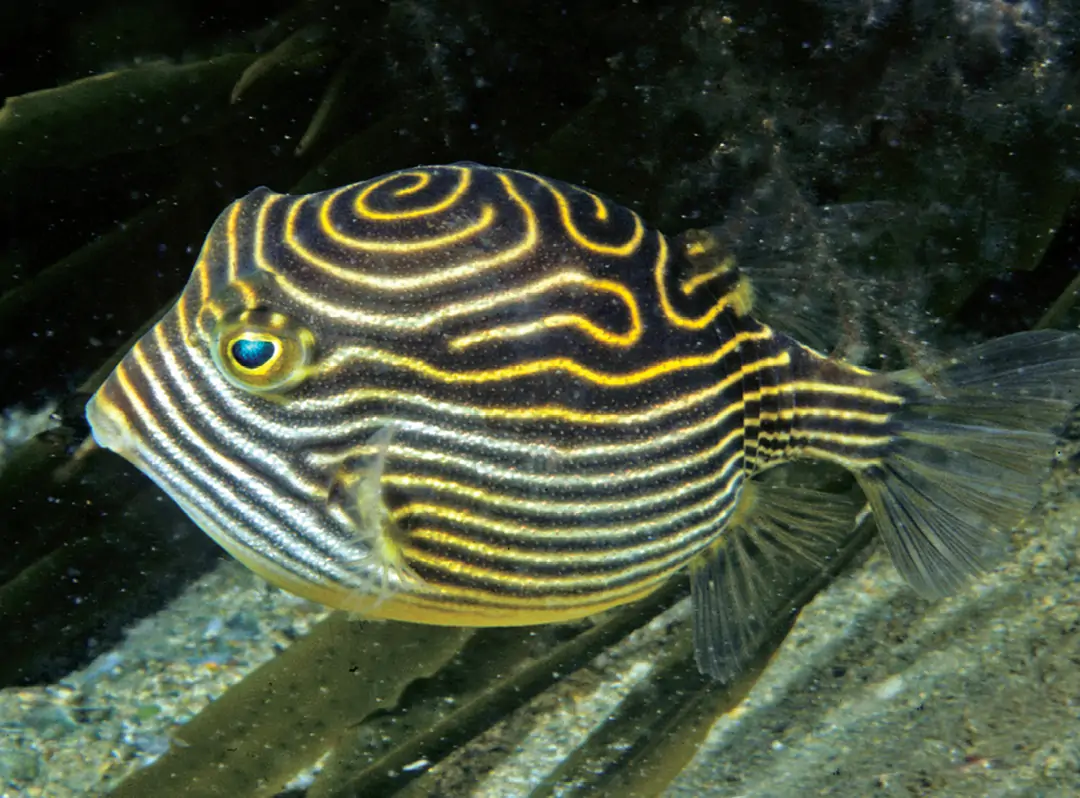
Ornate Cowfish (juvenile)
Aracana ornata
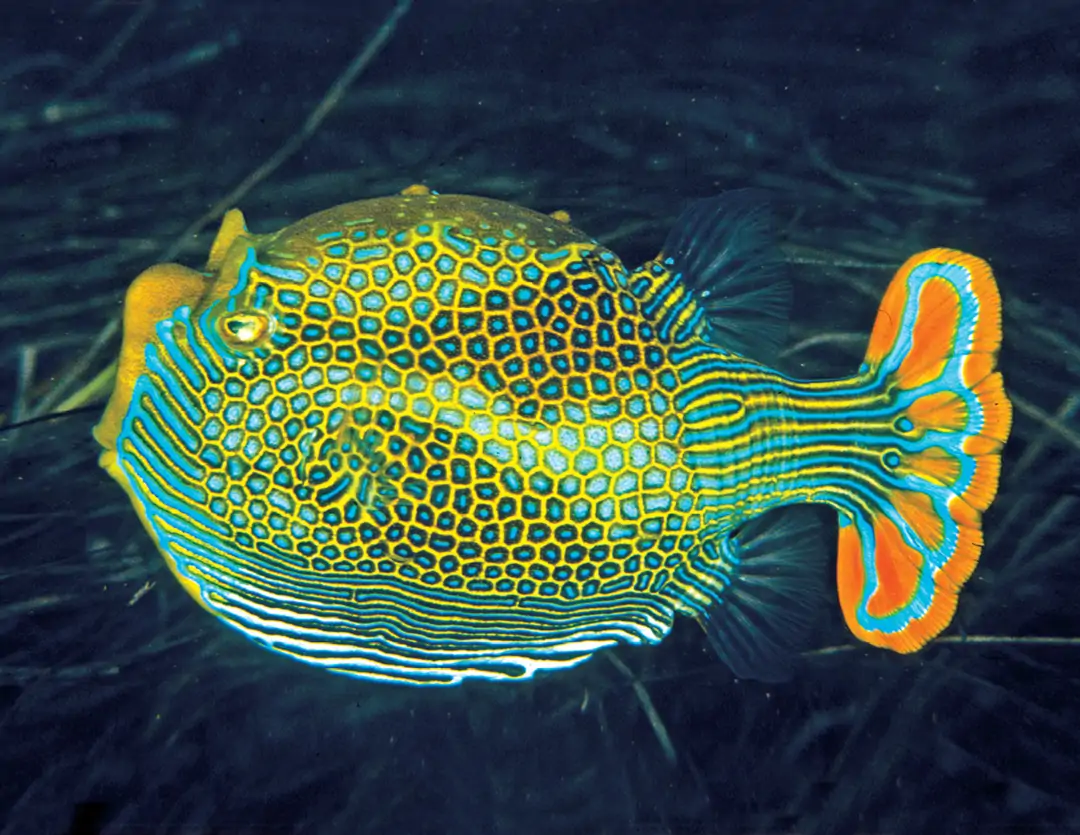
Ornate Cowfish (male)
Aracana ornata
Shaw's Cowfish (female)
Aracana aurita
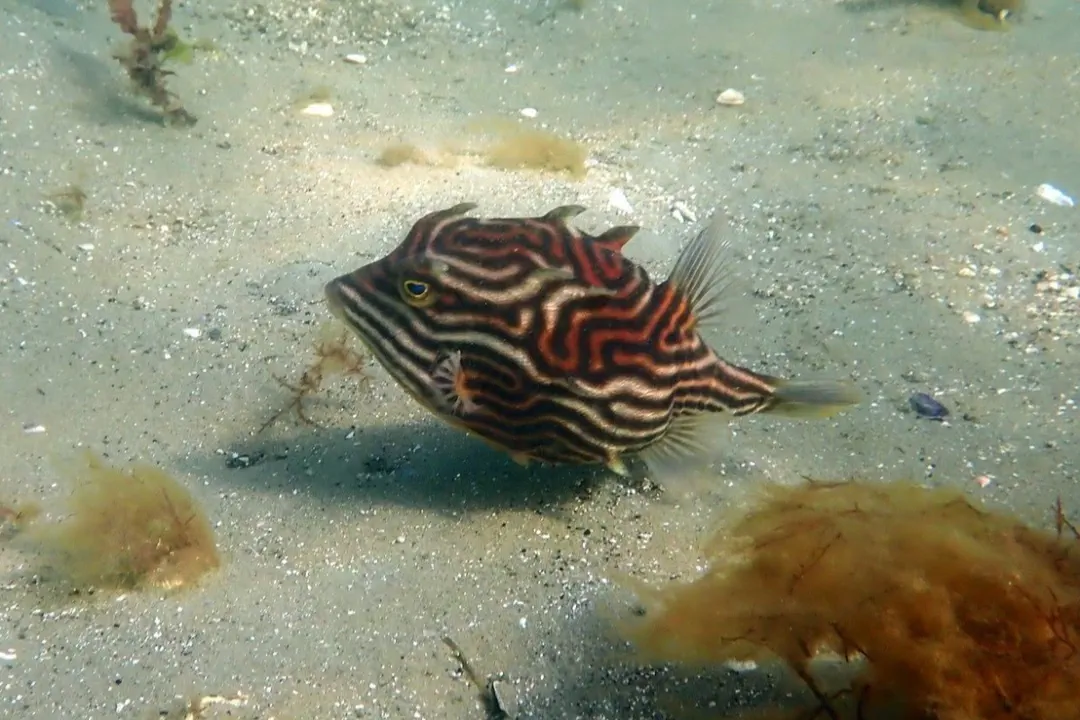 © Bruce DeagleCC BY 4.0 · iNaturalist
Shaw's Cowfish (juvenile)
Aracana aurita
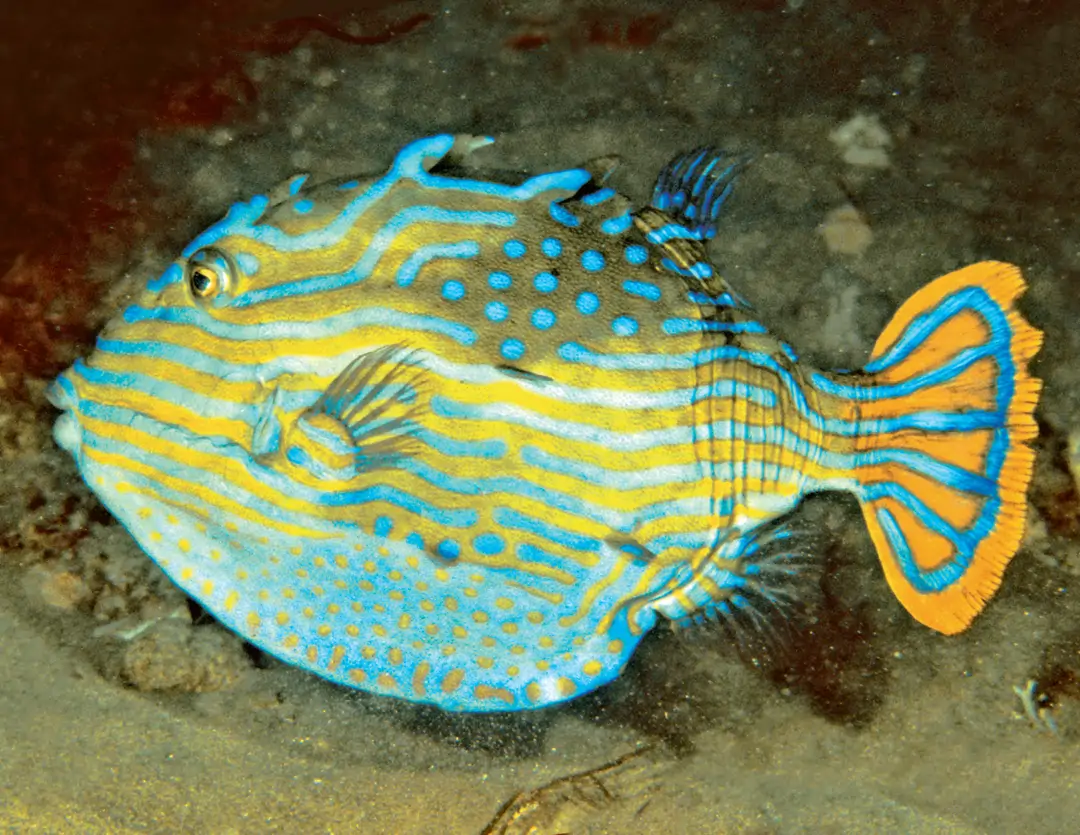
Shaw's Cowfish (male)
Aracana aurita
Questions
Is Shaw's Cowfish (male teen) dangerous?
Shaw's Cowfish (male teen) has no known danger to humans. However, always observe marine life responsibly.
Where can you find Shaw's Cowfish (male teen)?
Australia SouthAustralia WestBusseltonAustralia
How deep does Shaw's Cowfish (male teen) live?
Shaw's Cowfish (male teen) can be found at depths of up to 50 meters.