 © Julien RenoultCC BY 4.0 · iNaturalist
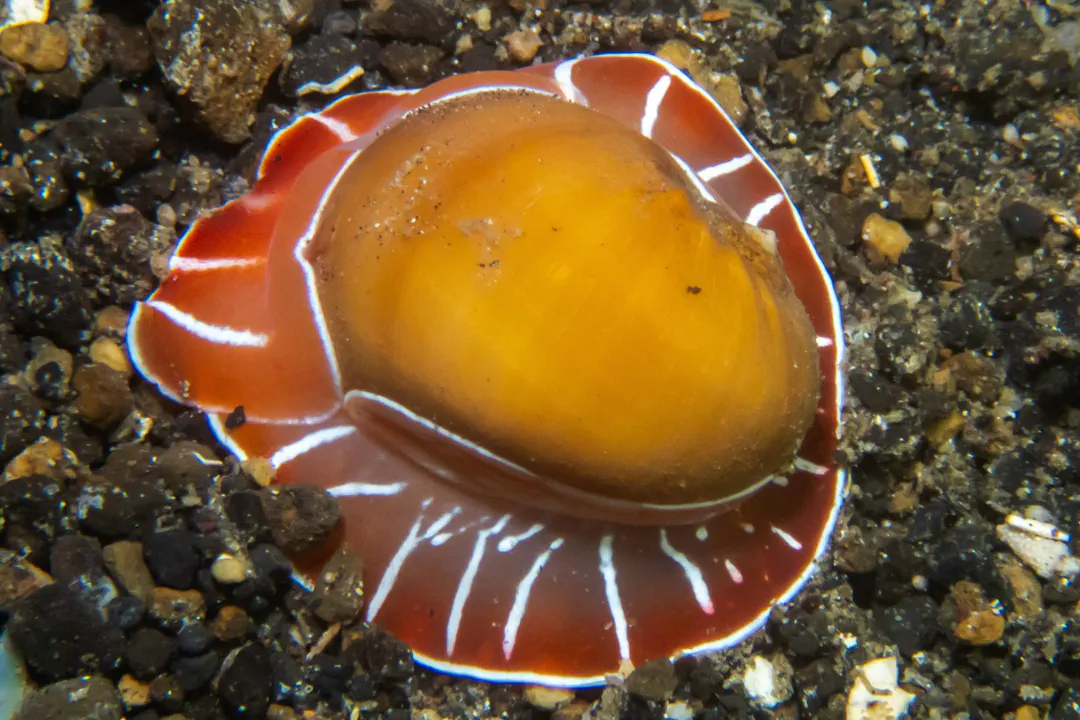
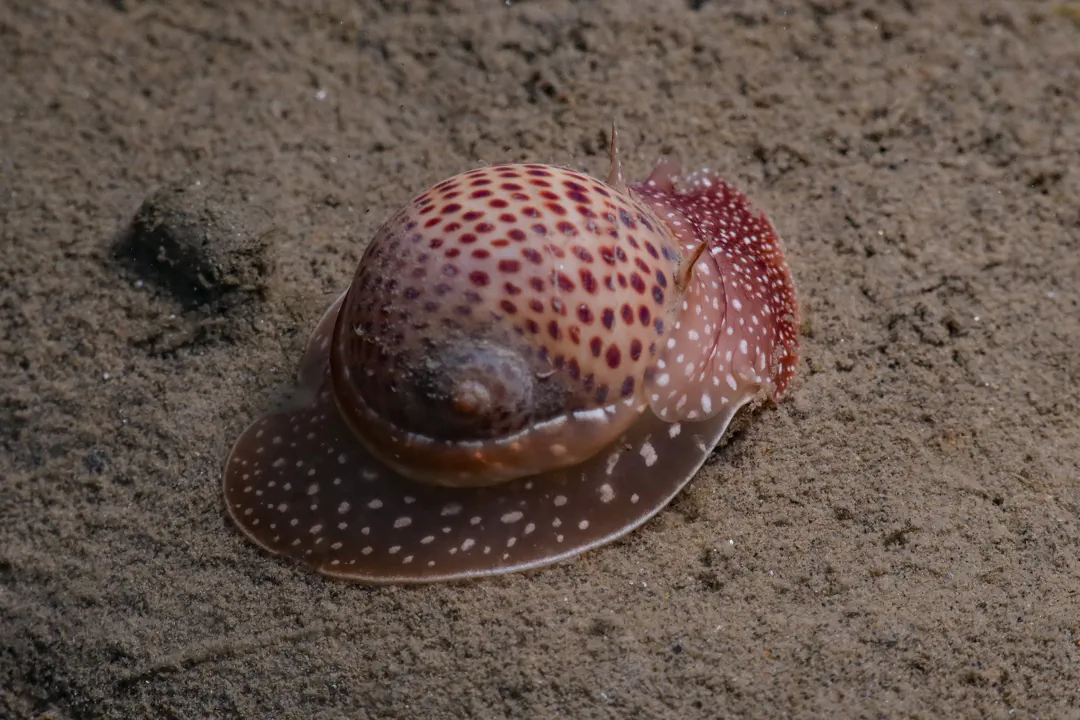
Fly-specked Moon Snail
Naticarius stercusmuscarum
Naticidae, common name the moon snails or necklace shells, is a family of minute to large-sized predatory sea snails, marine gastropod molluscs in the clade Littorinimorpha. The shells of the species in this family are mostly rather globular in shape.
Naticidae is the only family in the superfamily Naticoidea.
It has been estimated that worldwide there are about 260–270 Recent species of naticid snails. This group is assumed to have originated in the late Triassic or in the early Jurassic. Members of this family can be recognized by the shape of their shells, distinct appearance or by their predatory behavior.
Naticids are widely distributed and occur worldwide. The greatest diversity of both species and genera is found in tropical regions. Even so, naticid snails are also plentiful in temperate, Arctic and Antarctic waters.
Moon snails live on sandy substrates, at a great variety of depths depending on the species (from the intertidal zone to thousands of meters in depth). They are often seen ploughing along in the sand searching for prey.
Naticids are predatory, feeding mostly on bivalves. They will also attack almost any other shelled mollusk they encounter in the sand, such as scaphopods and other gastropods, including other moon snails. Additionally, Conuber sordidum was shown to prey on the soldier crab Mictyris longicarpus (Crustacea) by drilling predation. To catch soldier crabs, C. sordidum uses the same stereotyped behaviour as previously described for moon snails hunting shelled molluscan prey.
The moon snail envelops the prey and then bores a hole through the shell using its radula and an acid secretion. Once the shell is bored open, the proboscis is used to consume the flesh of the prey. The hole in the shell, which has a "countersunk" appearance with chamfered edges, and which varies in size according to the species, is a characteristic diagnostic sign of moon snail predation.
In the breeding season, the female moon snail lays a rather stiff egg mass which includes sand and mucus. These objects wash up on sandy beaches fairly often, and are known by the common name "sand collars" because of their resemblance to an old-fashioned removable shirt collar or false-collar.
Some authors have suggested a distinct separation of the Naticidae into four subfamilies: Ampullospirinae, Naticinae, Polinicinae and Sininae. This arrangement is mainly based on morphological data, such as details of the operculum including the material (calcareous in the Naticinae, corneous in the Polinicinae and Sininae) and size, and also the morphology of the shell.
The following three subfamilies were recognized in the taxonomy of Bouchet & Rocroi (2005):
Genera in the family Naticidae include:
Unassigned to a subfamily:
subfamily Naticinae
subfamily Sininae
subfamily Globisininae
subfamily Polinicinae Gray, 1847
© Julien RenoultCC BY 4.0 · iNaturalist Naticarius orientalis has no known danger to humans. However, always observe marine life responsibly.
Download Seabook free for iOS and Android.