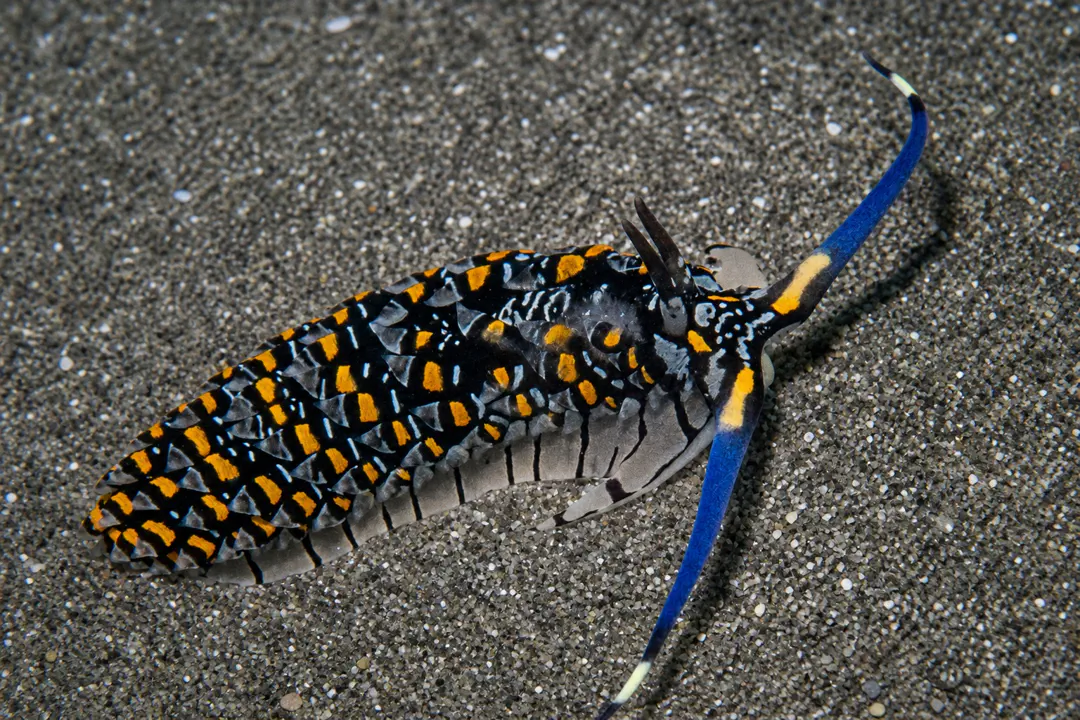
Ambon Cerberilla
Cerberilla ambonensis
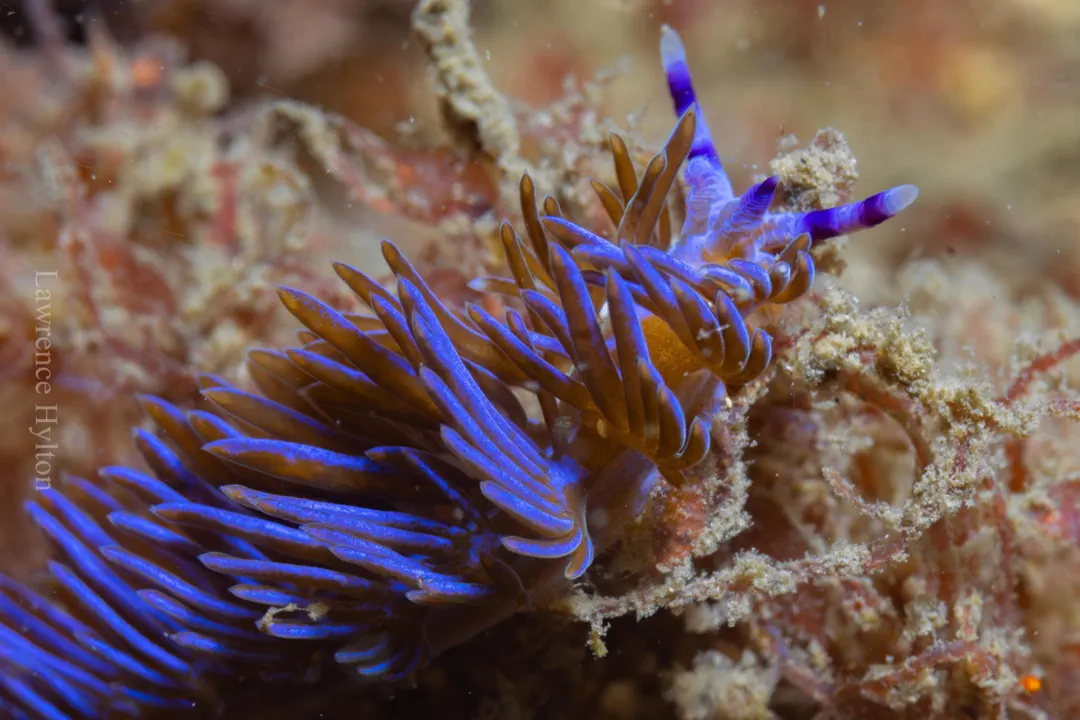
Pteraeolidia ianthina
Pteraeolidia ianthina is a sea slug, an aeolid nudibranch, a marine gastropod mollusc in the family Facelinidae.
This species is found in diverse habitats and among shallow coral reefs throughout Western Pacific Ocean, from Hawaii to the Philippines, to the Northeast Australian waters and New Zealand, also in the Red Sea. Recent research shows that it is a complex of more than one species.
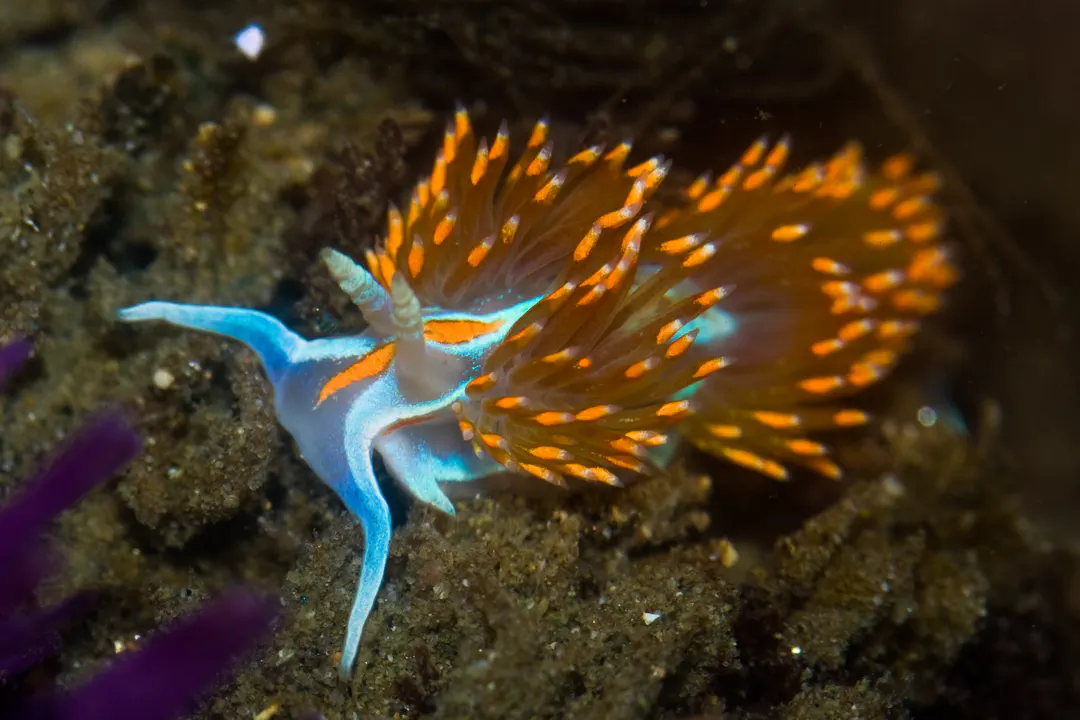
Pteraeolidia ianthina, one of the most common aeolids found, is often called a "blue dragon" by Eastern Australian divers because of its close resemblance to a Chinese dragon. It is one of the most common aeolid nudibranchs found in Eastern Australia. It can inflict a painful sting to humans.
The body color of this species is translucent tan, but the cerata, which vary from dark purple to lavender to golden brown, give the nudibranch most of its distinct color, green specimens are not uncommon.
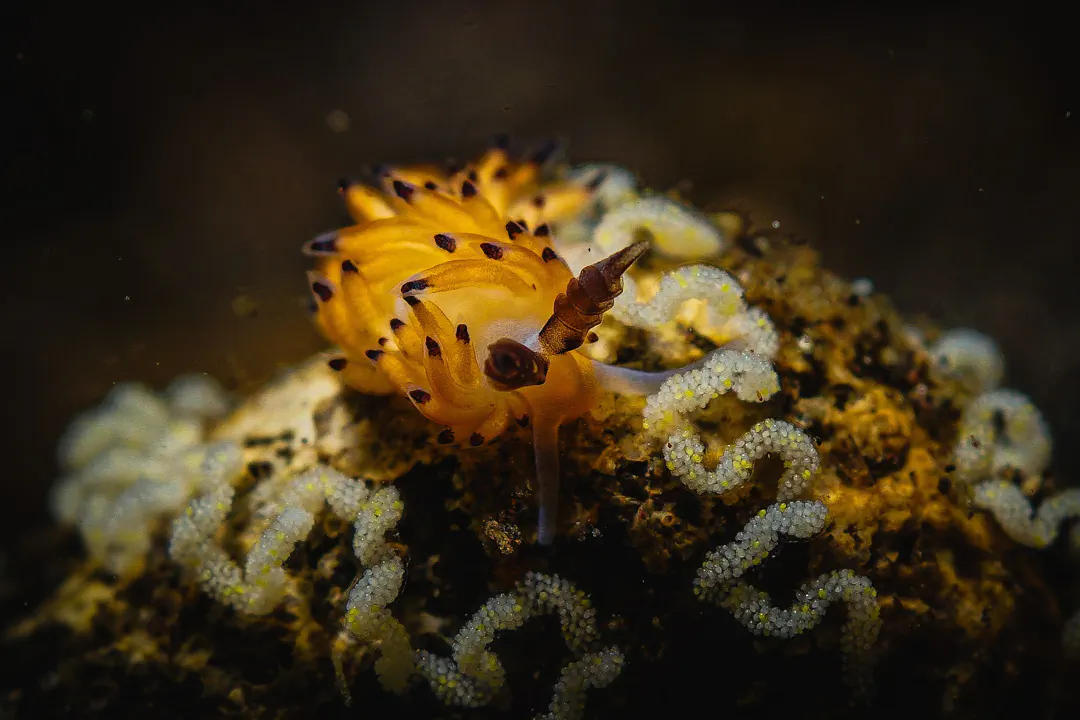
The slug is very elongated (7 cm) with many clusters of medium-large sized cerata along the length of the body. The fat rhinophores and the long cephalic tentacles have at least two dark purple bands that stand out. The tips of the cerata contain nematocysts.
Algal zooxanthellae of the genus Symbiodinium derived from the food of these animals continue to photosynthesise inside the body and give rise to brown and green pigments. Symbiodinium, together with the nematocysts, are presumed to be derived from coelenterate prey. These Symbiodinium occur within vacuoles in host cells derived from the endoderm.
Young specimens are much shorter, have fewer cerata, and are often mistaken for other nudibranch species.
This sea slug feeds on hydroids which contain Symbiodinium, microscopic dinoflagellates that are photosynthetic. The microscopic Symbiodinium acquired from the hydroids are 'farmed' in the sea slug's digestive diverticula, where the Symbiodinium photosynthesizes sugars to be used by the slug. The slug gains enough photosythetically derived sugars to sustain it without feeding.
 © Bernard PictonCC BY 4.0 · iNaturalist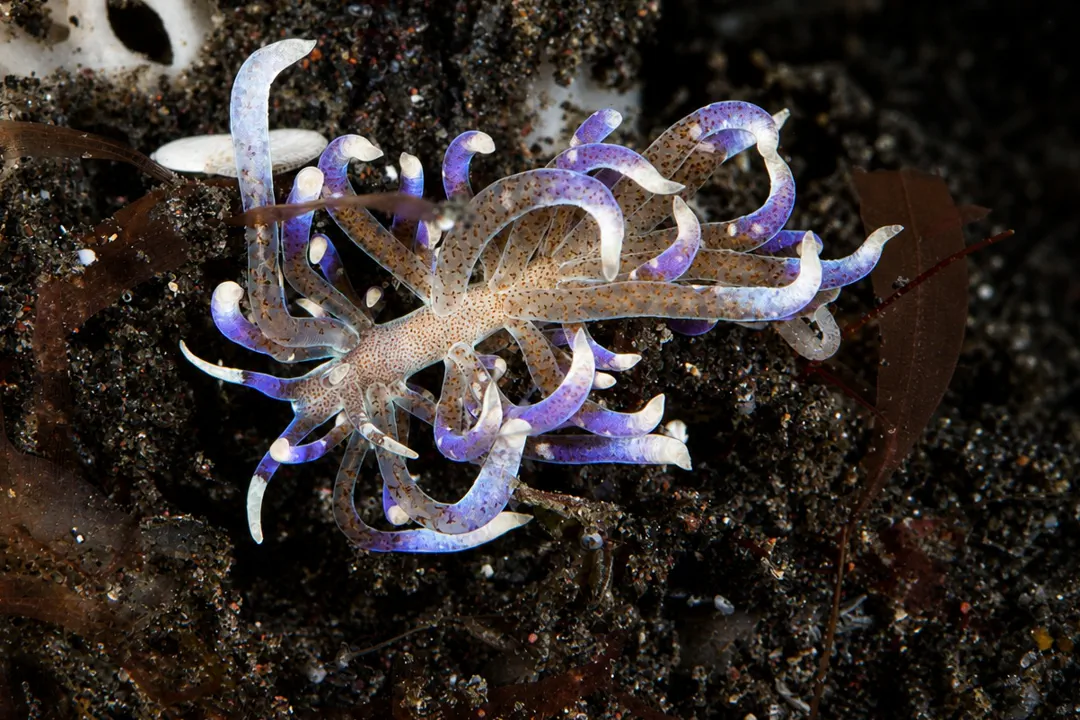
 © Ken-ichi UedaCC BY 4.0 · iNaturalist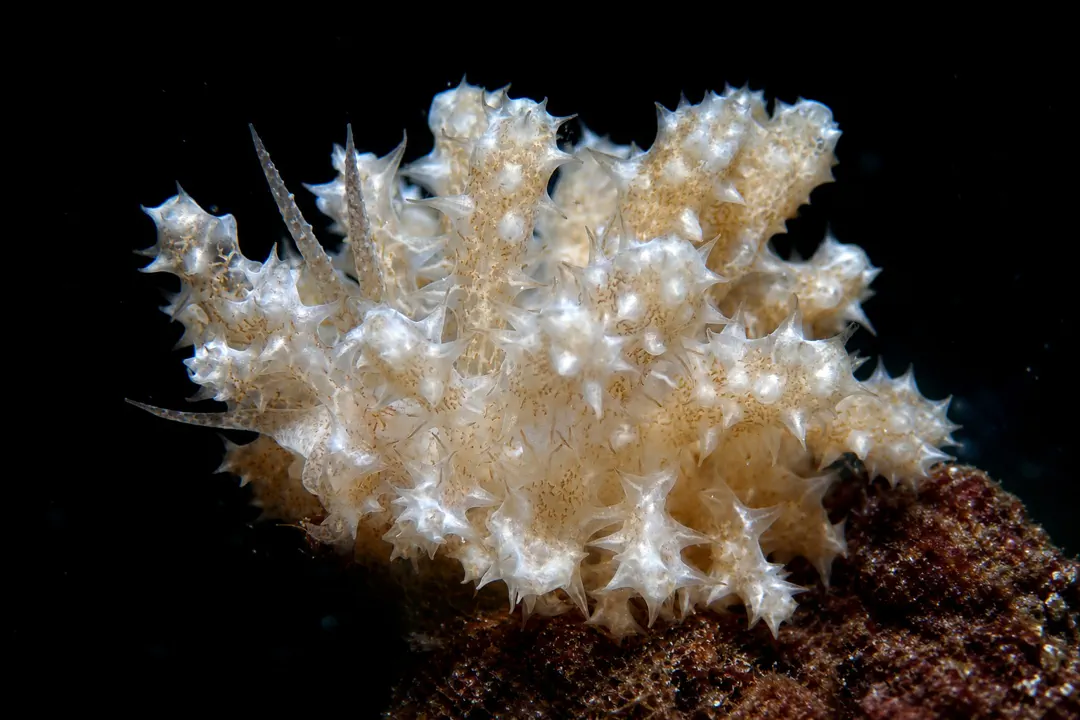
 © Stas KuryanAll rights reserved
 Australian Blue Dragon has no known danger to humans. However, always observe marine life responsibly.
Download Seabook free for iOS and Android.