Introduction to Diving in Phuket
Phuket, Thailand's largest island, anchors the Andaman Sea's dive circuit with over 30 accessible sites within a 1-2 hour boat ride. This premier gateway to spectacular underwater landscapes is a must-visit for divers, offering unparalleled accessibility and diverse ecosystems. Divers flock here for granite pinnacles rising from 18-40 meter depths, hard coral gardens thriving at 5-30 meters, and soft coral forests on sheer walls dropping beyond 40 meters.
Accessibility shines through Phuket International Airport, handling millions of passengers annually, and a fleet of over 200 dive boats departing daily from Chalong Pier. Water temperatures hold steady at a comfortable 27-30°C year-round, with visibility spanning an impressive 10-30 meters in peak season. Currents rarely exceed 1 knot at beginner-friendly sites, making it an ideal destination for all skill levels.
The Andaman Sea's marine environment supports over 1,000 fish species and 300 coral types across Phuket's sites, fueled by nutrient upwelling from the Malacca Strait. While historical overfishing in the 1980s posed challenges, marine sanctuaries like Shark Point, established in 1992, have successfully boosted leopard shark populations from near-local extinction to routine sightings of 10-20 individuals per dive. Ecologically, these vibrant reefs sequester 50-100 tons of carbon per square kilometer annually, playing a vital role in the global ecosystem.
Phuket's dive tourism is a significant economic driver, generating 0.8 million southern Thailand dives yearly, sustaining local economies but also highlighting the critical need for responsible practices to protect these fragile ecosystems. Divers encounter seasonal shifts: November-April delivers 20-30 meter visibility and flat seas under 1 meter, ideal for novices, while May-October brings plankton blooms attracting mobulas but drops visibility to 5-15 meters with 2-meter swells.
Geography and Marine Environment
Phuket is situated at 7.88°N, 98.39°E within the Andaman Sea, a vast 1,700-kilometer basin that averages 1,115 meters deep. However, the majority of its dive sites are found on shallower shelves at depths of 20-50 meters, which host approximately 70% of the island's underwater attractions. These underwater landscapes are characterized by dramatic granite boulders, eroded over 200 million years, forming towering pinnacles like those at Shark Point.
These formations pierce the surface at 5 meters and extend down to 40 meters, often cloaked in vibrant gorgonians and whip corals that sway gracefully in gentle 0.5-knot currents. Shallow gardens, typically found at 5-20 meters, are dominated by robust hard corals such as Acropora and Porites. In contrast, deeper walls beyond 30 meters are home to clusters of black coral trees (Antipathes spp.), which provide shelter for a diverse array of cryptic species.
The sea conditions are consistently favorable for diving, with surface temperatures ranging from 28-31°C and salinity levels at 33-34 ppt. These conditions are crucial for supporting the symbiotic algae that fuel coral growth rates of 5-10 centimeters annually, contributing to the health and expansion of the reefs. Monsoon-driven upwelling from June to October elevates nutrient levels to 0.5 mg/L, triggering phytoplankton blooms.
These blooms, while potentially reducing visibility, are vital as they attract large filter-feeders and create spectacular feeding frenzies, drawing in barracuda schools that can number between 200-500 individuals. Although historical events like the 2010 coral bleaching caused a significant loss of 20-40% coral cover at sites like Racha Yai, natural larval settlement and dedicated ranger patrols have facilitated a remarkable recovery, reaching 60% by 2023. The ecological significance of Phuket's reefs is immense, serving as biodiversity hotspots.
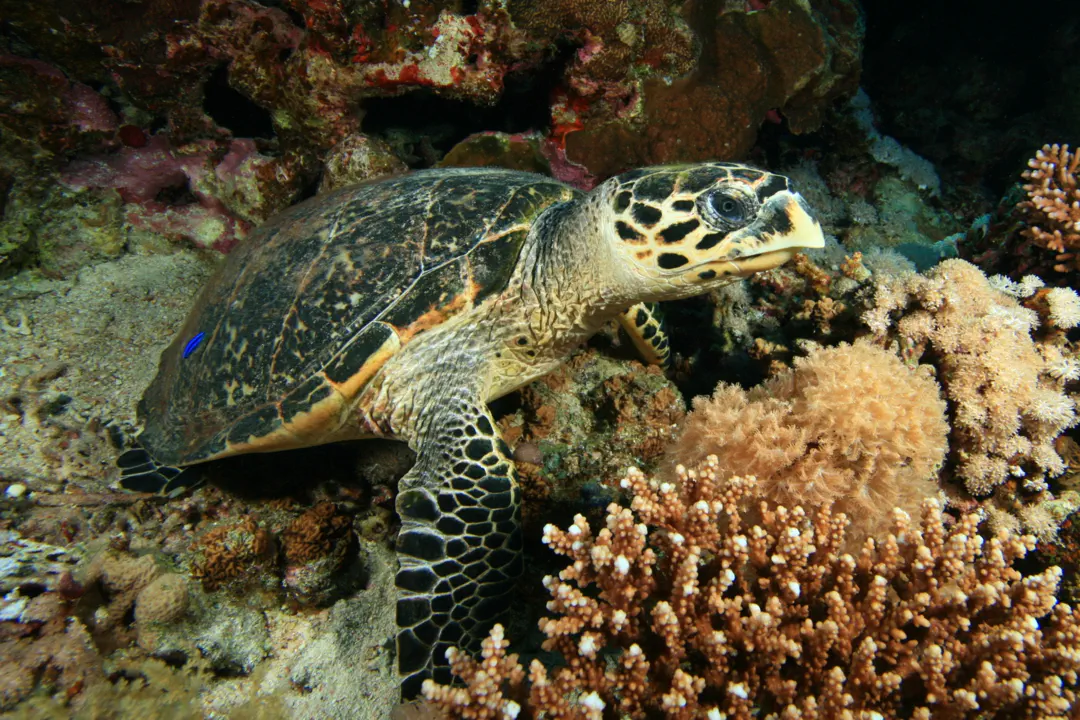
They host 25% of the Andaman's shark species and boast 15 sea turtle nesting beaches that annually welcome 500-1,000 green turtles. Divers actively contribute to conservation through no-touch protocols, which have reduced coral breakage by 70% at monitored sites. Seasonal variations also offer unique encounters, with peak manta sightings occurring from May to July, even with the trade-off of 10-20 meter visibility during these periods.
 © Pauline FeyAll rights reserved
  © seabook.appAll rights reserved
  © Elias LevyCC BY 4.0 · iNaturalist
  © Matteo BellucciCC BY 4.0 · iNaturalist
  © seabook.appAll rights reserved
  Justin PhilboisCC0 · iNaturalist
 Best Time to Visit for Diving
The optimal time for diving in Phuket is during the dry season, from November to April, coinciding with the northeast monsoon. This period typically offers exceptional conditions, including 20-40 meter visibility, minimal swells under 1 meter, and pleasant air temperatures ranging from 24-32°C. Currents generally remain below 2 knots at 80% of dive sites, allowing for comfortable drift dives over reefs teeming with over 50 fish species per 100 square meters.
Marine encounters are particularly vibrant, with leopard sharks frequently aggregating in sandy bottoms at depths of 15-25 meters, their numbers often tripling post-monsoon feeding. While the dry season is ideal for most, the wet season from May to October presents a different, yet equally rewarding, experience. During this time, visibility may drop to 5-20 meters amidst waves of 2-4 meters.
However, these plankton-rich waters attract magnificent pelagic species, most notably mobula rays (Mobula birostris), which can be seen in impressive groups of 20-50 individuals at sites like Racha Noi. Water temperatures during the wet season climb slightly to 30-32°C, which also boosts soft coral spawning in March around the full moon, offering divers the unique spectacle of synchronized releases blanketing sites in a vibrant pink mucus. It's worth noting that dive operators may cancel around 30% of trips between June and September due to rougher conditions, often redirecting to more sheltered bays such as Ao Mai Pai, where diving remains feasible at depths of 8-15 meters.
Historical data also provides insights into long-term changes, such as the El Niño impact in 1998, which halved coral cover; however, recent surveys show a remarkable 75% recovery at sites like the King Cruiser wreck. For practical diving, it's recommended to weight for a 3kg surface drop at 28°C, use 3mm wetsuits year-round for comfort, and schedule dives before noon to avoid afternoon trade winds that can gust up to 15 knots.
Iconic Dive Sites Around Phuket
Phuket offers access to a variety of world-class dive sites, each with its unique characteristics and marine inhabitants. From vibrant submerged pinnacles to historic wrecks and crystal-clear island reefs, the Andaman Sea provides an incredible underwater playground for divers of all levels. This section introduces some of the most popular and rewarding locations that make diving around Phuket an unforgettable experience.
Anemone Reef
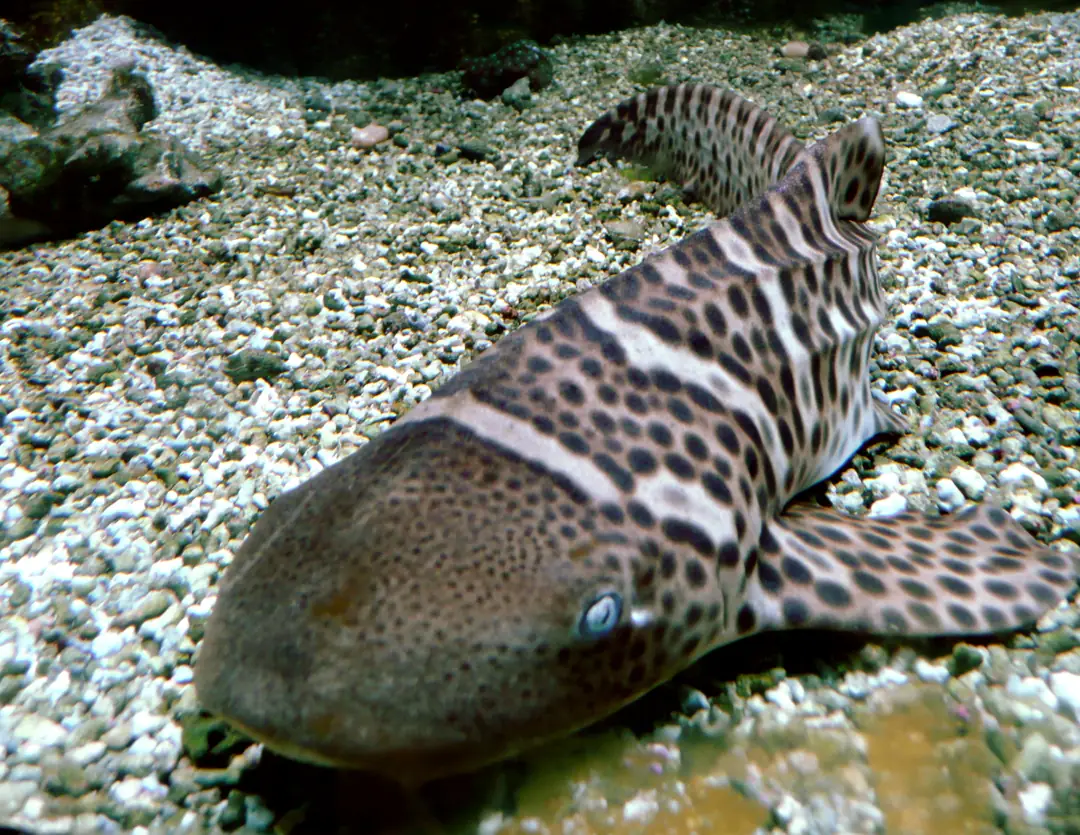
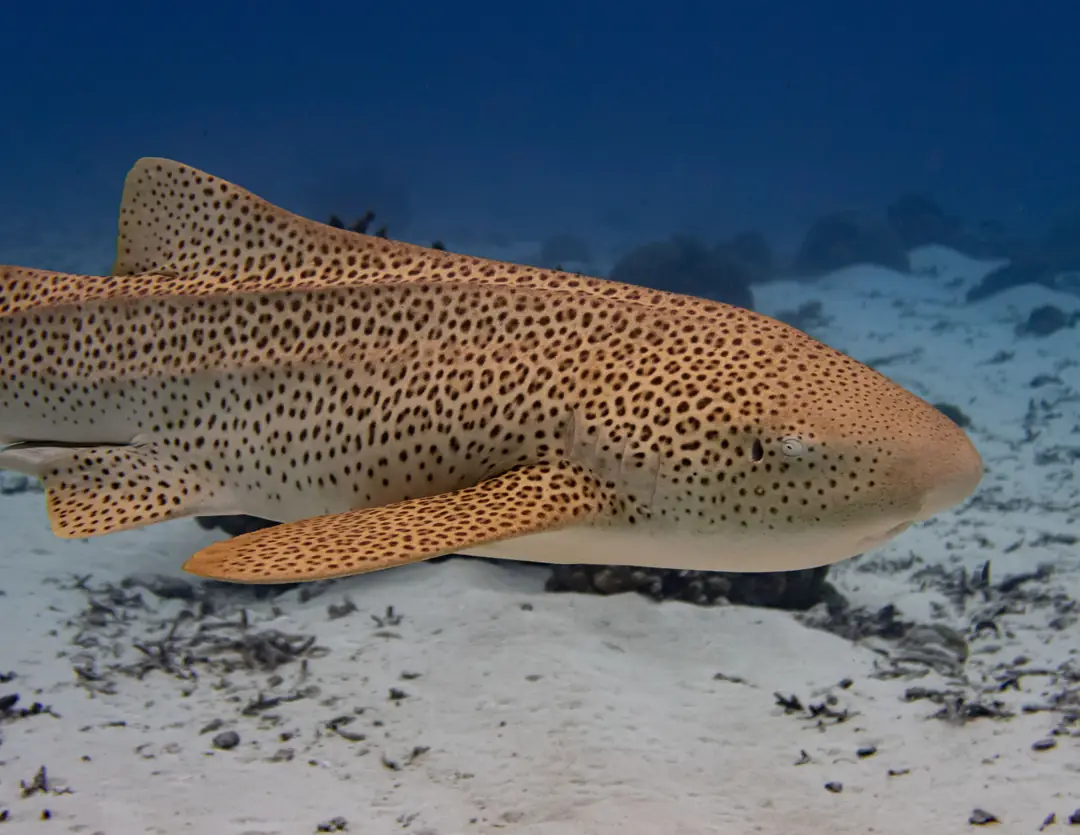
Anemone Reef is a breathtaking submerged pinnacle that rises from 18 meters to a crest just 3 meters below the surface, located at 8°00'N, 98°22'E. Its approximately 200-meter circumference is famously carpeted in vibrant Entacmaea quadricolor anemones, which host over 100 pairs of resident ocellaris clownfish (Amphiprion ocellaris). This site is also renowned for its leopard sharks (Stegostoma tigrinum), which can often be found resting motionless on the sandy bottom in 22-meter basins, averaging 1.5-2 meters in length and seemingly undisturbed by the gentle 0.3-knot drifts.
The reef fish biomass here is significant, hitting 15 kilograms per 100 square meters, with large schools of fusiliers (Caesio cuning) darting through the excellent 25-meter visibility. Divers typically descend via an anchor line to a 5-meter plateau, then circuit the pinnacle clockwise, navigating against mild currents. Along the way, keen eyes can spot elusive yellow seahorses (Hippocampus kuda) at 12 meters, clutching onto anemone arms for stability.
Lionfish (Pterois volitans) are also a common sight, hovering mid-water at 15 meters, although their numbers have seen a 50% reduction in juvenile populations since 2016 culls. Historical surveys conducted after the 1997 Asian crisis noted a remarkable 40% increase in fish density due to reduced trawling activity, highlighting the resilience of this marine ecosystem. Seasonal peaks in October-November bring shark nurseries, with sightings of 5-10 leopard shark pups under 1 meter.
For divers, practical tips include maintaining a 50-bar reserve for required decompression stops at 6 meters, deploying an SMB (Surface Marker Buoy) in 1-knot surface flows, and strictly adhering to a no-contact policy with the anemones to help curb their 20% annual tissue loss.
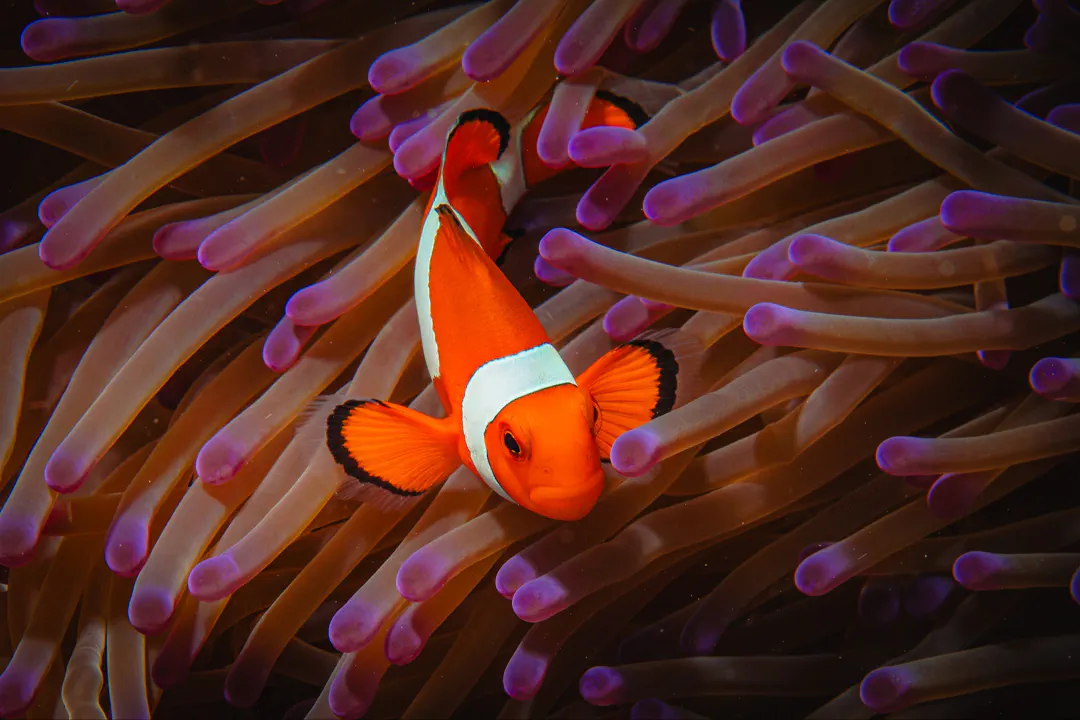 © Olka KuryanAll rights reserved
 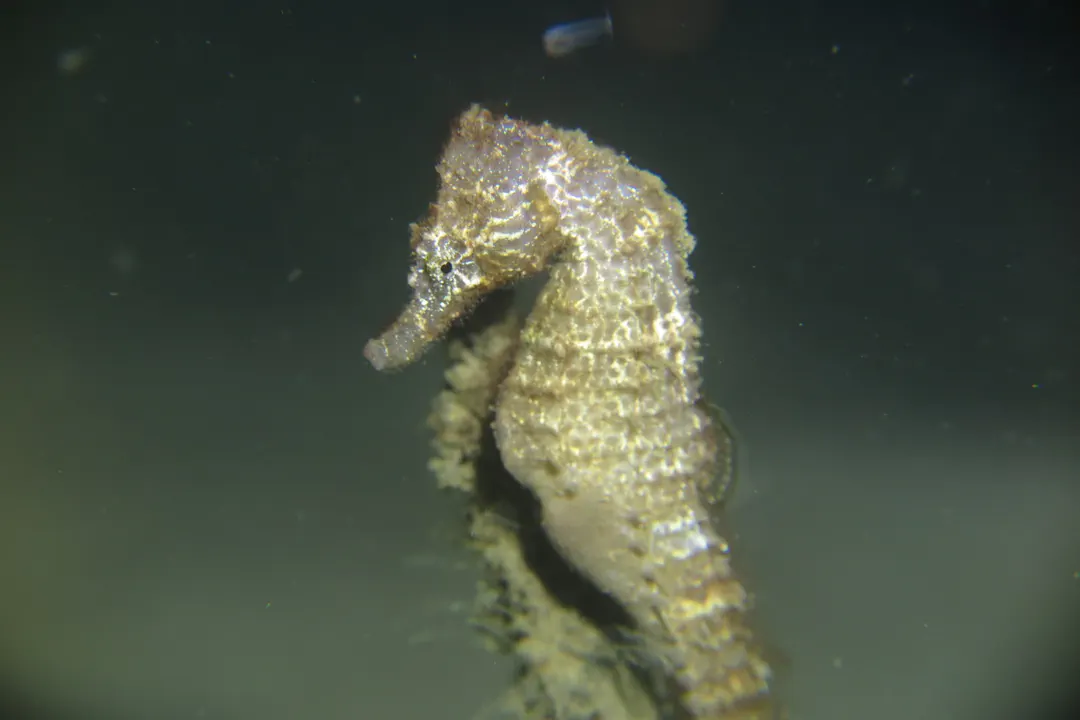 © Ewout KnoesterCC BY-SA 4.0 · iNaturalist
 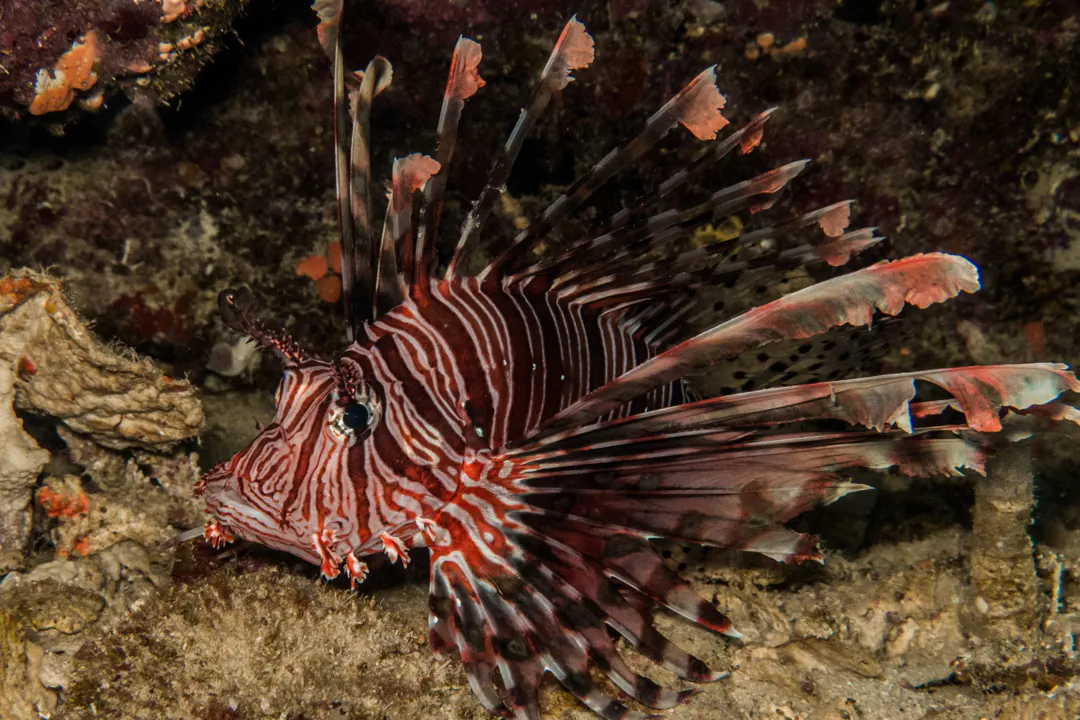 © João D'AndrettaCC BY 4.0 · iNaturalist
 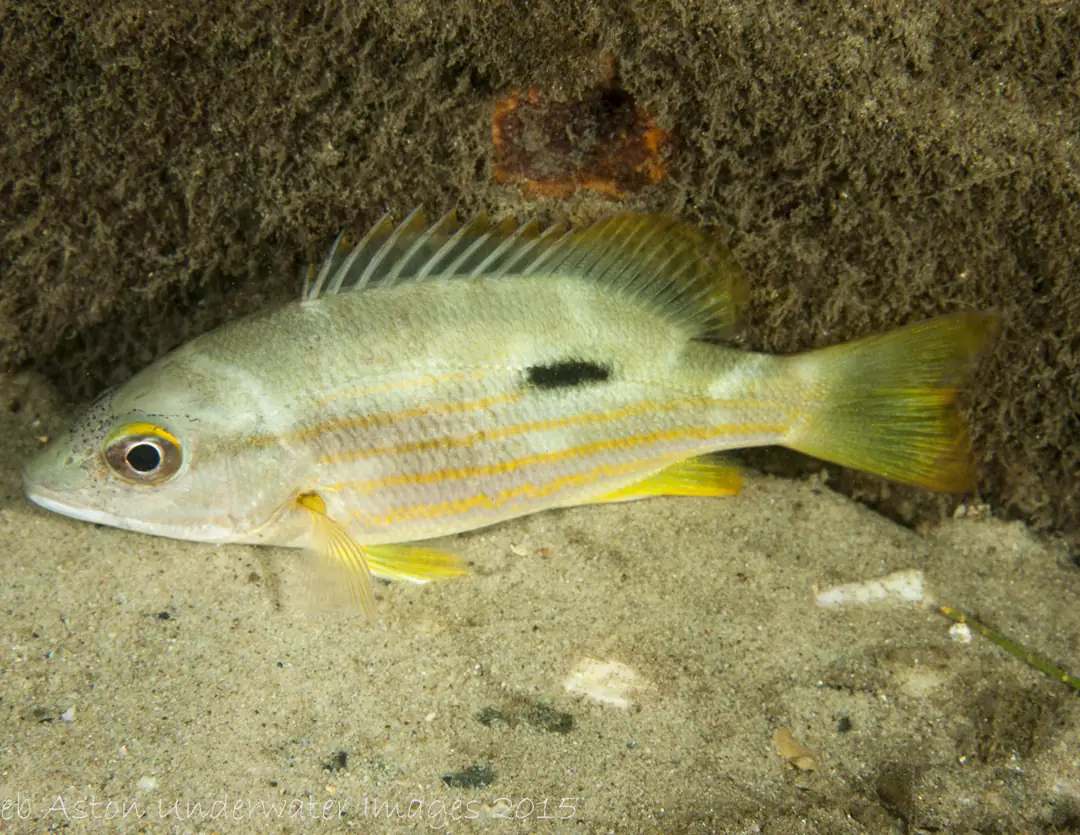 © Deb AstonAll rights reserved
  © Ewout KnoesterCC BY-SA 4.0 · iNaturalist
 Shark Point (Hin Musang)
Shark Point, also known as Hin Musang, is a renowned marine sanctuary famous for its three distinctive pinnacles located at 7°52'N, 98°31'E. These pinnacles rise from depths of 30-40 meters, peaking at 14 meters below the surface, and are spectacularly draped in soft corals, particularly the 2-meter Dendronephthya corals, which pulse in vibrant yellow-pink hues in currents ranging from 0.5-1.5 knots. It's a prime location for spotting its namesake, leopard sharks (Stegostoma tigrinum), which patrol the 20-meter plateaus in groups of 5-15 individuals.
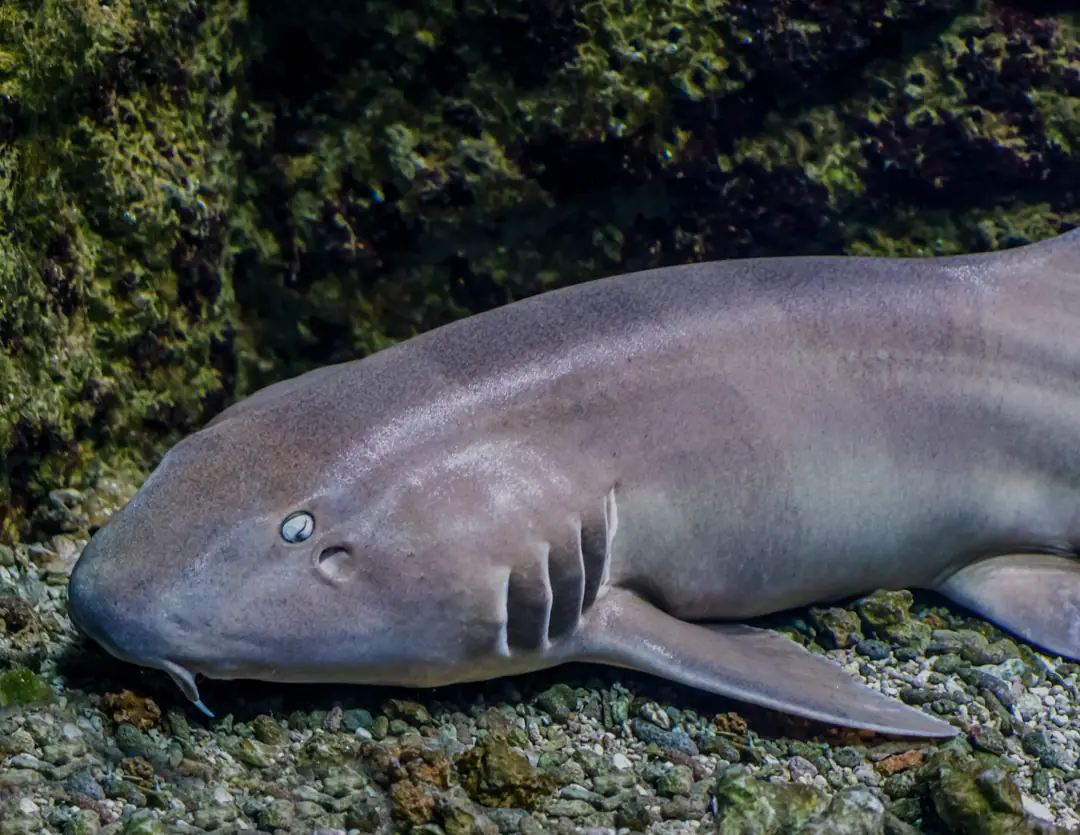
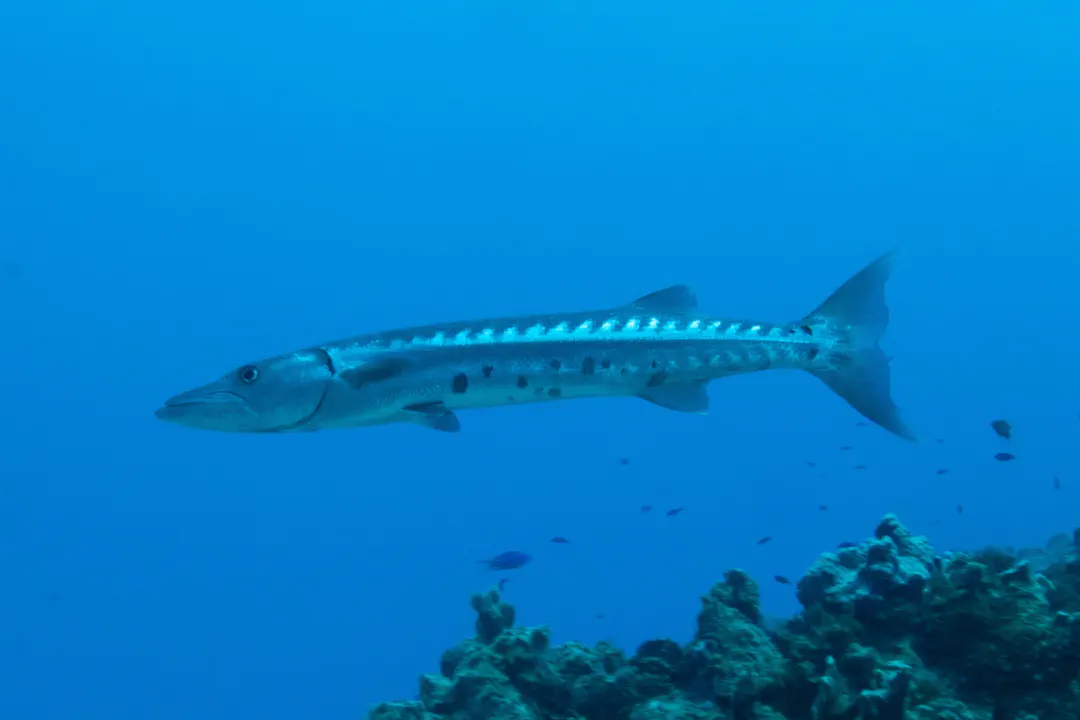
These graceful sharks are often joined by bamboo sharks (Chiloscyllium punctatum) at 25 meters, meticulously probing the rubble for crustaceans. One of the most impressive sights at Shark Point is the massive vortex of barracuda (Sphyraena barracuda), numbering 200-fish strong, that often circles cylindrically over the western pinnacle. Designated as a marine sanctuary since 1992, this 4-square-kilometer zone strictly prohibits fishing and anchoring, a measure that has successfully preserved an impressive 80% coral cover, significantly higher than the 50% found at nearby fished reefs.
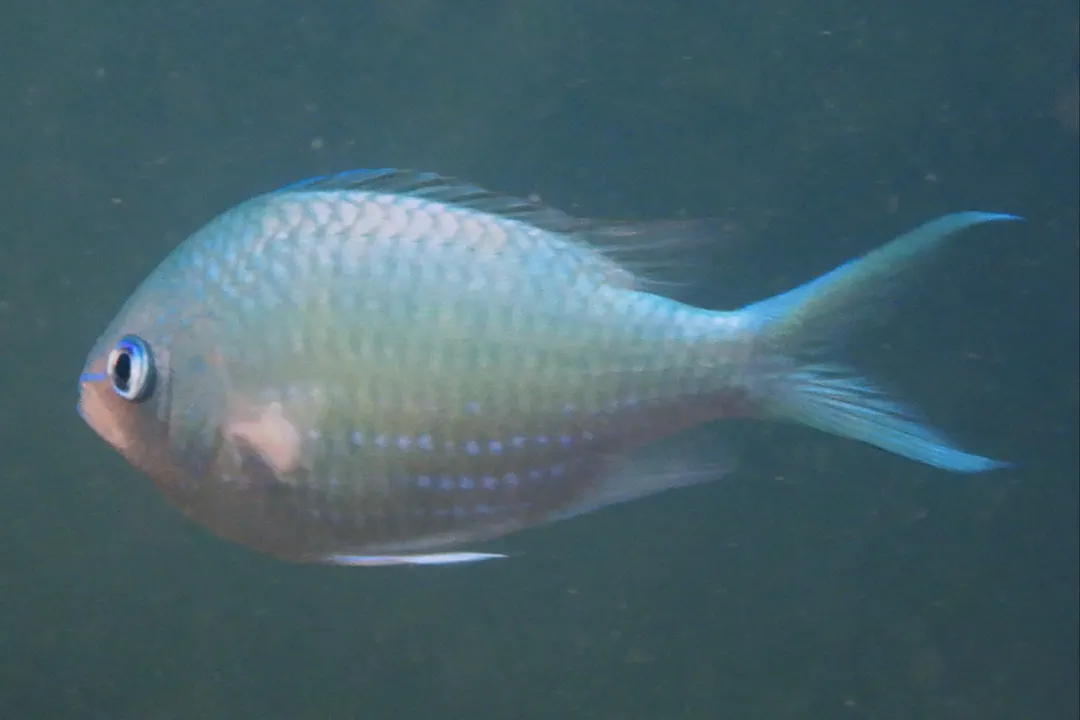
Divers typically hook in at 18 meters, then ascend to the plateau rims for macro hunts, observing clouds of blue-green chromis (Chromis viridis) numbering in the thousands. Post-monsoon dives in November are particularly rewarding, yielding up to 30-meter visibility and often doubling the sightings of various ray species. Practical considerations for diving here include a maximum of 12 divers per boat and adhering to a 3-minute safety stop, often hugging the protection of gorgonians at 5 meters.
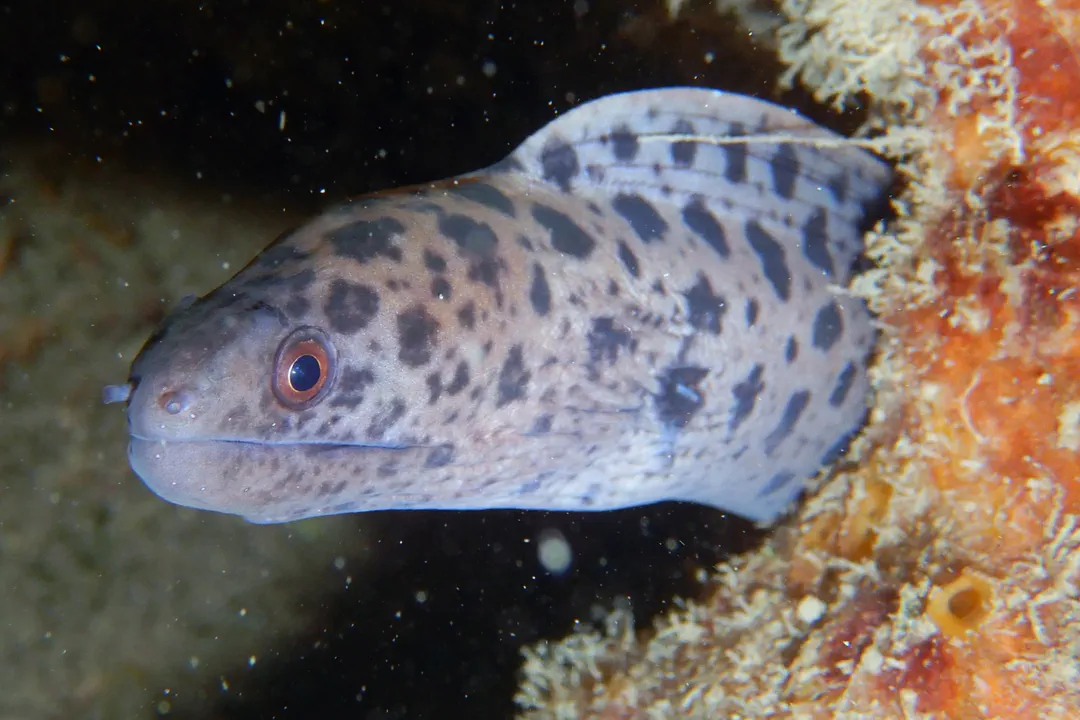
Historically, the 2004 tsunami shifted boulders, deepening some basins to 45 meters and exposing new lairs for moray eels.
 © seabook.appAll rights reserved
  © Dan SchofieldCC BY 4.0 · iNaturalist
  © Ian ShawAll rights reserved
  © Ian ShawAll rights reserved
  © Ewout KnoesterCC BY-SA 4.0 · iNaturalist
 King Cruiser Wreck
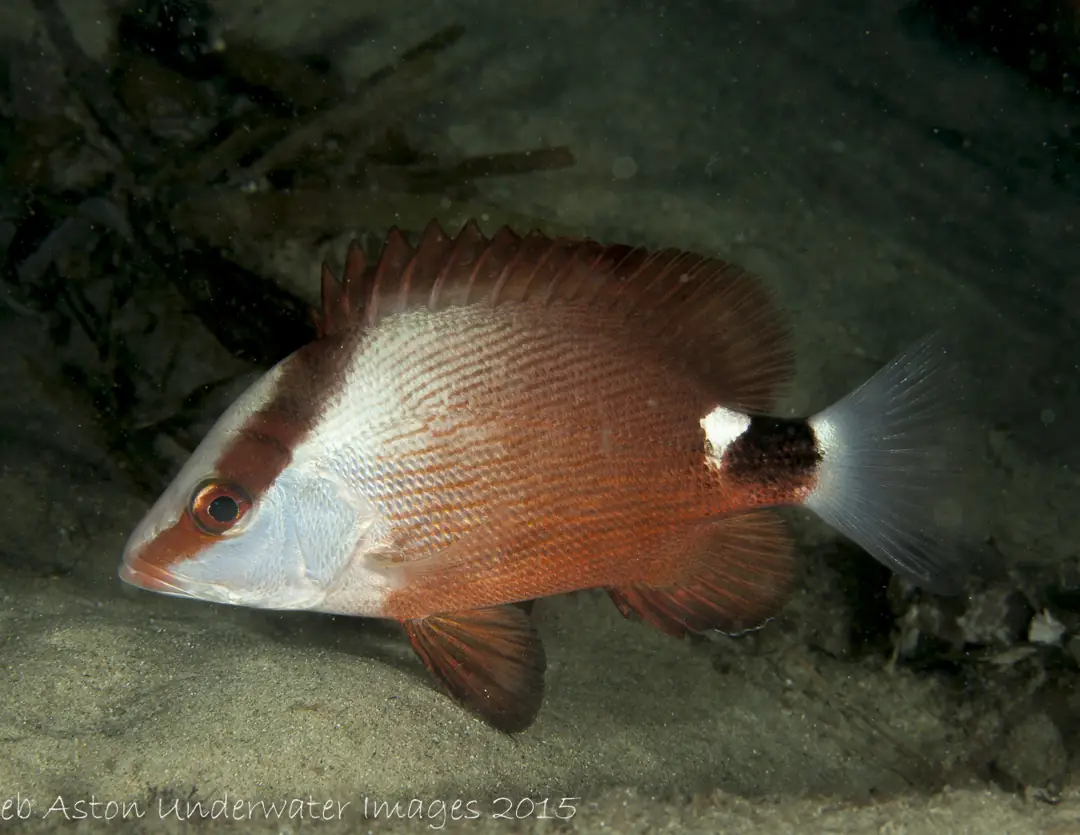
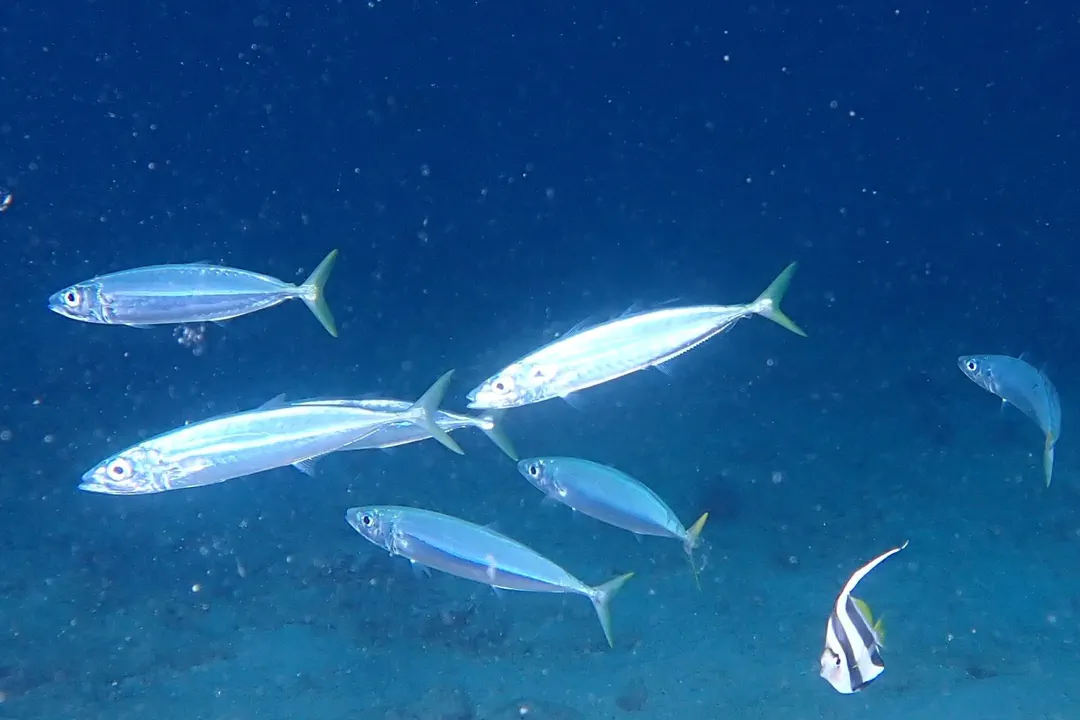
The King Cruiser, a passenger ferry that tragically sank stern-first in May 1997, now rests at 15°42'N, 98°46'E in 28-32 meter silts, transformed into a vibrant artificial reef. Its 85-meter hull has become a thriving habitat, hosting over 50 lobsters (Panulirus versicolor) within its engine holds. Large shoals of barracuda (Sphyraena barracuda), often numbering 100-300 individuals, encircle the bow at 18 meters, ambushing mackerel (Decapterus macarellus) amidst 15-25 meter visibility.
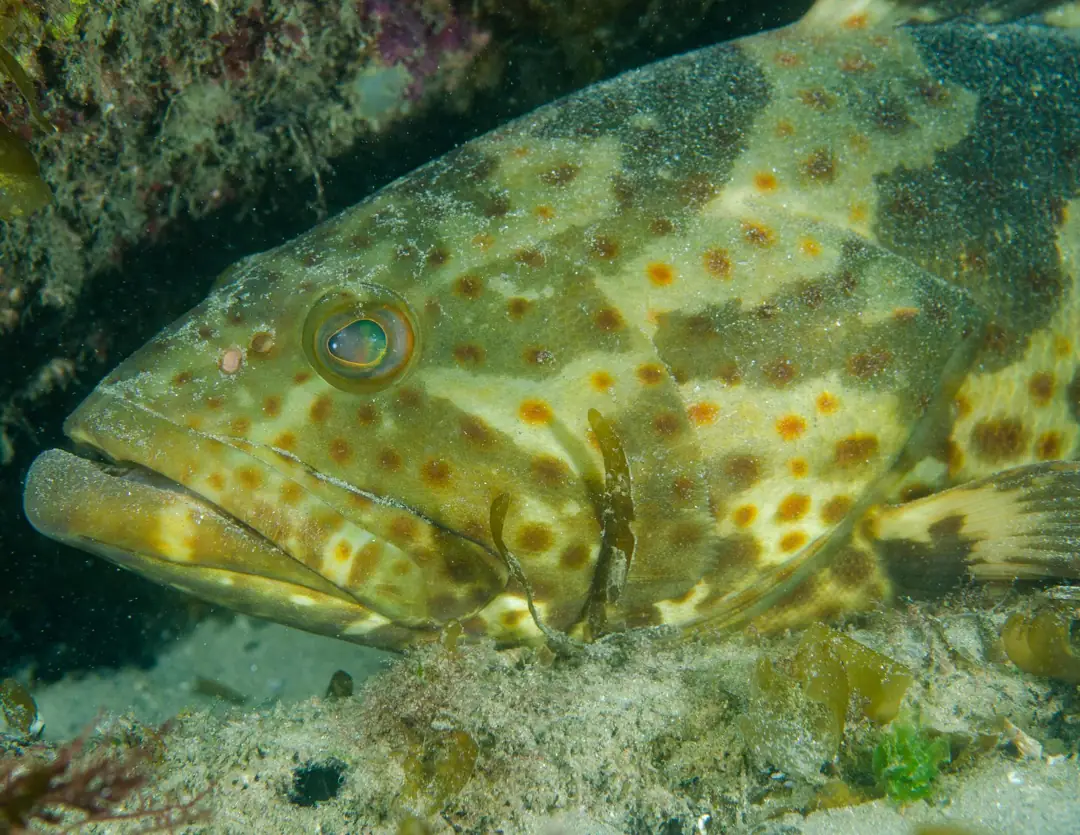
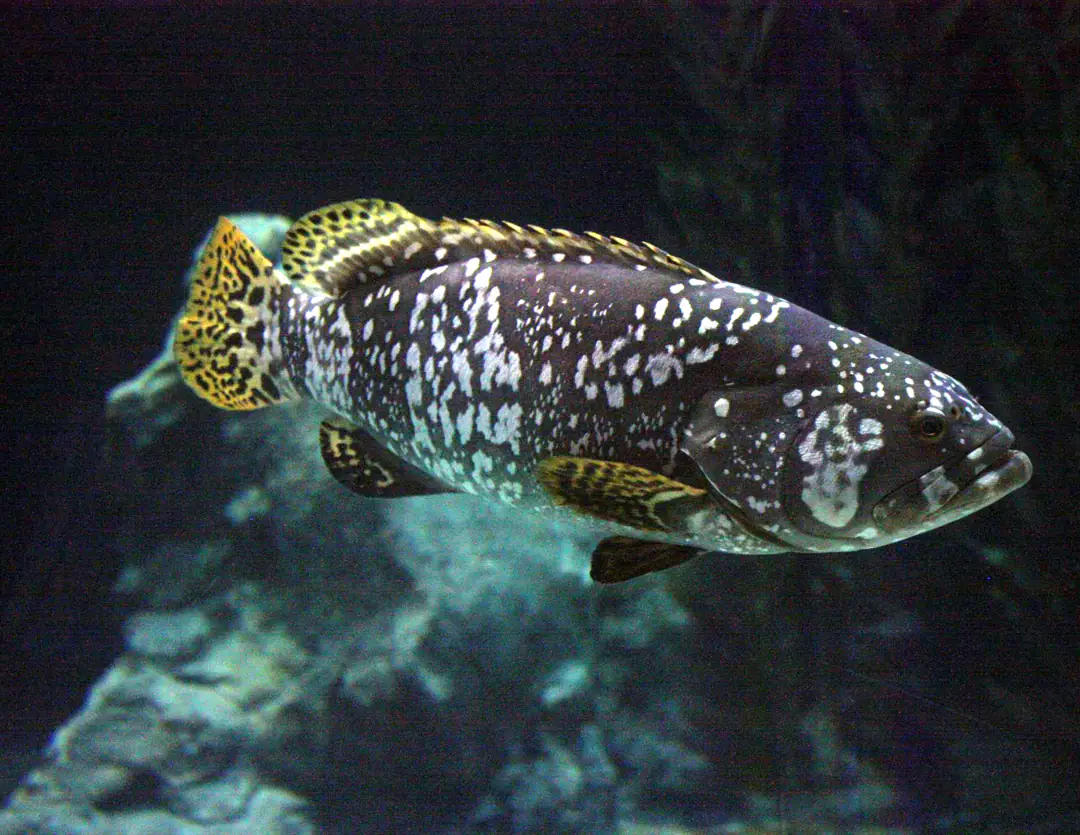
Giant groupers (Epinephelus lanceolatus), some reaching up to 2 meters in length, lurk in the dark voids of the wheelhouse, with spawning activity observed in March-April. This popular artificial reef attracts approximately 10,000 diver visits annually, a testament to its success in boosting fish densities five-fold compared to pre-sinking baselines. For advanced divers, penetration is possible through 5-meter-wide companionways, leading to the 30-meter keel where formidable giant moray eels (Gymnothorax javanicus), spanning up to 2 meters, can be found guarding their eggs.
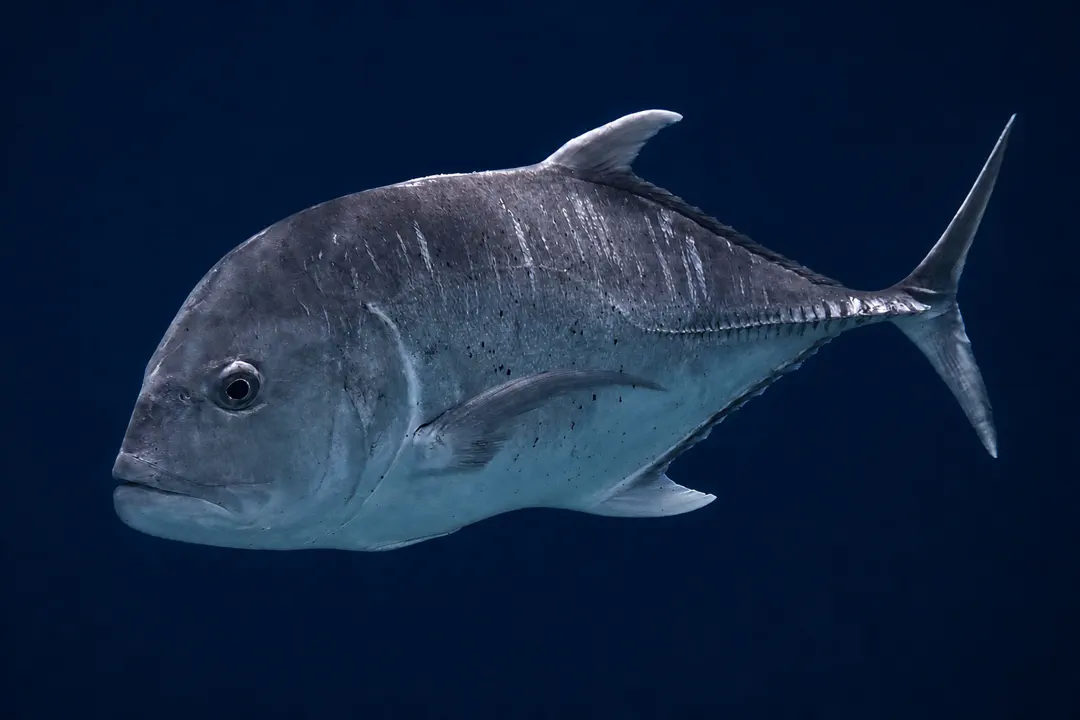
Currents at the King Cruiser can peak at 1.5 knots towards the northwest, making reef hooks a useful tool for maintaining position. Conservation monitors have noted that the hull is expected to experience about 60% corrosion by 2025, which will further open up the wreck and create new habitats. Schools of giant trevally (Caranx ignobilis) are observed to be thriving, often fattening on declining populations of invasive lionfish.
Practical diving tips include using single 12-liter tanks for typical 45-minute bottom times and carrying a torch to illuminate the 80% shadow coverage found inside the wreck's structure.
 © seabook.appAll rights reserved
  © HombreCC BY-SA 4.0
  © Deb AstonAll rights reserved
  © Robin WhiteCC BY 4.0 · iNaturalist
 Racha Islands (Racha Yai & Racha Noi)
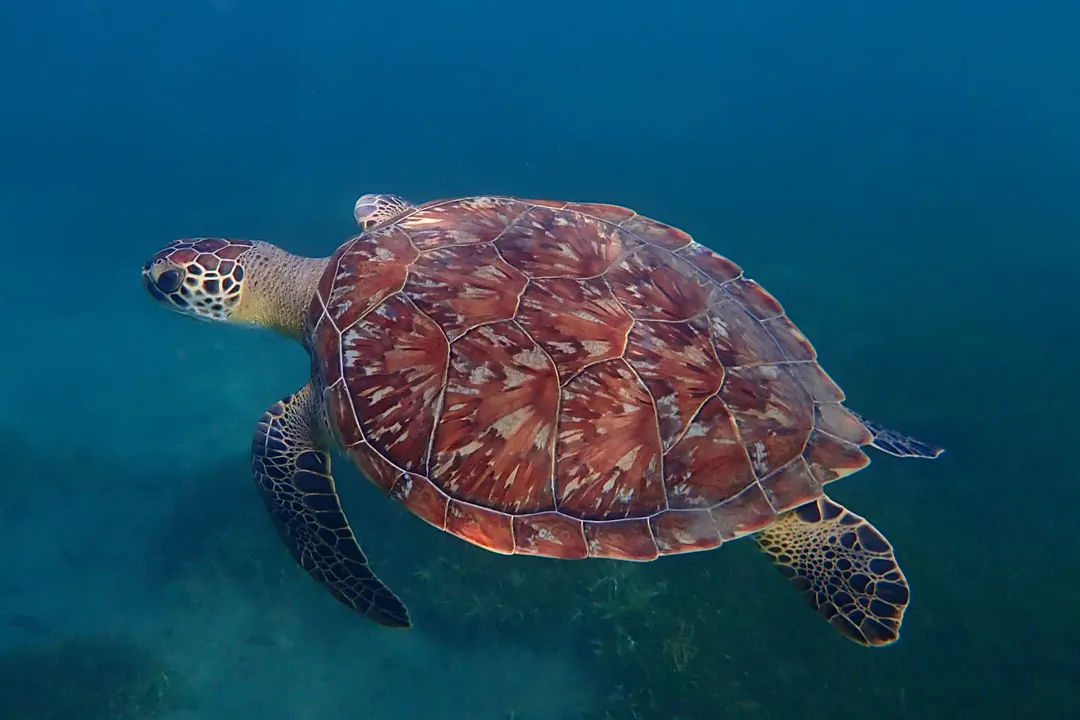
The Racha Islands, comprising Racha Yai and Racha Noi, offer distinct diving experiences south of Phuket. Racha Yai, located 12 kilometers south at 7°36'N, 98°21'E, is characterized by gentle slopes that extend from 5-meter reefs down to 40-meter sandy bottoms, boasting an impressive 90% hard coral cover, particularly of table Acropora. This island is perfect for beginners, who can enjoy drifting along 100-meter transects at depths of 8-18 meters, often encountering green sea turtles (Chelonia mydas) gracefully grazing at 12 meters, all within crystal-clear 30-meter visibility.
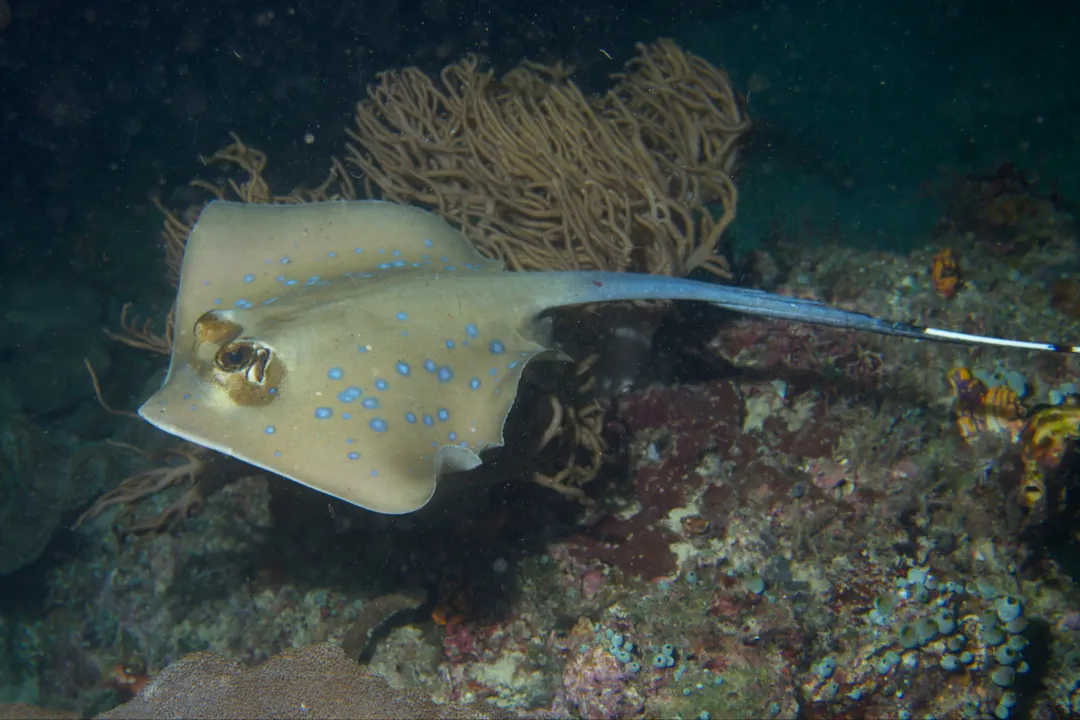
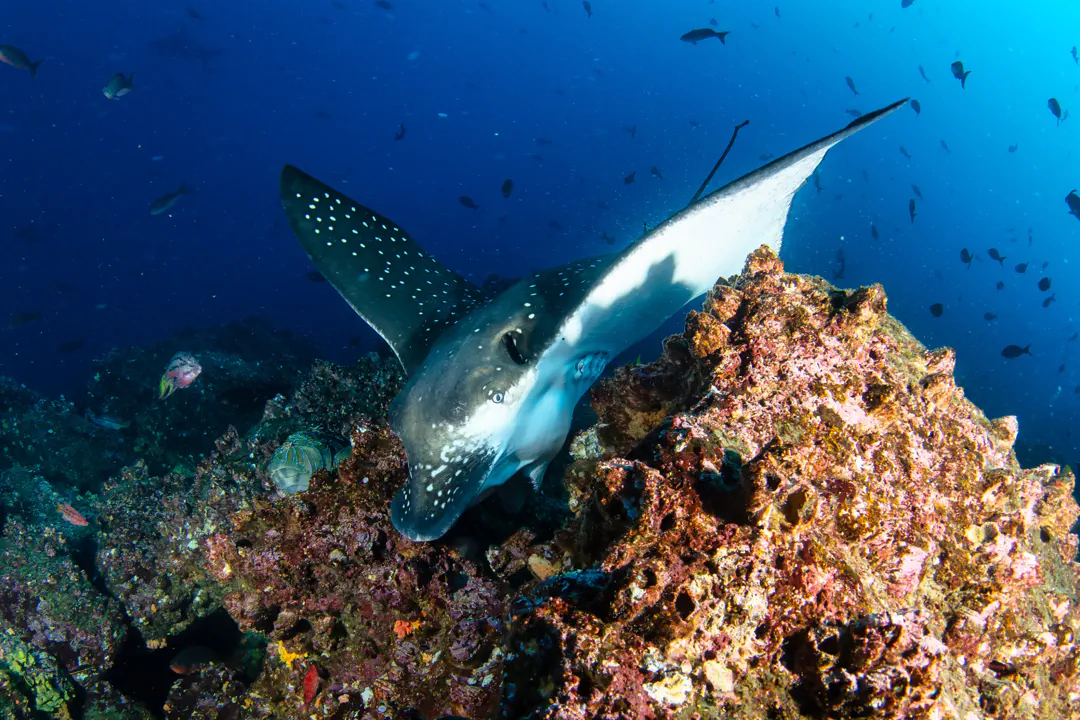
Further offshore, Racha Noi plunges to depths of 55 meters, offering more challenging dives and the exciting possibility of pelagic encounters. This island is known for its manta ray cleaning stations, which are particularly active from May to July. White sandy bays, such as Siam Bay, experience gentle 1-2 knot drifts over vibrant fan corals, drawing in majestic eagle rays (Aetobatus narinari) with wingspans of up to 3 meters.
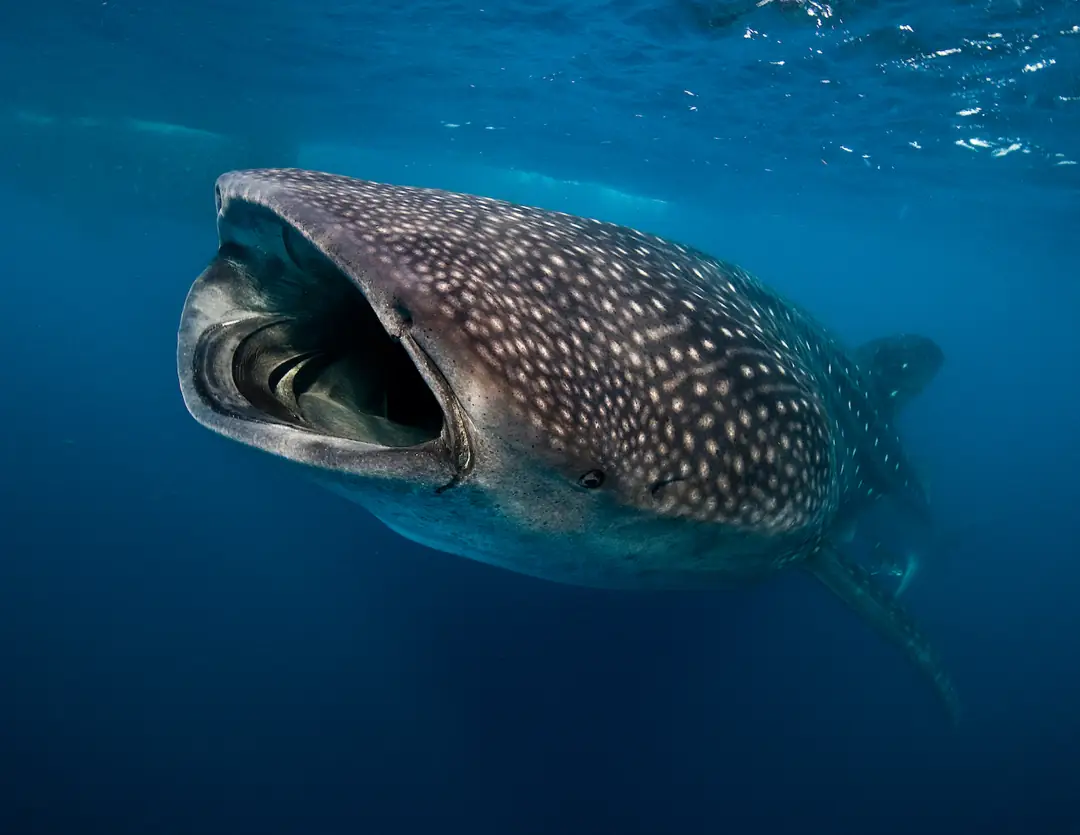
While seasonal visibility can drop to 10 meters in August, this period also sees transient whale shark (Rhincodon typus) sightings peak in September, with individuals averaging 8 meters in length. Historically, the Racha Islands faced challenges such as coral bleaching in 2016, which slashed 30% of their coral cover. However, dedicated conservation efforts, including 2020 transplant initiatives, have led to significant rebounds.
For divers exploring Racha Noi's deeper walls, steel tanks are often recommended. Surface intervals can be comfortably spent on Racha Yai's pristine beaches, enjoying air temperatures of 28°C. Adhering to no-touch policies is crucial to preserve the vital 70% live coral metrics that make these islands so special.
 © seabook.appAll rights reserved
  © seabook.appAll rights reserved
 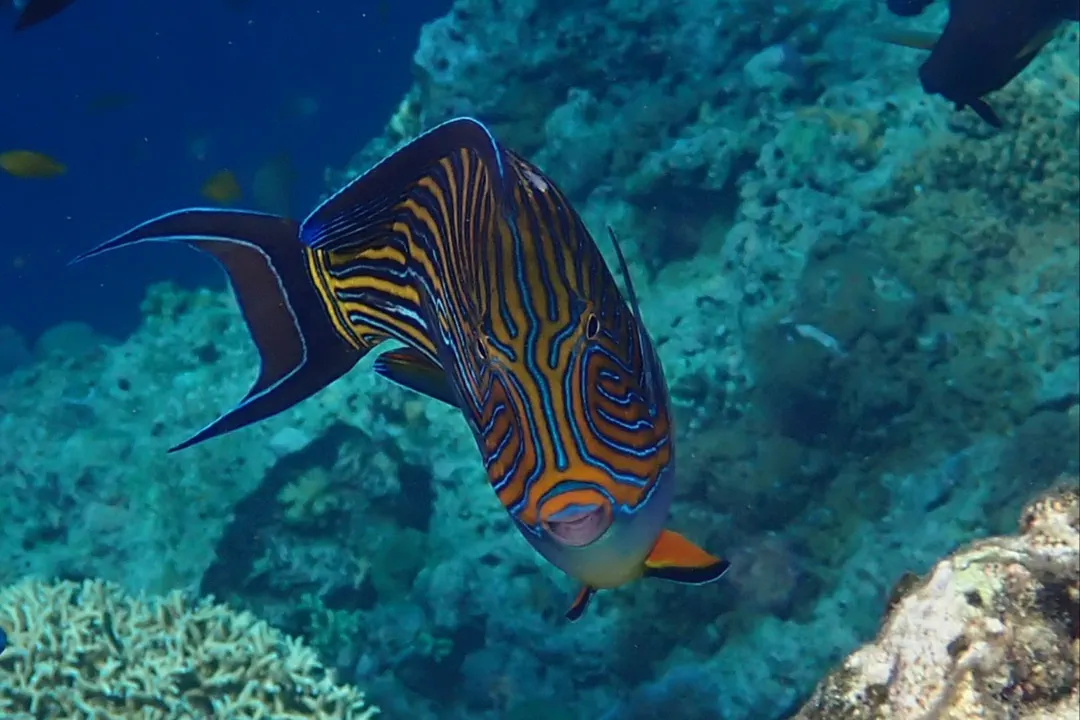 © Petr KnotekCC BY 4.0 · iNaturalist
 Practical Diving Tips for Phuket
When planning your diving adventure in Phuket, selecting a reputable dive operator is paramount. Opt for companies with over 15 years of operation, PADI 5-star ratings, and comprehensive boat insurance that covers dives to depths of 30 meters. For equipment, renting balanced regulators with octopus secondaries is recommended, alongside 7mm wetsuits for comfortable diving in 29°C water, which can help conserve up to 20% of your air supply.
Safety is a non-negotiable aspect, mandating buddy checks at 50 bar, strict adherence to 3-minute safety stops, and ensuring DAN (Divers Alert Network) oxygen kits are onboard all vessels. Respecting the delicate marine ecosystem is a core responsibility for every diver. This includes foregoing gloves to prevent accidental contact, maintaining neutral buoyancy to fin gracefully mid-water at least 40cm above the substrate, and actively participating in reef cleanups, which collectively remove an average of 500kg of plastics annually.
Historical insights from 1980s diving pioneers stress tide tables: slack low tides minimize 2-knot rips at pinnacles. Phuket's extensive network of 200 dive centers collectively logs an impressive 300,000 dives each year. To make the most of your trip, consider booking multi-day dive packages, which can often reduce costs to as little as 2,500 THB per immersion, offering excellent value for exploring the Andaman Sea's underwater wonders.
Marine Conservation Efforts
Phuket's commitment to marine conservation is evident through various ongoing initiatives aimed at protecting its precious ecosystems. Since 2015, sanctuaries in the region have successfully deployed over 100 artificial reef modules, leading to the restoration of 2 hectares at sites like Anemone Reef, with an impressive 70% survival rate for the new corals. Tourism management plays a crucial role, with boat limits restricting access to 4 vessels daily at Shark Point, a measure that has effectively reduced anchor scars by 50%.
Divers actively contribute to these efforts through a 20 THB green fee, which directly supports 50 rangers patrolling over 100 square kilometers of marine protected areas. Citizen science initiatives are also thriving, with volunteers logging over 10,000 iNaturalist entries annually. This data is vital for tracking and managing marine populations, including monitoring lionfish invasions, which have seen a 40% decline post-hunts.
Coral nurseries at Racha Yai are propagating over 5,000 coral fragments annually, with outplanted staghorn corals showing healthy growth rates of 8cm per year. Historical responses to events like the 1998 El Niño, which caused 25% coral bleaching, have led to innovative recovery strategies involving shading and probiotic treatments. Educational programs are a cornerstone of these efforts, mandating no-feed policies to reduce shark habituation by 80%.
Liveaboard operators rigorously enforce touchless dive practices, which are essential for preserving microfauna densities at a remarkable 1,000 per square meter. These combined efforts underscore Phuket's dedication to ensuring its vibrant underwater world remains a thriving sanctuary for generations of marine life and divers to come.
Questions
What is the best time of year to dive in Phuket?
November to April dry season delivers 20-40 meter visibility, seas under 1 meter, and 24-32°C air, with December-February peak calm minimizing cancellations to 5%. Wet May-October suits advanced divers chasing plankton-driven pelagics despite 5-20 meter viz and 2-4 meter swells. Operators log 80% of 300,000 yearly dives in dry months.
Are there dive sites suitable for beginners in Phuket?
Racha Yai's 5-18 meter slopes with 90% coral cover and 0.5-knot currents host novices amid turtles and rays. Centers offer Discover Scuba at 12 meters max, PADI Open Water courses starting in 2-meter pools. 40% of Phuket's 200 operators certify 10,000 beginners annually.
What kind of marine life can I expect to see?
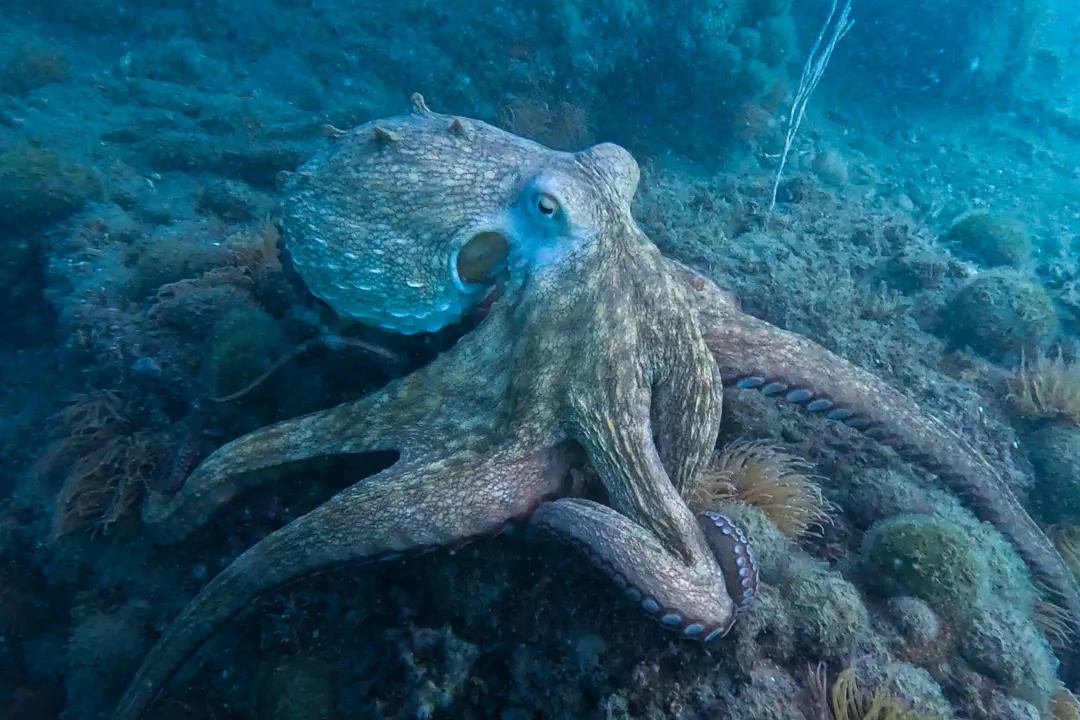
Leopard sharks rest in 20-meter sands, barracuda form 200-fish schools, turtles graze reefs, morays guard 2-meter lairs, octopus shift colors mid-hunt, alongside 50+ reef fish per dive. Sites average 15kg fish biomass per 100 square meters. Seasonally, mantas aggregate May-July.
Do I need to bring my own dive gear?
Operators rent full sets including 12L aluminum tanks and 3mm wetsuits for 500 THB daily, with 95% reliability. Bring personal mask, booties, and computer for fit, saving 20% air via familiar seals. 70% of 300,000 divers opt rentals vetted by PADI standards.
Is it possible to see whale sharks or manta rays near Phuket?
Whale sharks transit Racha Noi September at 8-12 meters, with 10-20 seasonal sightings; mantas clean at 25-35 meter stations May-July in groups of 3-5. Liveaboards from Phuket reach Similans for 50% higher odds over 3-day trips. Sightings hit 80% at Richelieu Rock pinnacles.