 © Lisa_JamesCC BY 4.0 · iNaturalist
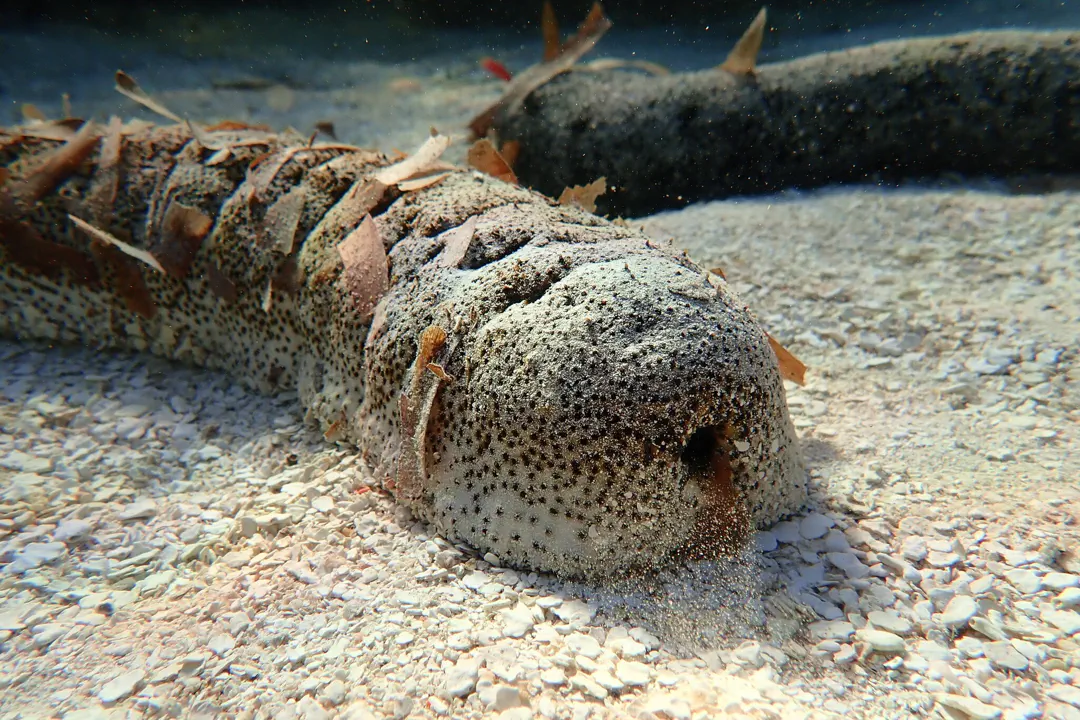
Elephant Trunkfish
Holothuria fuscopunctata
 © Julien BidetCC BY-SA 4.0
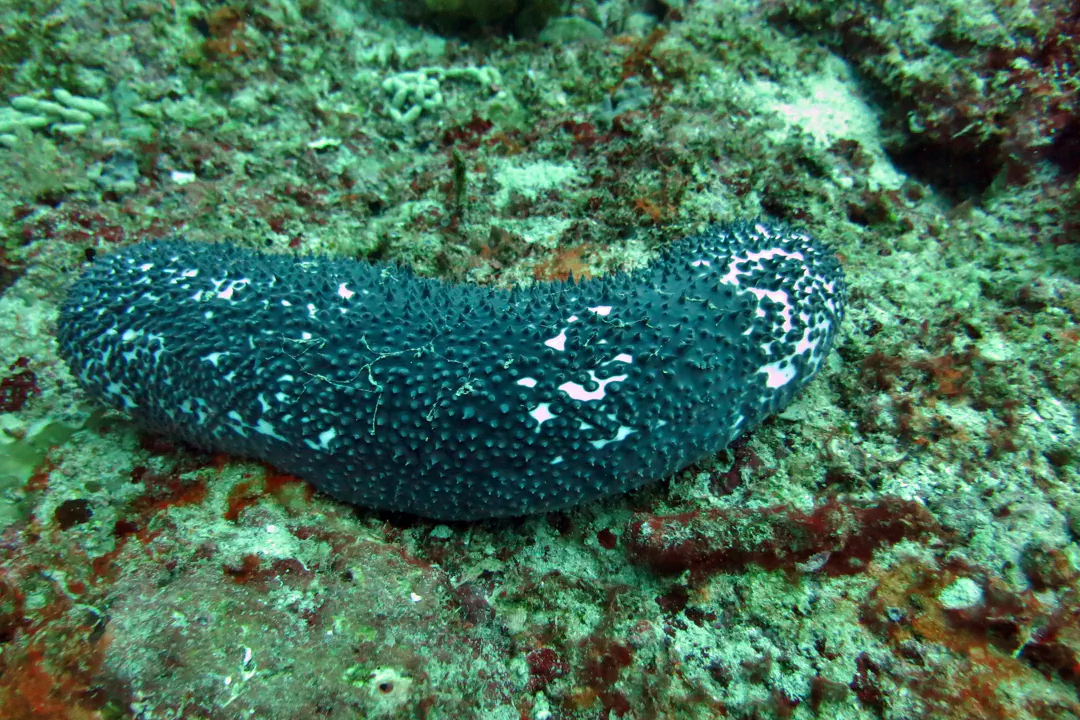
Actinopyga caerulea
Actinopyga caerulea is a sea cucumber from the Holothuriidae family.
Very large species; living specimens up to 400 mm long and 140 mm wide mid-body; preserved specimens from 225 to 280 mm long and from 85 to 110 mm wide mid-body. Body loaf-shaped with slight ventral flattening (more or less cylindrical with some distal tapering). Colour in life bluish with patches of white devoid of tube feet at anterior and posterior ends and, discontinuously, along sides (Plate 1). Colour in type material in alcohol largely preserved, but faded to dull brown in specimen from Papua New Guinea. White patches remain clearly visible on all specimens. Body wall smooth, up to 14 mm thick. Mouth ventral, surrounded by 15–18 large, peltate, uniformly bluish-grey tentacles, in turn surrounded by a stout collar of bluish papillae, fused at their base. Anus terminal, guarded by five prominent, calcareous, teeth, each bearing numerous tubercles. Ventral tube feet stout, distributed unevenly, albeit somewhat concentrated in ambulacral areas. Dorsal “papillae” large, conical at base, near cylindrical at top; bluish at base, slightly lighter at top; scattered over ambulacral and interambulacral areas, though absent in white zones. Cuvierian organ absent. Single, club-shaped Polian vesicle, about one seventh of length of preserved animals. Stone canal and associated madreporite not observed in all the specimens studied. Gonad observed only in the specimen from Papua New Guinea. Calcareous ring huge, radial pieces about twice as large as interradial pieces (Figure 1A). Details of surface of calcareous ring obscured by thick layer of tissue.
This species is characteristic of somewhat deeper tropical waters; it has been observed from 12 to 45 m. The species is predominantly a detritus/deposit feeder on coral patches on the outer slope of coral reefs; it forages actively during the day.
© Lisa_JamesCC BY 4.0 · iNaturalist  © Stas KuryanAll rights reserved
  © Debra BakerCC BY 4.0 · iNaturalist
 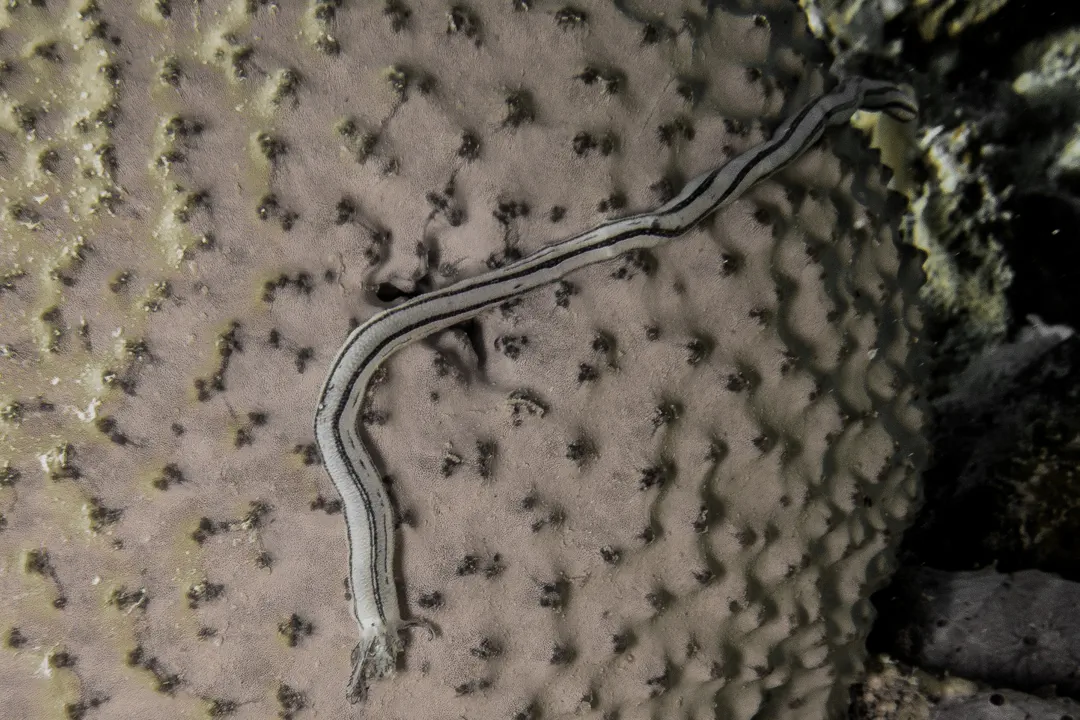 © João D'AndrettaCC BY 4.0 · iNaturalist
 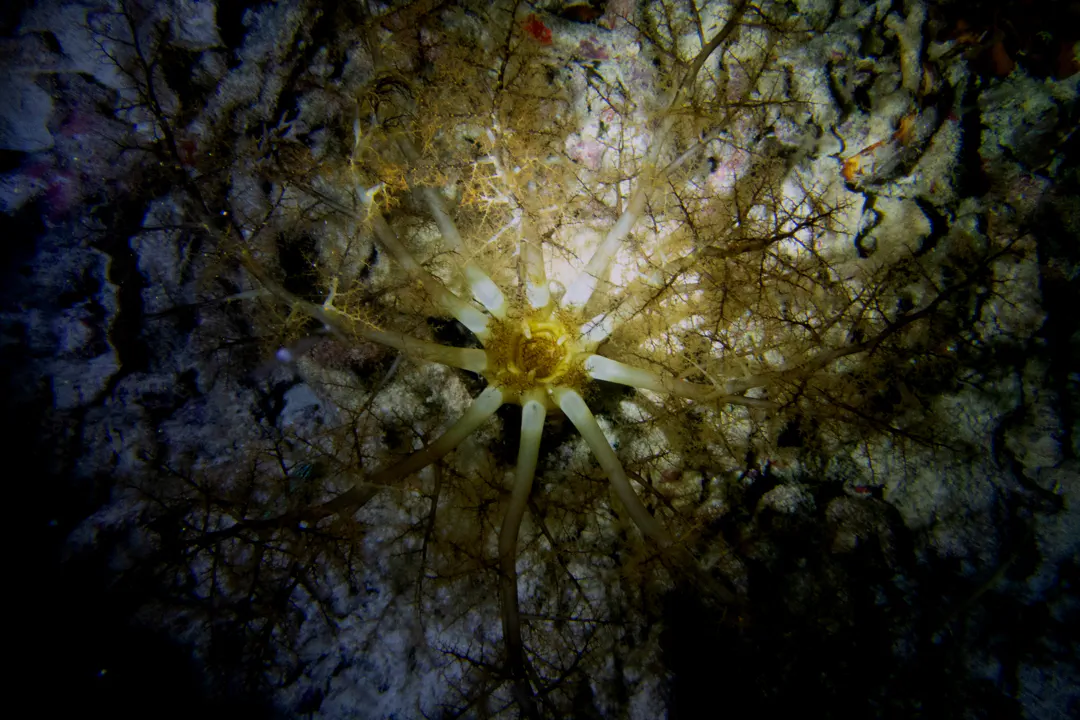 Justin PhilboisCC0 · iNaturalist
 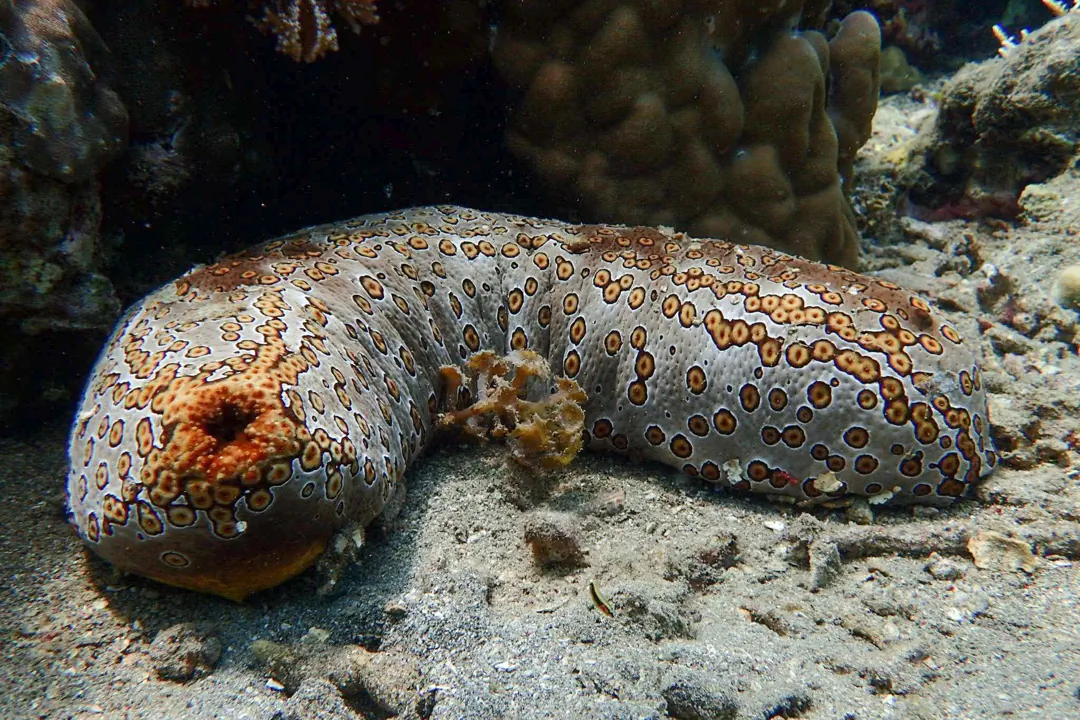 © Dan SchofieldCC BY 4.0 · iNaturalist
 Blue Sea Cucumber has no known danger to humans. However, always observe marine life responsibly.
Download Seabook free for iOS and Android.