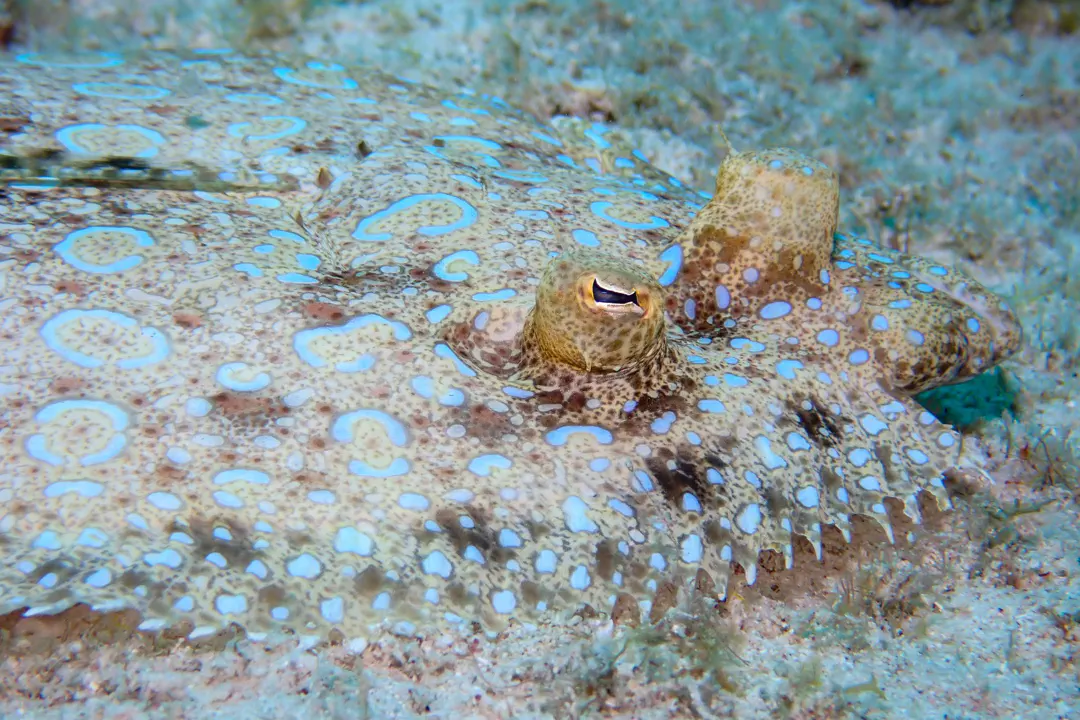
 © Dan SchofieldCC BY 4.0 · iNaturalist
Atlantic Peacock Flounder
Bothus lunatus
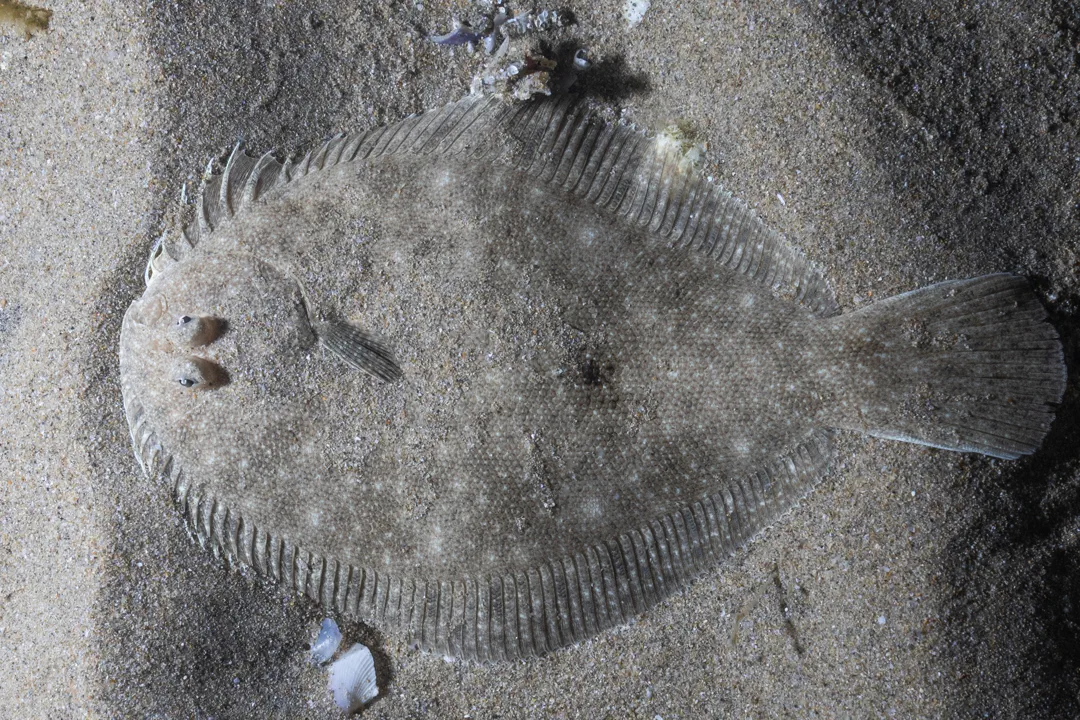 © Lawrence HyltonCC BY 4.0 · iNaturalist
Ammotretis rostratus
Ammotretis rostratus, commonly known as the longsnout flounder, belongs to the family Rhombosoleidae and is found in temperate southern Australia, including coastal waters, bays, and estuaries from southwestern Australia to New South Wales, with records also from Tasmania.
The longsnout flounder was first described by Albert Günther in 1862, with the accepted author citation remaining Günther, 1862. The original name of the species is Ammotretis rostratus Günther, 1862. The type locality is Norfolk Bay, Tasmania, although the original publication reportedly listed Norfolk Island in error. The genus name Ammotretis is derived from the Greek word 'ammos', meaning 'sand', and 'tretos', meaning 'full of holes'. The species name rostratus comes from the Latin word 'rostratus', meaning 'beaked', which refers to the fleshy hook-like snout of the species. The longsnout flounder has undergone several reclassifications, including synonyms such as Ammotretis adspersus, Ammotretis macleayi, Ammotretis zonatus, Peltorhamphus bassensis, Rhombosolea bassensis, and Solea uncinata. Currently, it is placed in the genus Ammotretis within the flatfish family Rhombosoleidae according to FishBase, while Australian resources also categorize it within the broader flatfish classification for regional fauna lists.
The longsnout flounder has a deep, compressed body that is rounded to oval in shape. It is a right-eyed flounder, with both eyes located on the right side of its body. The species features a distinctive hook-like snout that projects downward in front of the mouth. Underwater, the longsnout flounder typically appears sandy to pale brown or light brown to grey, with variable darker speckling on the eyed side. The blind side of the longsnout flounder is whitish in color. Key field marks include an upper/eyed side that is sandy, beige, light brown, or grey, often speckled with darker spots. The dorsal fin of the longsnout flounder starts at the tip of the hooked snout. The pectoral fin on the blind side is often described as whitish, and in larger individuals, it may appear mostly black. The longsnout flounder can be distinguished from Ammotretis lituratus by its lack of orangey-reddish spots and generally larger size. Unlike Ammotretis elongatus, the longsnout flounder has a more deep-bodied shape and lacks tiny black spots covering the head, body, and fins. The most useful combination for underwater identification includes a deep oval body, right-sided eyes, a short hook-like snout, and a sandy/brown background with darker speckling.
The longsnout flounder is a demersal, benthic flatfish that inhabits sandy and shelly soft-bottom habitats in bays, estuaries, and nearby coastal/offshore waters. It is not described as a reef-associated species and is found in the littoral to sublittoral/neritic marine-brackish environment. The substrate it occupies includes sand, fine sand, and broken shelly/sandy soft bottoms. The recorded depth range for the longsnout flounder is between 1 and 80 meters. This species is endemic to temperate southern Australia, with a distribution from southwestern Australia through South Australia, Victoria, Tasmania, to New South Wales.
Juveniles of the longsnout flounder are known to be daytime feeders. The species is reported to spawn in fresh/estuary environments from October to January. There is no reliable species-specific information regarding whether the longsnout flounder is solitary, paired, or social. No direct evidence about how the longsnout flounder reacts to divers is available in the provided sources.
The longsnout flounder is a carnivorous bottom-dwelling predator that mainly eats small animals, especially small invertebrates. Reported prey of the longsnout flounder includes worms, prawns, amphipods, polychaetes, crustaceans, bivalves, squids, and small bony fishes. It feeds on or near the seafloor as a hunting macrofauna predator, indicating an ambush/foraging style typical of flatfish living on soft bottoms. The longsnout flounder forages on the bottom rather than feeding in open water.
The longsnout flounder is used in commercial fisheries, but it is usually taken in relatively small quantities and is not considered a major target species. The flesh of the longsnout flounder is described as very high quality, and it is considered a popular eating fish with firm white flesh in Tasmania. Individuals of the longsnout flounder are often too small to make preparation worthwhile. The species is listed as harmless to humans. The IUCN Red List status of the longsnout flounder is Data Deficient (DD), assessed on 9 December 2020. The longsnout flounder is commercially harvested in southern Australia, with small commercial catches and some recreational or spear fishing, especially in Tasmania.
© Dan SchofieldCC BY 4.0 · iNaturalist 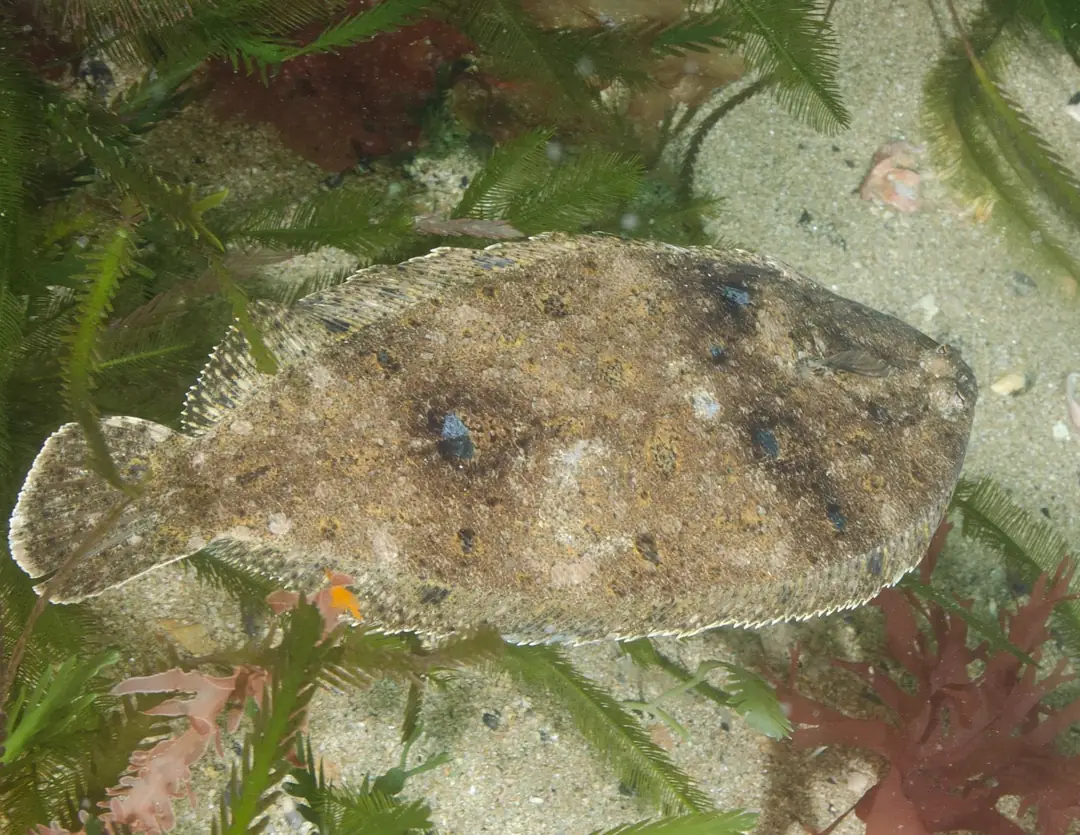 © Ian ShawAll rights reserved
 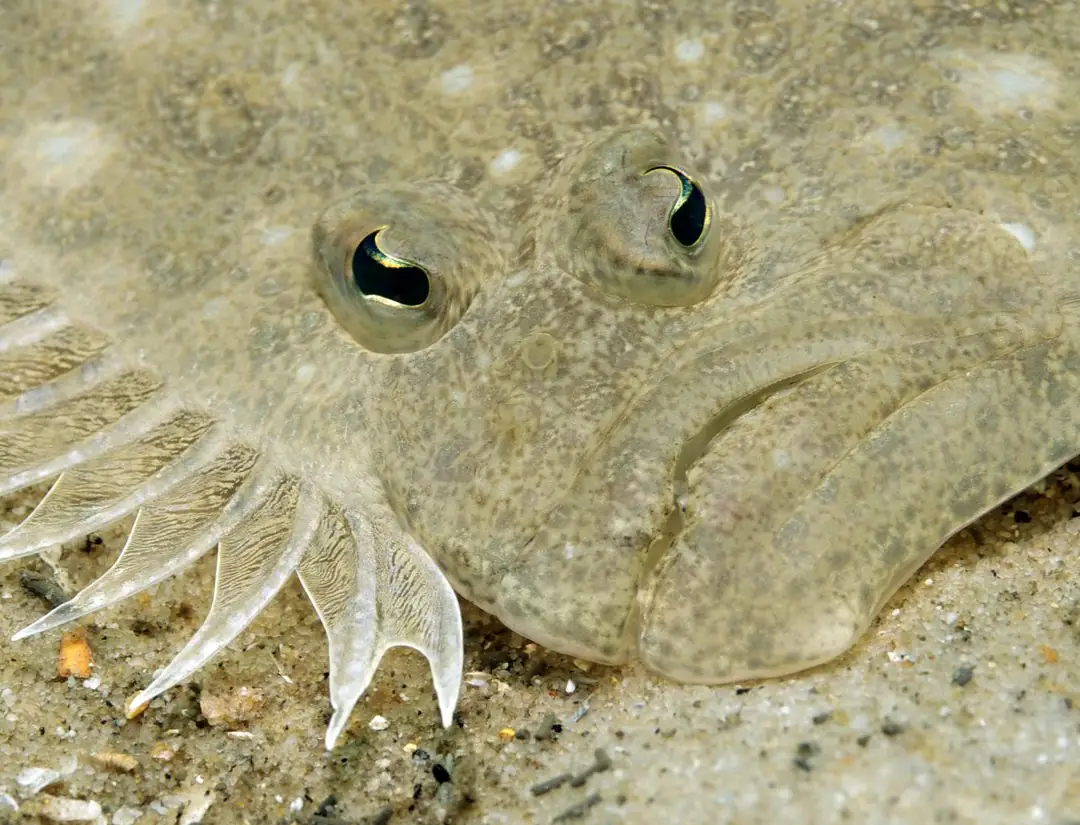 © Richard VeversAll rights reserved
 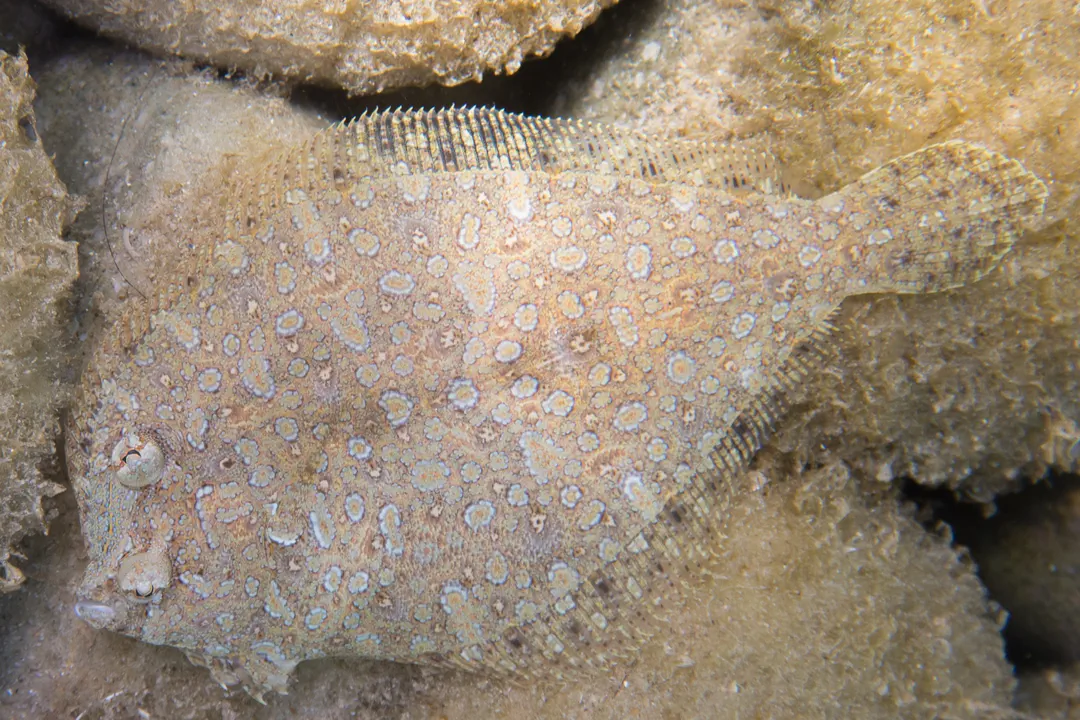 © BartCC BY 4.0 · iNaturalist
 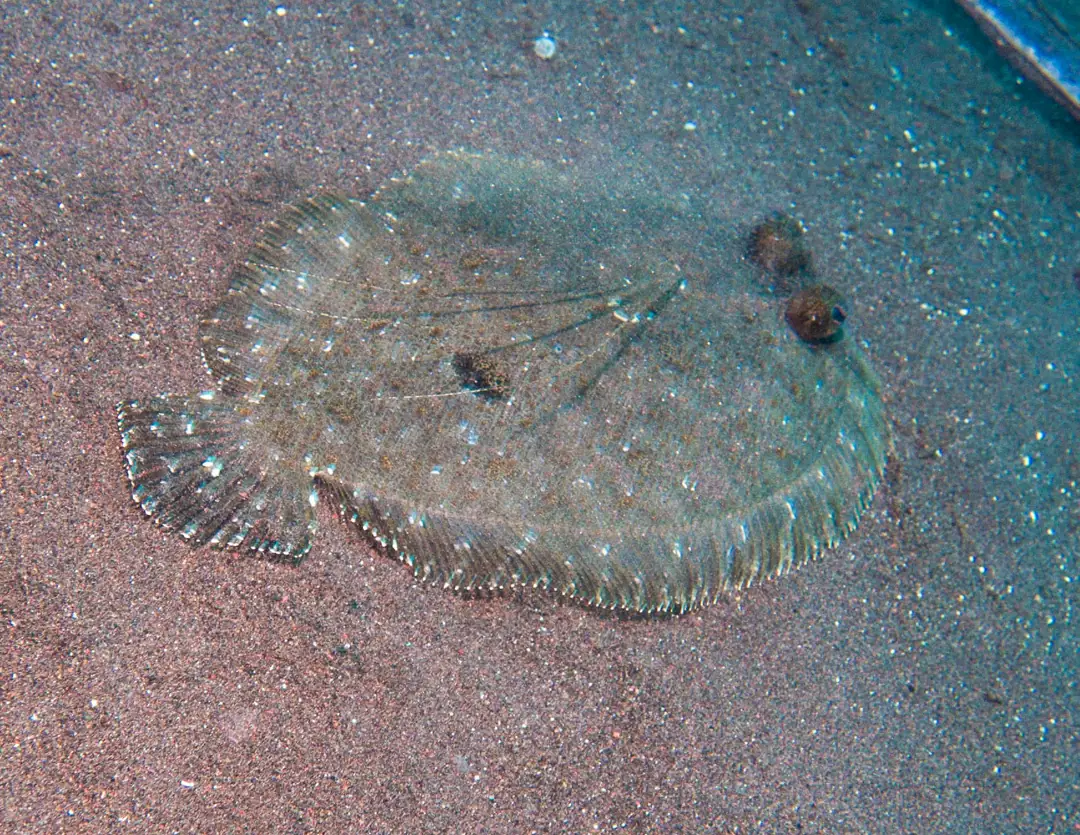 © Lesley ClementsAll rights reserved
 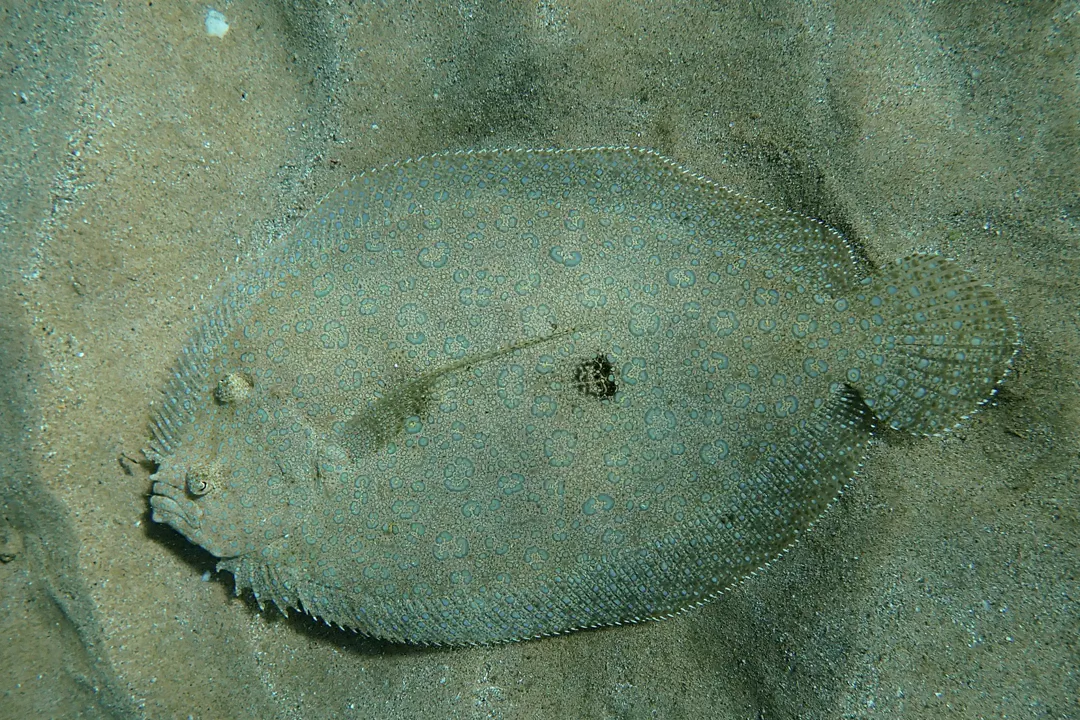 Kyle NessenCC0 · iNaturalist
 Longsnout Flounder has no known danger to humans. However, always observe marine life responsibly.
Longsnout Flounder can be found at depths of up to 80 meters.
Download Seabook free for iOS and Android.