 © Jan Ebr & Ivana EbrováCC BY 4.0 · iNaturalist
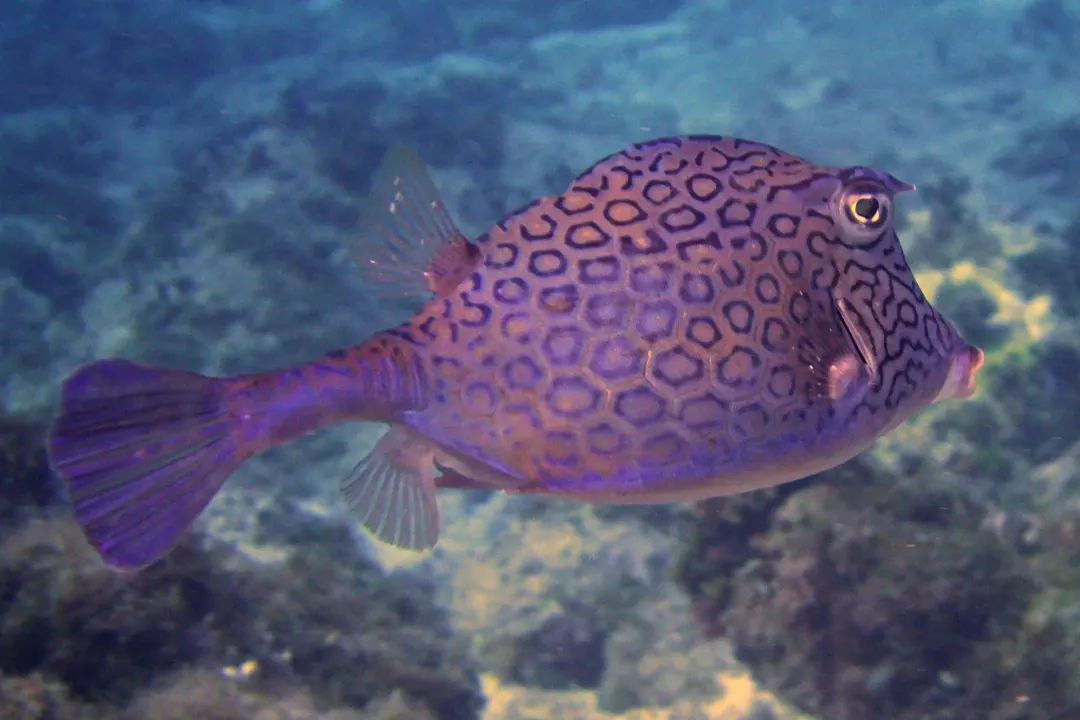
Honeycomb Cowfish
Acanthostracion polygonius
Ostracion cubicus
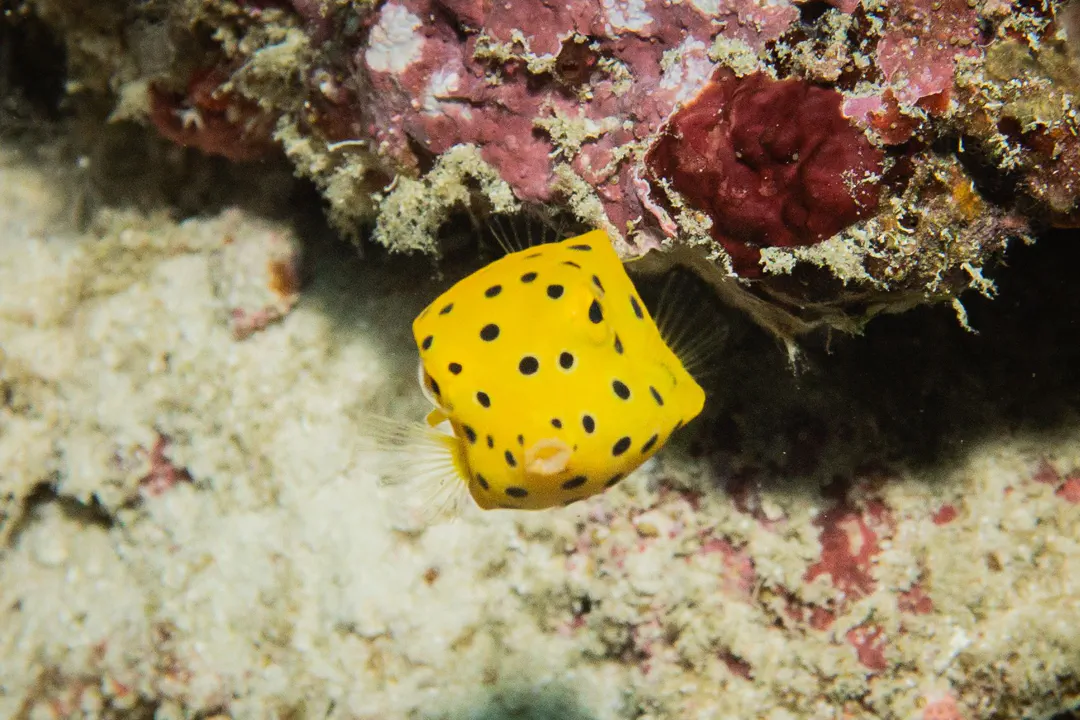
Ostracion cubicus is a species of boxfish. It can be found in reefs throughout the Pacific Ocean and Indian Ocean as well as the south eastern Atlantic Ocean. It reaches a maximum length of 45 centimetres.
As the name suggests, it is box-shaped. When juvenile, it is bright yellow in color. As it ages, the brightness fades and very old specimens will have blue-grey coloration with faded yellow. As the fish grows, the spots become smaller and brownish, sometimes even changing to white spots with a black margin. When stressed or injured it releases poisonous proteins from its skin that may prove lethal to any fish in the surrounding waters. The bright yellow color and black spots are a form of warning coloration (Aposematism) to any potential predators.
Closely related to Ostracion immaculatus from southern Japan.
Indo-Pacific: Persian Gulf, Red Sea and East Africa to the Hawaiian and Tuamoto islands, north to Ryukyu Islands, south to Lord Howe Island. Southeast Atlantic: south coast of South Africa.
It feeds mainly on algae, but will also feed on sponges, worms, crustaceans, mollusks and small fish. They are solitary animals. Breeding occurs during the spring, in small groups that consist of 1 male and 2 - 4 females. Inhabit lagoon and semi-sheltered seaward reefs. Juveniles are often among Acropora corals.
Because of its unique shape, this boxfish is popular in the pet industry for use in saltwater aquarium. They are typically taken from their habitat and exported to other continents (assuredly North America, Europe) where they are held at importers' until picked up by pet stores. Fish that arrive in a new habitat must be acclimatized. The boxfish, like most ocean creatures kept in aquariums, are provided with filtration, heating, and reverse osmosis water; lighting, substrate, and decor also play key roles in the health and behavior of fish in captivity.
In 2006, Mercedes-Benz unveiled its Bionic concept car, which was inspired by the shape of the yellow boxfish. It was assumed that due to the extreme agility with which boxfish maneuver, that their shape was aerodynamic and self stabilizing. However, analysis by scientists suggests that boxfish agility is instead due to the combination of an aerodynamically unstable body and the manner in which the fish use their fins for movement.
© Jan Ebr & Ivana EbrováCC BY 4.0 · iNaturalist  © Dan SchofieldCC BY 4.0 · iNaturalist
  © Daniel BenákCC BY 4.0 · iNaturalist
 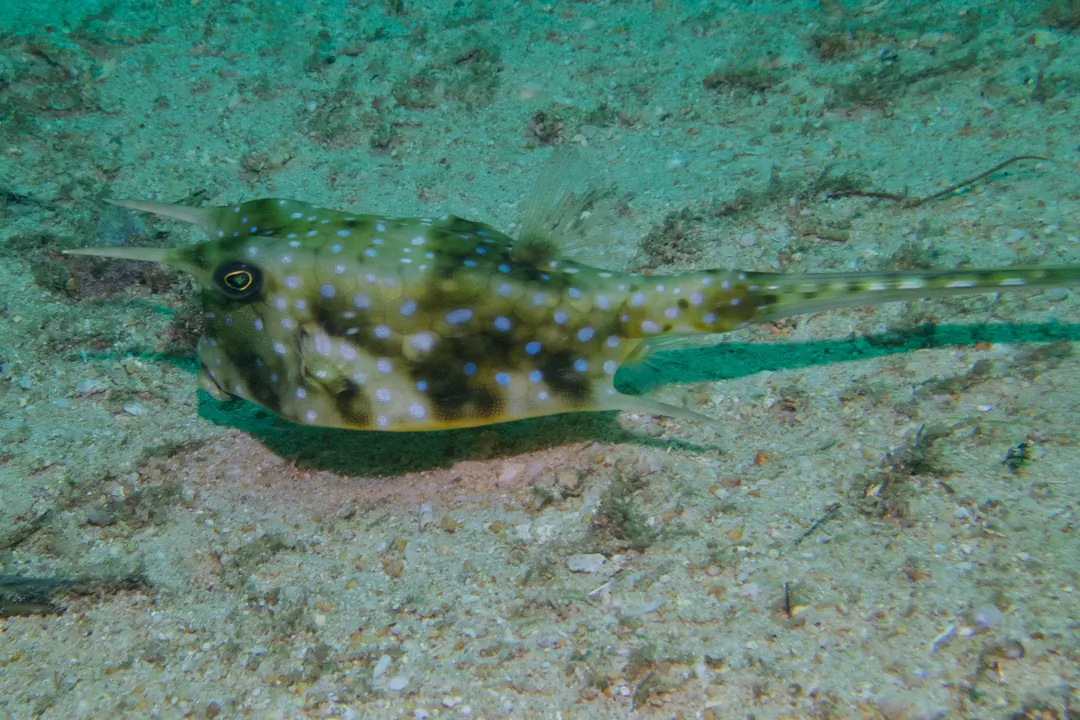 © Pierre PericardCC BY 4.0 · iNaturalist
 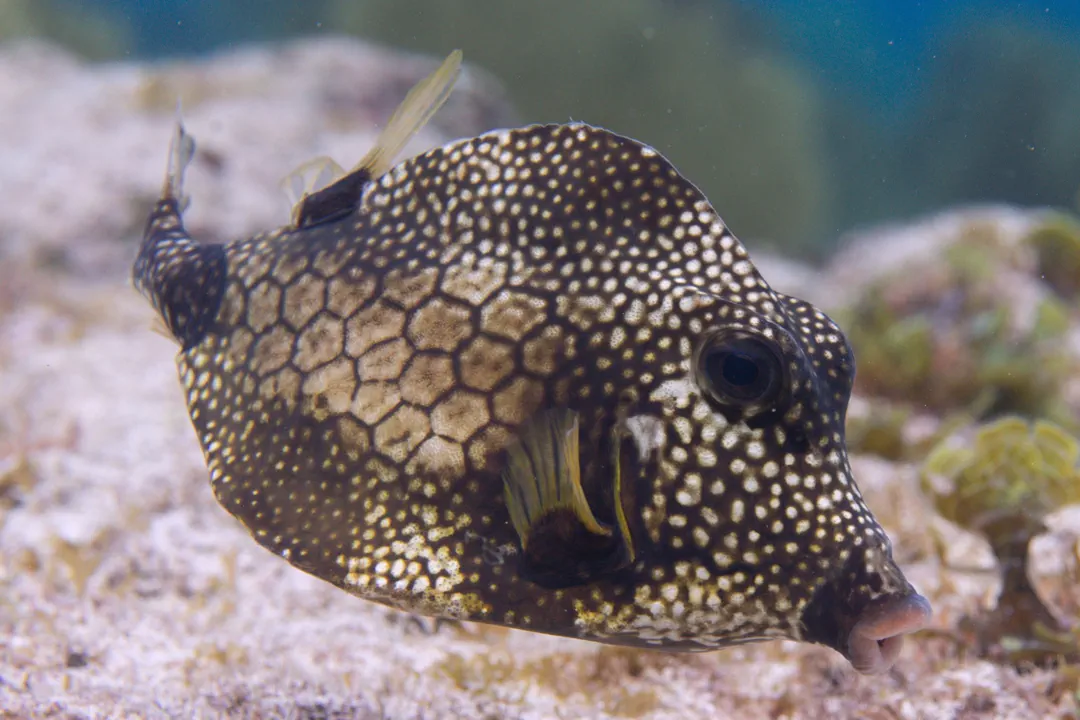 © Dan SchofieldCC BY 4.0 · iNaturalist
 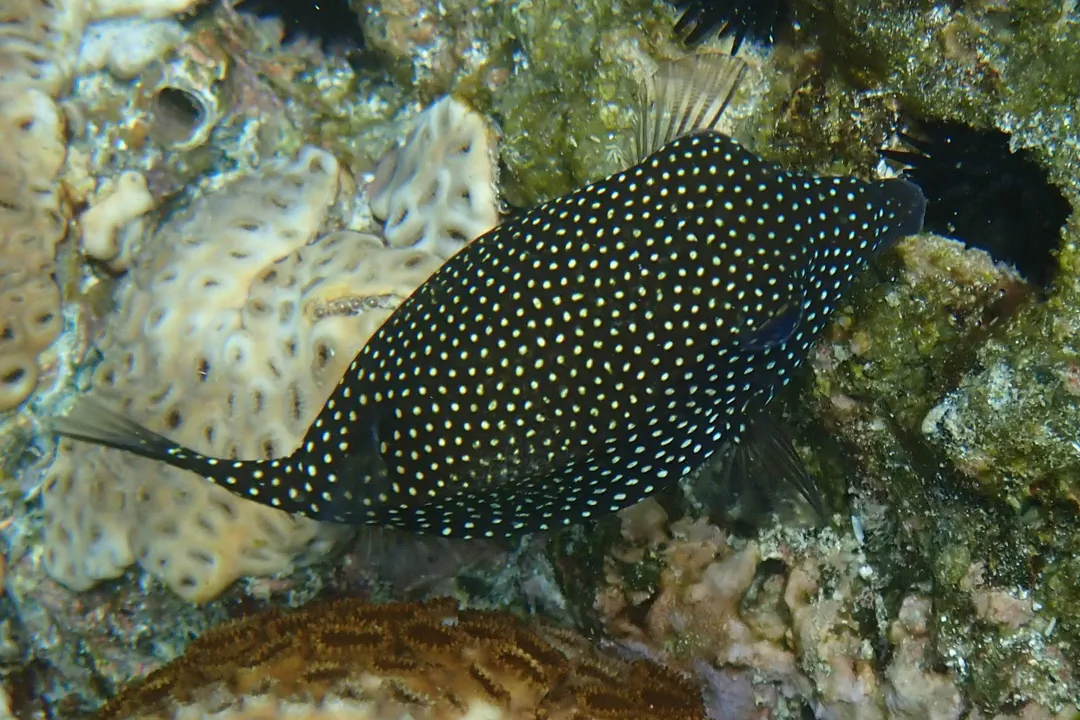 © Cricket RaspetCC BY 4.0 · iNaturalist
 Yellow Boxfish (juvenile) has no known danger to humans. However, always observe marine life responsibly.
Yellow Boxfish (juvenile) can be found at depths of up to 280 meters.
Download Seabook free for iOS and Android.