 © Dan SchofieldCC BY 4.0 · iNaturalist
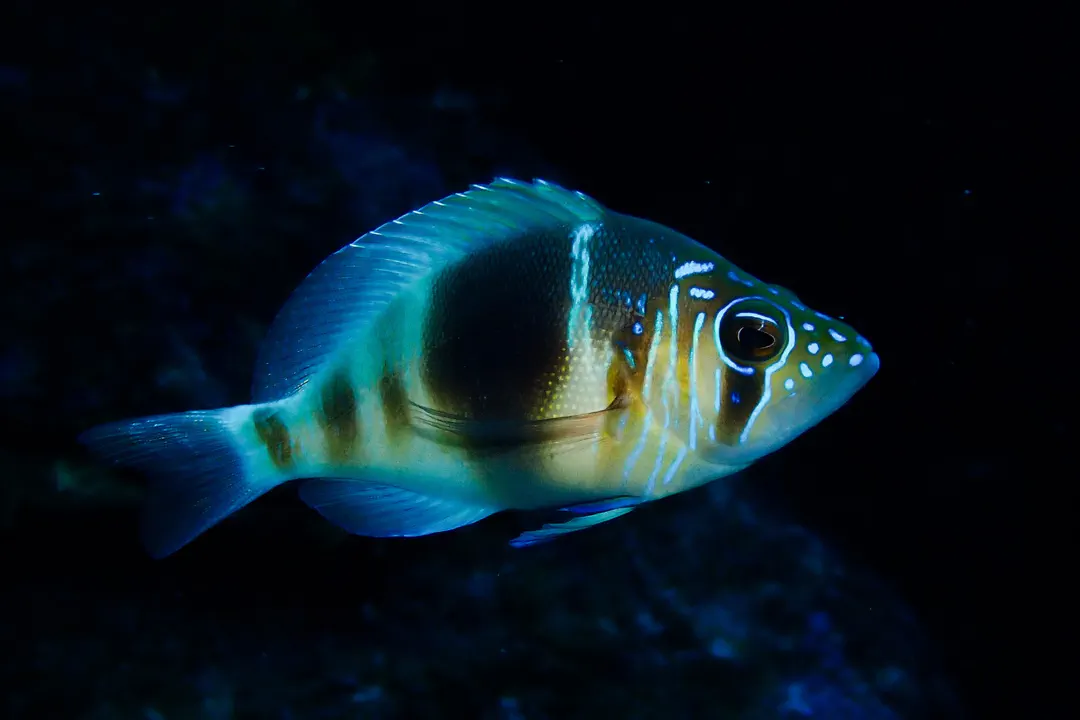
Barred Hamlet
Hypoplectrus puella
Serranus scriba
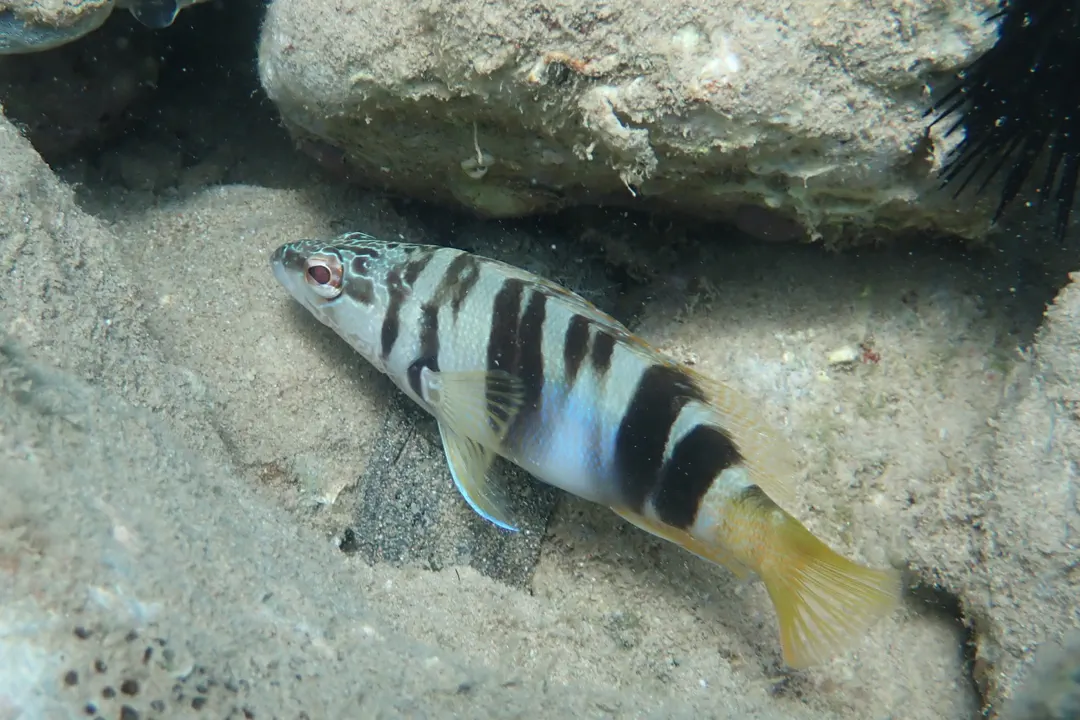
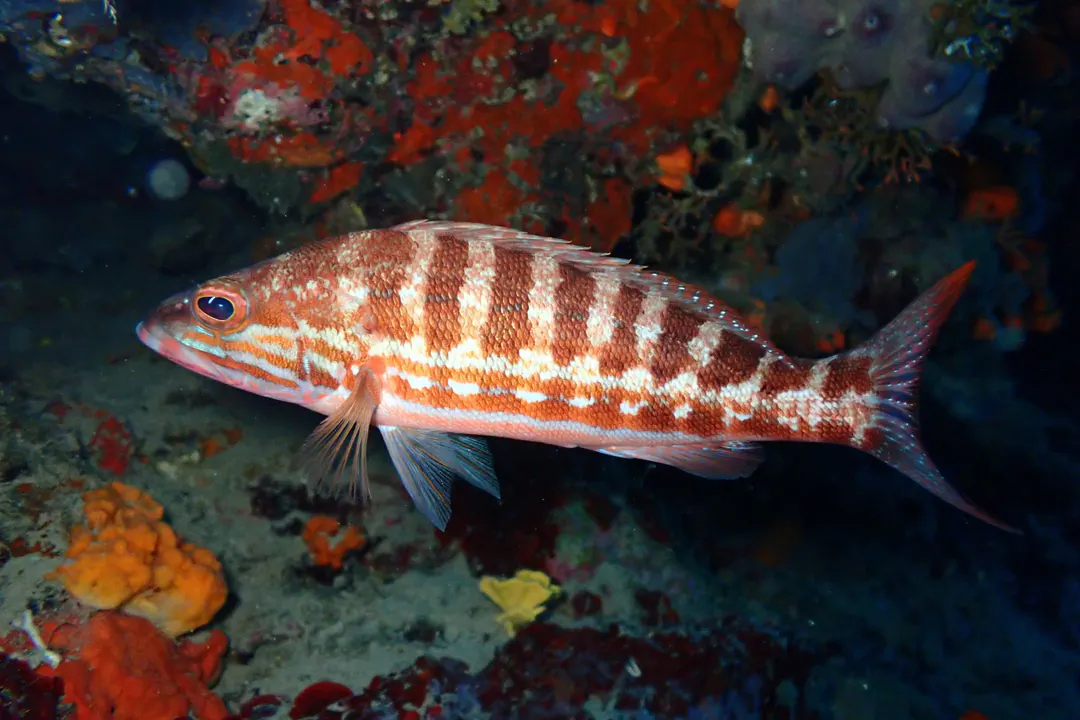
Serranus scriba is a subtropical marine fish, classified in family Serranidae, the groupers and sea basses. It is found in the eastern Atlantic Ocean, the Mediterranean Sea, and the Black Sea. Confusingly, a synonym of this species is Perca marina, but that name (as Sebastes marinus) has incorrectly been used for a separate species, the rose fish.
Serranus scriba grows to a length of 28 centimetres (11 in). This grouper has a squat body, a large head and a mouth very large in proportion to the body size. Jaws are filled with sharp teeth. The painted comber is orange to red in color with bluish to dark brown vertical stripes that are wider and darker towards the tail. The caudal fin is dark yellow to orange, the dorsal fins are yellow with orange dots and lines. The pelvic fins and pectoral fins are usually monochromatic light yellow. The head shows many reddish-brown lines that resemble Arabic writing (hence the Latin name of the species). On both sides of the abdomen there is a large, bright blue area. The maximum recorded fish measurement is 36 centimetres.
The painted comber is found in the eastern Atlantic Ocean where its core range extends from the Straits of Gibraltar to Senegal, including the Canary Islands but it occurs as far north as the Bay of Biscay. Its range extends into the Mediterranean and Black Seas.
The painted comber occurs over rocky bottom and among beds of Posidonia at depths of 5 to 150 metres (16 to 492 ft). It normally speneds the day sheltering in rocky caves and is normally either solitary or found in small groups. It emerges at dusk to hunt. It is a carnivorous species which is a territorial ambush hunter and has a diet made up of cephalopods, bivalves, crustaceans, fishes, and worms. It is often used to indicate sites occupied by octopuses as it waits at the entrance scavenging the octopus's discarded parts of shellfish.The spawning season runs from late spring to early summer with the eggs being laid under stones near the shore.It is a synchronous hermaphrodite, i.e. each individual has both male and female gonads and may be capable of self-fertilisation. They have a maximum life expectancy of 16 years.
These fish are hermaphrodites and can fertilize themselves. Spawning is seasonal and controlled by the moon's phase.
The painted comber has minor commercial value, and, much like other species of Serranus, is considered to have tasty flesh.
As most fish species, the painted comber harbours internal and external parasites.
© Dan SchofieldCC BY 4.0 · iNaturalist 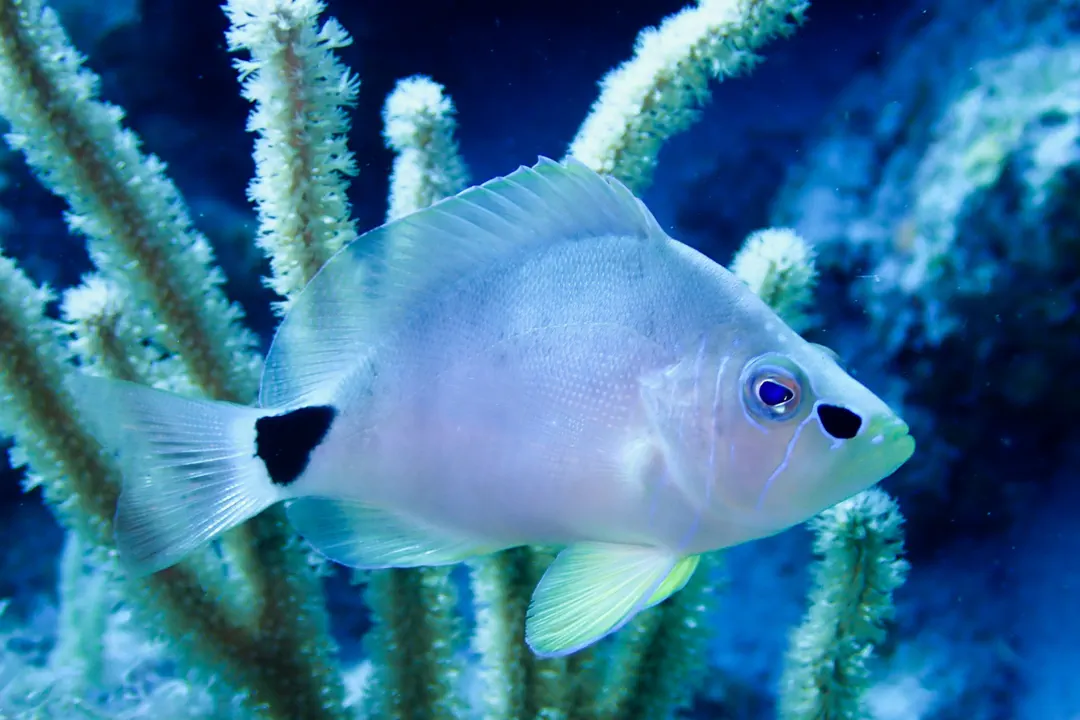 © Dan SchofieldCC BY 4.0 · iNaturalist
  © Sarah FaulwetterCC BY 4.0 · iNaturalist
 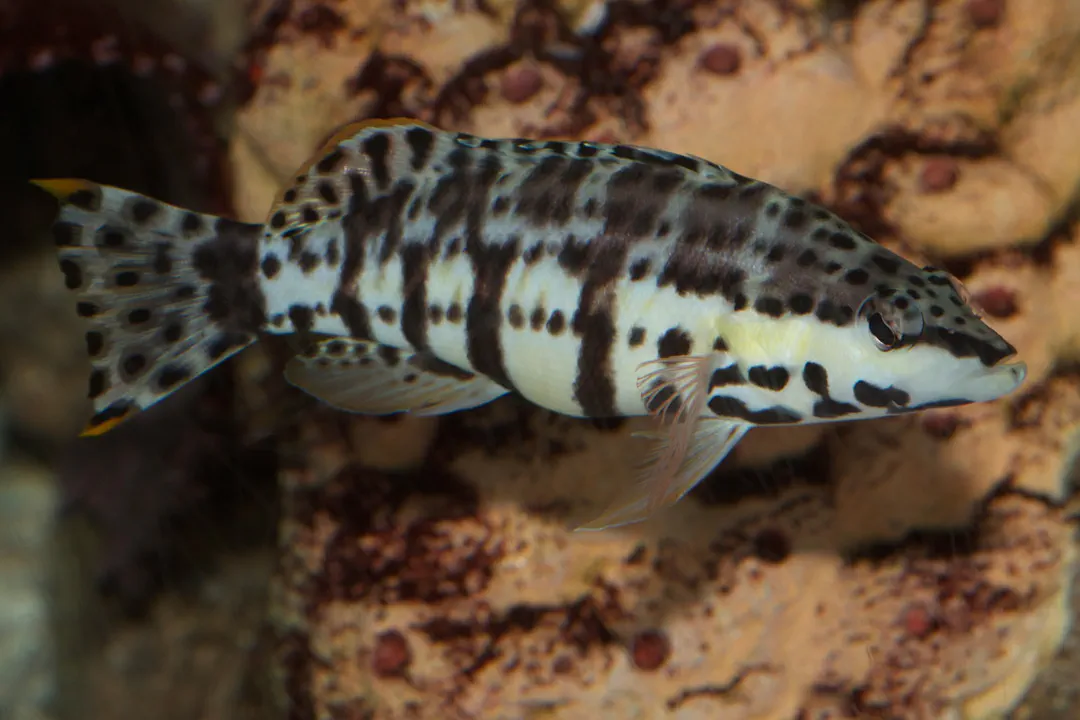 © Brian GratwickeCC BY 4.0 · iNaturalist
 Painted Comber has no known danger to humans. However, always observe marine life responsibly.
Painted Comber can be found at depths of up to 150 meters.
Download Seabook free for iOS and Android.